How to Set One Improvement Goal for Your Next Trout Trip
Trout rarely reveal one clean lesson, so improvement works best when you isolate an observable skill from the day’s noise. I’ll show you how to choose one target, practice it briefly, and review it honestly after your next trip.
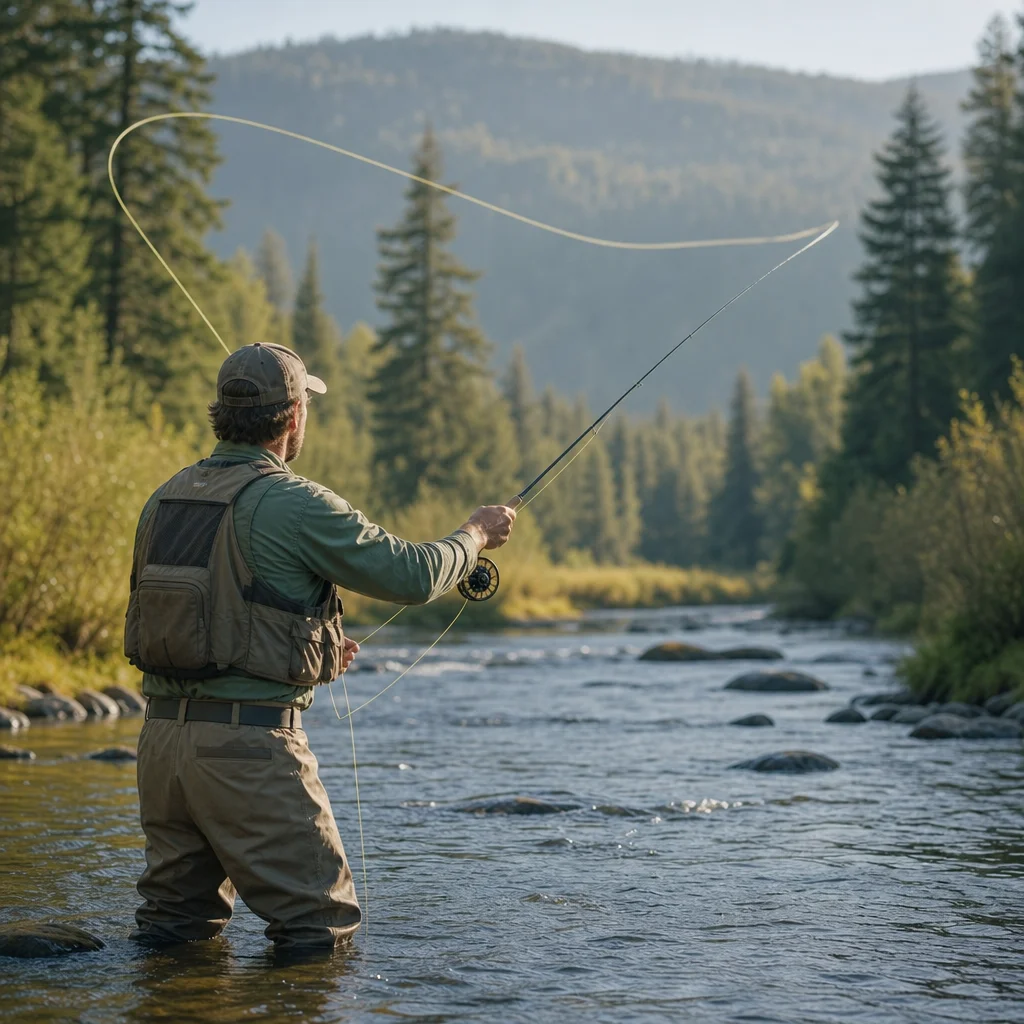
A trout trip can leave you with plenty to think about: missed takes, poor presentations, tangled leaders, awkward footing, and stretches when the fish simply stop cooperating. If you treat all of those as improvement priorities, you’ll return to the water with a crowded mind and no clear way to tell whether you’re getting better.
A single improvement goal gives your attention somewhere useful to land. The goal isn’t to control the trout or guarantee a better catch. It’s to choose one part of your process that you can observe, practice, and review regardless of what the fish do.
What Makes an Improvement Goal Useful?
A useful goal describes an action or decision you can recognize on the water. “Catch more trout” is an outcome. “Make quieter presentations at 30 feet” is a skill target. The second goal gives you something to attempt even when the fish refuse every fly in the box.
Your goal should be:
- Specific enough to notice: You can tell when you’ve attempted it.
- Small enough to practice: It doesn’t require changing your entire approach.
- Relevant to your fishing: It addresses a recurring limitation or an upcoming challenge.
- Flexible enough for real conditions: You can adapt it to weather, water level, access, and fish activity.
- Independent of luck: Success doesn’t depend entirely on a trout eating.
This doesn’t mean your target has to be easy. Advanced anglers may work on subtle matters such as reducing slack in a reach cast, improving the timing of a mend, or choosing a better first presentation after reading a current seam. The important distinction is that the goal remains visible in your decisions and movements.
Choose the Right Kind of Target
Most useful trip goals fit into one of four categories: technique, observation, decision-making, or process.
Technique goals
These focus on a physical skill. Examples include:
- Place five casts in a selected landing zone without false casting over the fish.
- Practice a controlled reach cast before presenting to a likely holding lie.
- Keep the rod tip and line position consistent during short-range drifts.
- Improve hook-setting direction when a fish takes downstream.
Technique goals work well when you know what you want to change but need repetition to make it more reliable.
Observation goals
These concern what you notice before acting. You might look for rising forms, darker holding water, subtle current changes, or the direction in which bubbles and debris move.
A practical observation goal could be: “Before each first cast to a new piece of water, identify the likely current speed, the trout’s possible feeding lane, and where my line could create drag.” You don’t need to be right every time. You need to make the reading deliberate enough to compare your prediction with what happens.
Decision-making goals
These address choices such as fly changes, approach angle, distance, or when to leave unproductive water. A good example is: “When a fish refuses twice, change only one variable before trying again.” That variable might be drift length, tippet position, fly size, or your angle of presentation.
This kind of goal helps prevent random experimentation. If you change the fly, distance, cast, and position all at once, you may get a different result without learning which change mattered.
Process goals
Process goals improve how you manage a session. You could aim to pause and reset after a tangle, check your leader at regular transitions between water types, or record one meaningful observation at the end of each major stop.
These goals are especially useful when frustration causes rushed decisions. A simple reset routine can protect the rest of the day from one bad cast or lost fish.
Turn a Vague Intention Into an Observable Goal
Start with a broad statement such as “I need to cast better.” Then narrow it by asking three questions:
- When does the problem appear? Is it on short casts, longer casts, windy casts, or casts from awkward positions?
- What can you see or feel when it happens? Perhaps the line piles up, the fly lands hard, the loop collapses, or the rod stops too low.
- What action would represent improvement? You might aim to stop the rod more crisply, shorten the casting stroke, or reduce false casts before presenting.
The final goal should be short enough to remember. For example:
“On the first three presentations to each new lie, I’ll keep my cast low and land the fly softly without adding an unnecessary false cast.”
That target contains a situation, an action, and a rough measure. It doesn’t demand perfection, and it doesn’t require a trout to eat before you can assess it.
Avoid combining several skills in one sentence. “Improve my cast, read the water, choose better flies, and land more fish” is a season plan, not a next-trip goal. You can still notice other issues, but only one receives deliberate attention.
Build a Short Practice Plan
Your practice plan should fit into the trip rather than compete with it. A useful structure has three stages.
1. Rehearse away from the fish
If conditions and access allow, make a few casts in open water before approaching a likely target. This lets you test the movement without the pressure of a visible fish. Keep the rehearsal brief. The purpose is to establish one cue, not to drain your patience before fishing begins.
Choose a simple cue such as “smooth stop,” “low line,” or “look before casting.” A short phrase is easier to recall than a technical explanation once the wind rises or a trout appears.
2. Apply the goal in low-consequence situations
Use the target first where a mistake won’t ruin your best opportunity. A broad riffle, an empty bank, or a less-suspicious piece of water can provide useful repetitions. This isn't wasted fishing. It separates skill practice from the emotional weight of a difficult fish.
After a few attempts, decide whether the goal is still appropriate. If the wind makes the chosen cast unsafe or impractical, modify the application rather than abandoning the learning objective. For example, you may focus on maintaining a clean loop in the wind instead of insisting on a particular casting shape.
3. Use it on meaningful opportunities
Once the movement or decision feels familiar, apply it where it matters. Before casting, take one breath and state the goal silently. After the presentation, judge the process before judging the outcome.
Ask: Did I perform the action I intended? Did the water allow a fair test? What changed when the result was different?
That sequence keeps a refusal or missed take from automatically becoming evidence that the goal failed.
Use Measures That Don’t Depend on Catching Fish
A goal needs a measure, but the measure doesn’t need to be complicated. Choose one or two indicators:
- Number of deliberate attempts.
- Number of attempts that met your defined standard.
- Frequency of a specific mistake.
- Time between recognizing a problem and making a controlled adjustment.
- Whether you followed a decision rule before changing tactics.
Suppose your goal is to improve drift control. You might record ten meaningful drifts and note whether the fly reached the target lane without visible drag. You don’t need laboratory precision. A consistent, honest count is more useful than a detailed score that you can’t maintain while fishing.
For outcome-based information, keep it separate. A trout eating your fly can confirm that the presentation was acceptable, but it can’t prove that every part of your process was sound. Conversely, a refusal may result from fly choice, natural food availability, fish alertness, or conditions beyond your control.
Account for Difficult Conditions and Edge Cases
A goal can be sound and still receive a poor test. Wind, high or low water, glare, limited backcast room, heavy vegetation, deep wading, or an unusually short feeding window may prevent you from applying it normally.
Instead of marking the trip as success or failure, classify the test:
- Clear test: You had a reasonable opportunity and followed the goal.
- Partial test: You attempted it, but conditions changed the situation.
- No fair test: The goal wasn’t practical or safe under the circumstances.
This distinction matters for advanced skills. A reach cast practiced on open grass isn't the same as a reach cast from an unstable bank with branches behind you. A nymphing goal may be difficult to evaluate when water visibility changes rapidly. A stealth goal may be impossible to isolate if you’re also navigating unfamiliar, slippery terrain.
Safety and access take priority over any practice target. Don’t force a casting position, wade farther, or delay leaving an exposed area to complete a goal. Adapt the exercise to the conditions or set it aside.
Review the Trip Without Overinterpreting It
Take two or three minutes after fishing to review the goal while the details are fresh. Write down:
- What was the exact goal?
- How many fair attempts did you make?
- What repeated pattern did you notice?
- What condition made the goal easier or harder?
- What is the smallest adjustment for next time?
Keep observations separate from conclusions. “Three casts landed left of the target in a crosswind” is an observation. “My loop was too wide” is a possible explanation. “I need a completely different cast” is a larger conclusion that may require more evidence.
If the goal worked, decide whether to retain it, increase its difficulty, or let it become a normal part of your routine. If it didn’t work, ask whether the target was poorly chosen, insufficiently practiced, or simply not fairly tested.
A Simple Template for Your Next Trip
Before leaving, complete this sentence:
“On my next trip, I’ll improve [one skill or decision] by [one observable action] during [a defined situation], and I’ll review it after [a practical number of attempts or stops].”
For example: “On my next trip, I’ll improve presentation accuracy by making three purposeful casts to each new lie before changing position, and I’ll review the result after five productive stops.”
The template is deliberately modest. A narrow target gives you enough focus to learn without turning a recreational day into an examination.
Practical Next Steps
Choose one recurring issue, not the most dramatic mistake from your last outing. Define the action you want to see, select a simple measure, and identify where the conditions will provide a fair test. Then give the goal your attention for one trip before deciding whether it deserves another.
When you return, judge the process first: what you attempted, what you observed, and what you’ll change. Trout may cooperate, complicate the lesson, or offer no useful feedback at all. Your improvement goal can still succeed if it turns an unfocused day into a clearer next decision.