What to Change When Trout Follow but Don't Take
A trout that follows is giving you more information than a trout that vanishes; I’ll show you how to change one variable at a time, from speed and depth to fly profile and pause length.
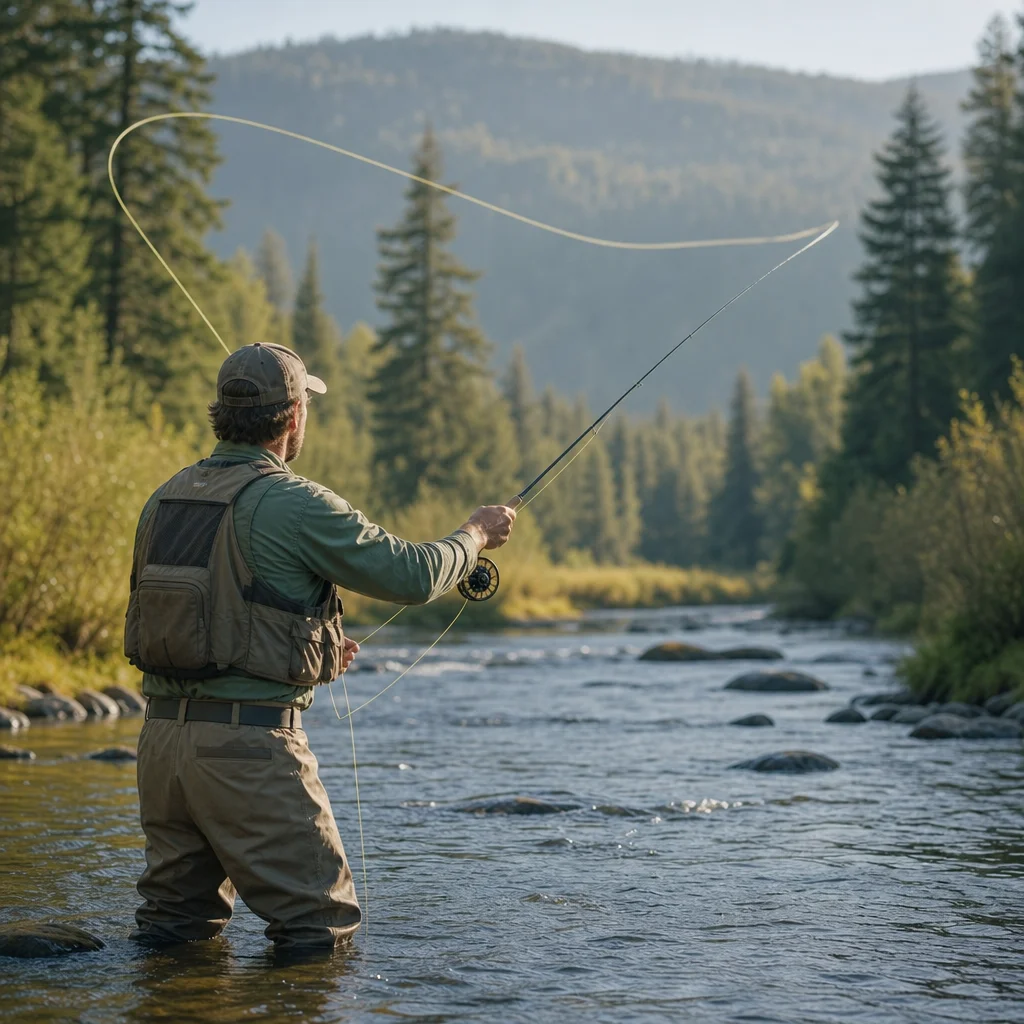
A trout following your fly has already answered an important question: the presentation is close enough to attract attention, but something is stopping the final decision. That “something” might be speed, depth, fly size, profile, or the moment when the fly pauses. It might also be your next move.
The common mistake is changing everything at once. A new fly, a faster retrieve, a longer cast, and a different angle may produce another follow—or nothing at all—without telling you what actually helped. Treat the refusal as a troubleshooting problem. Keep most of the presentation stable, change one meaningful variable, and watch how the fish responds.
Start by reading the refusal
Before changing tackle, replay the final few seconds. The trout’s behavior often points toward the most useful adjustment.
- It follows from a distance: The fly may be visible but not convincing, or the presentation may be moving too quickly for the fish to close the gap.
- It tracks closely, then drops away: The fly may be slightly too large, too bright, too fast, or too unnatural in its movement.
- It follows only near the surface: The fish may be willing to move upward, but the fly could be just outside its preferred feeding depth.
- It follows and stops when the fly pauses: The pause may be useful, or the fly may be hanging unnaturally. Test a shorter pause before assuming more time is better.
- It turns away at the rod tip: The fish may have detected you, the line, or an abrupt change in retrieve angle. This is often a presentation problem rather than a fly problem.
Don’t assume a follow means the trout wants a smaller fly. Size is only one part of the picture, and changing it first can hide a more basic issue such as speed or depth.
Make the first change low-risk
Your first adjustment should preserve as much information as possible. If the trout followed a streamer, for example, keep the same fly and test a slower retrieve. If it followed a nymph under an indicator, keep the pattern and adjust depth or drift before switching patterns.
A useful order is:
- Change retrieve speed.
- Change the pause or cadence.
- Change depth.
- Change the presentation angle or cast position.
- Change fly profile or size.
- Change color or pattern.
This isn’t a rigid law. Conditions may make depth the obvious first variable, especially when you can see feeding fish well below your fly. The point is to avoid making several unrelated changes before you’ve learned anything from the refusal.
Test speed before replacing the fly
Retrieve speed is often the simplest variable to test and the easiest to overlook. A trout may follow a fly that is moving just quickly enough to trigger interest but too quickly to allow a confident take.
On the next cast, slow the retrieve by roughly a third. Don’t turn the fly into a motionless object unless the situation calls for it. Keep enough movement to maintain control and make the fly look intentional.
Then try the opposite if the first change does nothing. In cold water or when fish are holding deep, a slower presentation may be more effective. In warmer, faster-moving water, a fly that barely moves can look out of place or fall behind the available current. The fish’s reaction matters more than a general rule about “slow” or “fast.”
For a streamer, compare a steady retrieve with short strips and pauses. For a wet fly or soft-hackle, try a controlled swing with a slight lift at the end. For a nymph, think less about hand speed and more about whether the fly is drifting at the same pace as the surrounding food.
Adjust pause length carefully
A pause can turn a follow into a take, but it can also expose an unnatural change. Trout often respond when a baitfish pattern stalls or a nymph briefly rises in the current. They may also lose interest when the fly stops in open water with no environmental reason.
Test pause length systematically:
- Start with a short pause of about one second.
- Repeat the retrieve with no pause or only a soft hesitation.
- Try a longer pause only if the fish stays close and continues tracking.
Watch the fish rather than counting mechanically. If it noses closer during the pause, repeat that cadence. If it turns away as soon as the fly stops, shorten the pause or replace it with a slower continuous movement.
The final pause at the end of the retrieve deserves special attention. A trout following into shallow water may see you, the leader, or the sudden upward movement of the rod. Before changing flies, make the next cast longer and continue the retrieve past the point where the fish turned away.
Change depth without changing everything else
A trout can follow a fly for several feet while remaining just outside its most comfortable feeding lane. This is especially common when the fly is near the fish but not moving through the same current seam.
With a nymph, adjust depth in small increments. Add or remove a little weight, change the indicator position, or alter the angle of the cast. Large depth changes make it harder to know whether the fish rejected the fly or simply never encountered the revised presentation properly.
With a streamer, count the fly down before beginning the retrieve. Add one or two seconds on the next cast, then compare the reaction. If the fish follows more closely or strikes as the fly crosses a deeper edge, you’ve learned that depth was part of the problem.
Don’t automatically fish deeper because the trout followed low in the water. A fish may rise to inspect a fly and still prefer to feed above the bottom. Your goal is to find the depth where the trout commits, not simply the deepest water available.
Confirm the change in the water column: After adjusting depth, make several casts through the same likely holding area and compare the fish’s distance, speed, and body language before changing the fly again.
Use fly profile before color
If speed, cadence, and depth produce no improvement, change how the fly looks in the water. Profile—the fly’s overall shape and movement—often matters more than a small color difference.
Try a smaller or less bulky version of the same general pattern. A compact streamer may look less threatening than a large, heavily dressed one. A slim nymph can appear more like the insects drifting in the current than a bulky imitation. In clear water, reducing flash or material may help the trout inspect the fly without rejecting it.
You can also move in the other direction. A trout following a small fly may be interested but unable to track it in broken water. A slightly larger profile can make the fly easier to find and may create a more convincing target.
Change one characteristic at a time when possible. If you switch from a large, bright streamer to a small, dark nymph, you’ve changed profile, color, and often retrieve style together. That can catch a fish, but it doesn’t explain the refusal.
Change color last—or when visibility demands it
Color matters, but it’s frequently overemphasized because it’s easy to change. If the trout is following closely, the pattern is already visible enough for the fish to notice. A new color may help, but test presentation first.
Color becomes a more reasonable early adjustment when light, water clarity, or background changes significantly. In stained water, a darker silhouette or more visible profile may help. In bright, clear conditions, a subtler fly may reduce suspicion. These are starting points, not guarantees.
Keep the replacement similar in size and shape if you want a useful comparison. Switching from one olive nymph to another olive nymph with a different size and weight tells you less than changing only the amount of flash or the general silhouette.
Reposition before blaming the fly
A trout may follow because your cast brings the fly across its field of vision at the wrong angle. Move a few steps, cast from a different side, or alter the retrieve so the fly crosses the current more naturally.
This matters particularly for streamers and swinging flies. A fly moving directly toward a trout may look threatening, while the same fly crossing the fish’s view or moving away along a seam may trigger a response. For nymphs, a better drift angle can reduce drag without any change to the pattern.
Also consider whether the trout saw you. A fish that follows once and disappears after you false-cast repeatedly may be responding to angler pressure, not fly selection. Give the area time, reduce unnecessary movement, and approach the next cast from a lower or less direct position.
Know when to stop experimenting
After several controlled changes, you may have enough information to leave the fish alone. Repeatedly showing the same trout new flies can turn curiosity into wariness. If the fish follows twice without committing, move to a different angle or rest the spot rather than conducting an endless fly-box audit.
A follow is useful evidence, but it isn’t a promise. The trout may be inspecting the fly, defending a space, or reacting to movement without feeding. You’re trying to improve the odds while learning what the fish will tolerate.
A simple follow-to-take sequence
When a trout follows and refuses, use this sequence:
- Keep the same fly and slow the retrieve slightly.
- Test a shorter or longer pause, depending on the fish’s reaction.
- Adjust depth in a small, deliberate increment.
- Change your casting angle or position.
- Try a similar fly with a different profile or size.
- Change color only after the more informative variables have been tested.
- Rest or leave the fish if repeated casts make it less responsive.
Make a mental note—or a quick note in your phone—of what changed and what the trout did. Over time, these small comparisons become more valuable than a long list of favorite patterns.
The best response to a follow is rarely panic. Keep the next cast similar enough to teach you something, change one variable with a reason, and let the trout’s behavior determine the next adjustment.