Why You Keep Missing Trout: A Diagnostic Guide to Short Strikes and Poor Hooksets
When trout rise short, nip at a nymph, or vanish just as you set, the cause is usually a small mismatch in timing, slack, or fly position. I’ll help you diagnose each failure and build more reliable hooksets without turning every take into a wrestling match.
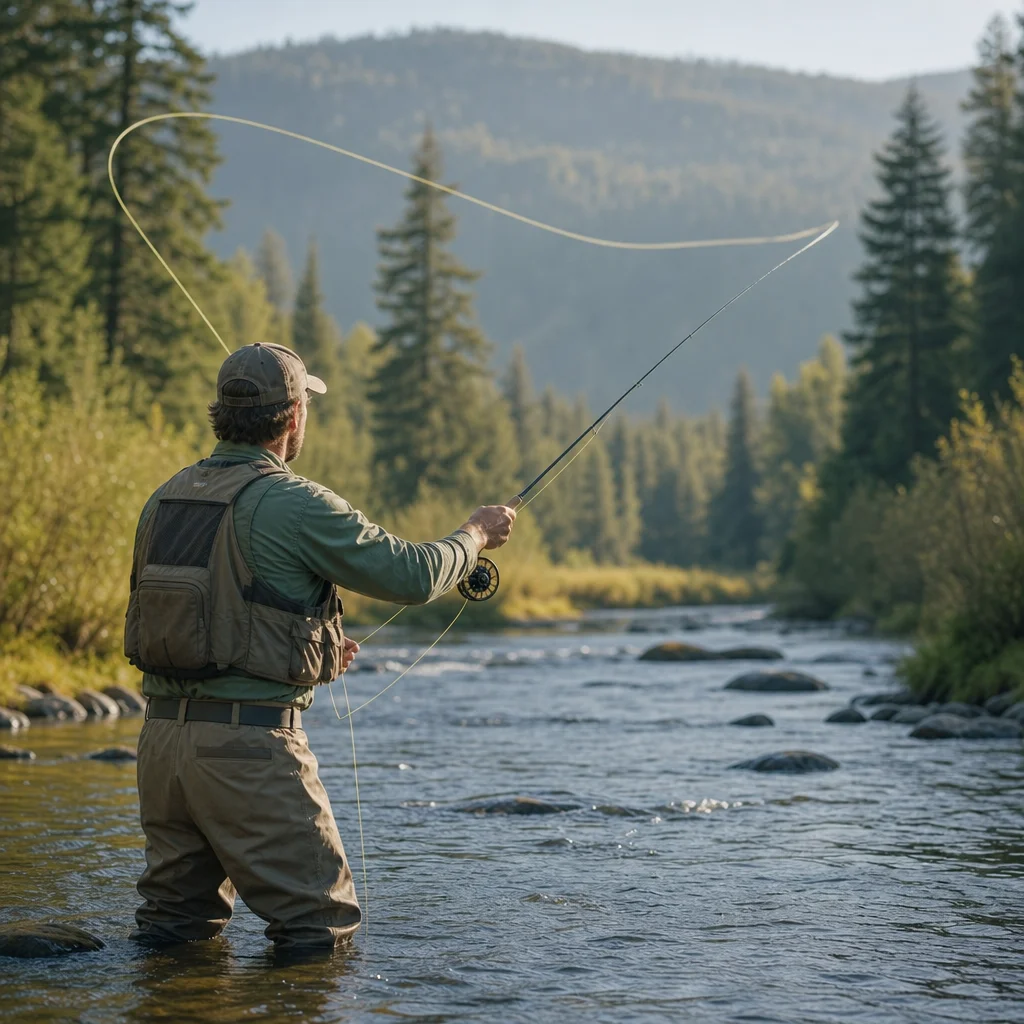
Missing trout is rarely a single problem called “bad luck.” More often, the fish has made contact with your fly, but your line, rod, timing, or hook position has prevented that contact from becoming a hookup.
The useful question isn’t simply, “Why didn’t the hook stick?” It’s, “What happened in the second before the fish was gone?” A trout that rises and refuses may be telling you the fly is wrong. A trout that eats and leaves no visible evidence may be exposing slack. A hook that pulls free after a few seconds may point to poor pressure or an unsuitable hook angle.
This diagnostic approach helps you separate those situations and fix the right problem.
Start by identifying the kind of miss
Before changing flies, examine how the failure looked. Different misses usually have different causes.
The trout rises but never touches the fly
If you see a boil, splash, or head-and-tail rise beside the fly, the fish may have rejected the presentation rather than missed the hook. Possible causes include:
- The fly is dragging unnaturally.
- The fly is the wrong size, shape, or profile.
- Your tippet is visible or landing heavily.
- The trout rose to a natural insect near your fly instead.
- You reacted to movement that wasn’t an actual take.
This isn’t primarily a hookset problem. Try improving the drift, reducing drag, or changing the fly before changing your timing.
The trout takes, but the line never comes tight
This is commonly caused by slack. You may see the fly disappear, feel a faint tick, or notice the leader straighten briefly, but the hook never moves firmly into position.
Slack can form in several places:
- Between the rod tip and the surface fly
- In coils of line on the water
- In a curved leader during a cross-current drift
- Between a nymph and an indicator
- Between the hook and the end of the tippet
You don’t need every inch of line tight at all times. You do need enough contact to move the hook when the trout takes.
The trout is hooked, then comes free
A quick release often means the hook did penetrate, but the connection wasn’t maintained. Common causes include lowering the rod, allowing slack during the fight, pulling too aggressively with light tippet, or using a hook that is dull or poorly positioned.
The first few seconds matter. Keep steady pressure, maintain a bend in the rod, and adjust your angle if the trout changes direction.
Dry-fly hooksets: wait for the connection
Dry-fly fishing creates a strong visual reaction. A trout rises, your pulse jumps, and your hand wants to lift immediately. That reflex is responsible for many missed fish.
When the trout takes a dry fly, the sequence is usually:
- The fish moves toward the surface.
- The mouth opens around the fly.
- The fish turns or begins to move away.
- The fly and leader pull tight.
- The hookset drives the hook home.
If you set at step one or two, you may pull the fly away before it reaches the trout’s mouth. Beginners often describe this as “setting too fast,” but the deeper issue is reacting to the rise instead of the take.
Use a short pause, not a long count
You don’t need to count several seconds. In most situations, watch for the trout’s mouth to close or for the fish to turn down. Then lift the rod smoothly.
The correct delay varies with distance, current, and fly size. A trout taking a small dry at close range may require only a brief pause. A longer cast with more line and slack may require additional time for the connection to develop.
Focus on the fly and the fish’s mouth rather than the splash. If you can’t see the fly, follow the leader or the area where the fly should be, then react to a convincing movement—not every ripple.
Lift smoothly and to the side when appropriate
A violent overhead strike can pull a dry fly straight out of the trout’s mouth. It can also create unnecessary slack when the rod moves abruptly.
Use a firm, controlled lift. On larger fish or when fishing close to bankside cover, a side-set can help turn the trout without launching the fly upward. Keep the movement appropriate to the fish and the available space.
Nymph hooksets: respond to connection, not a visible take
Nymph fishing often gives you less information than dry-fly fishing. The trout may take below the surface, and the only signal might be an indicator stopping, dipping, twitching, or moving against the current.
Because the take is less obvious, waiting too long is a common mistake. With nymphs, set when the indicator or sighter gives you a credible signal, especially if the movement differs from the surrounding current.
Don’t set on every flick
A nymph rig moves through turbulent water, so small movements are normal. If you set on every twitch, you’ll spend the day catching sticks, rocks, and your own rig.
Look for changes such as:
- The indicator slowing or stopping unexpectedly
- A downstream or sideways movement that doesn’t match the drift
- A brief dip followed by hesitation
- The leader straightening or lifting unnaturally
- A sighter changing angle or disappearing
When the signal is plausible, make a compact lift. The goal is to remove slack and move the hook, not to throw the line into the next county.
Use the right hookset for the rig
A standard nymph rig often works well with a firm lift of the rod. If you’re fishing tight-line or contact techniques, the rod may already be positioned to respond quickly, so a controlled raise is usually enough.
Avoid ripping aggressively when fishing light tippet or small hooks. Excessive force can break the tippet, bend the hook, or pull the fly away before it turns into the trout’s mouth.
Find and remove slack before the trout takes
Many missed fish are decided before the take. If your line lands in loose coils or your leader forms a large curve, you may not be able to respond in time.
Some slack is useful. A perfectly straight line can drag a dry fly or pull a nymph out of its natural path. The aim is controlled slack: enough to protect the drift, but not so much that you lose contact.
Match your line management to the current
In a cross-current cast, the water may push your line faster or slower than the fly. Mending can reduce that problem, but a large, late mend may create more slack and disturb the drift.
Try to place the line where it will interfere least from the start. Cast slightly upstream, use a reach cast, or make a small mend early in the drift. Early corrections are usually easier to control than emergency repairs after the fly has traveled downstream.
Keep the rod tip purposeful
A rod tip held too high can leave a long, loose connection between you and the fly. A rod tip held too low may drag a dry or catch on the water. Position it according to the technique, while keeping enough line under control to respond.
Strip in excess line during the drift when doing so won’t disturb the fly. Many anglers focus so closely on casting that they forget the line lying at their feet is part of the hookset system.
Fly placement matters more than perfect casting
A technically good cast can still miss the trout if the fly lands outside the feeding lane or arrives too late.
For rising trout, place the fly where the fish can see it naturally. Don’t cast directly onto the fish’s head unless the situation leaves you no choice. Aim far enough upstream to allow the fly to reach the trout at the correct speed.
For nymphs, think about depth and lane position. A fly that is too shallow may pass above the fish. A fly that is too deep may snag or drift unnaturally. If you get repeated short strikes, the trout may be contacting the fly but failing to take it cleanly because the presentation is slightly off.
Change one variable at a time:
- Adjust depth.
- Improve the drift.
- Change the fly size.
- Modify the tippet length or diameter.
- Move your casting angle.
Changing everything at once makes it difficult to learn what solved the problem.
Check the hook before blaming your timing
A dull, damaged, or fouled hook can turn a good take into a miss. After fishing through weeds, rocks, or several trout, inspect the hook point.
Run the point lightly across a fingernail. A sharp hook should catch rather than slide easily. Replace or sharpen it if the point is damaged, and remove fibers, algae, or other material that may block the point.
Also check whether the fly is riding correctly. A dry fly soaked with water may sit low or become difficult to see. A nymph with excessive material around the hook point may look attractive but hook poorly.
Diagnose the problem on your next few casts
Instead of changing tactics randomly, use a short troubleshooting sequence:
- Watch the take carefully. Did the trout actually eat the fly, or only rise nearby?
- Check for slack. Could your rod or line have moved the hook when you set?
- Match the timing to the fly. Delay briefly on dries; respond promptly to credible nymph signals.
- Examine the hook. Make sure it’s sharp, clear, and properly positioned.
- Review the drift. Look for drag, poor depth, or a fly entering the feeding lane incorrectly.
- Adjust one thing. Give the change enough casts to judge it fairly.
Keep the adjustment modest. A small change in casting angle or hookset timing can matter more than replacing half your fly box.
A short decision checklist
When trout keep coming unbuttoned, ask:
- Am I setting when the trout takes, or when I merely see movement?
- Is there enough contact to move the hook?
- Am I using a smooth lift rather than a violent strike?
- Is the fly drifting at the right speed and depth?
- Is the hook sharp and free of debris?
- Am I maintaining pressure after the hookup?
Dry flies reward patience. Nymphs reward attention. Both require controlled contact rather than maximum force. Once you identify whether the real failure is timing, slack, placement, or equipment, missed trout become useful information—and your next hookup becomes much less mysterious.