Why Your Fly Keeps Landing Short of the Target
When your fly repeatedly lands short, I’ll help you separate timing, line-speed, loop-shape, and rig-weight problems so you can make reliable corrections on short and medium-range casts.
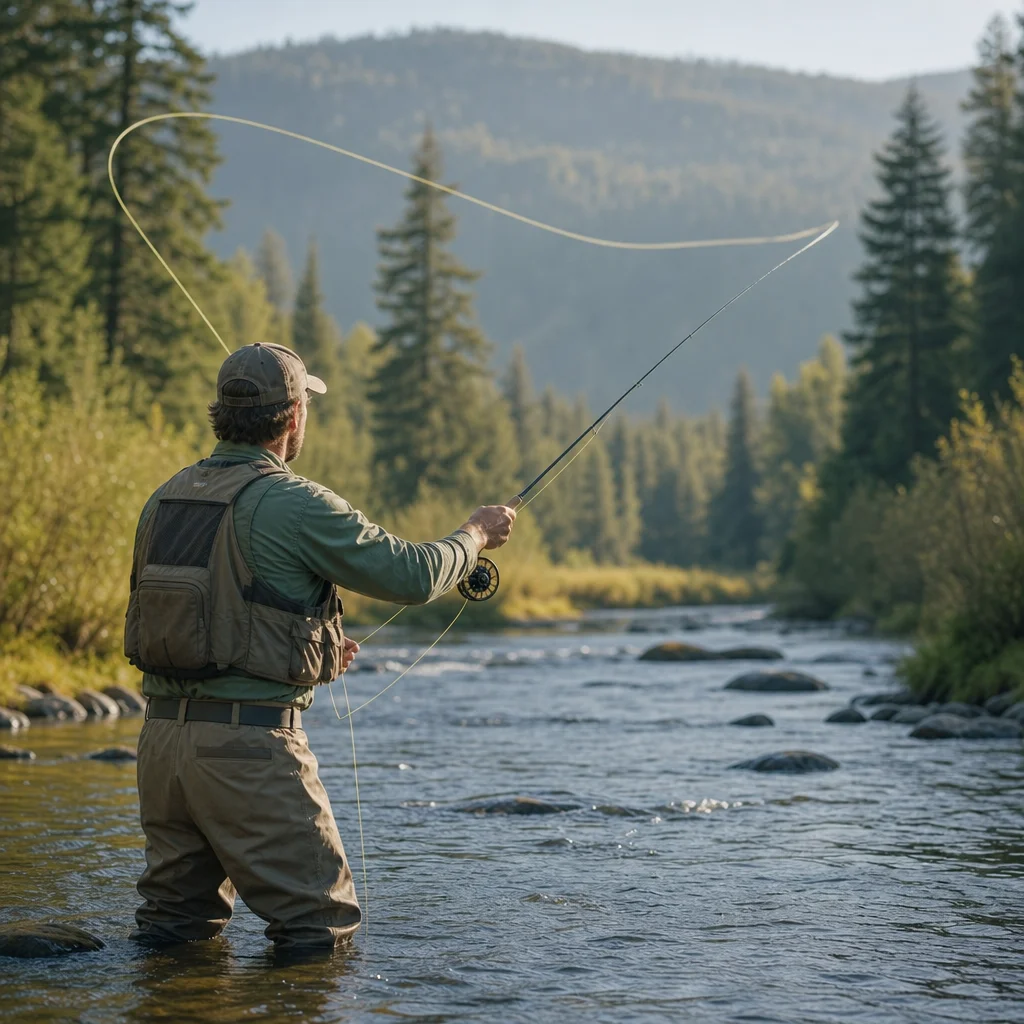
A fly that lands short of the target usually isn’t failing for just one reason. The cast may lack line speed, the rod may be unloading too early, the loop may be collapsing, or the leader and fly may be asking more than the setup can deliver.
The useful approach is to diagnose one part at a time. Instead of casting harder, watch where the cast loses energy and make the smallest correction that restores it.
Start by identifying where the cast fails
First, notice whether the problem happens on every cast or only when you add distance.
- The fly falls short immediately: Check line speed, rod loading, and whether you’re carrying enough line outside the rod tip.
- The line travels, but the leader piles up: Look for a tailing loop, a poor stop, or a leader that is too long, heavy, or tangled.
- The cast works at close range but fails at medium range: Check timing, false-casting habits, and whether you’re trying to carry more line than your loop can support.
- The cast loses power after changing flies: Suspect an overloaded or poorly balanced rig.
- The fly reaches the target but lands with a splash: The cast may have enough distance but too much downward force, a wide loop, or an abrupt turnover.
Make one change at a time. If you lengthen the line, speed up the stroke, and replace the fly all at once, you won’t know which adjustment helped.
Insufficient line speed: add energy without muscling the cast
Line speed is the speed at which the fly line travels through the air. A faster line generally carries farther, but trying to create speed with your arm alone often produces a tense, inefficient cast.
A better sequence is to let the rod load, then apply a smooth acceleration and a crisp stop. The rod bends during the stroke and releases that stored energy into the line. If the movement is slow from beginning to end, the rod may never load properly. If the movement is rushed, the rod may not have time to bend before you stop.
Try this correction:
- Shorten the amount of line you’re carrying until the loop feels stable.
- Make a smooth backcast with your forearm and a compact stroke.
- Pause long enough for the line to straighten behind you.
- Accelerate toward the target and stop firmly, rather than pushing the rod forward.
- Watch whether the loop travels farther without adding much effort.
A firm stop matters because it directs the rod tip’s movement. A soft finish can leave the rod tip drifting forward and down, which sends energy into a wide or collapsing loop instead of toward the target.
Don’t confuse more effort with more speed. A relaxed casting hand and a controlled stroke are usually more dependable than a hard throw. Excess force also makes timing errors harder to see.
Poor timing: wait for the line to straighten
If your forward cast begins before the backcast has straightened, the rod won’t receive a clean load. The line may land short, fall in a heap, or form an uneven loop.
This is especially common when you’re eager to reach a rising fish or when you’re adding line during a false cast. The line behind you may still be climbing or folding when you start forward.
Use a shorter pause at close range and a longer pause as you carry more line. The pause doesn’t need to be exaggerated. You’re waiting for the line to extend, not freezing the rod in place.
A useful practice drill is to cast with your eyes briefly turned toward the backcast, where conditions allow. Watch for the line to straighten before beginning the forward stroke. Once the timing becomes familiar, return your attention to the target.
You can also practice with a simple rhythm: back, pause, forward, pause. The rhythm should change with the amount of line in the air. Longer casts need more time for the loop to travel, while short casts may require only a compact, quick exchange.
Tailing loops: fix the sudden dip in the rod tip
A tailing loop occurs when the rod tip dips during the casting stroke instead of traveling along a relatively straight path. The upper and lower parts of the loop can collide, causing the line to lose energy. It may land short even when the cast feels forceful.
Common causes include:
- Applying power too early in the stroke
- Making a sudden, abrupt acceleration
- Bending the wrist excessively
- Starting the forward cast with the rod tip too low
- Using a stroke that is too short for the amount of line being carried
To correct it, focus on a smooth build of power. Start the stroke calmly, then accelerate toward the stop. Keep your wrist firm enough to prevent it from collapsing, but don’t lock your entire arm.
Changing the casting plane can also help. If your forward and backcast travel on exactly the same path, a timing error may cause the line to collide with the rod or itself. A slightly altered plane—such as casting a little to one side—can make the loop easier to observe and reduce tangles.
If the loop still tails, shorten the line and slow down. A stable loop with less line is more useful than an unstable loop with more.
An overloaded rig can steal distance
The fly line isn’t the only thing your rod has to move. Large streamers, weighted flies, bulky indicators, split shot, heavy tippet, and waterlogged materials all add resistance or mass. A rig that is too demanding for the rod and line may open the loop, collapse the leader, and land short.
The answer isn’t always a stronger cast. First, simplify the rig if the situation allows. Remove unnecessary weight, choose a less bulky fly for practice, or shorten the leader temporarily while you diagnose the problem.
A long leader can also make turnover less reliable, particularly with a large or wind-resistant fly. Shortening it slightly can improve control, though it may change how delicately the fly lands or how far it sits from the fly line. Treat leader length as a trade-off rather than a permanent fix.
Check the leader for knots, wind knots, damaged sections, and tangled loops. A leader that has lost its taper or is twisted around the fly can absorb energy before the fly reaches the target. Straighten it gently and replace damaged sections rather than repeatedly compensating with harder casts.
Check the rig before changing your stroke: Confirm that the fly, tippet, leader, and any added weight are moving freely and aren’t tangled, waterlogged, or unusually bulky. A clean setup makes casting faults much easier to diagnose.
Correct the cast for short and medium distances
Short-range casts often fail because anglers use too much motion. If the target is close, keep the stroke compact and avoid carrying unnecessary line in the air. A short, controlled cast can be made with the rod hand and forearm while the line hand manages only the amount of line needed.
At medium range, the main challenge is maintaining a consistent loop while carrying more line. Add line gradually during false casts rather than stripping out a large amount and trying to launch it in one movement.
When you extend the line, lengthen the casting stroke slightly and give the line more time to straighten. Don’t immediately increase power. If the loop remains stable, you can add a small amount of acceleration. If it widens or collapses, return to the last length that worked.
The haul can add line speed, but it shouldn’t be the first repair for a faulty cast. Once your timing and loop shape are sound, a short, crisp pull with the line hand can increase speed without requiring a bigger rod movement. Release or relax the line hand at the right moment so you don’t choke the cast or stop the line from running.
A simple troubleshooting routine
When the fly keeps landing short, work through this sequence:
- Reduce the problem: Cast a shorter amount of line with the same fly and leader.
- Check the backcast: Make sure the line straightens before the forward stroke.
- Watch the loop: Look for a narrow, stable loop rather than a wide or colliding one.
- Improve the stop: Accelerate smoothly and finish with a distinct stop.
- Inspect the rig: Check for tangled leaders, damaged tippet, excess weight, or a bulky fly.
- Add distance gradually: Extend only a little line at a time.
- Change one variable: Alter timing, stroke, line length, or rig—not all of them together.
If the cast improves when you shorten the line, the problem is probably control or timing rather than a lack of strength. If it stays short even with a compact amount of line, inspect the rig and make sure the rod is loading during the stroke.
Keep the setup reliable
Casting performance changes as equipment gets dirty, damaged, or poorly organized. Clean the fly line according to its manufacturer’s care guidance, check the leader regularly, and replace tippet that has become abraded or repeatedly knotted. Store flies so bulky materials don’t become crushed and so hooks don’t catch the leader.
These small maintenance habits reduce the number of faults you have to solve on the water. They also help you tell the difference between a casting mistake and a rig that is simply not turning over well.
Before your next session, practice with the rig you’re most likely to fish. Start close, establish a straight backcast and a clean stop, then add distance in small steps. If the fly starts landing short, return to the last distance that worked and find the first change that caused the failure. Reliable casting comes from preserving that repeatable sequence—not from forcing every cast to reach farther.