How to Improve After a Day of Constant Snags
I’ll help you sort constant snags into tackle, depth, position, and decision-making problems, then turn each lost fly into useful information. You’ll finish with a simple recovery plan for losing fewer flies on rivers and lakes.
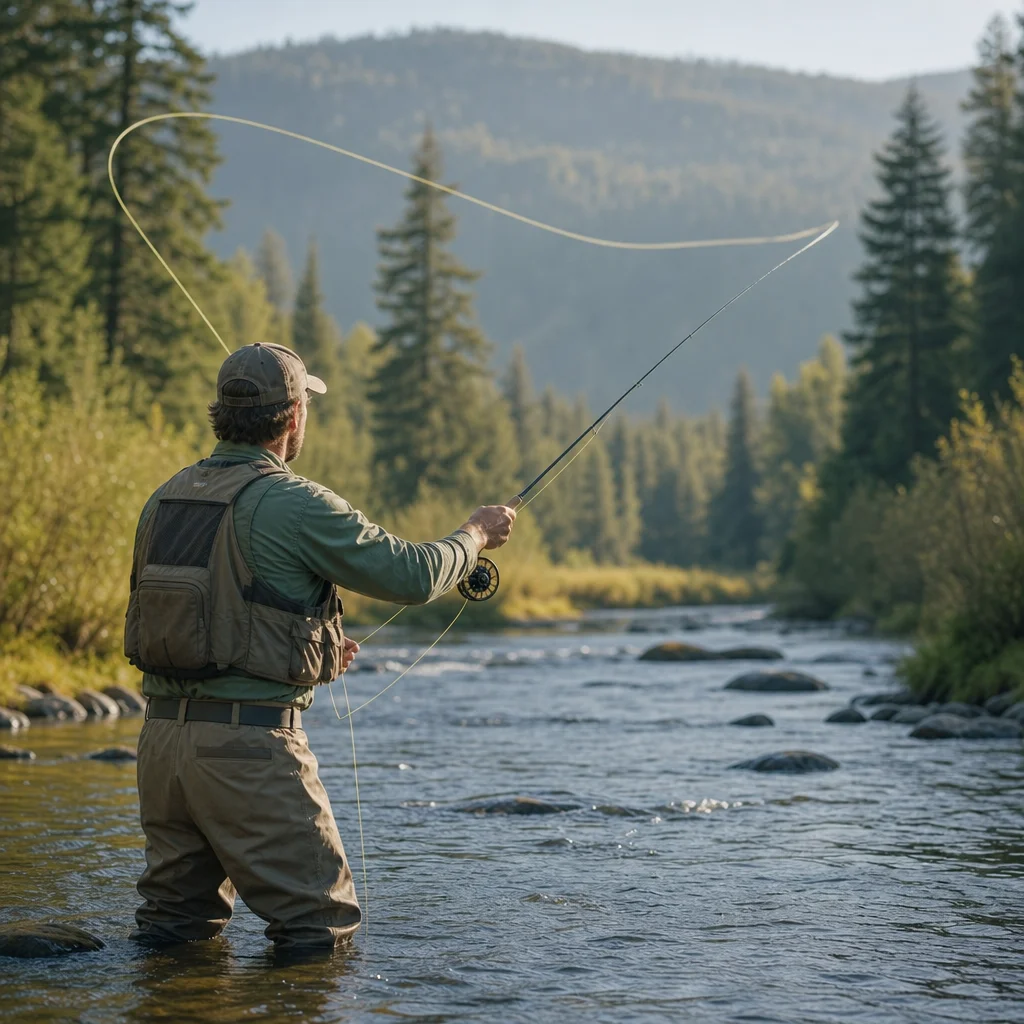
A day of constant snags can make your casting feel worse than it is. You may be blaming your fly choice when the real problem is depth, or changing flies repeatedly when your position is putting every drift into the same branch.
The useful question isn’t simply, “How do I stop snagging?” It’s, “What kind of snag keeps happening, and what does it tell me?” Once you separate the causes, you can make one change at a time and learn whether it worked.
Start by identifying the snag
Before changing anything, recall where and how the fly became stuck. The location of the snag is often more informative than the number of flies you lost.
Snags on the bottom
A bottom snag usually feels heavy and solid. The line may stop during the drift, or the indicator may pause unnaturally and then settle. In lakes, the fly might catch weeds, submerged branches, or soft debris. In rivers, it may lodge between rocks or drag along the bed.
Common causes include:
- Too much weight for the water depth or speed
- A split shot positioned too close to the fly
- A long leader that lets the fly reach the bottom before you expect it
- An overly slow drift that allows the rig to settle
- Casting directly into a deep pocket without planning the exit
A bottom snag isn’t always a mistake. Getting near the bottom is often necessary, especially when fish are holding low. The problem is losing contact with the fly and continuing to fish a rig that is repeatedly digging in.
Snags in branches, grass, or brush
Vegetation and woody cover usually produce a different pattern. The fly may land cleanly but catch during the backcast, during a mend, or as you lift it for the next cast. If the same bank-side bush claims several flies, the issue is probably position or casting direction rather than fly selection.
Watch when the snag happens:
- During the backcast: The fly is traveling behind you into cover, or your loop is too wide.
- During the forward cast: The fly or leader is crossing nearby branches, reeds, or a bank obstacle.
- During the drift: The fly is reaching cover because the cast is too close or the current is pulling it sideways.
- During the pickup: You’re lifting through cover instead of moving the fly into open water first.
Snags in the leader or line
Sometimes the fly isn’t the main problem. A leader can wrap around the rod tip, knot around the fly line, or catch on small twigs that the fly would have passed.
These tangles often follow poor turnover, slack in the cast, or hurried retrieval. If the fly is clean but the leader is repeatedly fouled, work on casting shape and line management before replacing the fly.
Separate the four main causes
A productive troubleshooting session treats tackle, depth, position, and decisions as separate variables. They overlap, but changing all four at once makes the next result difficult to interpret.
Tackle problems: inspect before you replace
A snag-heavy day can expose equipment issues that were easy to overlook.
Check the leader and tippet
Look for abrasion, wind knots, weak sections, and badly seated knots. A rough section of tippet can catch vegetation more easily and may fail when you try to free a fly.
After a hard snag, run the final section of tippet between your fingers. If it feels rough or flattened, replace that section rather than trusting it for another fish. Also check whether a knot has slipped or whether the tag end is long enough to catch debris.
Examine the fly and connection
A damaged fly may have a bent hook, loose material, or a bead that changes how it enters the water. A barbless or pinched-barb hook can be easier to free from some kinds of cover, though it won’t prevent a solid hook-up on wood or rock.
Use a knot you can tie consistently and inspect it after each serious snag. A perfectly suitable knot tied poorly is still a weak point.
Review the weight system
Weight is useful, but it reduces your margin for error. Too much weight makes the rig reach the bottom quickly and can turn a promising drift into repeated dredging.
If you’re using split shot, consider moving it farther from the fly, reducing the amount, or removing it briefly as a test. If the rig rises too high, you’ll have learned that the original setup was close to the bottom; if it continues to snag, depth may not be the main cause.
Check your setup before the next cast: After a hard snag, inspect the last section of tippet, the knots, the hook, and the weight. A small tackle problem can imitate a casting or depth problem.
Depth problems: adjust one control at a time
Depth is often the easiest variable to change and the hardest to judge by feel. Water speed, depth, fly density, and current seams all affect how quickly a rig sinks.
If the fly is too deep
Try one modest adjustment:
- Reduce or remove some weight.
- Shorten the distance between the indicator and the fly if the rig is awkward to control.
- Use a lighter or less heavily weighted fly.
- Speed up the retrieve slightly in still water.
- Mend less aggressively if the mend is pulling the rig toward the bottom.
Don’t make all five changes together. If you do, you won’t know which adjustment solved the problem.
In a river, repeated bottom contact can also mean your line is being carried into a slower seam while the indicator remains in faster water. That difference creates slack and lets the fly sink or drift sideways. A better mend or a different casting angle may solve what appears to be a weight problem.
If the fly is too shallow
A lack of bottom contact doesn’t automatically mean the rig is wrong. Fish may be suspended, rising, or feeding higher in the water column. Still, if your goal is to reach deeper water, add weight gradually or use a longer leader only when you can maintain control.
A deeper setup isn't automatically a better setup. Every increase in depth also increases the chance of catching the bottom, and it can make detecting takes more difficult.
Position problems: move before you cast again
Many snags are created before the fly leaves the rod tip. You’re standing at the wrong angle, casting over a hazard, or trying to reach water that can be approached more cleanly from a few steps away.
Change your casting lane
If branches are behind you, roll casts, side casts, or low casts may keep the fly away from the obstruction. If the hazard is in front of you, shift downstream or along the bank so the target opens up.
Even a small change in position can alter the angle of the drift and keep your fly out of the same submerged branch. Don’t assume the only solution is a more accurate cast.
Read the exit route
Before casting to a pocket, decide where you’ll lift or retrieve the fly. A cast may be safe on the way out but impossible to recover without dragging through a log or weed bed.
Leave yourself an exit route into open water. If there isn’t one, shorten the cast or choose a nearby target. A slightly less attractive lie is often more useful than a perfect-looking lie surrounded by tackle-eating cover.
Keep the backcast in mind
Beginners often watch the target and forget the space behind them. Turn your head or make a deliberate check before false casting. Avoid repeated false casts around trees, tall grass, and people.
If there’s no safe backcast, don’t force an overhead cast. A roll cast or a short, controlled water-loaded cast may be safer for your fly, rod, and companions.
Decision-making problems: know when to stop pressing
Constant snags are sometimes caused by a reasonable decision repeated after the evidence has changed. You found fishy-looking water, lost a fly, and kept presenting the same way because the spot still looked promising.
Set a limit before frustration takes over. For example, after two similar snags, change one variable. After another snag in the same hazard, leave that angle or move to a different target.
This isn’t giving up. It’s protecting your time and turning the next cast into a test.
Use a simple decision sequence
When you snag, ask:
- Where did it catch? Bottom, vegetation, wood, or line?
- When did it catch? Backcast, forward cast, drift, retrieve, or pickup?
- What changed before the snag? Weight, mend, position, cast length, or fly?
- What is the smallest useful adjustment?
- What result would confirm the adjustment worked?
Write a quick note in your phone if the pattern isn’t obvious. “Three bottom snags after adding shot” is more useful than “bad day.”
Recover a snag without creating another problem
When the fly is stuck, avoid pulling hard with the rod tip. A high, bent rod can be damaged, and a sudden release can send the fly back toward you.
First, lower the rod and remove unnecessary slack. If possible, change your angle by moving sideways or downstream. Apply steady pressure through the line or leader rather than loading the rod tip. Keep people clear of the line and fly while you work.
If the fly won’t come free, breaking off may be the sensible choice. Protecting the rod and avoiding a dangerous rebound matter more than rescuing one inexpensive fly. Retrieve any loose line and dispose of damaged tippet responsibly.
Turn the next outing into a controlled test
Don’t try to correct the entire day at once. Choose one troublesome situation and create a small plan:
- Use the same fly but reduce the weight.
- Fish the same water from a different angle.
- Keep the setup unchanged but shorten the cast.
- Use the same position but switch to a roll cast.
- Fish an open section nearby and compare the number and type of snags.
The goal isn't to eliminate every snag. Some productive water is close to rocks, weeds, and wood. The goal is to understand why you’re snagging and decide whether the information is worth the cost of another fly.
A short recovery checklist
Before your next cast, check:
- Is the tippet abraded or knotted?
- Is the fly or weight heavier than this water requires?
- Is the fly reaching the bottom too quickly?
- Is your casting lane clear behind and ahead?
- Do you have a safe exit route for the retrieve?
- Have you already repeated the same failed approach?
- What single change will you test now?
A day of lost flies can still improve your fishing if you treat each snag as evidence. Inspect the tackle, adjust depth carefully, change position when the angle is poor, and stop repeating a decision that the water has already rejected. Next time, fewer snags should mean more than a fuller fly box: they should leave you with a clearer idea of how your setup behaves.