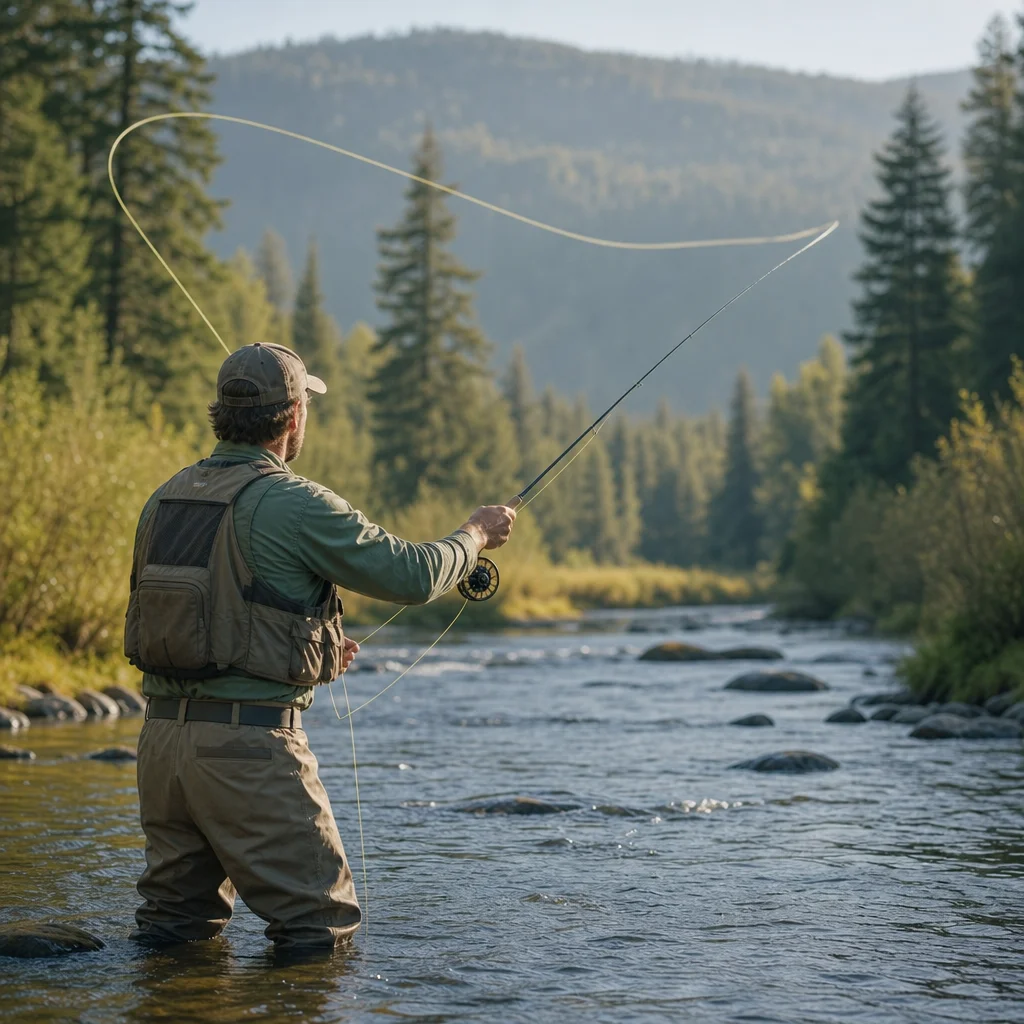
A trout pool often reveals its feeding lanes, depth changes, fish positions, and safest entry points before you touch the water. I’ll show you a minimalist bank-side sequence for turning those clues into a quieter, more deliberate wade.
Read article →
Open banks can look featureless, but wind, depth, bottom changes, and drifting food still reveal where trout may gather. I’ll show you how to build a safer, more deliberate search plan when shoreline cover offers no obvious starting point.
Read article →
I’ll clarify how to use a trout-fishing report as a source of clues rather than a script. You’ll learn to judge its age, location, conditions, and tactics so you can build a sensible plan for your own water.
Read article →
Snowmelt can turn the same mountain stream into several different fishing situations between breakfast and late afternoon. I’ll explain how changing flow, clarity, temperature, and access fit together so you can adjust your plan instead of guessing at the bank.
Read article →
Clear small spring creeks reward observation before presentation: depth changes, weed edges, feeding lanes, and escape routes all shape where trout feel secure. I’ll show you how to balance stealth, positioning, and casting choices without turning every approach into a slow-motion military operation.
Read article →
The calmest bank isn't always the best one; wind, depth, weeds, and morning light often point elsewhere. I’ll show you how to read those shoreline clues and make a sensible first move before trout settle into their daytime routines.
Read article →
The coolest water isn't always the best-looking water, and the deepest edge may not be the most productive. I’ll show you how to assess an early-summer lake inlet by temperature, current, depth, and shoreline structure before choosing where to fish.
Read article →
A fly-fishing map can reveal whether a promising river is reachable, fishable, and worth your limited time. I’ll show you how to turn access points, contours, tributaries, crossings, and satellite imagery into a realistic first-day plan.
Read article →
When a mountain run is broken by slick boulders, shifting depth, and competing currents, it can be hard to know where trout are holding or where to wade. I’ll show you how to read the water before disturbing it.
Read article →
When a trout stream looks shallow and simple from the bank, the best holding water may be easy to overlook. I’ll show you how to read current seams, depth, structure, and entry points before your first step disturbs the water.
Read article →