How to Read a Trout-Fishing Report Without Copying Someone Else’s Strategy
I’ll clarify how to use a trout-fishing report as a source of clues rather than a script. You’ll learn to judge its age, location, conditions, and tactics so you can build a sensible plan for your own water.
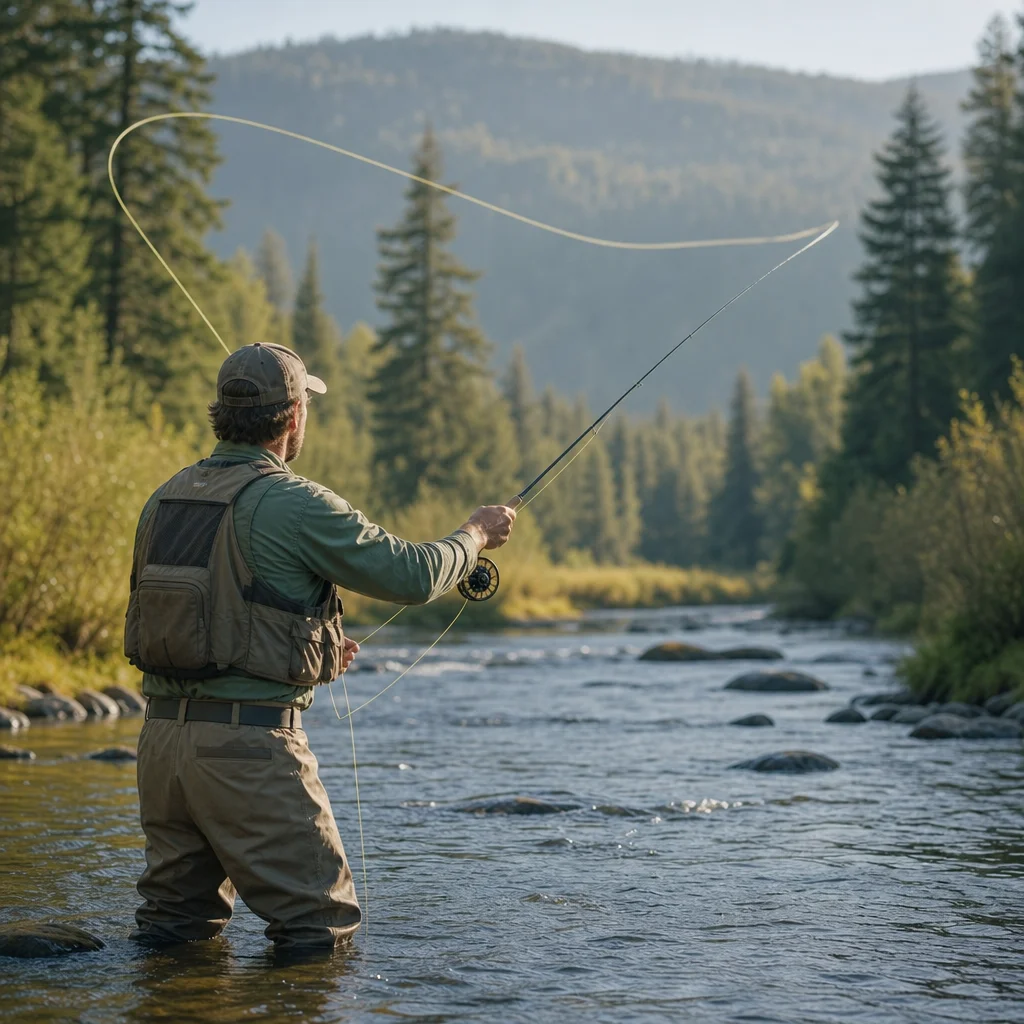
A fishing report can save you time, but it can also send you in the wrong direction. A successful angler may have fished a different section, on a different day, under completely different flows—and a report that sounds recent may already describe conditions that have passed.
The useful approach is to treat a report as evidence, not instruction. You’re looking for patterns in water conditions, food, access, and fish behavior. Then you’ll adjust the plan to match the stream in front of you.
Start With the Report’s Age and Location
Before studying the fly list, establish what the report can actually tell you.
Check the date of the observation
A report’s publication date isn’t always the same as the date the angler fished. Look for wording such as “yesterday,” “over the weekend,” or a specific fishing date. The difference matters when water levels, temperatures, weather, or insect activity are changing quickly.
A report from several weeks ago may still offer a useful seasonal clue, such as the kinds of insects that commonly appear during that period. It’s much less reliable as a description of today’s fly activity or the best time of day.
Identify the exact water
“River fishing has been good” is broad information. “The upper reach below the access road fished well” is more useful, but it still may not apply to a lower section, a tributary, or a nearby stream with different elevation and water temperature.
Pay attention to:
- The river, creek, lake, or tailwater named in the report
- The section or access point, if provided
- Elevation and general geography
- Whether the water is wild, stocked, spring-fed, freestone, or regulated
- The species being targeted
A report from a cold, spring-influenced reach may not translate to a warmer section downstream. Likewise, a tailwater report may reflect controlled releases rather than conditions on a nearby freestone river.
Verify the Water You’re Visiting
Before you leave, compare the report’s location with a current gauge, access information, and local regulations for your specific section. A nearby name on a map doesn’t guarantee similar flows or fishing rules.
Separate Observations From Conclusions
Reports often mix what the angler saw with what they decided to do. Those aren't equally transferable.
An observation might be:
- “The water was slightly stained.”
- “Small mayflies were present in the afternoon.”
- “Fish were holding near the inside edge of the current.”
- “The river was higher than normal.”
A conclusion might be:
- “Use a dark streamer.”
- “Fish only the deep pools.”
- “The best fly was a particular size and pattern.”
- “The fish wouldn’t move more than a few inches.”
Observations help you understand conditions. Conclusions are guesses about how to respond to those conditions. The angler may have made a good decision, but you still need to decide whether the same response fits your water, equipment, and skill level.
When reading a report, mentally rewrite tactics as questions. Instead of “I need that exact fly,” ask, “What food or visibility condition made that fly effective?” Instead of “I should fish only the bank,” ask, “Were fish using slower edges because the current was strong?”
That shift keeps you from copying the surface detail while preserving the useful reasoning underneath it.
Use Flow Information Properly
Flow is one of the most valuable clues in a report, but it’s easy to misuse. A gauge reading is meaningful only when you know which gauge it represents, how far it is from your fishing area, and whether the river changes substantially between the gauge and the access point.
Look for three pieces of information:
- The direction of change: Is the water rising, falling, or holding steady?
- The recent pattern: Has it changed gradually, or did it move sharply after rain or a release?
- The fishing section: Does the gauge represent the reach you plan to fish?
A falling river may expose familiar lies and improve visibility, while a rapidly rising river can push fish toward softer edges. But those are general tendencies, not guarantees. Water color, temperature, bank conditions, and the strength of the current all matter.
A report saying “the river was at a good level” is incomplete unless “good” is tied to a location and a comparison. Good for wading may not be good for floating. Good for a large streamer may not be good for delicate dry-fly presentations.
Use the report to form a starting hypothesis: “Given this flow trend, I’ll first inspect slower margins and deeper structure.” Once you arrive, let the actual water confirm or reject that idea.
Treat Insect Reports as Clues, Not Shopping Lists
An insect report can tell you what trout may have encountered, but it doesn’t automatically identify the fly you should tie on.
Consider four questions:
Were insects present in meaningful numbers?
Seeing a few mayflies doesn't necessarily mean trout are feeding heavily on them. Look for signs of concentrated activity: repeated rises, insects collecting in slower water, shucks on nearby vegetation, or multiple observations across the report.
Were trout feeding on them?
A report may mention insects without confirming that fish responded. If trout were rising, note whether the rises were frequent, selective, splashy, or limited to a particular current lane.
Did the timing match your trip?
Hatches can shift with weather, elevation, water temperature, and the season’s progress. An afternoon hatch in a report isn’t a promise that the same activity will occur at the same hour on your visit.
What did the insects suggest about presentation?
The report may point toward size, profile, color, or behavior. A small emerging insect may call for a different presentation from a larger adult riding the surface. Sometimes the most useful conclusion isn't an exact pattern but a general category, such as “small dark mayflies” or “larger terrestrials near grassy banks.”
Carry a modest selection that covers the reported food group and a couple of alternatives. That’s more useful than buying every named pattern in the report.
Translate Someone Else’s Tactic Into Your Own Plan
A practical way to use a report is to convert it into a sequence of decisions.
1. Write down the conditions
Record the report’s date, section, flow trend, weather, water clarity, observed food, and the species caught. Leave out the fly names at first. This helps you understand the setting before becoming attached to a tactic.
2. Identify the likely reason for success
Was the angler matching a hatch? Covering rising water? Fishing low light? Presenting to fish holding in slower current? Working a deep bank with a streamer?
You may not know the answer with certainty, but making the connection is useful.
3. Choose a first approach that fits your abilities
If the report describes a technically demanding tactic, you don’t have to reproduce it exactly. A developing angler may be better served by a simpler, controlled presentation that reaches similar water. A well-presented general nymph can teach you more than an elaborate setup you can’t manage.
4. Build an adjustment plan
Decide what you’ll change if the first approach fails. For example:
- If you see rises but get no response, alter depth, distance, or fly size.
- If the water is higher or faster than expected, move toward softer edges and reduce the amount of difficult wading.
- If the reported insects aren’t visible, search likely holding water with a general attractor or a different food category.
- If another angler has already covered a popular pool, explore nearby water with similar structure rather than repeating the same exact cast.
A report becomes useful when it gives you both a starting point and a reasoned next step.
Judge Reliability Without Dismissing Every Report
No report is perfectly complete. Some are detailed and timely; others are promotional, vague, or based on a single outing. You don’t need to reject them all. Assign each report a level of confidence.
Higher-confidence clues
These usually include a clear fishing date, specific location, water conditions, multiple observations, and enough detail to distinguish what was seen from what was inferred.
Lower-confidence clues
Be cautious when a report:
- Uses vague timing such as “recently”
- Covers a large region without naming a section
- Lists only successful catches and no conditions
- Gives precise fly advice without describing water or food
- Appears designed mainly to promote a shop, service, or destination
- Repeats old seasonal information as if it were current
A report can still be useful even when confidence is low. Just use it for broad preparation rather than precise decisions. “Bring options for small mayflies” is a reasonable takeaway. “Tie on this exact pattern at 10:15 a.m. in this pool” usually isn’t.
Verify Access, Regulations, and Safety Separately
Fishing reports often focus on catching fish, not on whether your planned outing is legal, accessible, or safe. Those details deserve their own check.
Regulations can vary by state, province, waterway, season, species, tackle type, and management area. Access may change because of private property, closures, construction, fire restrictions, seasonal roads, or altered parking arrangements. Water that looked manageable in a report may be unsafe after a rise or release.
Confirm the Day’s Conditions and Rules
Check the current agency regulations, closure notices, access information, weather, and flow or release updates for the exact water you’ll fish. If conditions look beyond your wading ability, fish from safer ground or choose another section.
These checks are especially important when a report is old, comes from another jurisdiction, or describes a trip during a different season.
A Simple Report-Reading Checklist
Before using a report to plan your day, ask:
- When was the fishing actually done?
- Where, exactly, did it take place?
- What were the flow, clarity, weather, and temperature conditions?
- Which details were observations, and which were the angler’s conclusions?
- Were insects present, and were trout demonstrably feeding on them?
- What might explain the reported success?
- How could my water, timing, skill, or equipment differ?
- What’s my first adjustment if the plan doesn’t work?
- Have I checked current regulations, access, and safety conditions?
The goal isn’t to become suspicious of every fishing report. It’s to read one with enough judgment that it expands your options instead of narrowing them to someone else’s lucky sequence.
Start with the report’s strongest clues, confirm the conditions when you arrive, and let the trout—not the fly list—tell you what needs to change.