How to Choose a Beginner-Friendly Trout Water
A first trout stream can be welcoming or needlessly difficult when access, current, fish size, and crowds work against you. I’ll help you compare those trade-offs so your first outing uses your time, money, and attention well.
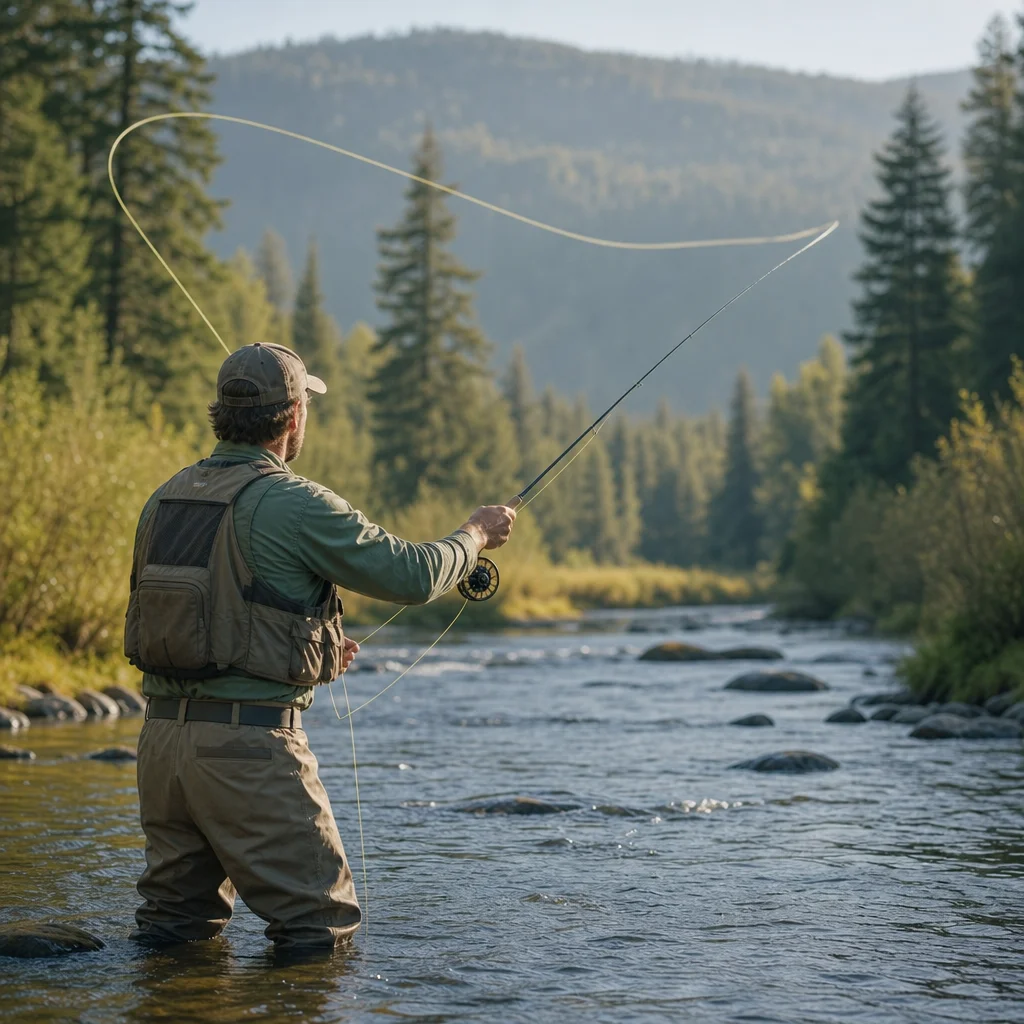
Your first trout destination doesn’t need to be famous, remote, or packed with large fish. It needs to give you enough room to learn, reasonably safe water to stand beside, and a realistic chance to understand what happened when a cast goes wrong.
Choosing well also saves resources. A nearby stream with simple access may teach you more than an expensive weekend trip to challenging water. Before committing, compare the conditions that affect both your fishing and the amount of effort required to reach it.
Start with the total outing, not just the stream
A trout water that looks excellent on a map may be a poor beginner choice if it requires a long drive, a difficult hike, specialized equipment, or a full day to fish a short section. Consider the entire outing:
- Driving time and fuel cost
- Parking availability and fees
- Walking distance from the vehicle to the water
- Availability of restrooms or nearby services
- Time needed to reach a backup location
- Whether you can leave easily if conditions change
For a first trip, short and repeatable is usually better than ambitious and expensive. A nearby stream you can revisit several times gives you opportunities to learn the same water in different light, flows, and weather. That repeated observation is valuable practice, and it costs less than treating every lesson as a destination trip.
A simple half-day outing is often enough. You can focus on knots, casting, fly placement, and reading current seams without becoming tired before the useful part of the day begins.
Check legal access before studying the fish
Public-looking water isn’t automatically accessible water. A river may pass through public land, private property, a park, a managed fishing area, or a mixture of all four. Access rules can also differ between the bank, the streambed, and the land surrounding the stream.
Look for an official access point, public parking area, or clearly marked trail. Don’t assume you can cross private land to reach water, park on a roadside, or walk through a neighboring property because another angler has done so. Respecting access boundaries protects your outing and helps preserve future fishing opportunities.
Confirm the launch point and rules: Before you drive out, check the current state, provincial, tribal, or local fisheries information for legal access, license requirements, season dates, tackle restrictions, harvest rules, closures, parking limits, and any special regulations for the exact water you plan to fish.
Save the access information on your phone and carry a backup map. Cell service may be weak near streams. If the location’s access description is vague, choose a better-documented site rather than spending your first morning solving a land-use puzzle.
Compare wading difficulty honestly
Wading difficulty is more than water depth. A shallow stream can still be awkward or unsafe if the bottom is loose, slippery, uneven, or covered by algae. Larger rivers may have slow margins but strong flow in the middle. Water that looks calm from the bank can exert considerable force around your legs.
For beginner-friendly water, look for:
- Clearly visible shallow margins
- Stable, coarse-bottomed areas rather than slick bedrock
- Broad banks where you can move without stepping into the current
- Places to fish effectively from shore
- Easy routes back to the bank
- A current that doesn’t require you to stand in the deepest channel
You don’t need to wade to catch trout. In fact, beginning from the bank reduces the number of things you must manage. It also prevents unnecessary disturbance of fish and avoids the common mistake of walking through the very water you intended to fish.
If you do enter the water, move slowly and keep each step deliberate. Use a wading staff when appropriate, and don’t enter water whose depth, bottom, or current you can’t confidently assess. Avoid crossing simply to reach a spot that can wait for another day.
Treat changing water as a different destination
A stream that is manageable in ordinary flow may become unsuitable after heavy rain, rapid snowmelt, or a reservoir release. Water clarity and height can change the fishing, but they can also change the risk of reaching your preferred bank or crossing point.
Check recent flow and weather information when available. Look at the water from a safe position before deciding how much of the stream to approach. If the water is high, discolored, fast, or rising, make bank fishing your plan—or choose another day and location.
Match current speed to your learning goals
Fast water can hold trout, but it gives a new angler less time to see what the fly is doing and more opportunities for an untidy drift. Extremely slow water presents a different challenge: fish may have more time to inspect your leader, fly, and movements.
A good learning water usually offers variety without demanding perfection. Search for a stream section with:
- Slow edges beside moderate current
- Visible seams where two speeds meet
- Pocket water that can be reached from the bank
- Some deeper holding water, but not only deep water
- Enough open space for a basic cast
Moderate current is useful because it lets you observe cause and effect. You can place a fly near a seam, mend the line, and see whether the drift improves. On very fast water, the fly may be dragged away almost immediately. On glassy water, small errors in position and line control may be harder to overcome.
When comparing destinations, favor a place with several current speeds close together. You can begin at the slower edge, then work toward more challenging water as your confidence improves.
Don’t choose by fish size alone
Large trout are appealing, but they aren’t always the best teachers. Trophy-oriented water may have wary fish, complex regulations, limited access, heavy pressure, or conditions that reward specialized techniques. A beginner can spend hours trying to imitate advanced tactics without learning the basic relationship between fly, current, and presentation.
Smaller trout waters often provide more manageable targets and clearer feedback. A missed take or poor drift may be easier to understand when the surroundings aren’t intimidating. That doesn’t mean you should avoid larger fish entirely. It means fish size should be one part of the decision rather than the deciding factor.
Ask what kind of success you want from the first outing:
- If success means catching any trout, choose accessible water with a healthy population and simple presentation options.
- If success means learning to read currents, choose a varied stream with visible seams and pools.
- If success means practicing casting, choose open banks and room behind you.
- If success means seeing larger fish, accept that the water may be more technical or crowded.
A destination that supports your immediate learning goal is usually a better value than one advertised with impressive fish but poor beginner conditions.
Account for crowding and fishing pressure
Crowding affects more than privacy. A busy access point can limit where you stand, make casting uncomfortable, and create pressure to rush. On heavily fished water, trout may also respond cautiously to repeated presentations, though fish behavior varies by stream and conditions.
You don’t need an empty river. A few other anglers can help you learn how the water is used and where the established access points are. The problem is a destination where you can’t find a respectful place to fish without interfering with someone else.
Before choosing a popular location, consider:
- Whether parking fills early
- How many anglers use the same access point
- Whether the fishable section is long enough to spread out
- Whether you’re comfortable waiting, sharing water, or moving on
- Whether a nearby alternative offers similar conditions
Fishing on a weekday, choosing a less publicized access point, or visiting outside the busiest part of the day can reduce pressure without requiring a longer trip. Follow local etiquette: give other anglers space, move around occupied water rather than through it, and avoid stepping into a run someone is actively fishing.
Use a simple comparison scorecard
You can compare several waters without pretending to know exactly how they will fish. Rate each destination from one to five for the categories below:
| Category | What to look for |
|---|---|
| Travel cost | Fuel, tolls, lodging, and time away from other commitments |
| Access clarity | Official parking, marked trails, and unambiguous legal access |
| Bank-fishing options | Water that can be fished without wading |
| Wading difficulty | Stable footing, manageable depth, and easy exits |
| Current variety | Slow edges, seams, pools, and moderate runs |
| Casting room | Open space behind and beside you |
| Fish accessibility | Trout that can be approached with basic techniques |
| Crowding | Room to fish without rushing or conflicts |
| Backup options | Another suitable section or nearby water |
Weight the categories that matter most to you. If you’re nervous about wading, give safety and bank access more importance than fish size. If you have only a few hours, travel time and easy parking should carry more weight. If you’re learning to cast, open space may matter more than a reputation for large trout.
The best choice isn't necessarily the highest-rated water overall. It’s the water that fits your current ability, available time, and willingness to spend money on the outing.
Pack for the water you chose
A beginner-friendly destination can become difficult if your equipment doesn’t match it. For a short, accessible stream, you may need less than you expect: a rod and reel suited to trout fishing, appropriate line and leader, a small selection of permitted flies, forceps or a similar tool, water, weather-appropriate clothing, and a way to keep your phone and keys dry.
If you expect to wade, add suitable footwear and any flotation or support equipment appropriate to the conditions. Don’t treat gear as a substitute for choosing conservative water. More equipment can improve comfort, but it doesn’t make hazardous current safe.
Check the forecast and prepare for changing weather. Cold water and wet clothing can turn a pleasant outing into a serious problem, especially if you’re far from the vehicle. Tell someone where you’re going when fishing alone, and keep your first trip close enough that leaving is simple.
A useful first-trip decision
Choose the water where you can comfortably do these things:
- Park legally and find the stream without uncertainty.
- Fish from the bank before deciding whether to wade.
- See at least a few current features you can identify and reach.
- Cast without constantly striking trees, brush, or other anglers.
- Leave for a backup spot without wasting the whole day.
- Follow the current rules without relying on hearsay.
If a destination fails several of these tests, it may still be excellent water—but it’s probably better saved for a later stage.
Start with the closest location that offers clear access, manageable current, and room to learn. Spend a few hours observing before changing flies or moving constantly. Take notes on water level, weather, access, crowding, and what you could see from the bank. That information will make your next choice cheaper, calmer, and more informed.