How to Choose a First Fly Rod Without Buying More Than You Need
I’ll clarify how rod length, line weight, and action affect a first fly-fishing setup, then compare sensible starter outfits so you can match your water and target species without paying for features you won’t use.
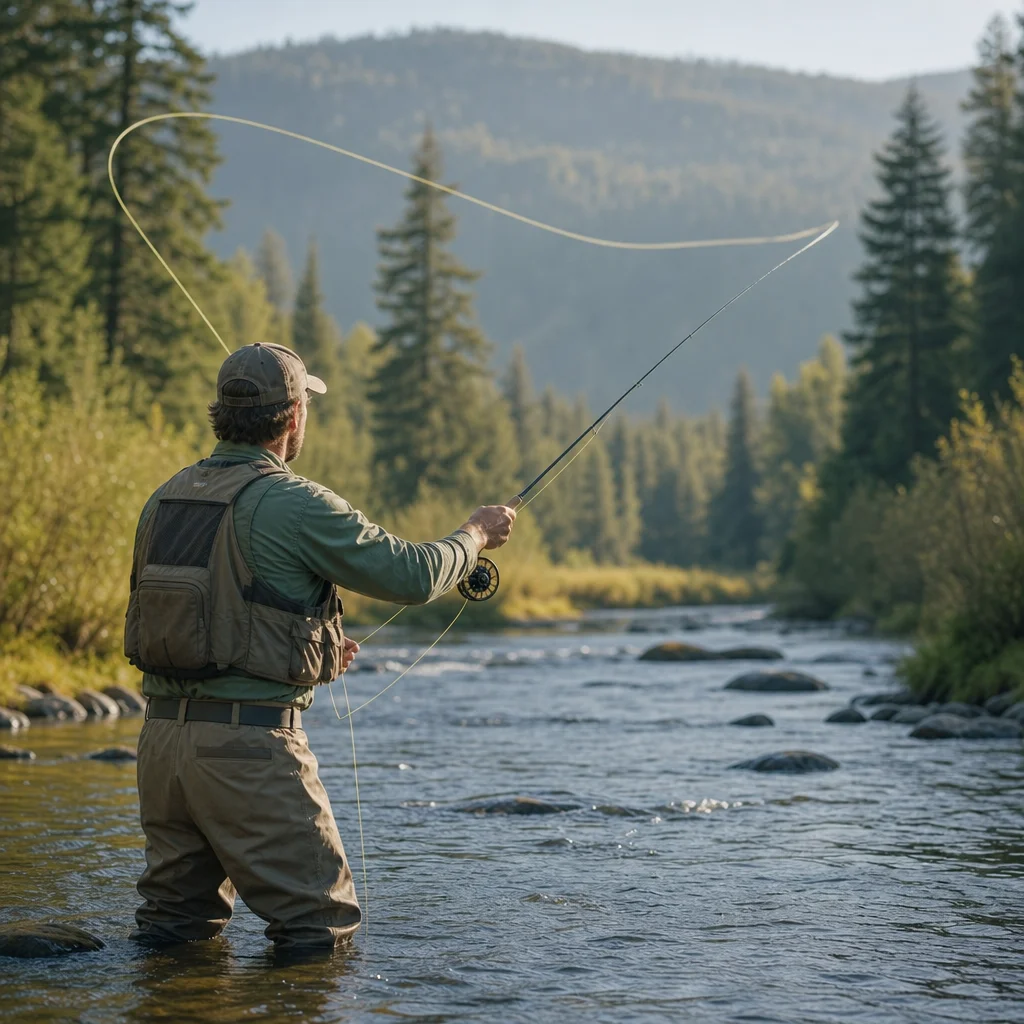
Choosing a first fly rod can feel like decoding a catalog written in numbers: 3-weight, 5-weight, 9-foot, fast action, medium-fast action. The terminology matters, but beginners often overbuy because they try to solve every possible fishing situation with one expensive rod—or buy several specialized rods before they know what they enjoy.
A better approach is to match the rod to the water you’ll fish most, the species you’ll target, and the flies you’ll cast. Then choose the simplest outfit that handles those conditions comfortably.
Start with the water, not the price tag
Think about where you’re most likely to fish during your first season.
- Small, brushy streams favor shorter, lighter rods that are easier to maneuver around branches.
- Medium trout streams and rivers usually reward a versatile rod with enough length and power for ordinary trout flies and moderate casts.
- Large rivers, windy lakes, and bigger fish may require a heavier line weight and more casting authority.
- Warmwater species such as bass and panfish can call for different priorities, especially if you’ll cast larger or wind-resistant flies.
The right first rod isn't the one with the widest theoretical range. It’s the one that fits the water you’ll actually reach regularly. A modest rod used often will teach you more than a premium outfit that stays in its case because it feels too specialized.
Understand line weight before choosing rod weight
Fly rods are commonly labeled by line weight, from very light rods for small flies and fish to heavy rods for large flies and powerful species. The rod and fly line should be matched: a 5-weight rod is designed to cast a 5-weight line, not whichever line happens to be on sale.
Line weight affects several things at once:
- How much energy the cast carries
- How large or heavy a fly you can reasonably turn over
- How well the outfit handles wind
- How delicately it presents a small fly
- How much pressure you can apply to a hooked fish
For many beginning trout anglers, a 5-weight outfit is a useful middle ground. It can handle common trout flies, ordinary river conditions, and moderate wind without being excessively heavy for typical trout fishing. That doesn’t make it the universal answer. A small-stream angler may find a 3- or 4-weight more comfortable, while someone fishing large rivers, streamers, bass flies, or frequent wind may prefer a 6-weight.
Choose based on your main use, not the belief that a heavier rod is automatically more capable. More power can make casting large flies easier, but it can also feel less pleasant with small flies and smaller fish.
Choose a length that suits your casting space
A rod’s length affects line control, mending, reach, and maneuverability.
Short rods for tight water
Rods around 7 to 8 feet can be useful on narrow streams where trees, steep banks, and short casts limit your backcast. They’re easier to keep clear of branches and can feel lively with light lines.
The trade-off is reduced reach. You may have less leverage for line control, fewer options for keeping line off conflicting currents, and less casting distance when the water opens up.
Medium-length rods for general trout fishing
A rod around 9 feet is a common all-purpose choice for trout. It offers useful reach, good line control, and enough length for ordinary overhead and roll casts. On open streams and rivers, that extra reach can make mending and managing complex currents easier.
Its disadvantage appears in cramped cover. If most of your fishing involves tiny creeks with overhanging branches, a 9-foot rod may feel cumbersome even if it’s technically versatile.
Longer rods for line control
Rods longer than 9 feet can improve reach and help with specialized techniques, fine line control, or particular stillwater situations. They can also be more tiring or awkward in confined areas. For a first rod, added length is useful only if your usual water gives you room to use it.
Action describes how the rod loads and recovers
“Action” refers broadly to where a rod bends under load and how quickly it returns to position.
- Slower actions bend deeper into the blank. They can feel smooth and forgiving, and they often suit short casts and relaxed timing.
- Medium or medium-fast actions offer a balance of feel, recovery speed, and versatility. They’re often a comfortable starting point for learning.
- Fast actions bend more toward the tip and recover quickly. They can produce tight loops and handle longer casts or wind well, but they may expose rushed timing and feel less forgiving at short range.
Action labels aren’t perfectly standardized. One manufacturer’s medium-fast rod may feel noticeably different from another’s. If possible, cast the actual rod with a properly matched line rather than choosing from the label alone.
A fast rod isn’t automatically better, and a slower rod isn’t automatically easier. The best action is the one that lets you feel the rod load, maintain a steady casting rhythm, and deliver the flies you plan to use.
Match the rod to the species and flies
The fish’s size matters, but it’s only part of the decision. The flies you cast may be more influential than the fish you hope to catch.
A small trout may take a relatively large, wind-resistant indicator rig or streamer. Conversely, a larger fish may be caught on a light presentation in calm water. Consider these questions:
- Will you mostly cast small dry flies and light nymphs?
- Will you regularly use indicators, split shot, streamers, or weighted flies?
- Do you expect frequent wind?
- Are the fish likely to be delicate trout, strong warmwater species, or something larger?
If the answer to most questions is “small flies, modest casts, and sheltered water,” a light outfit may be appropriate. If you’ll use bulky flies, cast into wind, or pursue stronger fish, additional line weight can make the job safer for your equipment and less frustrating for you.
Don’t buy a heavy rod merely because it might handle a larger fish someday. Choose a setup for your expected fishing, then adjust your tactics when an unusual opportunity comes along.
Compare the main starter-outfit choices
A versatile 5-weight outfit
A 9-foot, 5-weight rod with a medium-fast action is a sensible starting point for many trout anglers fishing a mix of streams and rivers. It offers a broad range without requiring specialized casting skills.
Choose this option when you want one outfit for ordinary trout fishing and don’t yet know which situations will become your favorite.
A lighter small-stream outfit
A 3- or 4-weight rod can be a better choice for small trout, short casts, and narrow water. It can make modest fish and short-range casts feel engaging rather than overpowered.
Choose it when small streams are your clear priority. Don’t expect it to be equally comfortable with large flies, strong wind, or long casts.
A heavier or more powerful outfit
A 6-weight rod can make sense for larger trout flies, bass, windy conditions, and bigger water. It has more authority, but that power comes with a less delicate feel for small dry flies and light tippets.
Choose it when those demanding conditions are common rather than occasional.
A matched outfit instead of separate components
A starter outfit usually includes a rod, reel, backing, fly line, and sometimes a case. A matched outfit reduces the chance of buying incompatible components and can be less expensive than assembling everything separately.
The trade-off is limited customization. You may eventually replace the line, reel, or rod as your preferences develop. That’s normal; a starter outfit doesn’t have to be a lifelong commitment.
Don’t overspend on the reel
For most freshwater trout fishing, the reel’s main jobs are holding line and providing a usable drag. The rod and fly line usually have a greater effect on learning and casting performance.
That doesn’t mean the reel should be flimsy. Look for a reliable drag, a spool that matches the intended line, a sensible way to change spools if you need it, and construction suitable for the water you’ll fish. But a premium reel won’t correct a mismatched line or a rod that doesn’t suit your casting space.
Spend enough for dependable components, then prioritize the rod and line.
Use the fly line to fine-tune the setup
A good fly line can make a basic rod feel much easier to cast. Confirm that its weight and taper suit the rod and the fishing you intend to do. A general-purpose floating line is often the most useful first line for trout, while specialized sinking or presentation lines can wait until a specific need appears.
If a new rod feels difficult, don’t immediately assume the rod is the problem. Check that:
- The line weight matches the rod’s rating.
- The line is loaded through the guides correctly.
- The leader connection is smooth.
- The rod sections are seated securely.
- You’re not trying to cast more line or larger flies than the outfit handles comfortably.
These simple checks solve many “bad rod” diagnoses.
What to do if you chose poorly
A first rod doesn’t have to be perfect. If it’s too light for your flies, reduce the fly size when practical, avoid forcing casts into heavy wind, and consider a different line only after confirming the manufacturer’s recommendations. If it’s too heavy for your small water, shorten your casts, work open pockets, and plan a lighter rod later rather than immediately replacing everything.
If the rod’s length is the main problem, change where you fish before changing equipment. A 9-foot rod may be awkward in dense cover but excellent on a nearby open meadow stream. Likewise, a short creek rod may become frustrating when you move to a broad river.
Try to identify the specific limitation. “This setup feels wrong” is difficult to solve; “the rod struggles to turn over my weighted streamer in wind” points toward line weight, action, technique, or a different outfit.
A simple buying checklist
Before purchasing, write down:
- Your most common fishing location
- Your target species
- The flies you expect to cast
- Whether wind and tight cover are normal conditions
- Whether you want one general outfit or a specialized small-stream setup
- The complete cost, including line, backing, leader, and basic accessories
For many beginners, a quality matched 5-weight outfit is enough to start learning on ordinary trout water. Choose a lighter or heavier option when your conditions clearly call for it, not because a catalog suggests you need a collection immediately.
Start with the outfit that solves your most common problem. Fish it long enough to discover what you actually want from the next one. That’s how you avoid buying more gear than you need—and still leave room for the occasional rod that earns its place.