How to Choose Your First Trout Water When You Have Only One Afternoon
I’ll help you compare a small stream, river access, and stocked pond so you can choose the best first trout water for one afternoon, with limited travel time, gear, and confidence.
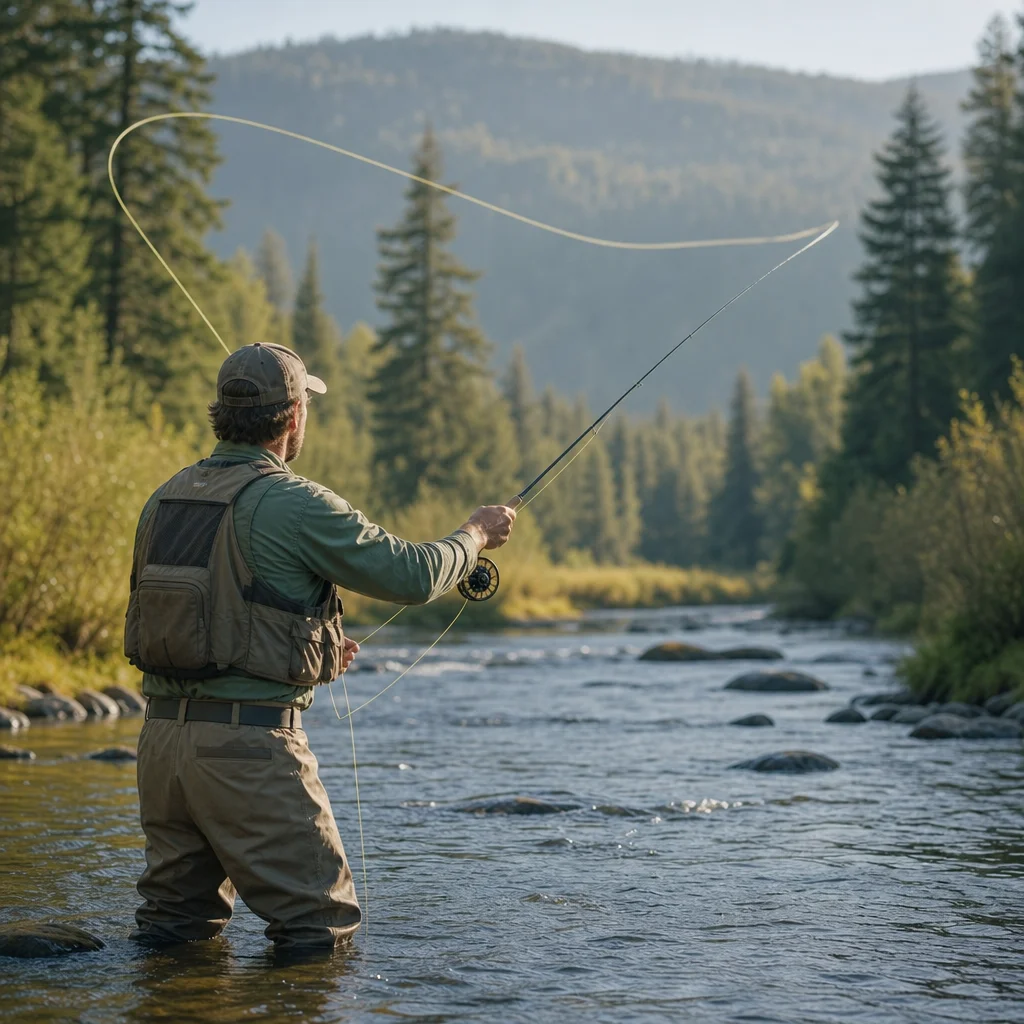
Your first trout outing doesn’t need the most famous water or the most ambitious plan. When you have only one afternoon, the best choice is usually the place that gives you enough fishing time to learn without turning travel, complicated access, or difficult conditions into the main event.
For a beginner, choose your water by asking one practical question: Which option gives me the simplest, most forgiving afternoon from leaving home to packing up?
That often means accepting less glamour in exchange for more time with a fly in the water.
Start with the afternoon, not the fish
Before comparing locations, set a realistic time budget. An afternoon includes more than casting. You may need to drive, park, walk to the water, assemble your rod, identify access points, change flies, take breaks, and return home before dark.
Write down four limits:
- How many hours you have from leaving home to returning
- How far you’re willing to drive each way
- Whether you’ll fish alone or with someone who can help
- How much equipment you can comfortably carry and manage
A useful rule is to protect the middle of the outing. If a location requires a long drive and a complicated walk, you may spend most of your available time getting ready to fish. A closer, simpler location can provide more useful practice even if the fishing itself is less celebrated.
For a first trip, aim for a fishing session long enough to settle down, make a few mistakes, and try one adjustment. If you’re rushing from the moment you arrive, the water is probably too ambitious for this particular afternoon.
The three common choices
Small stream: best for a short, focused outing
A small stream can be an excellent first choice when it’s nearby, easy to reach, and has clear public access. The water is often broken into manageable sections by pools, riffles, rocks, and small runs. That gives you natural stopping points and makes it easier to fish a short stretch carefully.
Small streams can also feel approachable because you don’t need to cover a huge area. You can concentrate on a few likely spots instead of wondering how to search an entire river.
The trade-offs are important, though:
- Tight vegetation may make casting difficult
- Shallow water can require careful movement
- Trout may spook when you approach carelessly
- A small stream can become crowded quickly in an accessible area
- Water levels and temperatures may change rapidly with weather and season
A small stream suits you if you’re willing to make short casts, roll casts, and simple presentations. It’s less suitable if you expect to stand in one place and make long overhead casts.
For one afternoon, choose a small stream when the access is obvious, the walk is short, and you can identify several fishable pools without exploring miles of water.
River access: best when you need room to cast
A river-access site may offer more room for casting and a wider variety of water. You might find deeper runs, seams, pools, and slower edges within a short walk. That variety can make the outing interesting and give you several ways to adjust if your first approach doesn’t work.
The difficulty is that a river can look simple from the bank while hiding complicated currents. Different flows can pull on your line and leader at different speeds, making it harder to keep a fly moving naturally. The river may also tempt you to keep walking in search of a better spot, using up the afternoon without actually fishing much.
Choose river access when:
- You can reach the water without a long or confusing hike
- There’s a clear bank or wading option suited to your experience
- You have enough room for basic casting practice
- You’re comfortable fishing one manageable section rather than exploring everything
For a first trip, don’t make “river” mean “cover as much river as possible.” Pick one bend, pool, or accessible run and learn how the current behaves. A small amount of water studied carefully is more useful than a long walk punctuated by hurried casts.
Stocked pond: best for simplicity and confidence
A stocked pond can be the most forgiving option when your time and confidence are limited. It often has straightforward access, fewer current problems, and enough open space for practicing basic casts. If trout have recently been introduced, fish may also be concentrated in predictable areas, although their behavior still varies with weather, water conditions, and fishing pressure.
A pond is especially practical when you want to focus on the mechanics of fly fishing:
- Getting the rod and line ready
- Making controlled casts
- Watching the line and indicator, if you use one
- Managing loose line
- Setting the hook without striking wildly
- Landing and releasing a fish carefully
The trade-off is that a pond may offer less practice reading current or presenting a fly in moving water. It can also become frustrating if you assume stocked fish will always be easy to catch. A simple setting removes some obstacles; it doesn’t remove the need to observe and adjust.
Choose a stocked pond when your main goal is to build confidence, practice basic handling, or maximize the amount of time your fly is actually fishing.
Check the afternoon’s rules: Before leaving, confirm the location’s current fishing regulations, access restrictions, open seasons, permitted methods, and any special requirements. Regulations can differ between nearby waters and may change by season or jurisdiction.
Use a simple decision filter
When two or three locations seem reasonable, score each one against the same five questions. You don’t need exact numbers; a quick low, medium, or high rating is enough.
| Question | What a strong answer looks like |
|---|---|
| Travel time | You can spend most of the afternoon fishing rather than driving |
| Access | You know where to park, enter, and leave the water |
| Casting room | You have enough space for the casts you can currently make |
| Water complexity | You can understand the likely holding water without guessing constantly |
| Recovery options | If one approach fails, you can change flies, position, or technique easily |
Give extra weight to travel time and access. Beginners often overvalue the quality of the fishery and undervalue the difficulty of getting organized. A location with excellent trout habitat isn't a good first choice if you’ll arrive tired, uncertain where to go, and worried about getting back before dark.
A simple scoring method can help:
- Add two points for each category that feels easy
- Add one point for each category that feels manageable
- Add zero points for each category that creates a serious obstacle
If a location scores well but has one major concern—such as unclear access or difficult wading—treat that concern as a reason to choose another site. One serious complication can outweigh several minor advantages.
Match the water to your goal
The best location depends partly on what you want to learn.
If your goal is simply to catch your first trout
Favor the water with the clearest access, the least complicated currents, and the highest chance of spending time fishing. That may be a stocked pond or an easy riverbank rather than a technical stream.
Keep your first objective modest: make a reasonable presentation, notice a fish response if one occurs, and handle the equipment calmly. Catching a trout is worthwhile, but an afternoon in which you learn what to do next time is also productive.
If your goal is to learn moving water
Choose a small stream or a manageable river section. Look for visible current seams, slower edges, and pools that can be approached without entering the water. Start with one section instead of trying to understand an entire drainage.
Your first moving-water lesson isn't finding every trout. It’s seeing how current affects your line and fly. That lesson is easier to absorb when you remain in one area long enough to observe it.
If your goal is to practice casting
Favor open space over fish-holding reputation. A pond or an open riverbank can let you practice without constantly catching your backcast in branches. Keep the casts short and controlled at first. Distance can wait until your loop is consistent.
If vegetation surrounds a small stream, you may still learn useful casts, but the outing will be more about precise placement and recovery than about traditional overhead casting.
Plan a compact first-trip setup
You don’t need to carry every fly, tool, and spare item you own. A minimalist setup reduces decisions and makes it easier to notice what the water is telling you.
Bring:
- A rod, reel, line, and leader suited to the water
- A small selection of flies appropriate to the location and season
- Nippers or another way to trim line
- Forceps or hemostats for removing hooks
- A small net if you already have one and expect to handle fish
- Water, a snack, and clothing suited to changing conditions
- A phone or map for navigation and emergency communication
Keep the fly selection narrow. Carry a few patterns in different sizes or weights rather than a large box that encourages constant switching. Change one variable at a time so you can tell whether your adjustment helped.
Avoid building the day around equipment you haven’t used before. Your first afternoon is a poor time to test several unfamiliar items at once.
Make access and safety part of the choice
A location isn't beginner-friendly merely because the water looks calm. Banks can be slippery, paths can be uneven, and water depth or current strength can be difficult to judge. If you’re uncertain about an approach, fish from shore and choose a different position rather than forcing access.
Tell someone where you’re going if you’ll be alone. Keep your phone protected from water, watch the time, and leave enough daylight for the walk back and the drive home. General precautions are useful anywhere, but local conditions and official guidance should determine how you approach a particular waterway.
If a place requires wading for productive access, treat that as a separate skill rather than an automatic part of fly fishing. You can learn a great deal from the bank.
A quick choice for common situations
Use these shortcuts when the decision still feels unclear:
- You have less than four hours door to door: Choose the closest water with clear access, even if it’s not your dream fishery.
- You’re nervous about casting: Choose an open pond or riverbank with room behind you.
- You want to learn current: Choose one accessible pool or run on a small stream or river.
- You’re carrying minimal gear: Choose the location with the shortest walk and the simplest exit.
- You’re fishing after recent rain or changing weather: Prefer the site with safer access and an easy way to leave if conditions worsen.
- You don’t know where to start once you arrive: Choose the water with a clearly identified public access point and a short, obvious route to fishable water.
The strongest choice is usually the one with the fewest unknowns, not the one with the most possibilities.
Your one-afternoon checklist
Before you commit, make sure you can answer these questions:
- How long will the full trip take, including travel and setup?
- Where exactly will you park and enter?
- What section of water will you fish first?
- Can you cast there with your current skill level?
- What will you do if the first fly or position produces nothing?
- Have you checked the current rules for that specific water?
- Can you leave safely and comfortably before dark or worsening weather?
If you can answer those questions, you’re ready to choose.
For most beginners with one afternoon, a nearby stocked pond is the simplest confidence-building option, an open river access point is the best compromise for casting room and varied water, and a small stream is the most focused choice when access is easy and short casts don’t bother you. Pick the option that leaves you time to fish slowly, observe carefully, and finish the day wanting another outing.