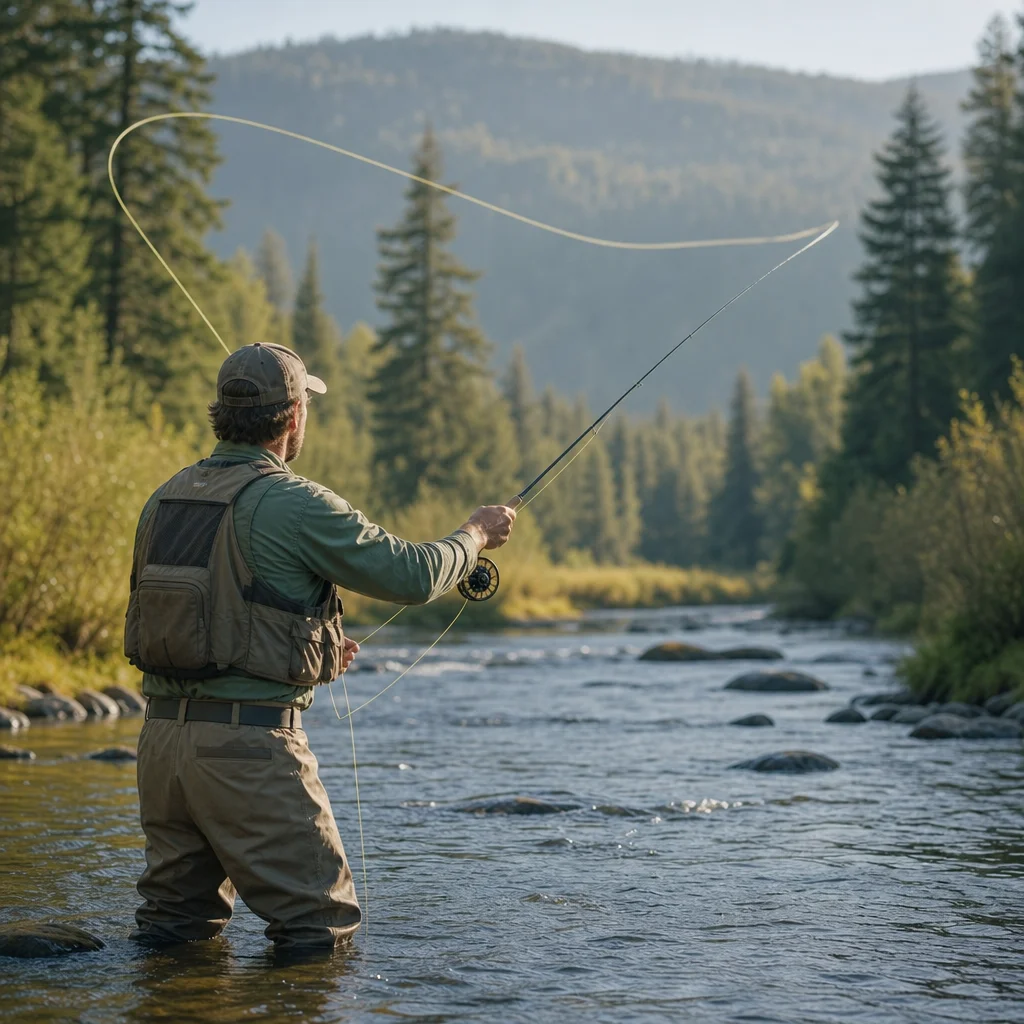
I’ll compare the anchor placements, rod-loading choices, and casting directions that make a controlled roll cast work beside brushy Appalachian streams, so you can choose a compact setup instead of forcing a backcast into branches.
Read article →
A loop-to-loop connection is quicker than tying a new knot, but only when both loops align cleanly. I’ll show you how to inspect, connect, straighten, and replace worn loops before a small rigging fault costs you a fish.
Read article →
I’ll explain the simplest reliable sequence for connecting backing, fly line, and leader, including which knot or loop belongs at each junction. You’ll also learn how to inspect the finished setup so you can reach the water without second-guessing your rig.
Read article →
A compact sling keeps you mobile, while a vest spreads gear across your torso; I’ll help you compare access, balance, weather protection, net placement, and real tackle needs before you switch systems.
Read article →
I’ll help you compare Hare’s-Ear, Pheasant-Tail, and Frenchie nymphs by profile, movement, weight, and water conditions, so you can carry fewer patterns while still making sensible choices when trout ignore the first fly.
Read article →
I’ll show you how to avoid carrying mud, plant fragments, and microscopic hitchhikers from one trout water to the next. This practical routine covers waders, boots, nets, boats, and the easily missed equipment that needs more than a quick rinse.
Read article →
I’ll clarify how rod length, line weight, and action affect a first fly-fishing setup, then compare sensible starter outfits so you can match your water and target species without paying for features you won’t use.
Read article →
I’ll explain how floating, intermediate, and sinking fly lines behave, then help you choose one dependable first line for the trout water you fish most often. You’ll also learn which features matter and which purchases can wait.
Read article →
Warm rain can make heavy waders uncomfortable while cold water still makes wet-wading risky. I’ll help you compare breathable waders, wet-wading layers, and rain protection so you can choose a sensible setup for changing shoulder-season conditions.
Read article →
I’ll compare felt alternatives, rubber soles, studs, ankle support, drainage, and fit so you can choose wading boots that stay secure on slick cobble without punishing your feet on long walks.
Read article →