Fly-Fishing Packs Compared: Sling, Chest, Hip, and Traditional Vest
A compact sling keeps you mobile, while a vest spreads gear across your torso; I’ll help you compare access, balance, weather protection, net placement, and real tackle needs before you switch systems.
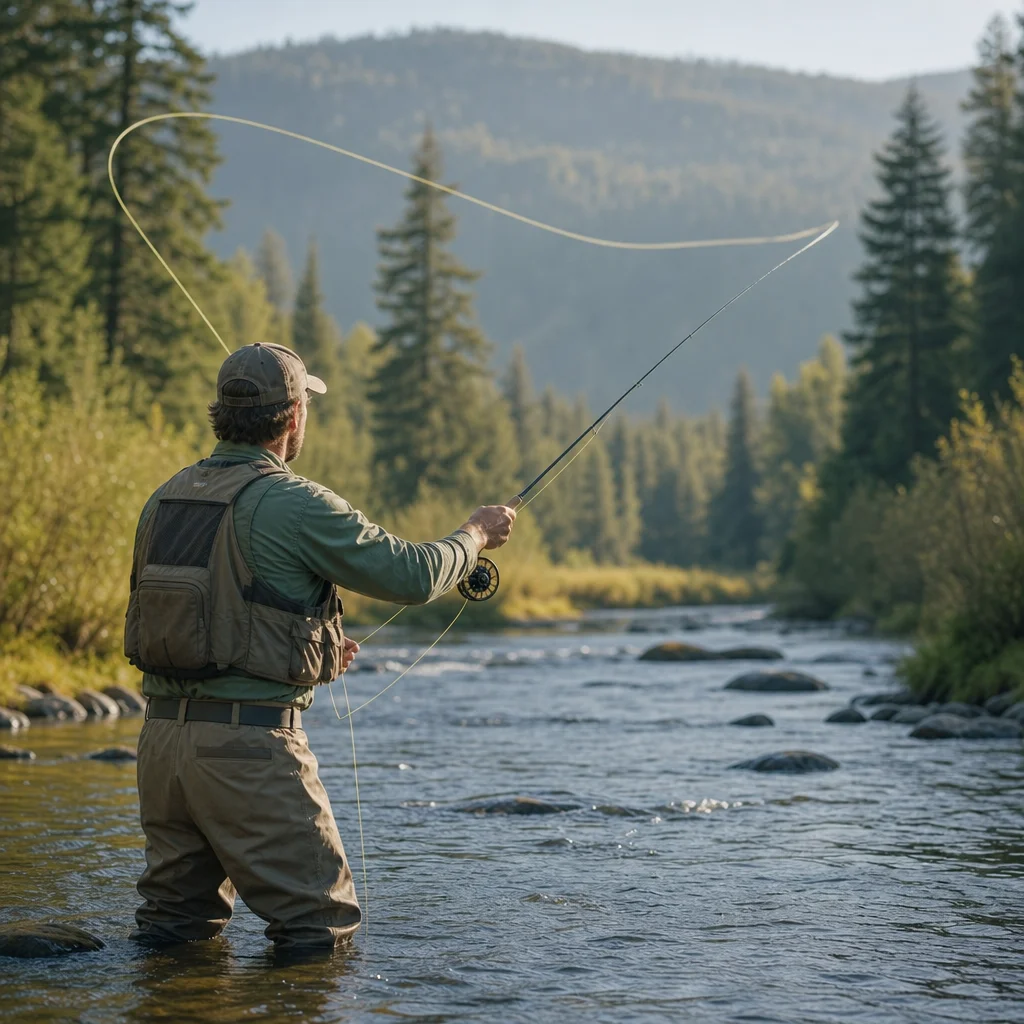
If your current pack leaves you reaching behind your back, bumping your net into branches, or carrying boxes of flies you never use, the solution may not be more storage. It may be a different way to distribute and access your gear.
Sling packs, chest packs, hip packs, and traditional vests can all hold the basics. They differ most in how quickly you can reach those basics, how the load affects your balance, and what happens when rain, brush, wading, or a landing net complicates the day.
For beginners simplifying their setup, the best choice is usually the system that keeps essential gear accessible without encouraging you to bring the whole tackle drawer.
Start with the job your storage system must do
Before comparing designs, list what you actually carry on a normal outing. A useful starting kit might include:
- One or two fly boxes
- Tippet and leaders
- Nippers and forceps
- Floatant or other small accessories
- A phone, keys, and identification
- Water and a small snack
- A landing net, if you use one
- A light layer or rain shell when conditions call for it
You may need more for a long hike, a full-day outing, or changing weather. You may need much less for a short session near the car. This distinction matters because a larger pack can solve a capacity problem while creating an access and balance problem.
The safest system isn't necessarily the one with the most pockets. It’s the one that lets you reach essential tools without awkward twisting, keeps loose items from falling into the water, and doesn’t interfere with wading or casting.
Sling packs: easy access with a moving load
A sling pack hangs from one shoulder and can usually be rotated from your back to your chest. That makes it appealing if you want a small-to-medium amount of storage and don’t want pockets spread across your entire torso.
Advantages
- A single rotation can bring the pack in front of you.
- It often carries more comfortably than a pocket stuffed with tackle.
- It leaves your chest and upper torso relatively open.
- It works well for anglers who move between spots and want one compact storage unit.
A sling can be particularly useful when you need to switch between hiking and fishing. You can carry it behind you while walking, then bring it forward to change flies or access tools.
Trade-offs
The load is concentrated on one shoulder. If you fill the pack with heavy boxes, water, and spare clothing, it may pull to one side or begin to swing as you walk. That can become tiring during a long day and distracting while wading.
A sling can also shift when you cast or bend down. Adjust the strap so the pack sits securely without restricting your arm movement. Keep heavier items close to your body and use smaller compartments to prevent tools from collecting at the bottom.
A sling is a good match if you want moderate capacity, front access, and a relatively uncluttered setup. It’s less suitable if you routinely carry a large load or dislike weight on one shoulder.
Chest packs: direct access and a compact footprint
A chest pack places storage in front of your torso, usually high enough to keep the contents visible and close at hand. It can be a very efficient choice for anglers who carry only the essentials and want to change flies or reach tools without rotating a pack.
Advantages
- Tools and fly boxes are directly in front of you.
- The pack can be easy to organize by task: flies, tools, and terminal tackle.
- It keeps storage away from your hips and legs.
- A small chest pack encourages a deliberate, lightweight load.
That direct access is its main strength. If you frequently change flies, adjust leaders, or use forceps and nippers, a chest pack can reduce the amount of reaching and searching involved.
Trade-offs
A chest pack occupies space where your line, rod, or rain layer may also need to go. A large or heavily loaded pack can feel restrictive when casting, bending, or climbing over uneven ground. It may also interfere with a shoulder strap from a larger backpack.
Consider how the pack sits when you’re wearing your usual layers and waders. You want clear access to the contents without having to lift the pack out of the way every time you move your arms.
A chest pack suits minimalist anglers and short outings especially well. If you need water, clothing, lunch, and a substantial assortment of tackle, you may need a larger system or a separate backpack.
Hip packs: freedom up top, weight around the waist
A hip pack carries gear around your waist or lower back. It leaves your chest and shoulders open, which can make it comfortable for casting and useful when you want an unobstructed upper body.
Advantages
- Your chest stays clear for casting and layering.
- The pack can be rotated from your back to your side or front.
- Weight rests lower on your body than with a chest pack.
- It can pair well with a small chest pocket or jacket storage.
Hip packs are often a sensible option when you dislike shoulder straps or want to keep your arms and upper torso free. They can also work well for anglers who carry a compact amount of gear and don’t need constant front-facing access.
Trade-offs
A hip pack can get in the way when you bend, sit, or wade deeply. If it rides at the small of your back, you may not be able to reach it without turning around. Rotating it to the front solves that access issue but can place the pack directly in the way of your line or rod hand.
A loaded hip pack may also sag unless the belt is adjusted firmly. Avoid tightening it so much that it restricts breathing or movement. Pack heavier items close to your hips and keep frequently used tools in an outside pocket or a position you can reach without twisting.
Choose a hip pack when upper-body freedom matters more than instant access and your load is modest.
Traditional vests: distributed storage and familiar access
A traditional fly-fishing vest spreads pockets across the front and sides of your torso. It provides many access points and can hold a broad selection of flies, leaders, tools, and small accessories.
Advantages
- Weight is distributed across both shoulders and the torso.
- Multiple pockets make it possible to organize gear by purpose.
- Essential tools can remain near the front of your body.
- A vest can provide useful storage without a separate shoulder bag.
For anglers who carry several fly boxes or fish in changing conditions, the distributed layout can be convenient. You can dedicate one pocket to leaders, another to tools, and another to backup items.
Trade-offs
A vest’s capacity can encourage overpacking. Filled pockets add bulk, and front-heavy storage may feel cumbersome when you’re hiking, scrambling, or wearing a rain shell. More pockets also mean more opportunities to misplace small items unless you use a consistent layout.
Vests can be less convenient when you want to carry substantial water, food, or clothing. They’re primarily tackle-carrying systems, not complete daypacks. If you need more volume, a vest paired with a small backpack may work better than trying to force everything into the vest.
A vest is a strong choice if you value distributed access, carry varied tackle, and don’t mind spending a little time organizing it.
Compare the systems by risk and movement
Access while standing in the water
A chest pack and a front-rotated sling generally offer the most direct access. A vest also keeps many items close, although you’ll need to remember which pocket holds each tool. A hip pack may require more turning or bending.
Keep items you may need while wading—such as nippers or forceps—in a secure, reachable location. Avoid placing critical tools in a pocket that requires you to turn away from current or lose sight of your footing.
Weight distribution
A vest distributes weight broadly. A chest pack concentrates it high and forward. A sling concentrates it on one shoulder, while a hip pack places it around the waist.
No arrangement is automatically best for every body. If one side of your neck, shoulder, or back becomes tired, reduce the load or change systems rather than simply tightening the straps.
Weather protection
Water-resistant fabric and covered zippers can help with light spray, but they don’t make a storage system waterproof. Keep phones, car keys, medication, and other moisture-sensitive items in a suitable dry pouch when conditions warrant it.
A vest leaves more of your gear exposed to rain unless its pockets have protective closures. A compact pack may protect contents better, but check how the opening faces when you rotate or bend it.
Check the conditions before you wade: Match your storage choice to the forecast, water level, expected depth, and route out. Keep essential items secure, and don’t let a convenient pocket arrangement encourage you to take unnecessary risks in moving water.
Landing-net placement
Your net should be reachable without repeated twisting or a long reach behind you. Many anglers use a magnetic or tethered connection, but the exact arrangement depends on the net, pack, clothing, and how you move.
Test the setup on land. Put the pack where you expect to wear it, attach the net as you normally would, and practice drawing and replacing it. Make sure the net doesn’t catch on the pack, line, vegetation, or wading belt.
A pack that carries everything except a conveniently reachable net may still be the wrong system for your fishing style.
A simple choice for common beginner needs
Choose a sling pack if you want moderate storage, a compact profile, and the ability to move the pack from your back to your chest.
Choose a chest pack if direct access and a lightweight, minimalist setup are your top priorities.
Choose a hip pack if you want your shoulders and chest clear and don’t mind reaching or rotating the pack for access.
Choose a traditional vest if you carry several small categories of tackle and prefer storage distributed across your torso.
If you’re uncertain, start by loading only the gear you use on most trips. A small pack or vest with room to spare is generally easier to manage than a large system filled for hypothetical problems.
Set up and test your new system
Before taking the system into the water, organize it at home and wear it with your usual clothing. Check that:
- Your most-used tools are reachable with either hand when practical.
- Fly boxes don’t press painfully against your body.
- The pack doesn’t restrict your casting motion or breathing.
- Zippers, clips, and closures can be operated without dropping loose items.
- Your net is secure but reachable.
- Water and safety essentials don’t have to share a cramped pocket with sharp tools.
- The load remains comfortable when you bend, climb, and walk.
Then take a short test outing before committing to a long hike or unfamiliar water. Notice what you reach for, what stays untouched, and what shifts while you move. Remove unused items and relocate anything that requires awkward twisting.
The best fly-fishing carry system is the one that supports careful movement, keeps essential tools accessible, and matches the amount of tackle you truly use. Start small, test the fit, and let your normal fishing habits—not the number of pockets—decide whether you need a sling, chest pack, hip pack, or vest.