What to Do When Your First Trout Trip Feels Overwhelming
I’ll help you avoid the most common first-trip mistake: trying to solve every fishing problem at once. You’ll learn how to simplify gear, choose manageable water, and set goals that make the day feel successful.
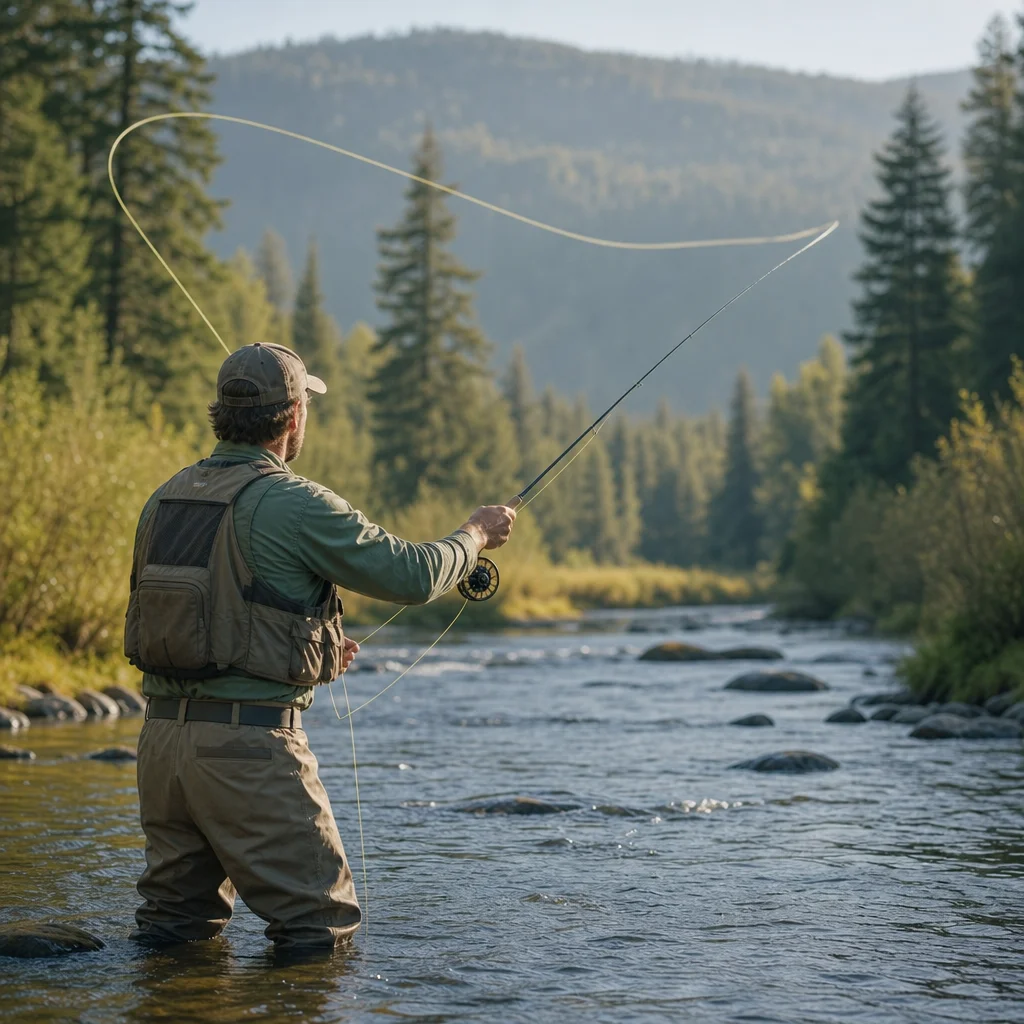
Your first trout trip can feel overwhelming before you even reach the water. There are rods, reels, leaders, flies, waders, knots, licenses, maps, currents, and a long list of advice from people who seem to speak fluent trout.
You don’t need to master all of it on day one. The better approach is to make a few deliberate trade-offs: carry less, choose easier water, and measure success by useful repetitions rather than the number of fish caught.
Start by Shrinking the Decision
A first outing becomes manageable when you limit the number of choices you need to make. Instead of preparing for every possible condition, choose one straightforward plan and one backup.
Your basic plan might be:
- Fish one accessible stream or river section.
- Use one rod and one simple rig.
- Carry a small selection of flies rather than an entire fly shop.
- Stay for two or three hours instead of committing to a full day.
- Practice presentation and water reading, with catching a trout as a welcome bonus.
The alternative is to prepare for every possibility. That approach can sound sensible, but it often creates more problems. More gear means more time deciding, more opportunities to lose equipment, and more distractions from learning what the fly is doing.
Preparation still matters. The point is to prepare for the conditions you’re actually likely to face, not every condition trout fishing can produce.
Choose Manageable Water Over Famous Water
The most celebrated trout water isn’t automatically the best place for a first trip. A famous river may have steep banks, difficult wading, strong currents, heavy fishing pressure, or complicated access. Those challenges can be worthwhile later, but they can turn basic learning into a survival exercise.
For your first outing, look for water with:
- Clear public access and an obvious place to park legally.
- A safe path to the bank.
- Room behind you for casting practice.
- Moderate current rather than fast, deep water.
- Visible seams, pools, riffles, or banks where you can observe how water moves.
- A reasonable chance of stepping away from the water if conditions change.
Small streams can be friendly because the target areas are easier to identify and shorter casts are often useful. They can also be brushy, awkward, and surprisingly difficult to cast on. Larger rivers may offer more open casting space, but they can require longer casts and more caution around depth and current.
The trade-off is simple: choose the water that lets you learn safely and see what’s happening. Size and reputation can wait.
Check the access details: Before leaving, confirm that the specific location allows fishing, has legal parking, and doesn’t have seasonal closures or special access rules. Local regulations and conditions can change, even when a general location description looks current.
Use Gear That Removes Decisions
You don’t need the perfect setup. You need equipment that works together and doesn’t demand constant troubleshooting.
A sensible first-trip setup often includes:
- A rod and reel suited to the trout water you’ve chosen.
- Backing and fly line that are properly installed.
- A tapered leader and a small supply of tippet.
- A few basic flies appropriate to the season and local water.
- Nippers or small scissors.
- Forceps or hemostats for handling hooks and flies.
- A landing net if you’re comfortable using one.
- Polarized glasses, which can reduce surface glare and help you see structure.
- Water, food, a phone, and a small first-aid kit.
If you’re borrowing or renting gear, ask the lender to show you how the reel works, how the leader attaches, and how to store the rod. A five-minute setup lesson can prevent a frustrating half-hour on the bank.
Buying more equipment can feel like progress, but it often postpones the actual learning. Start with functional basics, then add gear only when you can name the problem it solves.
Wading Gear Is a Separate Decision
You don’t need waders for every trout trip. Bank fishing can be the better choice when you’re learning, especially if the stream has accessible edges and open casting lanes.
Waders expand your access, but they also add heat, weight, and a new set of safety considerations. If you do wear them, use a properly fitted belt and avoid treating them as permission to enter deeper or faster water. Staying dry isn't the same as being stable.
Boots should provide reliable footing for the bottom you expect to encounter. Felt, rubber, and studded soles may have different rules or restrictions in different locations, so check local requirements before using them.
Set One Learning Goal
“Catch a trout” is an understandable goal, but it’s not entirely under your control. Trout may be inactive, the water may be crowded, or your chosen fly may not match what fish are eating.
Choose a goal based on an action you can repeat. For example:
- Make ten controlled casts without tangling.
- Learn to mend the line without moving the fly too far.
- Identify three different types of water.
- Present the fly to one promising lie from a good position.
- Tie one dependable knot several times.
- Keep the fly moving naturally for a short drift.
These goals give you something useful to do when the fish aren’t cooperating. They also make it easier to notice improvement. A first trip that produces no trout can still teach you where your fly lands, how current affects your line, and which parts of the setup need attention.
You can still count a fish as a success. Just don’t make it the only evidence that the trip worked.
Follow a Simple First-Hour Routine
A routine keeps the opening minutes from becoming a pileup of decisions.
1. Observe Before You Cast
Spend five or ten minutes looking at the water. Notice where the current is faster, where it slows, and where foam or floating debris travels. Look for seams, undercut banks, deeper edges, and softer water near faster flow.
You’re not trying to identify every trout. You’re learning how the river is organized.
2. Practice Away From Fish
If possible, make a few short casts in an area where you aren’t likely to disturb a target. Focus on lifting the line, forming a controlled loop, and placing the fly without excess force.
Longer casts aren’t automatically better. A short cast that lands cleanly and allows a natural drift is more useful than a long cast that creates slack and confusion.
3. Start Close
Fish the water nearest to you before moving farther across the stream. Trout may hold close to the bank, and beginning nearby helps you learn the current without immediately adding distance and difficult line control.
Move slowly between likely spots. Repeatedly covering the same water from poor positions usually teaches less than making a few careful changes in angle and location.
4. Change One Thing at a Time
When nothing happens, avoid changing the fly, leader, casting angle, depth, and location all at once. You won’t know which change mattered.
Try a simple sequence:
- Improve the drift.
- Change your position or casting angle.
- Adjust depth if the situation calls for it.
- Try a different fly.
- Move to another piece of water.
This process is slower than random switching, but it gives you information you can use on the next outing.
Keep the Fly Selection Small
A large fly box can create the impression that every missed trout requires a new pattern. For a first trip, a small selection is easier to manage.
Choose flies based on the water and season, ideally with help from a local fly shop, guide, or experienced angler. A few dry flies, nymphs, or streamers may be appropriate depending on the situation, but carrying every category can distract you from learning presentation.
A useful starting question isn't, “Which of these dozens of flies is perfect?” It’s, “What is the water showing me?” Look for insects on the surface, fish rising, movement near the bottom, or baitfish activity. If you can’t see a clear clue, begin with a general local option and concentrate on how it moves.
Fly choice matters, but a poor drift can make a good fly ineffective. A simple pattern presented naturally often gives you more useful feedback than a sophisticated pattern dragged through the current.
Know When to Stop or Change Plans
Persistence is valuable, but staying in a confusing situation for hours isn’t the same as learning. Change locations when you’ve made several thoughtful adjustments and still can’t identify what to try next.
End the trip early if:
- Weather or water conditions become uncomfortable or unsafe.
- You’re tired enough that footing, casting, or equipment handling is deteriorating.
- Crowding makes the area stressful or prevents you from fishing responsibly.
- Your clothing or equipment is failing.
- You can no longer explain what you’re trying to learn.
Leaving with energy for the next trip is a good outcome. The goal of a first outing is to build a repeatable way to fish, not to prove that you can endure every inconvenience.
Handle Trout With Care
If you catch a trout, keep the process calm and brief. Wet your hands before touching the fish, avoid squeezing it, and keep it in or close to the water while removing the hook. Support its body rather than holding it by the gill covers.
Barbless hooks or pinched barbs can make release easier, but they don’t replace careful handling. If a fish is deeply hooked and removing the hook would cause more damage, follow local guidance for the situation rather than forcing it out.
Rules about harvest, bait, hook types, seasons, and protected waters vary by location and can change. Treat the current state or local regulations as part of your equipment checklist.
Confirm the release rules: Before fishing, check the current regulations for the exact water you plan to visit, including license requirements, open seasons, size or possession limits, tackle restrictions, and special catch-and-release sections.
Use a Short Debrief Afterward
Before you pack everything away, note three things:
- What was easy?
- What caused the most confusion?
- What single change would make the next trip simpler?
You might discover that your main problem wasn’t casting. It may have been choosing a crowded location, carrying too much gear, failing to organize your leader material, or spending too long in water that was beyond your comfort level.
Write down the fly you used, the approximate conditions, and where you found the most promising water. You don’t need a detailed fishing journal. A few clear observations are enough to turn one trip into a useful starting point.
A Simple First-Trip Checklist
Before you leave, aim to have:
- One manageable location and one backup.
- Confirmed access and current regulations.
- A rod, reel, leader, tippet, and a small fly selection.
- Tools for cutting line and removing hooks.
- Water, food, phone, and suitable clothing.
- A plan to stay on the bank unless you’re properly prepared to wade.
- One learning goal that doesn’t depend on catching a fish.
- A time or condition that will signal the end of the trip.
The best way to reduce first-trip anxiety is to remove unnecessary decisions. Fish simpler water, carry only useful gear, change one variable at a time, and judge the day by what you learned. Trout fishing has plenty of complexity waiting for you later; your first outing only needs to be clear enough to make a second one appealing.