How to Build Confidence When You Haven't Caught a Trout Yet
I’ll help you build confidence before your first trout by setting manageable goals, noticing progress that isn’t a landing, and resisting the common mistake of changing flies, spots, and casts after every missed opportunity.
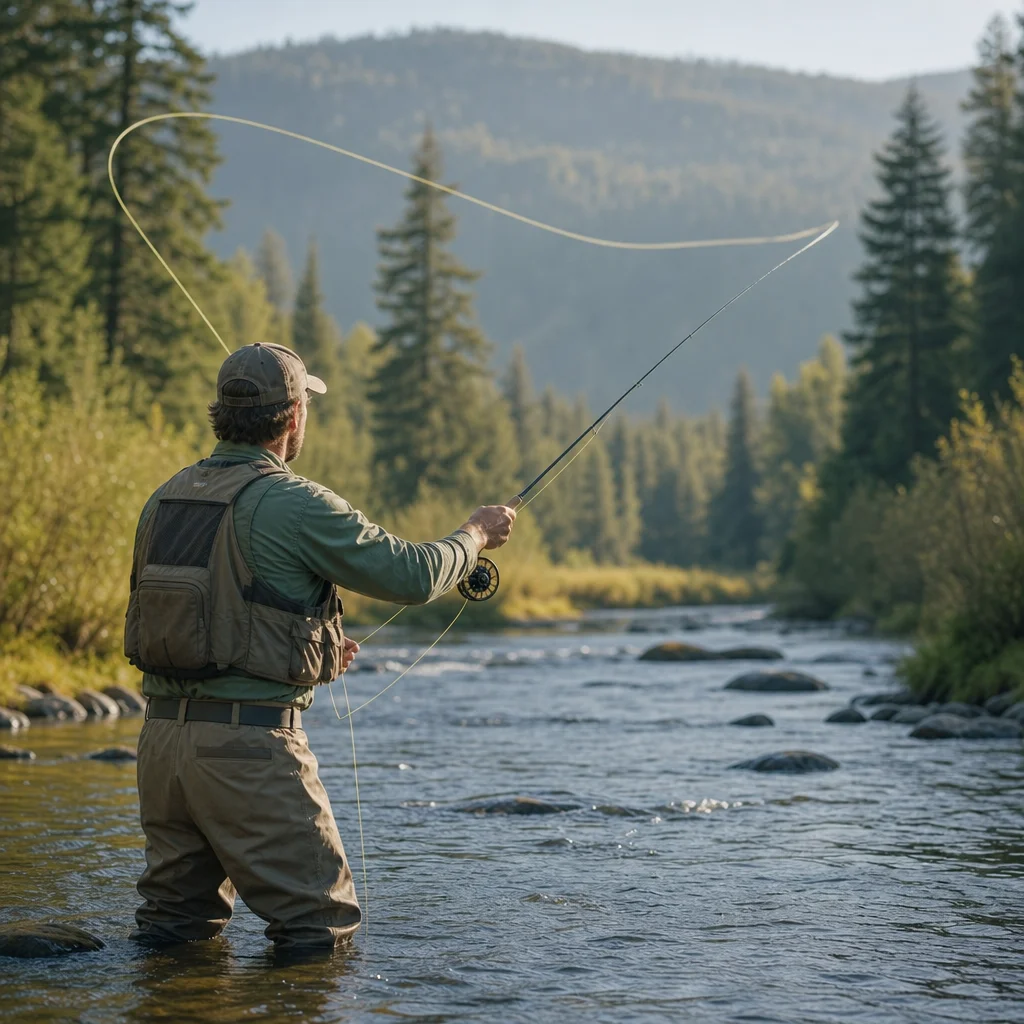
Not catching a trout yet can make every decision feel suspicious. Maybe the fly is wrong, the cast is poor, or everyone else understands something you don’t. That uncertainty often leads to the most expensive mistake in fly fishing: changing everything at once.
Confidence comes from making a few sensible choices, repeating them long enough to learn from them, and recognizing progress before a trout confirms it. Your first goal isn’t to become consistently successful overnight. It’s to create a process you can trust when the water is quiet.
Redefine what counts as progress
A landed trout is an obvious result, but it’s not the only useful measure. Early progress often appears in smaller forms:
- You place the fly closer to the intended target.
- Your line lands with less disturbance.
- You keep more of the line under control after the cast.
- You notice a current seam, deeper pocket, or likely holding area.
- You see a fish rise, follow, or turn away from the fly.
- You stay focused long enough to make a thoughtful next cast.
- You can explain what happened instead of calling the whole outing “bad luck.”
These signs matter because they show which parts of the process are improving. A missed take may mean your presentation reached a feeding fish. A refusal may tell you that the fly, drift, or angle needs adjustment. Neither result guarantees a trout on the next cast, but both are more informative than an empty stretch with no idea what occurred.
Try recording one process success after each outing. “I held the rod lower during the drift” is more useful than “I almost caught one,” because you can repeat it.
Set goals you can control
A goal such as “catch my first trout” is understandable, but it depends on conditions, fish behavior, and timing that you can’t control. Keep it as a long-term aim, then pair it with goals based on your own actions.
For a short session, choose two or three targets such as:
- Make ten careful casts to likely water.
- Improve one basic cast rather than collecting new techniques.
- Fish one section thoroughly before moving.
- Practice mending without losing sight of the fly.
- Identify three different current speeds.
- Observe the water for five minutes before wading or casting.
- Keep the same fly on long enough to evaluate its presentation.
These goals give the outing structure without turning it into an examination. If you complete them, the day produced useful practice even if no trout cooperated.
Keep the goals small enough that you can remember them while fishing. A long checklist can create its own pressure. Two clear intentions are usually better than ten vague resolutions.
Use a simple decision process
New anglers often make a reasonable observation and then react too broadly. A fish rises short of the fly, so they switch flies, move upstream, alter the tippet, and change casting distance within a few minutes. The next result becomes impossible to interpret.
Instead, change one meaningful variable at a time:
- Observe the problem. Did the fly land poorly, drift unnaturally, or pass outside the likely feeding lane?
- Choose the most likely cause. Start with presentation before assuming the fly pattern is wrong.
- Make one adjustment. Change your angle, mend, casting distance, or fly only when the evidence supports it.
- Repeat the new approach. Give yourself several good attempts rather than judging it from one cast.
- Review the result. Decide whether the adjustment improved the drift or simply changed the scene.
This method slows down the emotional part of fishing. It also helps you learn what your equipment and movements actually do. You’re not trying to find a magical combination; you’re building a chain of understandable decisions.
Start with presentation before changing flies
Fly selection matters, but beginners often give it too much responsibility. A suitable fly presented poorly may be ignored, while a simple pattern can work when it moves naturally through the right water.
Before replacing the fly, check a few basics:
- Is the fly reaching the depth where fish are likely to feed?
- Is drag pulling it across the current unnaturally?
- Did the leader or line land over the fish?
- Is the cast reaching the target without excessive false casting?
- Are you fishing water that actually offers cover, depth, food, or a current seam?
If the fly is consistently dragging, changing its color won’t solve the main problem. Improve the angle, mend, or distance first. If the presentation looks reasonable and you’ve observed a different food source or consistent refusals, then a fly change becomes a sensible experiment.
Confidence grows faster when you understand why you changed something.
Make your first outings easier to evaluate
Choose conditions that reduce unnecessary difficulty. A manageable first outing might involve a familiar access point, moderate flow, clear visibility, and enough room for a back cast. You don’t need a famous stretch or an ambitious full-day expedition to learn effectively.
Before you begin, decide what you’ll keep consistent. For example, use one rod setup, carry a small selection of flies, and fish a defined section for a set period. This limits distractions and makes the results easier to interpret.
A simple session plan could look like this:
First: observe
Watch the water before casting. Look for rising fish, submerged structure, changes in depth, and seams where faster and slower currents meet. Notice how surface debris moves. It can reveal whether your fly will drift cleanly or be pulled into a conflicting current.
Next: choose one target
Pick a likely piece of water within comfortable casting range. Aim for a clean, repeatable presentation rather than the most distant or dramatic target.
Then: repeat deliberately
Make a few casts that test the same idea. If the first lands short, adjust distance. If the fly drags, adjust line control or position. Avoid treating every cast as a completely new puzzle.
Finally: move with a reason
Move when you’ve covered the water reasonably, the presentation can’t be improved from your position, or conditions have changed. Moving because you feel impatient is understandable, but it rarely produces better information.
Learn from missed opportunities without replaying them endlessly
A missed fish can trigger an immediate question: “What did I do wrong?” Sometimes the answer is clear. You may have lifted the rod too early, pulled the fly away, or failed to notice the take. Sometimes the fish simply didn't connect.
Use a short review instead of a long self-critique. Ask:
- Did I see the take clearly, or did I react to movement or hope?
- Was the line or leader under control?
- Was my rod position suitable for a hook set?
- Did I pull sharply when a smooth lift would have been better?
- What will I repeat, and what one thing will I change?
Then let the moment go. Replaying it for the rest of the day can make your next cast tense and hurried. A missed opportunity is useful only if it improves your next decision.
If you’re unsure what happened, label it honestly: “I don’t know yet.” That is a stronger conclusion than inventing a complicated explanation from one event.
Avoid the confidence traps
Changing flies after every few casts
Frequent changes feel productive, but they can prevent you from learning whether your presentation works. Carry options, but give each choice a fair trial when conditions and water remain similar.
Fishing only the hardest water
Deep, fast, or heavily covered water can be attractive, but it may be difficult to read and present a fly effectively. Start where you can see the currents and control the cast. Complexity can come later.
Comparing your beginning with someone else’s routine
An experienced angler may make a difficult cast look casual because they’ve repeated it many times. You’re seeing the result of practice, not proof that the skill should already be automatic for you.
Treating every cast as a test
A cast is practice, observation, and sometimes an opportunity. It isn’t a final judgment about your ability. If you attach your confidence to every outcome, normal fishing becomes unnecessarily exhausting.
Buying a solution to an uncertainty problem
New flies, leaders, and accessories can be useful, but equipment rarely replaces a clear process. Before buying something, identify the specific problem it solves. If you can’t describe the problem, keep practicing with what you have.
Build a confidence routine between outings
Short, focused practice can make time on the water less intimidating. Work on one skill at a time rather than trying to perfect the entire system.
You might practice:
- Casting to a visible target at several distances.
- Keeping the fly line off a marked area while changing direction.
- Mending without moving the fly sharply.
- Lifting the rod smoothly to simulate a controlled hook set.
- Watching the leader or indicator for subtle changes.
Afterward, write down one improvement and one question. The improvement reinforces useful behavior; the question gives your next outing a purpose.
You can also prepare by learning the basic water-reading terms you’ll use on the stream: pool, riffle, seam, undercut bank, and pocket water. You don’t need to identify every feature perfectly. You only need enough understanding to make a reasonable first choice.
Check your first-outing plan: Before you leave, confirm the local access rules, fishing regulations, required license, and current conditions for the water you intend to visit. These details vary by location and can change, so use the relevant official source rather than relying on old advice.
Know when to ask for help
Guidance is most useful when you bring a specific question. Instead of asking someone to explain everything, describe the situation: “The fly drifts well for two seconds, then pulls toward the bank,” or “I’m seeing rises, but my fly lands several feet away.” Specific observations make practical advice easier to apply.
A lesson, club outing, or conversation with a patient angler can shorten the learning curve. You don’t need to copy another person’s entire setup. Look for the principle behind the advice and test it with your own equipment and local conditions.
Asking for help isn’t evidence that you lack ability. It’s an efficient way to turn confusion into a manageable experiment.
A realistic first-trout checklist
Before your next outing, choose:
- One or two process goals.
- One familiar or manageable area to explore.
- A small fly selection suited to the conditions.
- One presentation skill to focus on.
- A stopping point for changing tactics.
- One observation you’ll record afterward.
During the outing, give your first approach enough time to produce information. Change one variable when you have a reason. Afterward, judge the session by what you learned and practiced, not only by whether a trout reached the net.
Your first trout will be a welcome result, but confidence doesn’t need to wait for it. Build confidence by making clear choices, noticing small improvements, and returning with one useful question instead of a demand for instant success. Over time, that process makes the catch more likely—and makes the days without one far more rewarding.