Your First Fly-Fishing Outing: What to Practice Before You Reach the River
I’ll help you prepare for your first fly-fishing outing with a simple practice plan for knots, casting, wading awareness, and fish handling. You’ll know what to rehearse at home—and which common beginner mistakes to avoid at the river.
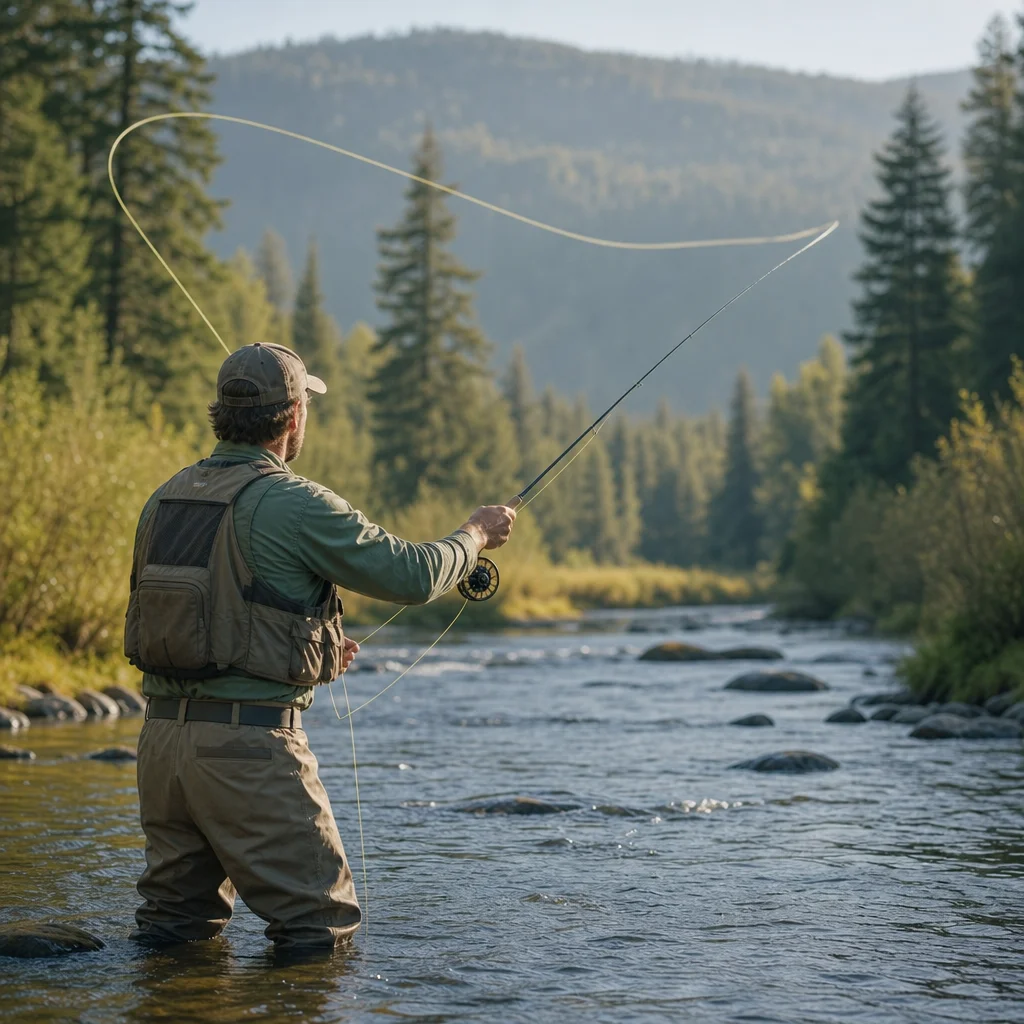
Your first fly-fishing trip can feel like several new hobbies happening at once: tying knots, controlling a long rod, choosing a fly, standing safely in moving water, and handling a fish you may have worked hard to catch. You don’t need to master everything before you arrive, but a little focused practice will make the day calmer and more enjoyable.
The goal isn’t to cast fifty feet or memorize every fly pattern. It’s to become comfortable with the basic movements and decisions that prevent small problems from becoming frustrating ones.
Start with a small practice kit
You can rehearse most beginner skills with a few inexpensive items:
- Your fly rod and reel
- A leader or a short length of monofilament
- Tippet material
- A few barbless practice flies, or hooks with the points safely removed
- Nail clippers or nippers
- Hemostats or forceps
- A piece of yarn for casting practice
- A tape measure or a few visible markers for distance
- Polarized sunglasses and a hat for outdoor practice
For casting, replace the fly with a short piece of brightly colored yarn. A real fly can catch clothing, skin, or vegetation surprisingly well. If you practice indoors, use only a rod without line or use a short section under careful control.
You’re building coordination, not testing how far the rod can launch something. Keep the practice area clear behind and beside you.
Learn two knots before learning ten
Beginners often lose time trying to memorize a complete knot library. Start with two connections you’re likely to use repeatedly.
The improved clinch knot
Use this knot to attach a fly or tippet to a hook eye. Practice slowly:
- Pass the line through the hook eye and leave several inches of tag end.
- Hold the standing line and wrap the tag end around it several times.
- Pass the tag end through the small opening near the hook eye.
- Bring the tag end through the larger loop you’ve created.
- Moisten the knot and pull it tight while guiding the coils into place.
- Trim the tag end close, but leave enough material that the knot won’t unravel if it was tied poorly.
The most common mistake is rushing the final pull. If the coils cross, bunch up, or slide instead of tightening neatly, cut the knot off and tie it again. A bad knot is difficult to diagnose after a fish breaks away.
The surgeon’s knot
Use a simple surgeon’s knot to connect tippet to a leader or to join two pieces of similar-diameter line. Lay the lines alongside each other, form a loop with both sections, and pass the combined lines through the loop twice before tightening.
Moisten the knot and pull the standing lines evenly. Trim the tag ends after checking that the knot has seated cleanly.
You don’t need to tie these knots quickly. Aim for consistent results. A knot that takes thirty seconds to tie at home is more useful than a fast knot you can’t trust at the river.
Practice the basic cast, not the heroic cast
The overhead cast is the best place to begin. Remove the fly and attach yarn to the leader. Stand with plenty of open space behind you.
Start with the line in front of you. Lift the rod smoothly and pause when the line travels behind you. Wait for the line to straighten, then move the rod forward and stop it firmly. The rod loads during the movement and releases energy as you stop.
Three habits matter more than distance:
- Keep your casting motion controlled rather than fast and forceful.
- Pause long enough for the line to straighten behind you.
- Stop the rod high enough that the line can travel above the water or grass.
A common beginner mistake is beginning the forward cast before the back cast has straightened. The line collapses, the leader tangles, and it’s tempting to add more power. Instead, slow down and watch the line behind you when it’s safe to do so.
Add a roll cast
A roll cast helps when brush, trees, or a steep bank leave little room behind you. Let the line rest on the water or grass in front of you. Raise the rod slowly until the line forms a loose D-shaped loop behind the rod tip. Then move the rod forward and stop it, allowing the line to roll out.
The roll cast is also useful for lifting line from the water without making a full back cast. Practice it gently. If you pull too much line off the surface or rush the movement, the cast loses its anchor and falls apart.
Practice short distances
Most first-time anglers try to cast farther than necessary. Begin at twenty or thirty feet, focusing on a straight line and a soft landing. Place yarn near a target such as a hula hoop, paper plate, or patch of grass.
Accuracy and presentation will help you more than maximum distance. Trout are often found close to a bank, current seam, pocket, or submerged structure. You may eventually need longer casts, but a controlled short cast gives you a better foundation.
Rehearse the sequence from cast to retrieve
Casting is only one part of presenting a fly. Practice the complete sequence:
- Pick a target.
- Check that the area behind you is clear.
- Make a controlled cast.
- Allow the fly to land without excessive line slack.
- Retrieve at a steady pace.
- Lift the rod smoothly if you need to recast.
You can practice this without a real fly. Learn to keep your hands organized so loose line doesn’t wrap around your feet, the reel, or nearby branches.
If you’re using a floating line, learn to manage the extra line at your feet. Avoid standing on it or allowing it to collect in loops around rocks. Many tangles are caused not by the cast, but by poor line control between casts.
Practice wading awareness before entering moving water
Wading isn't just walking into a river. Water can hide uneven rocks, deep holes, soft bottoms, and strong current. Even shallow-looking water can push against your legs and shift your balance.
Before your trip, practice the movements you’ll use on shore or on a stable, dry surface:
- Take short steps instead of long strides.
- Keep your feet shoulder-width apart when possible.
- Turn your body slightly into the current.
- Move one foot at a time and regain balance before taking the next step.
- Use a wading staff if conditions or your balance make one appropriate.
- Keep your hands free when moving through water.
At the river, avoid entering simply to reach a farther casting position. Fish the water near you first. If you do wade, look for a gradual entry and avoid crossing when you can’t see the bottom or judge the current.
Wear a wading belt with chest waders, and don’t treat waders as flotation equipment. If you fall, keep your feet downstream, get your head above water, and work toward shore rather than trying to stand immediately in fast current.
Check the river before stepping in: Look up current access rules, local conditions, water levels, weather, and any current equipment or wading restrictions for your destination. If the water looks faster, colder, or deeper than expected, stay on shore or choose a different section.
Learn fish handling before you catch one
Responsible handling starts before the hook is set. Pinch the barb down if local rules permit and if your tackle is designed for it. Keep forceps or hemostats easy to reach, and avoid placing gear where you’ll have to search for it while holding a fish.
When you hook a trout, keep the fight as brief as practical without using reckless pressure. Wet your hands before touching the fish. Keep the trout close to the water, support its body, and avoid squeezing it or touching its gills. Don’t handle it with a dry towel or let it rest on rocks, soil, or hot surfaces.
If you want a photograph, prepare the camera before lifting the fish. Keep the fish partly or fully in the water whenever possible, and return it promptly. If the trout is exhausted, face it gently into a mild current and allow water to move over its gills without forcing it back and forth.
Rules for keeping fish, bait, hooks, and release practices vary by location and species. Know the requirements for the water you’re visiting rather than relying on advice from another river.
Avoid these first-trip mistakes
Carrying too much gear
Extra gear creates clutter and gives you more things to drop, tangle, or forget. Start with a rod, reel, appropriate line and leader, a small selection of flies, nippers, forceps, water, and basic safety equipment.
Changing flies constantly
If your fly is properly attached and the presentation is poor, another pattern may not solve the problem. First check your drift, casting angle, depth, and distance from the fish.
Wading before reading the water
Spend a few minutes observing from shore. Look for seams, slower edges, submerged rocks, rising fish, and places where the current changes. You may find a useful target without getting wet.
Practicing only on a calm lawn
Grass is useful, but it doesn’t teach you how wind, current, uneven footing, or vegetation affect a cast. On your first outing, simplify your cast and give yourself more space rather than trying to force a familiar lawn routine into difficult conditions.
A simple practice plan
Before the trip, try this short schedule:
- Session one: Tie and test ten improved clinch knots and ten surgeon’s knots.
- Session two: Practice overhead casts with yarn at short distances.
- Session three: Add roll casts and work on placing yarn near several targets.
- Session four: Rehearse line management, knot tying, and fish-handling movements with a wet towel or basin nearby.
- At the river: Observe first, start close to shore, and change only one variable at a time.
You’re ready when you can tie a dependable knot, make a controlled short cast, recognize when your line is tangled, and explain how you’ll move safely and handle a trout carefully. The river will supply the parts you can’t practice at home—wind, current, unexpected branches, and the occasional trout with strong opinions. Your preparation simply keeps those surprises manageable.