What to Practice Before You Borrow or Rent Fly-Fishing Gear
The first outing goes better when your borrowed or rented gear isn't also your practice tool. I’ll show you what to rehearse cheaply—line handling, knots, casting movements, and setup—so limited water time goes toward fishing.
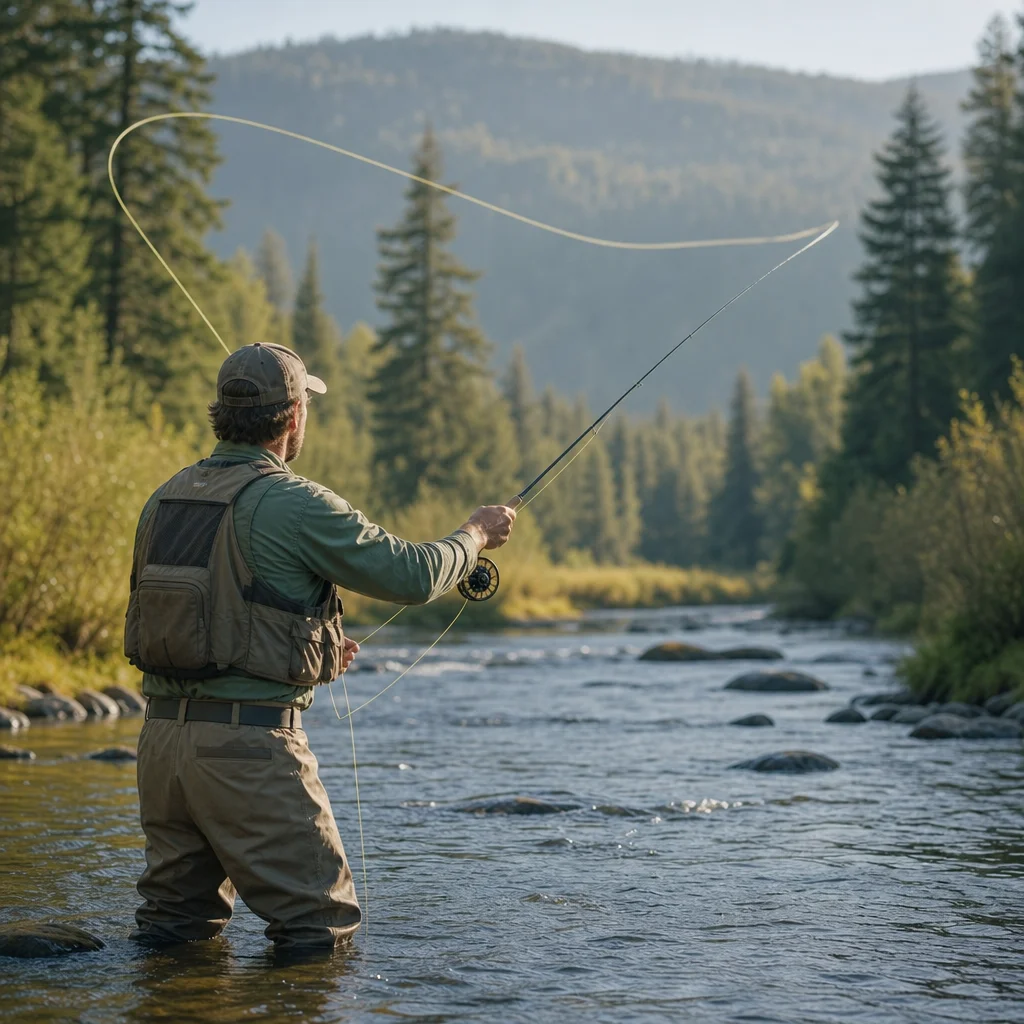
Borrowed and rented fly-fishing gear can make your first outing affordable, but unfamiliar equipment creates a predictable problem: you may spend your best fishing hours figuring out which end of the rod connects to what. A little practice before you leave home helps you arrive ready to learn from the water instead of troubleshooting on the bank.
You don’t need a complete outfit to prepare. You need a short length of fly line or inexpensive practice line, a leader or piece of monofilament, a fly, and enough open space to move safely. The goal isn’t to become an accomplished caster indoors. It’s to make the basic movements and setup steps feel recognizable.
Decide what to practice with
The best practice tool depends on what you’ll borrow or rent. Each option has a useful trade-off.
Use the actual outfit when possible
If a friend can lend you the rod and reel you’ll use, one short practice session with that outfit is valuable. You’ll learn its weight, handle shape, line setup, and casting rhythm before the outing.
The drawback is convenience. You may need to coordinate pickup, and you’ll want to avoid damaging someone else’s equipment. Practice in a clear area, keep the line away from rough pavement, and don’t force a rod movement that feels awkward.
Use a practice rod or inexpensive line
A basic practice rod, an old fly rod, or a length of fly line can teach you the most important movement: lifting and controlling the line without grabbing at it. This is usually the lowest-cost option if you’re still deciding whether to rent or borrow gear.
The trade-off is that the feel won’t perfectly match your fishing outfit. A heavier or lighter line may respond differently, and a short practice space can hide problems that appear on open water. Treat this as movement practice, not a complete rehearsal.
Practice without a fly
For early casting work, remove the hook. You can use a short piece of brightly colored yarn or a practice fly without a hook. This reduces the chance of catching clothing, skin, furniture, or vegetation while you concentrate on the rod and line.
A real fly still matters later because its weight and air resistance affect the cast. Add one only after you can move the line under control in a safe, open area.
Check the outfit you’ll receive: Before leaving for the water, confirm whether the rental or borrowed setup includes backing, fly line, leader, tippet, flies, and a reel already attached to the rod. What’s included varies, and missing one small connection can stop the session before it starts.
Practice line handling first
Fly casting isn’t like throwing a lure. You’re using the weighted line to carry a relatively light fly. Before working on distance, learn to move and manage that line deliberately.
Learn the basic parts
Know these terms before you handle the outfit:
- Backing: Line stored beneath the fly line on the reel. You may never see it during a beginner outing, but it fills the spool and provides additional line if a fish runs.
- Fly line: The thicker, weighted line used to load the rod and carry the leader.
- Leader: The tapered connection between fly line and tippet or fly.
- Tippet: The thinner material attached to the end of the leader.
The exact system may already be assembled, but identifying each section helps you avoid pulling apart the wrong connection or tying a fly directly to a bulky section of line.
Strip and gather line smoothly
Practice pulling line from the reel in controlled lengths and gathering it loosely in your line hand. Don’t coil it tightly around your fingers. Loose loops are easier to release and less likely to form stubborn knots.
Try this sequence:
- Hold the rod in your casting hand.
- Pinch the line against the rod handle with your index finger.
- Pull a short length of line with your other hand.
- Let the line rest in loose loops rather than dropping it in a heap.
- Repeat until you can strip line without losing track of it.
The important habit is maintaining light control. If you grip too firmly, you’ll make line release difficult. If you let everything fall at your feet, you’ll eventually step on it or tangle it around the reel.
Understand the line hand
Your rod hand moves the rod; your line hand controls the loose line. Practice pinching and releasing the line against the rod handle. This small action helps you stop the line from running out when you don’t want it to and release it during a cast when you do.
You don’t need to memorize every casting technique before your first trip. You do need to know which hand is doing what. That division of work prevents the common beginner habit of trying to steer the entire system with the rod hand alone.
Rehearse two useful knots
You don’t need a knot collection. Two dependable connections will cover much of a beginner’s preparation: one for attaching tippet to a fly and one for joining sections when your leader setup requires it.
Improved clinch knot for the fly
The improved clinch knot is a common choice for attaching tippet to a fly with an eye. Practice with a large hook, a hookless practice fly, or a short piece of cord so you can see the turns clearly.
A simplified sequence is:
- Pass the tippet through the fly eye and leave several inches of tag end.
- Wrap the tag end around the standing line several times.
- Pass the tag through the small opening near the eye.
- If your version of the knot calls for it, pass the tag through the larger loop you just created.
- Moisten the knot and draw it down gradually.
- Trim the tag, leaving a small amount rather than cutting directly against the knot.
The exact number of wraps depends on the material and conditions, so follow the knot instructions supplied with your class, outfitter, or trusted reference. The practice goal is recognizing the sequence and learning how the knot looks before it tightens.
Perfection loop or loop connection
Many leaders use a loop at the butt end so they can connect to the fly line with a loop-to-loop connection. You may not need to tie this knot yourself if the rental outfit is assembled, but it’s useful to recognize the connection and ask for help rather than pulling on it blindly.
If you practice a loop knot, make it large enough to inspect. Small loops are harder to tighten cleanly, and a badly seated loop can become a frustrating problem at the water. Learn one method well instead of collecting several half-remembered versions.
Practice casting movements, not distance
Your first casting goal is a controlled loop, not a heroic launch across the river. Distance requires room, timing, and line control. Those are easier to build after you can make the rod move consistently.
Start with the pickup and stop
On grass or another forgiving surface, lay out a short length of line. Lift the rod smoothly, allow the line to move behind you, and stop the rod firmly but not violently. Then let the line straighten before making the forward motion.
The stop matters because it helps the rod load and directs the line. A long, sweeping rod motion often produces a wide, poorly controlled loop. A compact motion with a clear stop is easier to repeat.
Keep the casting arc narrow enough that the line travels above and beside you rather than wrapping around your body. Look behind you when it’s safe, or practice with a partner who can watch the line.
Add a false cast carefully
False casting means moving the line back and forth without letting it land. It can help dry a fly and adjust the amount of line outside the rod tip, but beginners often use too much force and create tangles.
Practice only a few controlled back-and-forward movements. Let the line straighten behind you before starting forward. If the line collapses, stop and reset rather than adding more speed. More effort usually makes a timing problem larger.
Learn the roll cast separately
A roll cast is useful when trees, steep banks, or other obstacles leave little room behind you. It has a different feel from an overhead cast, so practice it as its own movement rather than treating it as a shortened version of the same cast.
Lay the line on the ground or water-like surface in front of you, form a small D-shaped loop behind the rod, and drive the rod forward with a smooth stop. Don’t lift large amounts of line into the air at once. The roll cast relies on the line’s contact with the surface to help load the rod.
Rehearse setup in the right order
Setup practice is one area where the actual borrowed or rented outfit is especially helpful. Even if someone assembles it for you, knowing the sequence makes it easier to spot a missing connection.
Practice this general order:
- Join the rod sections with the guides aligned.
- Attach the reel if it isn’t already mounted.
- Thread the line through every guide, including the small tip guide.
- Confirm that the leader is connected to the fly line.
- Attach tippet and fly if needed.
- Check that the reel’s drag turns and that the line can leave the spool smoothly.
- Gather loose line so it isn’t underfoot.
Don’t force rod sections together or apart, and don’t drag a knotted connection through the guides. If something won’t fit or release, ask the owner or outfitter. A few seconds of help is cheaper than a damaged rod.
Practice threading the guides in good light. Missing one guide near the tip is an easy mistake, and the line may snag as soon as you begin casting.
A simple three-session plan
You can prepare without turning the process into homework.
Session one: line control
Spend 15 to 20 minutes identifying the line sections, stripping line, gathering loose loops, and practicing the pinch-and-release motion. Finish by laying the line out neatly and coiling it loosely for storage.
Session two: knots and setup
Tie the same knot repeatedly with inexpensive material. Don’t move on because you tied one good knot by accident; repeat it until you can inspect the wraps and tighten it cleanly. Then assemble and disassemble the outfit once.
Session three: short casting
Practice pickup-and-stop movements, a few false casts, and several roll casts. Keep the amount of line modest. End the session when your movements become rushed or tangled. Tired practice tends to teach poor timing.
If you only have one evening, spend most of it on line handling and setup. Casting improves more quickly when you aren’t fighting an unfamiliar reel, loose line, or missing connection.
What to prioritize on the first outing
Once you reach the water, don’t try to demonstrate every skill at once. Start close, use a manageable amount of line, and focus on placing the fly where fish might reasonably see it.
Ask the lender or outfitter to show you:
- How to remove line from the reel without creating a tangle
- How the leader connects to the fly line
- Which knot they expect you to use for the fly
- How to adjust the drag, if adjustment is needed
- Where to store the rod when walking or changing flies
A short demonstration can resolve equipment-specific details that no generic practice session can predict.
Common preparation mistakes to avoid
- Practicing only for distance: Accuracy and line control matter more at the beginning.
- Using a weighted fly in a cramped area: Start with yarn or a hookless substitute.
- Changing knots constantly: Choose one suitable knot and learn to tie it consistently.
- Ignoring the line hand: Rod movement alone won’t manage loose line.
- Practicing on abrasive ground: Rough surfaces can damage fly line and leader material.
- Assuming the outfit is complete: Confirm what you’re receiving before the trip.
- Forcing connections: Fishing gear should assemble with reasonable pressure; resistance is a reason to pause.
The most efficient preparation isn't the most elaborate. Learn to control loose line, tie one reliable fly knot, perform a basic setup, and make a few calm casting movements. Those skills transfer reasonably well between borrowed and rented outfits, while the remaining differences—rod action, line weight, and reel feel—can be learned during a short briefing at the water.
Before you go, pack a small amount of practice tippet or monofilament, a few simple flies, and whatever line-care or storage items your lender or outfitter recommends. Arrive early enough to assemble without rushing. Then begin close, cast gently, and let the unfamiliar gear teach you its rhythm one movement at a time.