What Your First Trout License and Permit Checklist Should Include
I’ll clarify which license, trout stamp, permits, identification, and access documents a beginner may need before fishing for trout in the United States, including the easy-to-miss exceptions that can turn a legal-looking checklist into an incomplete one.
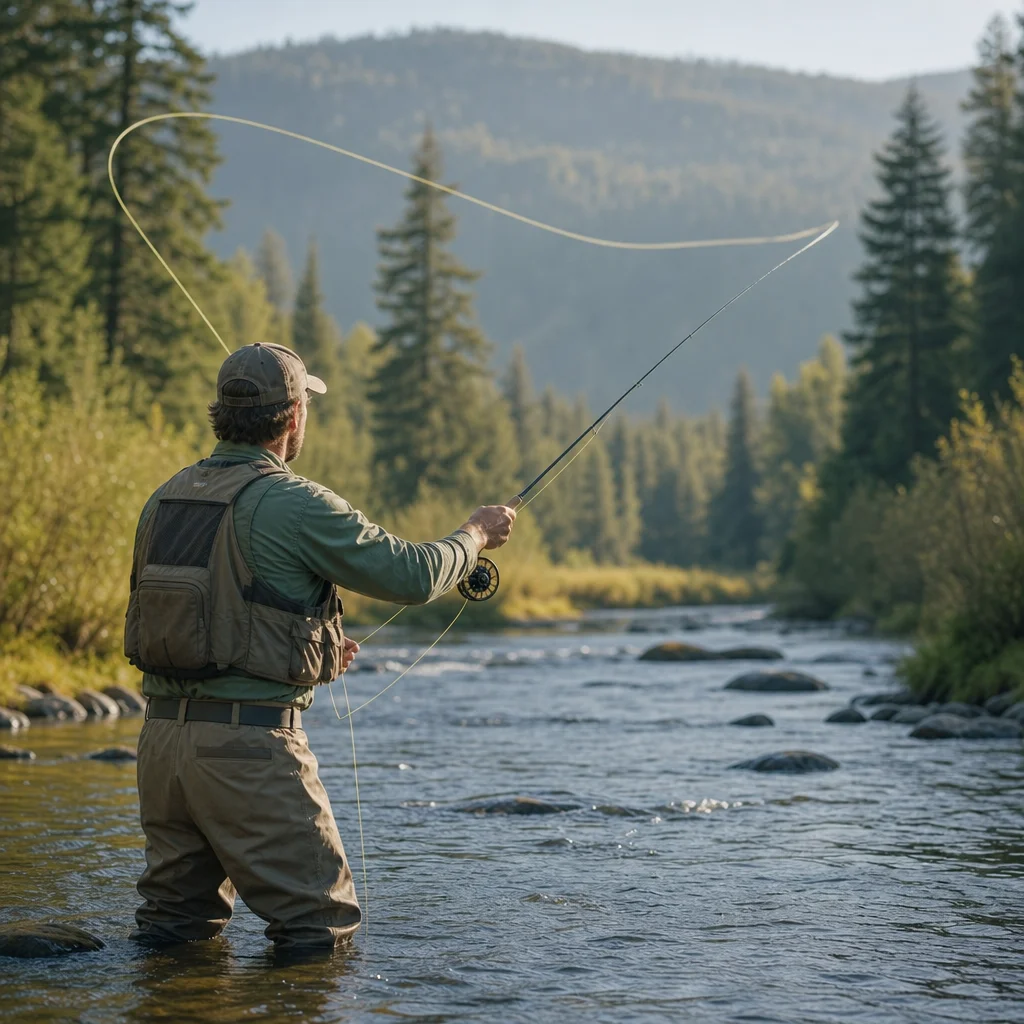
Your first trout trip can be ready in every practical way—rod assembled, flies sorted, coffee secured—and still be missing one small authorization. The confusing part is that “a trout license” usually isn’t one universal document. Requirements can change by state, species, water, fishing method, residency, age, and whether you plan to keep fish.
Use the checklist below as a planning framework, then confirm the exact rules for the state and water you’ll fish. The details are jurisdiction-specific, but the questions are broadly useful.
Start with the fishing location, not the tackle box
Before buying anything, identify:
- The state where you’ll fish
- The specific lake, river, stream, or managed area
- Whether the water crosses a state boundary
- Whether the water is on public, private, tribal, federal, or specially managed property
- Whether you’ll fish from shore, wade, use a boat, or move between access points
A license issued by one state generally doesn’t automatically cover fishing in another. Boundary waters can be especially complicated: each state may have different rules about which bank, channel, or section a license covers. “It’s the same river” isn’t a reliable legal theory.
A named water may also have special regulations that don’t appear obvious from a general fishing-license page. Tailwaters below dams, hatchery-supported streams, wildlife areas, parks, and urban ponds can all have additional requirements or restrictions.
The core documents to check
1. A valid fishing license
Most anglers need a state fishing license, but the product name and structure vary. You may see options such as:
- Annual licenses
- Short-term or multi-day licenses
- Nonresident licenses
- Resident licenses
- Youth, senior, veteran, or disability licenses
- Combination hunting-and-fishing licenses
- Permit packages sold through a state agency or authorized vendor
Check the eligibility rules before selecting a resident license. Residency is often based on specific legal criteria rather than where you happen to be staying, where you own property, or where you attend school. A nonresident visiting family may still need a nonresident license.
Also check the effective dates. Some licenses begin immediately; others begin on a selected date or remain valid for a defined number of calendar days. A short-term license purchased late at night may not work the way you assume for a trip that crosses midnight.
2. A trout stamp, trout endorsement, or similar add-on
Some states require a separate trout stamp, trout endorsement, or additional fee for fishing for trout. In other places, the trout privilege may already be included in the license you purchase.
Don’t assume the word “trout” in your plan is enough to identify the correct product. The rule may apply based on any of these factors:
- Targeting trout, even if you don’t catch one
- Possessing or keeping trout
- Fishing designated trout waters
- Fishing during a particular season
- Using a particular license category
The distinction between “fishing for trout” and “keeping trout” matters in some regulations. If you might change from catch-and-release to harvest during the day, make sure your authorization and the water’s rules support both plans.
3. Water-specific permits
A general license and trout endorsement may not be the entire package. Look for additional permits connected to:
- Special-regulation streams
- Trophy or catch-and-release waters
- Limited-entry fisheries
- Permit-required lakes or reservoirs
- State parks and wildlife-management areas
- Private-access fisheries
- Tribal or federal lands
- Guided trips or organized events
A permit can be required even when the fishing license is valid. It might be free, fee-based, reservation-based, or issued by a separate agency or land manager. Treat “no extra charge” and “no extra permit” as different ideas.
4. Proof of identity and eligibility
Have the identification needed to purchase or carry the license. Requirements can differ for residents, nonresidents, minors, and anglers using special license categories.
Depending on the jurisdiction and license type, you may need to provide or carry:
- Government-issued photo identification
- Proof of residency
- A date of birth
- A customer or conservation identification number
- Documentation supporting a disability, military, or age-based category
- A digital or printed license confirmation
A parent or guardian may need to handle the purchase or carry documentation for a young angler. If someone else buys the license for you, check whose information must appear on it and whether a purchaser’s account can be used by another person.
Check whether “free” means exempt
License exemptions are one of the easiest places for a beginner to make an incorrect assumption. Common categories may include children below a specified age, residents above a specified age, landowners fishing qualifying property, or participants in designated free-fishing events. The exact conditions aren't uniform.
An exemption from a fishing license may not exempt you from every other rule. You could still need to follow trout-stamp requirements, possession limits, access rules, special permits, or documentation requirements. Some exemptions apply only in particular circumstances, such as fishing on qualifying land or accompanying a licensed adult.
If your eligibility depends on an exemption, save the rule or agency explanation that supports it. “My neighbor said kids don’t need one” isn’t a document you want to present to a conservation officer.
Confirm your exact authorization: Before your first trip, use the official fish-and-wildlife agency site for the state and water you’ll fish. Confirm the license type, trout endorsement, water-specific permits, effective dates, residency category, age exemptions, and whether digital proof is accepted.
Decide whether you’ll keep trout
Your license checklist should match your intended fishing plan. Catch-and-release and harvest can involve different rules, and the rules may vary by water rather than statewide.
If you may keep fish, check:
- Daily possession or creel limits
- Minimum and maximum length limits
- Species-specific limits
- Whether multiple trout species count separately or together
- Open and closed seasons
- Bait, lure, hook, and artificial-fly restrictions
- Whether the limit changes in special-regulation waters
- Whether a harvest tag or report is required
- Transport and storage requirements
A trout that looks like a brown trout, rainbow trout, brook trout, cutthroat trout, or hybrid may not be covered by the same limit. Identification can be difficult when species overlap, so learn the local identification rules before deciding to keep a fish.
If you plan to release everything, you still need to follow the water’s legal tackle and handling requirements. Some catch-and-release areas prohibit certain hooks or methods, and a “release” plan doesn’t override a closed season or no-fishing restriction.
Confirm how you’ll carry proof
After purchasing your authorization, find out what counts as proof while fishing. Depending on the agency, acceptable proof might include:
- A printed license
- An agency-issued card
- A digital license in an official app
- A confirmation number paired with identification
- A license stored in an online account
Don’t rely on a screenshot unless the agency specifically says it’s acceptable. A phone can lose battery, signal, or access to an account. If digital proof is allowed, download the relevant license or confirmation before leaving service. A printed backup is sensible for remote water, but it doesn’t replace carrying whatever identification the rules require.
Keep the license accessible without putting your phone or paper documents at risk while wading. A waterproof pouch, sealed bag, or secure pocket can prevent a minor dunking from becoming a paperwork problem.
Don’t overlook access permission
A fishing license gives permission from the state to fish under its regulations. It doesn’t necessarily give you permission to enter land, cross a private driveway, park on private property, or walk along a streambank.
Before the trip, verify:
- The access point is open to the public
- Parking is allowed where you plan to leave your vehicle
- A day-use, parking, or launch fee isn’t required
- The trail or gate is open on your planned date
- The fishing access extends to the section you intend to reach
- You’re allowed to cross private land to reach the water
- Any tribal, federal, or park-specific rules apply
Public water and public access aren't always the same thing. A map showing a river doesn't guarantee a legal route to its bank.
Build a one-page trip checklist
For a first outing, write the answers down rather than relying on memory:
- State and exact water:
- License type:
- Resident or nonresident status:
- License start and expiration dates:
- Trout stamp or endorsement:
- Special-water permit:
- Required identification:
- Digital or printed proof:
- Harvest or catch-and-release plan:
- Current size and possession limits:
- Tackle restrictions:
- Access and parking permission:
- Agency contact or regulation link:
Take a screenshot or print the relevant regulation page, including the name of the water and any special section map. Regulations can be difficult to interpret when you’re standing beside a sign with poor cell service and a fish making a convincing case for immediate release.
When rules are unclear
Use the issuing fish-and-wildlife agency as your primary source. A tackle shop, guide, campground host, or fishing forum may offer helpful local context, but the official agency determines the legal requirements.
Ask a precise question that includes the state, water, date, residency, age category, and whether you’ll keep fish. “Do I need a trout license?” may produce an incomplete answer; “I’m a nonresident fishing this named section for one day and may keep trout—what authorizations and limits apply?” is much easier to answer correctly.
Practical next steps
A complete first-trout permit checklist has four layers: the correct state fishing license, any trout-specific endorsement, any water or land-management permit, and proof that you’re eligible and carrying valid documentation.
Before you leave, verify the exact water and date, decide whether you’ll harvest or release, confirm access permission, and save your license information offline. Then pack the documents with the same care you give your leaders and flies. The trout may still refuse to cooperate, but your paperwork won’t be the reason the day ends early.