When to Fish a CDC Pattern Instead of a Stiffer Dry Fly
CDC dries excel when trout want a low, mobile imitation, while stiffer patterns win when visibility and durability matter more. I’ll help you weigh flotation, movement, presentation, and maintenance before choosing between them on spring creeks and slow rivers.
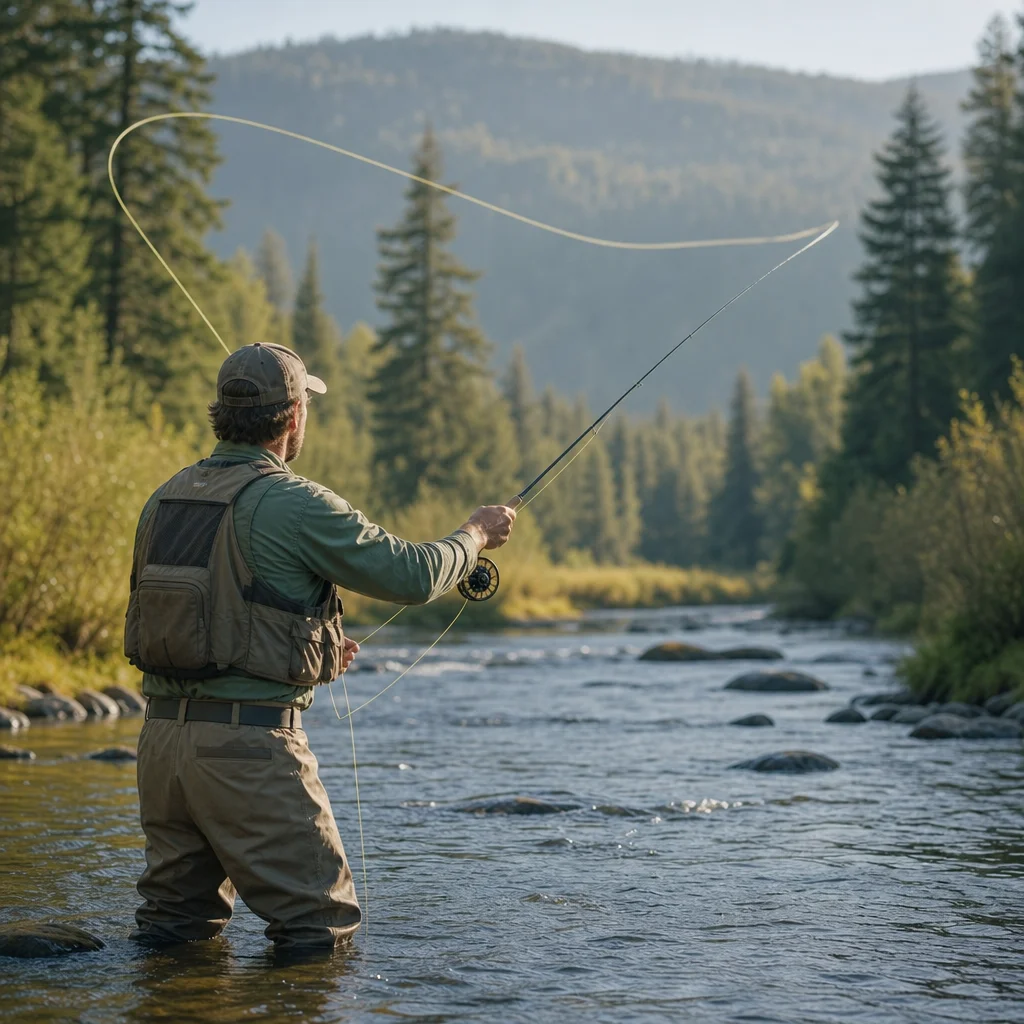
When trout are feeding on a slow river or spring creek, the choice between a CDC pattern and a stiffer dry fly often comes down to details that are easy to overlook. Both can imitate the right insect, but they sit differently, move differently, and demand different handling from you.
CDC—short for cul de canard—usually gives you a softer, more mobile footprint on the water. A stiffer dry fly, whether built with hackle, synthetic fibers, or a buoyant wing, generally offers better visibility and easier maintenance. Neither is the universal choice. The better pattern depends on what the trout are noticing and what the water will allow you to manage.
Start with the surface signal
The first question isn't simply, “Which fly floats better?” Ask what signal the trout seem to be responding to.
A CDC pattern is often useful when fish are eating insects trapped in or just above the surface film. Its fibers spread across the water and move with tiny currents, giving the fly a soft, natural outline. That can be especially valuable when trout are inspecting small mayflies, midges, or emergers in calm water.
A stiffer dry fly creates a more defined shape. Its hackle or synthetic support can hold the body higher and provide a clearer silhouette. That is helpful when the natural insect is riding on top of the film, when the water is broken, or when you need to track the fly through a complicated drift.
On a smooth spring creek, subtlety often matters more than height. On a slow river with wind riffles, conflicting currents, or scattered foam, a more visible and stable fly may give you the better overall presentation.
Where CDC has the advantage
Movement and a low profile
CDC fibers are naturally fine and flexible. They can suggest legs, wings, or an emerging insect without producing a bulky outline. When the fly settles properly, it may sit partly in the film rather than perched conspicuously above it.
That low profile is useful when trout are taking insects that haven't fully escaped the surface tension. A CDC emerger, a CDC midge, or a soft-bodied mayfly imitation can look more convincing than a heavily hackled dry that rides too high.
The same softness can help during delicate presentations. A CDC fly touching down lightly is less likely to slap the surface than a larger, stiffer pattern. This doesn't eliminate drag or poor casting, but it gives you a little more margin when fishing to close, cautious trout.
Natural movement in very slow water
In glassy water, trout may examine a fly for several seconds before eating it. Small movements in the fibers can make the imitation appear less rigid. CDC is particularly effective when the fly needs to suggest life without being deliberately twitched.
Avoid confusing movement with disturbance. Pulling a CDC dry across the surface usually creates more trouble than realism. Its advantage is the passive movement produced by current, surface tension, and the fly’s own soft materials.
A convincing footprint
Many CDC patterns are sparse. They expose more of the body and sit close to the surface, which can make them suitable for selective trout feeding on small or low-riding insects. That sparse construction also helps the fly avoid looking over-dressed in clear water.
The trade-off is that the fly may be difficult to see. A pattern that looks perfect to a trout can disappear to you at the end of a long drift.
Where a stiffer dry fly wins
Visibility and drift control
A stiff dry fly is usually easier to track. A prominent hackle, parachute post, foam element, or synthetic wing gives your eye a reliable reference point. This matters when you’re fishing long leaders, broken light, or a drift that passes through several conflicting currents.
Visibility isn't just a convenience. If you can’t see the fly, you may miss subtle takes, fail to mend accurately, or lose track of where your tippet is lying. A slightly less delicate fly that you can control and observe may produce a better result than a nearly invisible CDC pattern.
Stability in surface chop
Stiffer materials can keep a fly riding above small waves and bubbles. That makes them useful when trout are feeding on adult insects that remain clearly on top of the water, rather than in the film.
A heavily hackled dry may also support a small nymph or emerger as a visible indicator-style arrangement, although you should still consider whether the added weight and disturbance suit the water. On a calm spring creek, that arrangement may be too intrusive. On a broader, slower river with moderate texture, it can be practical.
Durability during repeated casts
CDC fibers can mat, collapse, or become waterlogged after a fish, a poor landing, or several false casts. A well-built stiffer dry generally tolerates more handling. That matters when you’re covering rising fish for hours and don’t want to stop after every take to restore the fly.
Durability isn't the same as effectiveness. A durable fly that rides too high or looks too rigid may be less useful than a fragile pattern that matches the feeding behavior. Treat durability as part of the decision, not the deciding factor by itself.
Compare the trade-offs directly
| Factor | CDC pattern | Stiffer dry fly |
|---|---|---|
| Surface position | Low, often partly in the film | Higher and more defined |
| Movement | Soft, mobile, subtle | More rigid and stable |
| Visibility | Often limited | Usually better |
| Calm-water realism | Excellent when sparsely dressed | Can look overly structured |
| Wind and chop | More difficult to track and maintain | Easier to see and manage |
| Durability | Requires more care | Usually more forgiving |
| Best use | Selective trout and low-riding insects | Visible adults, broken water, repeated casting |
These are tendencies rather than rules. A CDC caddis can ride surprisingly high, and a sparse parachute can sit low enough to fool wary fish. Construction matters as much as the label on the pattern.
Match the fly to the feeding behavior
Trout taking emergers
Choose CDC when fish are making subtle sips, showing only a nose or a small dimple, or feeding in a narrow lane just beneath the surface. These signs suggest that the trout may be focused on insects caught in the film rather than fully emerged adults.
A CDC pattern with a visible but restrained wing can give you some tracking help without sacrificing too much realism. You can also use a small, stiffer indicator fly as a reference only when the water and fish will tolerate the added profile.
Trout taking adults
If trout are confidently breaking the surface and leaving distinct rings, a stiffer dry may be the more efficient option. This is especially true when the naturals are visibly riding high or when you need to follow the fly through broken glare.
That doesn't make CDC unsuitable. A CDC adult imitation can still be excellent when the natural insects are delicate or when the fish refuse a bulky, heavily hackled version. Begin with the pattern that best matches the insect’s position, then adjust for visibility.
Trout feeding in a narrow, technical lane
On spring creeks, the best-looking fly can fail if it lands outside the feeding lane or drifts with even slight drag. CDC is often a good choice when the required presentation is soft and close, but your leader and cast matter more than the material alone.
Use the smallest fly you can see and control. If a tiny CDC pattern disappears immediately, move up only as much as necessary in visibility. A slightly larger sparse pattern may be a better compromise than switching straight to a heavily dressed dry.
Account for maintenance
CDC flies reward careful handling. After a fish or a submerged drift, remove excess water with a gentle shake or a suitable drying powder designed for the fly. Avoid crushing the fibers between your fingers. Liquid floatants may mat CDC or alter its intended shape, so follow the instructions for the specific product rather than assuming every dry-fly treatment works the same way.
Before recasting, inspect the fly. If the fibers are clumped, the body is saturated, or the fly no longer sits correctly, take a moment to restore it. A CDC pattern that has been dried and fluffed can fish well again; one that is repeatedly cast while waterlogged may become difficult to manage.
Stiffer flies still need maintenance. Hackle can flatten, synthetic posts can become coated with water, and foam can collect debris. The difference is that they usually recover more easily after a quick false cast or application of an appropriate treatment.
Check your fly’s treatment: Before applying floatant or desiccant, confirm that it’s suitable for CDC and use the product as directed. The wrong treatment can mat delicate fibers and turn a naturally mobile fly into a small wet brush.
Adjust the leader before abandoning the pattern
A CDC fly often performs best with a clean, delicate presentation. Long, fine tippet can help reduce splash and drag, but going thinner isn't automatically better. You still need enough strength to steer the fish away from weeds, undercut banks, or other hazards.
If the fly lands well but drags immediately, changing patterns may not solve the problem. Check the final leader section, the angle of the cast, and whether your line is crossing faster water than the fly. A stiffer dry can sometimes mask poor visibility, but it can't correct a bad drift.
If the CDC pattern repeatedly twists your tippet, inspect the fly’s proportions and your casting loop. Oversized wings, excessive false casting, or an open, wind-affected loop can make a delicate pattern spin. A more compact pattern or a slightly heavier tippet may restore control.
Make the decision at the water
Use a CDC pattern when:
- Trout are sipping or feeding on emergers.
- The water is calm and clear enough for them to inspect the fly.
- The natural insect sits low or partly in the surface film.
- A soft landing and subtle movement are more important than visibility.
- You can maintain the fly between casts.
Use a stiffer dry fly when:
- You need to track a long or complicated drift.
- Wind, glare, or surface chop makes CDC difficult to see.
- Trout are taking fully emerged insects riding high.
- You expect repeated casts, fish, or rough handling.
- The fly must support a little more structure or remain visible through broken water.
The most useful compromise is often a sparse, moderately visible pattern rather than an extreme choice. You can also carry both: start with CDC when the fish are selective and the water is calm, then switch to a stiffer dry if visibility, wind, or maintenance becomes the limiting factor.
Pay attention to the fly’s actual position, not just its name. If it sits too high, too low, too visibly, or not visibly enough, make the change based on that observation. On slow rivers and spring creeks, the winning adjustment is often the one that preserves a natural drift while making the fly manageable for you.