When Color Matters Less Than Size, Shape, or Movement
I’ll show you how to avoid changing fly colors endlessly when selective trout are refusing your pattern, using size, silhouette, and movement to make better choices on clear spring creeks.
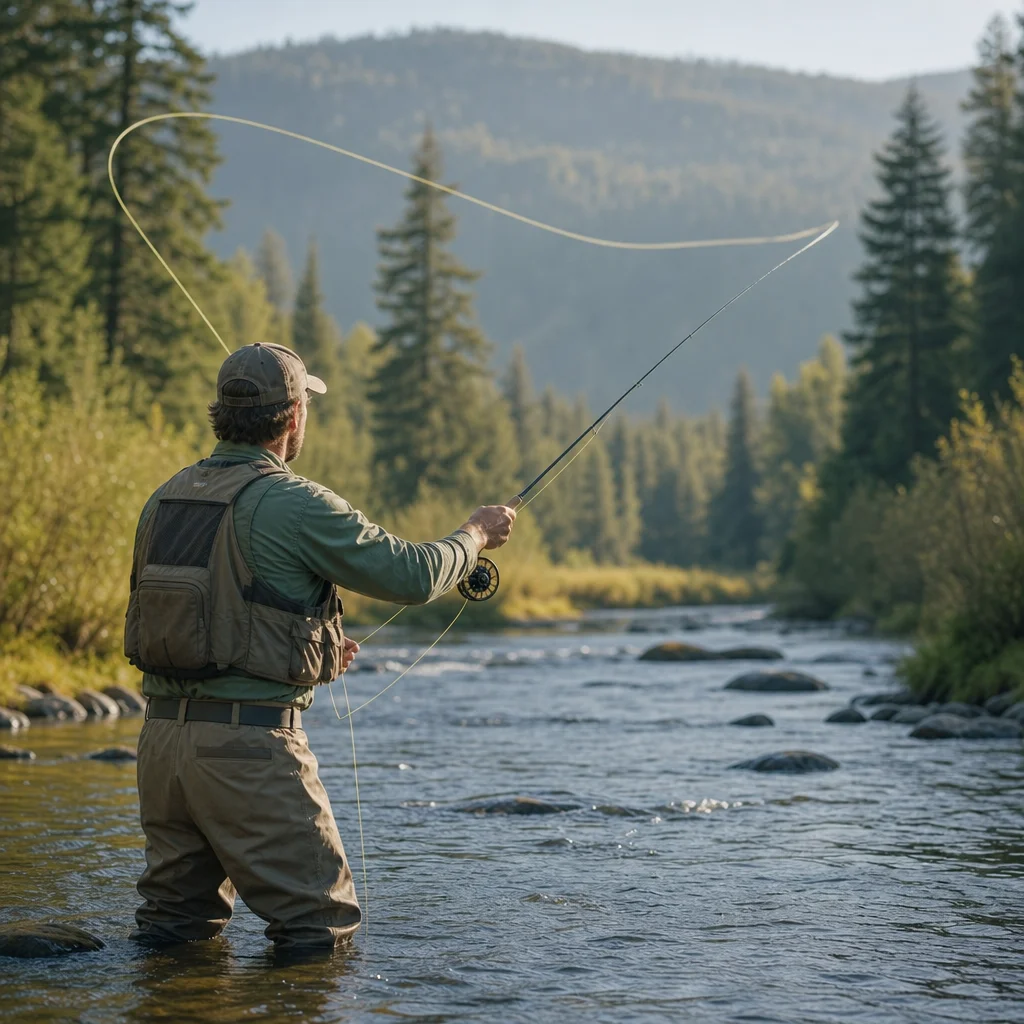
When trout are feeding in a clear spring creek, a refusal can make you blame the fly’s color first. You switch from tan to olive, then olive to gray, while the real problem may be a pattern that is too large, too bulky, or moving unnaturally.
Color matters, but it’s only one part of what a trout sees. When you’re uncertain which natural insect is present, you’ll often make faster progress by prioritizing size, shape, and movement—in that order or close to it—before fine-tuning hue.
Why Color Gets Too Much Attention
Color is easy for you to compare. You can hold two flies beside each other and immediately notice that one is darker, brighter, or more yellow. That makes color feel like a precise answer to a difficult question.
Trout don’t examine your fly in the same controlled way. They see it through moving water, changing light, surface glare, depth, and the distortion caused by the current. A fly’s apparent color can change as it drifts from shade into sunlight or sinks below the surface.
A trout also has to decide whether the object resembles something worth eating. Its first useful clues may be the object’s overall size, outline, position in the drift, and behavior. A perfectly colored fly that is twice the size of the available food may be less convincing than a slightly wrong-colored fly with the right proportions and drift.
That doesn’t make color irrelevant. It means color is often a refinement rather than the best first correction.
Start With Size
Size is usually the simplest characteristic to adjust and one of the easiest mistakes to make. In a clear spring creek, trout can inspect food closely, but they also see plenty of natural variation. You don’t need to identify the exact insect immediately; you need to avoid presenting something obviously out of scale.
If trout are rising to tiny mayflies and your dry fly sits high and large on the surface, changing from cream to pale gray probably won’t solve the problem. A smaller pattern may look more credible even if its color is only an approximation.
Size matters for nymphs, too. A large, heavily dressed nymph can look unnatural in a thin current where the available food is small and sparse. Conversely, downsizing too far can make your fly difficult to see or unable to reach the feeding lane.
Use the surrounding evidence:
- Watch the size of insects on the water or in nearby vegetation.
- Compare your fly with the rise forms rather than guessing from one splash.
- Look at the proportions of the naturals, not just their overall length.
- Consider whether high water or strong current might be carrying larger food.
- If you’re unsure, make a modest size change before making a dramatic color change.
A one-size adjustment is often more informative than cycling through several colors. If the trout respond, you’ve learned something useful. If they don’t, you can move to shape, presentation, or depth without having changed five variables at once.
Match the General Shape
Shape is the fly’s visual summary. It includes the outline, body thickness, wing or leg profile, and the way those parts appear from the trout’s viewing angle.
You don’t always need an exact imitation. You do need a shape that suggests the right broad category of food. A slender mayfly pattern, a compact caddis-like pattern, and a rounded terrestrial silhouette each make different promises to a trout.
This is especially important when the natural insect is small or difficult to identify. Instead of asking, “Is this fly the exact color?” ask:
- Is the body slim or thick?
- Does it sit flush in the surface film or ride high?
- Does it have a noticeable wing, shell, or leg profile?
- Is the abdomen longer than the thorax, or nearly the same length?
- Does the fly look sparse enough for a clear, low-water setting?
On spring creeks, over-dressing is a frequent problem. Extra hackle, bulky dubbing, and prominent rubber legs may make a fly easier for you to see, but they can also produce an outline that doesn’t fit the food trout are inspecting.
Sparse doesn’t mean fragile or invisible. It means each material has a job. If the fly’s silhouette is too full, trimming the profile or switching to a slimmer pattern may help more than selecting a new shade.
Pay Close Attention to Movement
Movement includes more than the speed of your retrieve. It includes drag, the natural motion of materials, the way a nymph tumbles or rises, and whether your fly pauses where the trout expects food to pause.
A fly with the right color and shape can still fail if it skates across a calm surface. On a spring creek, subtle current seams can pull the fly in different directions even when the water looks nearly still. Trout may refuse a pattern because its motion exposes it as an artificial object.
For dry flies, look for:
- A clean, drag-free drift.
- Tippet that isn’t pulling the fly across conflicting currents.
- A landing that doesn’t slap the water.
- A position in the feeding lane rather than constantly drifting outside it.
For nymphs, consider whether the fly is moving at the depth and speed of the natural food. A nymph that races above the bottom may be the wrong presentation even if its color is convincing. A slightly different weight, leader length, or angle of entry may matter more than a new pattern.
Movement can also be intentional. During a hatch, some insects emerge, struggle, or skate in ways that attract attention. In those cases, gentle animation may help—but only when it resembles the behavior trout are seeing. Random twitching is usually not a substitute for a natural drift.
A Better Order for Changing Flies
When you’re getting refusals, change one major characteristic at a time. A useful sequence is:
1. Check the drift
Before replacing the fly, watch it closely. Is it dragging? Is it entering the water too close to the trout? Is your line or leader crossing a faster current?
A poor drift can make a good fly look wrong. Fixing it costs nothing and gives you a cleaner test.
2. Adjust the size
If the fly seems too large, bulky, or conspicuous, go smaller. If trout are feeding on noticeably larger food or ignoring a tiny offering, try stepping up carefully.
3. Simplify or alter the shape
Choose a slimmer, lower-riding, or differently profiled pattern. You may not need a new insect imitation; you may need a different silhouette.
4. Change the movement or depth
For dries, improve the drift. For nymphs, adjust depth and speed. For emergers or soft-hackled patterns, consider whether a little controlled movement fits the situation.
5. Fine-tune color
Once the first four factors are reasonably close, color becomes a more useful adjustment. Change one element—lighter, darker, warmer, or duller—rather than replacing the entire concept.
This order isn’t a law. If the water clearly shows a strong color cue, use it early. But when the natural insect is uncertain, it prevents you from treating color as the only available answer.
Before your next fly change: Watch one complete drift and decide whether the refusal points to size, silhouette, movement, or color. Change only the most likely factor so the result teaches you something.
When Color Really Does Matter
There are situations where color deserves priority. A strong hatch can make trout narrowly focused on a particular shade or contrast. Some insects have distinctive bodies, wings, or egg colors that stand out in the water. In low light, a darker profile may be easier for trout to detect, while a bright pattern can look unnaturally bold in clear, shallow water.
Color can also affect visibility for you. A fly that you can’t track may lead to late hook-sets, poor line control, or missed takes. It’s reasonable to choose a visible color when the pattern still has a suitable size, shape, and drift.
The practical mistake isn't caring about color. It’s assuming color is the only difference trout can perceive, or the first difference you must correct every time.
Common Mistakes to Avoid
Changing several variables at once
If you switch size, pattern, color, tippet, and position simultaneously, a successful or unsuccessful result tells you very little. Make the smallest meaningful change you can.
Matching color while ignoring proportion
A tiny, slender natural isn't represented well by a bulky fly simply because the shade is accurate. Look at the outline from the trout’s likely viewpoint.
Blaming the fly for a bad drift
Refusals near the end of a swing, sudden wakes beside the fly, or repeated drag are clues about presentation. A new color won’t remove conflicting current.
Using too much material in clear water
Extra flash, foam, hackle, or legs may help in rough water, but they can make a fly look exaggerated in a clear spring creek. Start with a restrained profile and add visibility only when you need it.
Overreacting to one refusal
A trout can refuse because of position, leader movement, depth, or timing. Give the pattern a fair presentation before drawing a conclusion from a single inspection.
A Simple Decision Rule
When you’re unsure what trout want, begin with the broadest clues. Ask whether your fly is the right size, then whether its shape resembles the kind of food available, and finally whether its movement matches the water. Once those pieces are sound, adjust color to improve the imitation.
You won’t always solve selective trout with this sequence. Sometimes they are simply wary, poorly positioned, or feeding on something you haven’t noticed. But it keeps you from burning through a box of nearly identical colors while the real problem remains unchanged.
On your next clear-creek outing, carry a few patterns that vary by size and profile as well as by color. Start with a modest presentation, observe the trout’s response, and make one deliberate change at a time. That approach is easier on your patience—and usually easier on your fly box, too.