What to Carry for Trout Flies in Late-Winter Tailwaters
I’ll help you avoid the common mistake of carrying every fly you own for a late-winter tailwater. You’ll learn how to spend less on duplicates while covering the small profiles, deeper presentations, and limited insect activity trout are most likely to encounter.
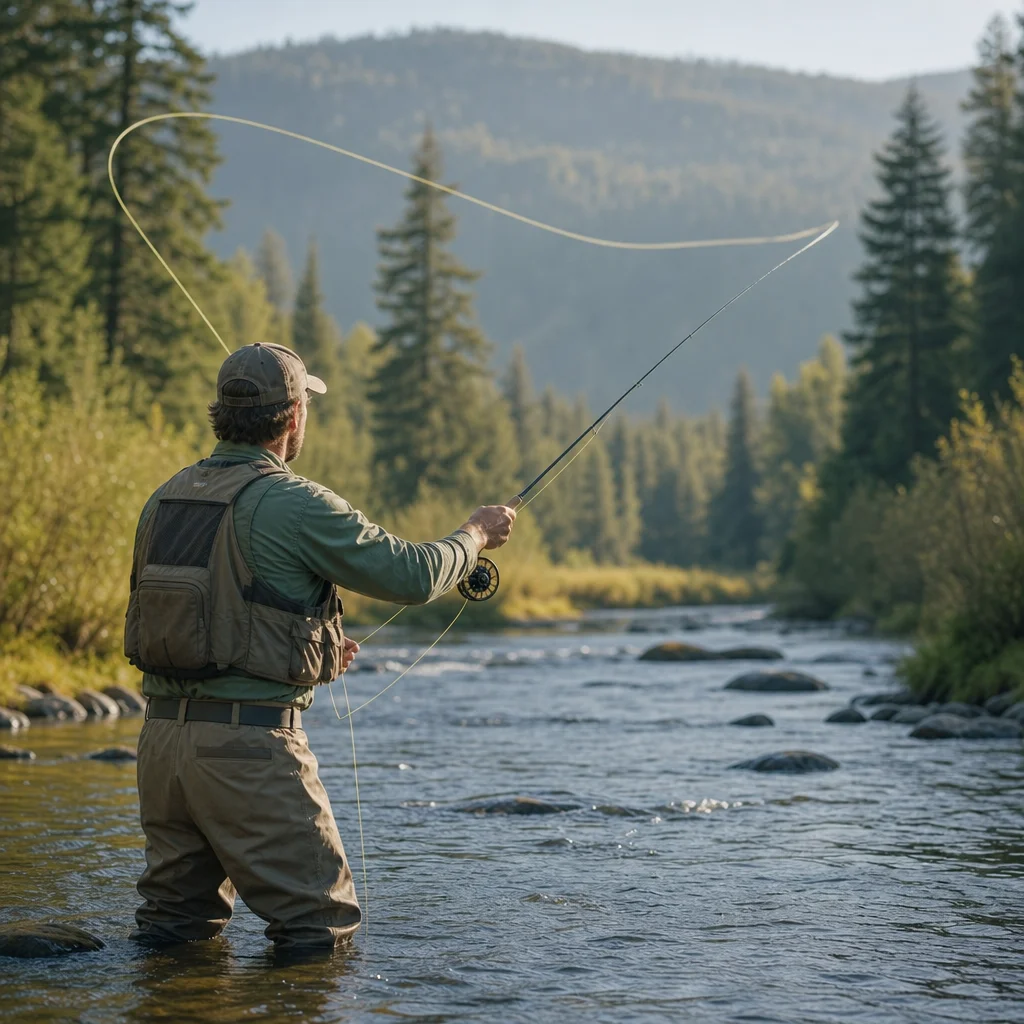
Late-winter tailwaters can make fly selection feel more complicated than it needs to be. The air may be cold, the river may run clear, and trout may be feeding—but often on small insects drifting below the surface rather than on an obvious hatch.
The efficient approach is to carry a compact selection that covers three decisions: how small the fly should be, how visible its profile needs to look, and how deeply it must fish. You don’t need six versions of every pattern. You need a few reliable options and a way to adjust them.
Why tailwaters fish differently in late winter
Tailwaters often receive water from deeper parts of a reservoir, so their temperatures can be more stable than those of freestone streams. That stability may keep aquatic insects active during periods when smaller tributaries are nearly dormant. It doesn’t guarantee an easy hatch, however.
In many temperate tailwaters, late-winter food is dominated by small midges, with baetis or other small mayflies appearing when conditions are suitable. Scuds, sowbugs, and other drifting organisms can also matter, particularly where the river flows through fertile water or receives consistent reservoir debris.
The exact menu varies by watershed. Dam operations, tributary influence, water clarity, reservoir conditions, and recent weather can all change what trout see. Treat general patterns as a starting point, not a substitute for observing the river.
Build your box around three questions
Before buying another dozen flies, ask:
- What food is reasonably likely to be present?
- Will trout see a distinct silhouette or only a small impression?
- Where in the water column are they feeding?
Those questions lead to a smaller and more useful collection than choosing flies by pattern name alone.
1. What is available?
Start with a midge group, a small mayfly group, and a general-purpose subsurface group. For many late-winter tailwaters, that might mean:
- Small midge larvae, pupae, and simple emergers
- A few dark and light midge adults for surface activity
- Small baetis nymphs or emergers where local observations support them
- Scuds or sowbugs if the river contains them
- One or two generic nymphs that imitate multiple small food items
You don’t need every color variation. Two or three useful color families—often dark, olive, gray, or cream, depending on the river—can cover more situations than a crowded box of near-duplicates.
2. What can the trout see?
Late-winter flies are often small, but “small” doesn’t mean invisible to you. A fly that looks perfect in the vise may be difficult to monitor in broken current or deep water.
Carry a few low-profile flies for clear, slow water and a few slightly more visible patterns for deeper or faster seams. Visibility can come from a modest hot spot, a sparse thorax, a contrasting wing case, or a light-colored indicator fly used above the actual point fly. Avoid turning every pattern into a brightly decorated attractor. In clear tailwater conditions, excess flash can make a small imitation look less convincing.
Profile matters as much as color. A slim midge pupa, a compact baetis nymph, and a plumper scud create different impressions even when tied on similar-sized hooks. If trout are inspecting flies closely, a thin, simple profile may outperform a heavily dressed version.
3. How deep must it fish?
Cold water often makes trout less willing to move far for food, especially during periods of low activity. A fly that is technically correct but drifting several feet above the feeding lane may be irrelevant.
Carry flies in at least two functional categories:
- Light or moderately weighted patterns for shallow riffles, slow edges, and situations where trout are visibly suspended
- Heavier or slimmer patterns for deeper runs, strong seams, and situations where you need to reach fish quickly
The fly itself isn’t the only way to change depth. Tippet diameter, leader length, added weight where permitted, indicator placement, and the angle of your cast all affect the drift. A small fly fished at the correct depth will usually be more useful than a larger, more elaborate fly floating above the fish.
A cost-efficient late-winter fly loadout
A compact box might include the following groups. The precise sizes should follow local hatch information, but many anglers begin by covering approximately size 18 through 24 for small midges and mayflies, with larger or smaller options added only when conditions justify them.
Midge patterns
Carry a few simple larvae, pupae, and emergers rather than a large stack of nearly identical adults. Include at least one dark option and one lighter or translucent option. A sparse midge pupa, a thread-bodied larva, and a small emerger can cover several stages without requiring specialized patterns for each one.
If you fish a midge-heavy tailwater regularly, keep a small selection of adult patterns as well. Surface feeding can be subtle in cold weather, and trout may take an adult or emerger in calm water without creating a dramatic rise.
Small mayfly patterns
Where baetis or another small mayfly is present, carry a few slim nymphs, emergers, and adults in the locally common colors. You don’t need a complete hatch chart in your vest. One or two dependable nymph shapes and a couple of surface patterns are often enough to test the idea.
A darker pattern may be useful in overcast conditions or stained water, while a lighter olive or gray version may better match clearer conditions. These are broad tendencies, not rules. The insects in your river should settle the question.
Scuds, sowbugs, and general nymphs
Scuds and sowbugs can be especially efficient flies to carry because they imitate common food forms without requiring a hatch to be underway. Use them where the habitat supports them, particularly around aquatic vegetation, slower margins, or tailwater sections known for these organisms.
A simple generic nymph—such as a slim pheasant-tail-style pattern or another local favorite—can fill gaps when you’re unsure what trout are eating. Choose one that sinks predictably and remains reasonably easy to see or track when used as part of a two-fly setup.
One or two attractors
An attractor can help when the water is slightly colored, fish are responding to movement, or you need a visible upper fly. Keep this category limited. Late winter usually rewards solving the depth and drift problem before adding more color and flash.
Choose size without overcommitting
Fly size should reflect both the insects and the water conditions. Small patterns are common in late winter, but the smallest available fly isn’t automatically the best choice.
Start with the largest size that plausibly matches the food and can still be presented naturally. It’s easier to see and handle, and trout may accept it if the profile is right. Step down when fish refuse the fly, the water is exceptionally clear, or your observations show very small insects.
Carry a few sizes within each important pattern family rather than buying every pattern in every size. For example, two sizes of a midge pupa and two sizes of a small mayfly nymph may cover more realistic adjustments than four colors of each in a single size.
Match your flies to the water you actually fish
A tailwater’s upper reach may differ sharply from its lower reach. The upper section might have cold, clear flows and limited vegetation, while the lower river may support more scuds, sowbugs, or larger seasonal insects. Your box should reflect the specific sections you visit, not an imaginary average tailwater.
Keep a small notebook or phone record of useful observations:
- Water clarity and approximate flow character
- Flies that produced takes
- Whether fish fed near the bottom, mid-column, or surface
- Useful sizes and colors
- Patterns that snagged constantly or failed to reach depth
This turns future fly purchases into replacements and targeted additions rather than guesses. If a pattern never gets used, don’t automatically buy a different color of it. First ask whether the problem was food choice, depth, drift, or presentation.
Check your tailwater’s current rules: Before you pack a multi-fly rig or add weight, confirm the river’s current regulations, seasonal closures, hook requirements, and restrictions on indicators or added weight. Regulations and access conditions can change, and local rules take priority over general fly-fishing practice.
Organize the box by function
A practical box can be divided into four sections:
- Small surface flies for visible rises or selective fish
- Midge and mayfly subsurface flies for the main late-winter food base
- Scuds, sowbugs, and general nymphs for non-hatch feeding
- Heavier or more visible options for depth, flow, and tracking
Labeling or separating these groups saves time when your fingers are cold and the light is poor. It also exposes unnecessary duplication. If three patterns perform the same job at the same size and depth, keep the one you tie or replace most easily.
Carry a few spares of patterns that are prone to loss or damage, especially small flies used near the bottom. You don’t need a dozen of everything. Two or three reliable examples of an important pattern are usually more useful than one perfect fly that disappears on the first snag.
A simple decision sequence on the river
Begin with observation. Look for adult insects, shucks, rising fish, and food in the margins or current seams. If you see no clear signal, start with a small, unflashy subsurface pattern appropriate to the local river.
Next, establish depth. Adjust the rig before changing through multiple patterns. If the fly is reaching the likely feeding lane and fish still refuse it, change size or profile. Change color only after those basic variables are reasonably close.
If you get occasional contact but no solid takes, check whether the fly is drifting naturally. Tailwater trout may reject a good imitation when drag, excess weight, or an unnatural leader angle makes it move incorrectly.
Practical next steps
Before your next late-winter outing, build a short list of the river’s likely food forms and choose two or three patterns for each important group. Add only the sizes that match your observations, then include enough weight and visibility options to reach and monitor the drift.
The most economical fly box isn’t the smallest one at all costs. It’s the one that covers the realistic combinations of food, profile, size, and depth without filling every gap with another nearly identical pattern.