How to Choose Between Parachute and Traditional Dry Flies
I’ll compare parachute and traditional dry flies by visibility, flotation, silhouette, and upkeep, then help you match each style to riffles, pools, changing light, and the compromises that matter on real trout water.
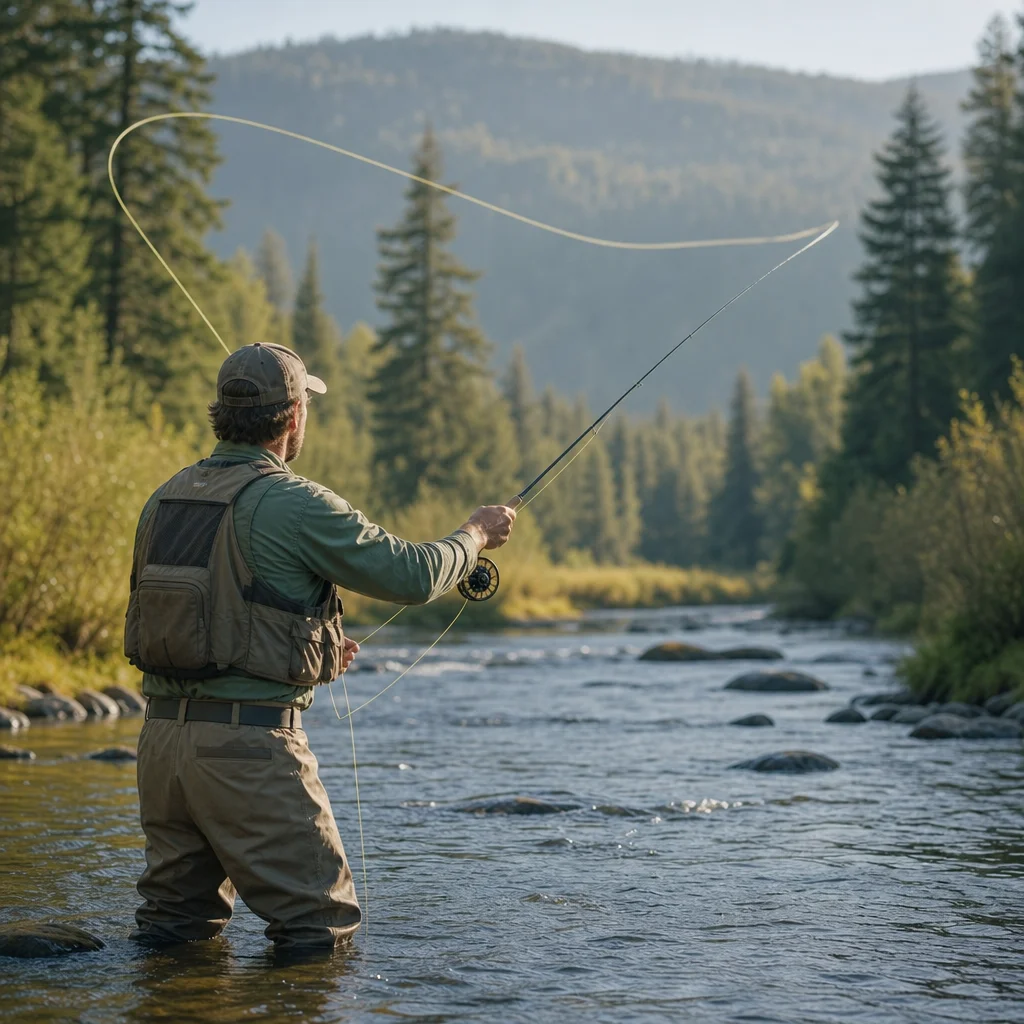
When two dry flies are the same size and imitate the same insect, the parachute version can still fish very differently from a traditional hackled pattern. The choice affects what you can see, how the fly rides in the surface film, and how quickly it becomes difficult to maintain.
For most anglers, neither style is universally better. A parachute dry is often easier to track, especially in broken water or dim light. A traditional dry fly may offer a cleaner upright profile, familiar proportions, or a more durable package depending on its construction. Your best choice depends on the water, light, trout behavior, and how well you can monitor the fly.
What separates the two styles?
A parachute dry fly has hackle wrapped horizontally around the base of a post, usually made from brightly colored hair, synthetic fibers, or another visible material. The hackle spreads around the hook, while the body hangs beneath the film.
A traditional dry fly generally has hackle wrapped around the hook shank in a collar. The fibers extend around the body and point in several directions, creating a more upright, rounded profile. Classic upright-wing patterns and hackled attractors fall into this broad category, although construction varies.
Both styles can float, imitate similar insects, and catch trout. The meaningful differences are practical rather than absolute.
Choose a parachute when visibility is the main problem
The post gives you a clear aiming point above the water. That matters when the fly lands among glare, foam, riffles, or scattered shadows. It also helps when you’re watching a small dry from a longer distance.
A parachute can be especially useful when:
- You’re fishing broken riffles where the fly repeatedly disappears.
- The fly is small enough that a dark hackle collar is hard to track.
- The water is shaded or the background is cluttered with rocks and vegetation.
- You’re fishing two flies and need a more obvious indicator fly.
- You’re learning to detect subtle rises rather than waiting for a dramatic splash.
Post color is a personal preference, but contrast matters more than fashion. A bright post may stand out against dark water, while a darker post can be easier to see against a bright sky or reflective surface. Some anglers use a two-color post so one section remains visible as the viewing angle changes.
Visibility isn't just about the post itself. A fly that is too small, drowned in glare, or coated with excess floatant can still be hard to follow. Choose the most visible fly you can fish without making the pattern obviously oversized for the situation.
Choose a traditional dry when profile and simplicity matter
A traditional hackled dry has no upright post, so it may be less conspicuous to you. That can be a disadvantage when you’re trying to follow it. It can also be an advantage when you want a less prominent pattern from the trout’s viewpoint.
Traditional dries are useful when:
- The water is calm enough for you to track the fly by its movement and rise.
- The natural insect has a more upright or distinct wing impression.
- You’re fishing close enough that visibility isn't a limiting factor.
- The fly is likely to brush against branches, grass, or other obstacles.
- You prefer a compact pattern with fewer projecting materials.
The lack of a post doesn’t automatically make a traditional dry more realistic. Trout respond to size, position, behavior, and the overall impression of the fly. Still, the different hackle arrangement can create a different footprint and profile, which may matter when fish have time to inspect a fly in smooth water.
A traditional pattern can also be easier to select when you’re matching a familiar local fly box. If the fish are taking a standard Adams, Hendrickson, or attractor pattern, changing from a traditional version to a parachute version may solve a visibility problem without changing the basic imitation.
Compare flotation in the water you’re fishing
Both patterns can float well when properly sized, dressed, and dried. The construction alone doesn’t determine flotation.
A parachute’s hackle spreads around the hook and supports the fly in the surface film. Its body often sits low, which can look natural but may make the fly appear partially submerged to the angler. The post can also collect floatant and help keep the upper portion visible.
A traditional hackled fly may ride higher when the hackle is appropriately stiff and the fly isn't overloaded with water. Some patterns sit prominently on the surface, while others settle lower as the fibers become wet or the body absorbs water.
The practical distinction is often how the fly fails. A parachute may remain easy to locate even after its body sits low, because the post stays above the surface. A traditional fly may become difficult to track as the hackle collapses or the pattern rides lower.
For rougher water, select a pattern with adequate hackle and a sturdy design rather than assuming one style always floats better. For smooth water, a low-riding fly may be desirable, but you still need to see it well enough to respond to a take.
Consider silhouette and trout viewing angle
Trout usually see a dry fly from below or from an angle within the water column. They don’t see the same image you see from above. The post that makes a parachute easy for you to track may contribute little to the trout’s underwater view, especially when it is narrow and upright.
The parachute’s hackle lies around the hook, creating a relatively flat support structure at the surface. The body hangs below it, and the hackle fibers can suggest legs or the outline of an insect resting in the film.
A traditional hackled fly presents a more radial collar. Depending on the pattern and hackle length, it can suggest legs, wings, or a general insect shape without a prominent post. That profile may be useful when trout are inspecting flies in slow currents.
These differences are subtle. Size and placement usually deserve attention first. A correctly sized parachute presented over feeding fish will generally outperform a theoretically perfect silhouette presented several feet away from the feeding lane.
Match the style to the water type
Riffles and pocket water
Start with a parachute if tracking the fly is difficult. Riffles create broken reflections, bubbles, and rapid changes in the background. A visible post helps you keep the fly in the intended lane and notice short drifts.
A traditional fly can work well here too, particularly if it has stiff hackle and you can stay close to the drift. The choice becomes less about imitation and more about whether you can maintain visual contact.
Smooth pools and glides
In calm water, a traditional dry can provide a less conspicuous profile. It may be a good option when trout have time to examine the fly or when the fish are refusing a parachute despite continuing to rise.
A parachute remains useful in pools when glare or distance makes the fly hard to see. Consider a smaller post or a subtler color if the prominent marker seems to be affecting refusals, but avoid changing visibility before you’ve confirmed that visibility is actually the problem.
Low light and changing backgrounds
Parachutes usually have the advantage during dawn, dusk, heavy cloud cover, or fishing beneath overhanging vegetation. The post gives your eye something to locate when the hackle and body blend into the surface.
Traditional dries may become practical again when the fly is close and the water is open enough for you to follow its movement. If you can’t reliably see the fly, however, you can’t confidently interpret a rise or mend line without disturbing the drift.
Don’t overlook sizing
A parachute and a traditional dry in the same nominal hook size may not look equally large. The parachute post adds height, and its spread hackle can create a broader visual outline. Compare the body length and overall footprint rather than relying only on the size printed on the package.
Use the smallest pattern that remains visible and floats adequately. If a size 18 parachute disappears, moving to an oversized size 14 may create a larger imitation than necessary. A better solution might be a different post color, improved positioning, or a traditional pattern with a more visible wing.
When trout are feeding selectively, size, body color, and behavior should usually take priority over the convenience of a large indicator post.
Manage maintenance differences
Dry flies perform poorly when they carry water, fish slime, algae, or too much floatant. This applies to both styles, but the materials can make the recovery process feel different.
After a fish or a rough landing, use the following routine:
- Blot the fly gently. Press it against a cloth or amadou-style patch rather than grinding the fibers into the material.
- Shake out excess moisture. A desiccant powder can help restore a damp fly, depending on the manufacturer’s instructions.
- Apply floatant sparingly. Put gel on materials designed to accept it, and avoid coating every fiber until the fly becomes heavy.
- Dry the fly before storing it. Rotate damp flies through a small fly box or drying patch instead of sealing them in a closed compartment.
- Inspect the hackle and post. Replace or retire a fly when the hackle is broken, the post is loose, or the hook has been damaged.
A parachute’s post is easy to treat with a small amount of floatant, but heavy application can mat fibers together. A traditional fly may need attention to the hackle collar, which can collapse if it is repeatedly crushed in a box or snagged in vegetation.
Keep Your Visibility Setup Flexible
Carry both styles in a few important sizes and change one variable at a time. If you switch from a parachute to a traditional dry, keep the size and general pattern similar so you can tell whether visibility, profile, or presentation changed the result.
Use a simple decision process on the water
When choosing between the two, ask these questions in order:
Can you see the fly?
If not, start with a parachute or another highly visible dry. Lost visual contact makes every other judgment less reliable.
Is the water calm and are trout inspecting the fly?
If yes, try a traditional pattern when the parachute is producing refusals or looks too prominent. Make sure the refusal is repeatable before blaming the post.
Is the fly staying on the surface?
If either style sinks, dry and redress it before changing patterns. If the problem continues, select a sturdier or slightly larger version appropriate to the water.
Are you matching the natural insect closely?
Use the style that preserves the needed size, body shape, and position in the film. A parachute isn't automatically an attractor, and a traditional hackled fly isn't automatically more exact.
Are conditions changing?
Keep a parachute available as light fades or the background becomes more difficult. Keep traditional versions for close, calm presentations where a lower-key profile may help.
A practical starting selection
For a beginning or intermediate fly box, you don’t need duplicate patterns in every possible style. Start with a few reliable combinations:
- Parachute, moderate size: for riffles, broken water, and general visibility.
- Traditional hackled dry, same general imitation: for calm pools and close presentations.
- Smaller parachute with a contrasting post: for selective fish when you still need to track the fly.
- Durable attractor in both styles: for testing whether trout respond to profile or simply to a visible surface meal.
The goal isn't to predict which construction trout will prefer in every situation. It’s to give yourself a controlled way to solve the most common problems: losing sight of the fly, failing to keep it floating, or presenting a profile that doesn’t fit the water.
The short answer
Choose a parachute dry when visibility, changing light, or broken water makes tracking difficult. Choose a traditional dry when you’re fishing close, the water is smooth, and a less prominent or more upright-looking profile may be useful.
Carry both when possible, but don’t change styles randomly. Begin with the version you can see and fish effectively, then switch only when you have a clear reason: the trout are refusing the pattern, the fly won’t stay afloat, or the water and light have changed. A fly you can follow through the drift gives you a much better chance to learn what the trout are actually telling you.