How to Use One Adult Caddis Pattern Across Changing Conditions
I’ll show you how to adjust floatant, fly size, position, and retrieve so one adult caddis imitation remains useful as trout move from searching water to an active hatch and then back to opportunistic feeding.
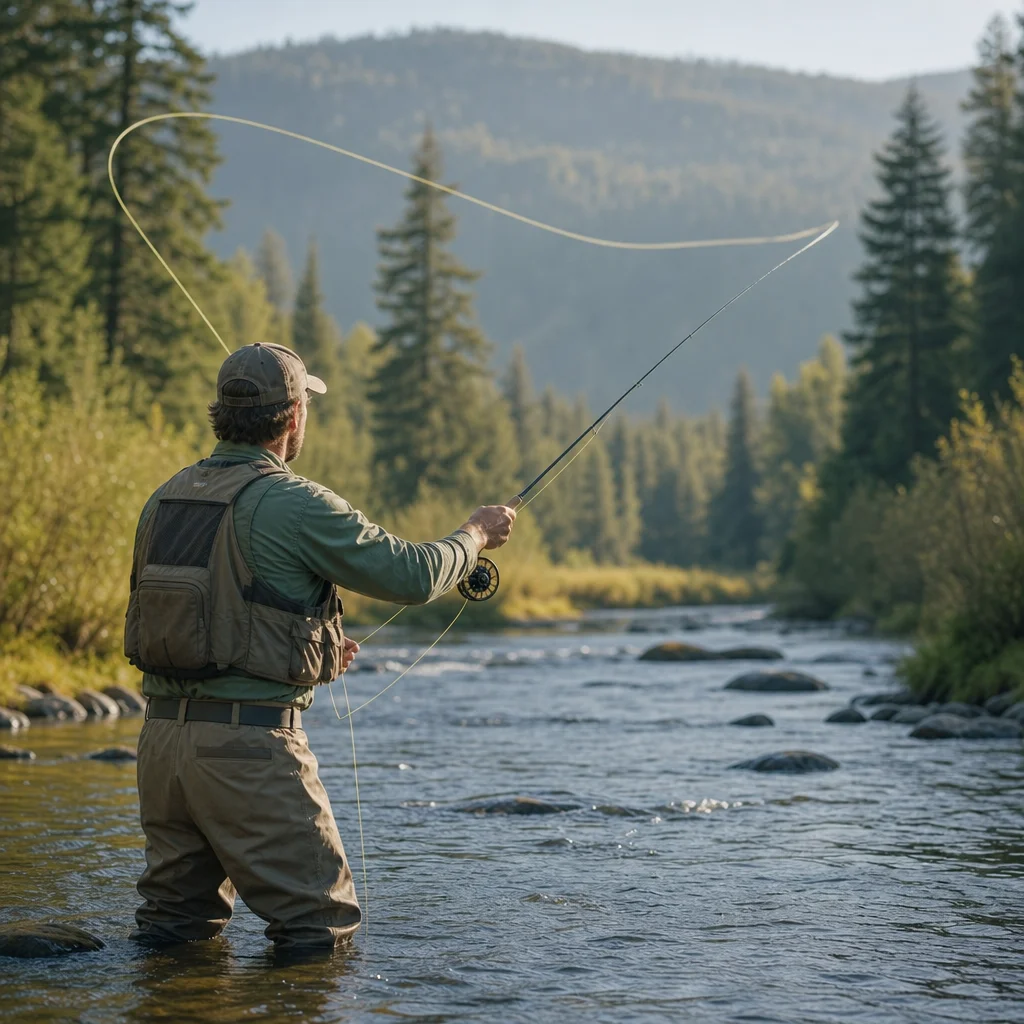
When trout are feeding on caddis, it’s tempting to change flies every few minutes as the light, current, and hatch intensity shift. Often, the bigger advantage comes from changing how you use one dependable adult pattern rather than reaching for a new box of imitations.
A single adult caddis can cover more water and more situations than its simple appearance suggests. It can skate, dead-drift, sit low, or act as a visible target near banks and structure. The key is to make deliberate adjustments in four areas: floatant, position, size, and retrieve.
Start with a versatile adult caddis pattern
Choose a pattern that floats well, is easy to see, and has a silhouette trout can recognize. Elk-hair caddis, CDC caddis, and other compact adult imitations can all work, though each behaves a little differently on the water.
An elk-hair style is usually durable and visible, making it a useful choice for learning this approach. A CDC-based fly can sit more naturally but may need gentler handling and careful drying. Whichever pattern you select, avoid treating it as a perfect copy of one exact species. You’re using it as a general adult caddis suggestion.
A useful all-around starting point has these characteristics:
- A size that matches the most noticeable caddis nearby
- A slim, buoyant body
- A wing or post you can see in broken water
- A hook and dressing that don’t make the fly needlessly heavy
- Enough durability for repeated casts and occasional contact with vegetation
The fly should be easy to cast and easy to track. A microscopic difference in body color matters less if the pattern is hard to see or sinks after two casts.
Before the hatch: cover likely holding water
Before adult caddis become obvious, trout may still be feeding on nymphs, pupae, or other insects. An adult pattern can work during this period, but it generally shouldn’t be your first assumption everywhere.
Use the adult fly as a searching pattern when conditions support it: trout are already looking upward, you see occasional rises, or the fly can be presented naturally along likely edges. Focus on water where a trout can feed without spending much energy, such as:
- Foam lines and soft seams
- The inside edge of a current
- Eddies below faster water
- Banks with overhanging vegetation
- The softer water beside logs, rocks, or undercut edges
Your position matters more than the number of casts. Approach from low in the water column and from downstream when possible. Caddis often flutter and move unpredictably, but your imitation still needs a believable drift long enough for a trout to inspect it.
Start with a dead drift. Cast slightly upstream or across and mend only as much as needed to prevent your line from dragging the fly. If the fly repeatedly swings across the current before reaching a likely lie, move your feet or adjust the casting angle rather than adding more line.
Use minimal floatant at the beginning
Apply enough floatant to keep the fly riding at the surface, but don’t automatically coat every part of the pattern heavily. Excessive floatant can make a fly sit higher and behave differently from a natural adult caddis.
A practical starting method is to treat the hackle, body, or wing according to the fly’s design while leaving the hook point and bend free of anything that could interfere with its intended position. Follow the product’s directions, since different floatants are made for different materials.
If the fly is riding properly and visible, leave it alone. Constantly picking it up to add more floatant creates unnecessary disturbance and costs you fishing time.
During the hatch: let position do the work
Once caddis are actively moving, trout often become more selective about where they feed. You may see splashy rises, short bulges, or fish taking insects close to banks and structure. This is when changing your position can produce more than changing your fly.
Rather than standing in one place and covering every lane, identify the direction in which the naturals are moving. Adult caddis may land, skitter, or get trapped in current margins. Cast so your imitation enters that feeding lane naturally.
Fish the edges first
Caddis activity frequently makes margins attractive. Look for:
- The slow water next to a fast bank current
- Seams where foam collects
- Shallow shelves leading into deeper water
- Overhanging grass, roots, or branches
- The downstream ends of riffles
A trout may move only a short distance to take an adult caddis near an edge, especially when the main current is turbulent. Your fly doesn’t need to cover the entire pool if it’s placed beside a likely lie.
Keep your profile low and avoid false casts over rising fish. If you must reposition line, do it behind the fish or wait for a natural pause. A good drift can be ruined by a well-intentioned aerial display.
Adjust floatant for the water you’re fishing
Fast, broken water calls for reliable flotation and visibility. Add or refresh floatant when the pattern begins to sit low, takes on water, or becomes difficult to track. In smooth water, use less product and make sure the fly isn’t leaving an unnatural wake.
A caddis pattern that rides high can be useful in riffles, but it may look suspicious on a flat. On calm water, a lower-riding presentation is often worth trying before you abandon the fly. You can remove excess water by false-casting away from the fish, using a suitable drying material, or replacing the fly briefly while it dries.
Avoid squeezing delicate materials aggressively. A crushed wing or matted CDC puff can change the fly’s profile more than you intended.
Match size before color
When trout refuse a fly during a hatch, anglers often change color first. Size is usually the simpler variable to test.
Compare the adult caddis you see on the water, in shoreline vegetation, or around your clothing. You don’t need a precise entomological identification. Ask whether your fly looks obviously larger or smaller than the insects trout are encountering.
A useful order of adjustments is:
- Keep the same general pattern and try a smaller size.
- If trout are ignoring it, try a larger size when the naturals are conspicuous.
- Change color only when size, drift, and position already look reasonable.
Small caddis can be especially important on clear water or during a sparse hatch. Conversely, a larger adult may be easier for trout to find in broken current or low light. The best size isn't necessarily the most common insect; it’s the size that fits both the natural activity and the water’s visibility.
Carry two or three sizes of the same pattern instead of many unrelated designs. That gives you a useful adjustment without making your decision process more complicated.
After the hatch: add controlled movement
When the main burst of activity fades, trout may continue looking for stranded or escaping caddis. This is the time to experiment with a small amount of movement—but movement should be intentional, not constant.
Begin with a dead drift through the most likely water. If that produces no response, try one of these changes:
- Lift the rod tip slightly as the fly approaches a seam
- Give the fly a short, gentle twitch near a bank
- Let it skate briefly across the current
- Cast tight to cover and allow the pattern to move a few inches downstream
- Use a short strip only after the fly has completed a natural drift
Think of these as brief accents. A caddis adult can flutter or skitter, but a fly dragged continuously across the surface often looks like an object fleeing without purpose. Short movements are easier to control and less likely to spook fish in clear water.
If a trout follows or rises short, don’t immediately speed up the retrieve. The fish may be responding to the fly’s angle, size, or position rather than asking for more motion. Repeat the presentation with a slightly different landing spot or a shorter twitch.
Change one variable at a time
The advantage of using one pattern is that you can learn what the water is telling you. If you change floatant, size, retrieve, and position together, a successful cast won’t tell you which adjustment mattered.
Use a simple progression:
1. Improve the drift
Check for drag, line shadows, and a poor casting angle. Mend early and keep the leader as straight as the situation allows without pulling the fly.
2. Change position
Move upstream, downstream, or toward a different current edge. Trout may be feeding in a narrow lane that your original position can't reach cleanly.
3. Adjust floatant
Make the fly ride higher for broken water or sit more naturally on smooth water. Refresh it only when its performance has changed.
4. Change size
Try the next smaller or larger version of the same adult pattern.
5. Add movement
Use a short twitch or skate after you’ve established that a natural drift isn’t producing.
This sequence keeps the problem manageable. It also prevents the common mistake of blaming the fly when the real issue is drag or poor placement.
Know when one adult pattern isn’t enough
A versatile fly isn't a universal solution. Switch patterns when the evidence points clearly elsewhere.
If trout are rising repeatedly but refusing your adult after careful drifts and reasonable size changes, they may be focused on emergers or pupae below the surface. If you see no surface activity and the fish are feeding deep, an adult imitation may simply be the wrong tool. A weighted nymph, pupa, or soft-hackled wet fly may give you a more appropriate presentation.
You should also change when wind, rain, or heavy surface turbulence makes the fly impossible to control. A pattern that can’t be tracked or presented cleanly isn’t helping just because it worked earlier.
The goal isn’t to prove that one fly can solve every condition. It’s to get more useful fishing from a good pattern before making a change.
A compact decision checklist
When conditions change, ask:
- Is the fly still floating as intended?
- Is my drift natural, or is the line pulling it?
- Am I positioned to reach the feeding lane?
- Does the fly look clearly too large or too small?
- Would one short twitch better imitate a struggling adult?
- Are trout actually feeding on the surface?
Start with the least disruptive adjustment. Usually that means improving position or drift, then changing floatant or size, and only afterward adding movement or changing flies.
A single adult caddis pattern becomes much more useful when you treat it as a presentation tool rather than a fixed answer. Keep it floating when the water demands visibility, let it sit lower on smooth water, adjust size before chasing color, and use movement sparingly after the hatch. With those habits, you can spend less time sorting through fly boxes and more time learning where and how trout are feeding.