How to Choose Flies When the River Is Clear but the Sky Is Overcast
Clear water still rewards restraint when clouds soften the light, but silhouette and contrast become more important than bright-water rules suggest. I’ll explain how visibility, trout behavior, and fly profile work together so you can choose with more confidence.
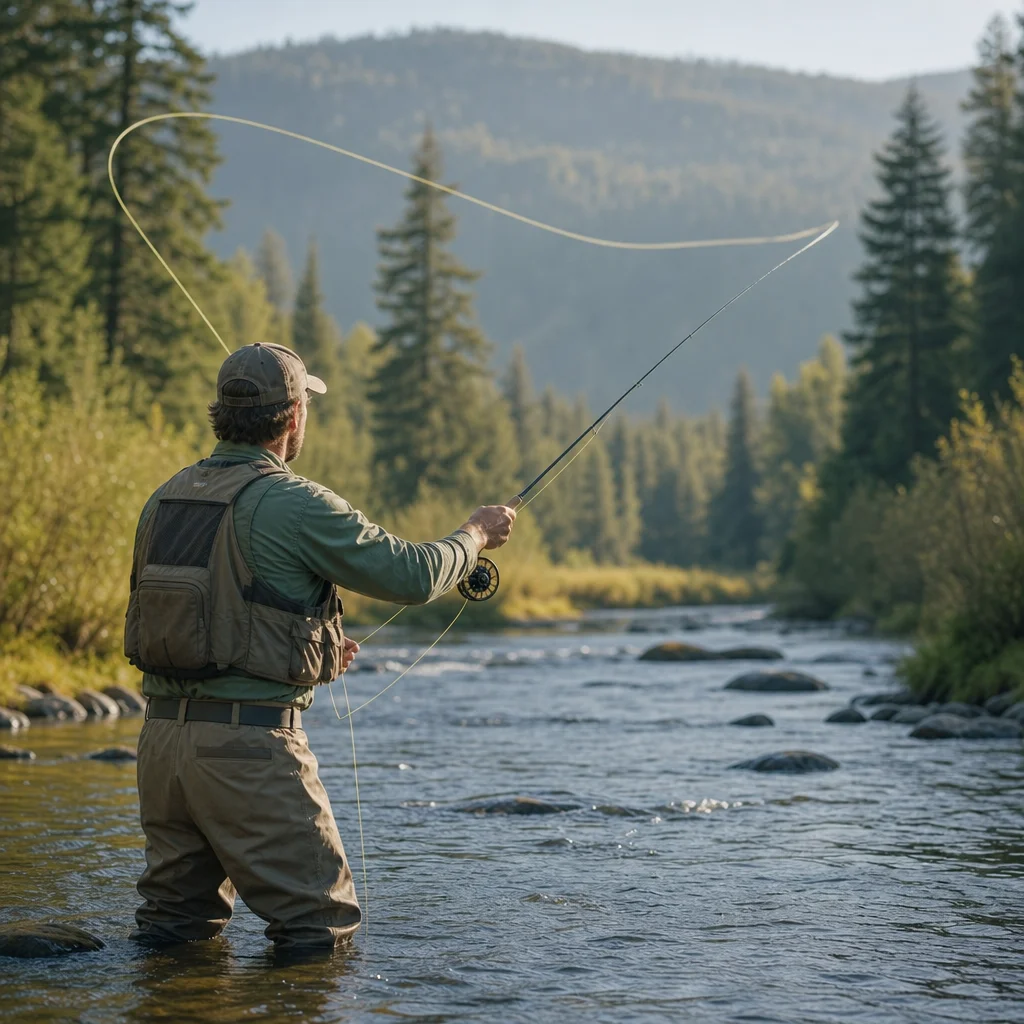
Clear water can make fly selection feel unforgiving. Add an overcast sky and the usual bright-day advice becomes less reliable: glare disappears, shadows soften, and a trout may inspect a fly from several angles without being dazzled by surface reflection.
The useful question isn’t simply whether to choose a light or dark pattern. It’s how much of the fly’s shape, movement, and contrast the trout can distinguish—and what the fish is likely to be doing under those conditions.
Start with the water, not the weather
An overcast sky changes the light, but it doesn’t erase the other factors that control fly choice. Begin with the river itself.
Look at:
- Water clarity: Can you see the bottom, submerged rocks, or trout at normal fishing distance?
- Depth and speed: A fly in shallow, slow water is easier to inspect than one drifting through a deep run.
- Surface condition: Flat water gives trout a clean view of your fly. Broken riffles conceal both mistakes and imitation details.
- Recent insect activity: Watch the surface, streamside vegetation, rocks, and slower margins for signs of mayflies, caddis, midges, or terrestrials.
- Fish position: Trout rising in a feeding lane give you different information from trout holding deep and refusing to move.
Clear water is a visibility problem, but it’s also an observation advantage. You may be able to see what trout are eating, where they are holding, and whether they follow or reject a pattern. Use that information before changing flies based on the sky alone.
What overcast light changes
Bright sunshine creates glare and strong contrast between light and shadow. That can make a small dry fly difficult for you to track, while the glare may limit a trout’s view of the fly from below. Overcast conditions reduce that glare and spread light more evenly across the river.
For the angler, this often means:
- The fly may be easier to see against the surface.
- Trout can inspect the fly without fighting as much surface glare.
- Shadows from your rod, line, or body may be less obvious.
- A hatch can appear more active or last longer, depending on water temperature and insect behavior.
- Subtle differences in profile, size, and drift may become more important than a bright color that catches your eye.
These are tendencies, not guarantees. A cloudy day doesn’t automatically call for a larger fly, a darker fly, or a more visible attractor. In clear water, trout may still reject a pattern that is too bulky, too stiff, or poorly matched to the insects around them.
Choose profile before color
When trout have a clear view, the outline of your fly often matters more than its exact shade. A good first choice should resemble the general shape and posture of the food available—not necessarily reproduce every microscopic detail.
For a dry fly, consider:
- The height of the wings or post
- The shape and length of the body
- Whether the hackle looks sparse or overly dense
- How the fly sits in the film
- Whether the pattern creates an unnatural bulky silhouette
A slim mayfly imitation, a low-profile emerger, and a heavily hackled attractor present very different shapes even if they share a similar color. In clear water, that difference can be visible to trout.
For nymphs, profile still matters, although movement and depth usually have more influence. A slender nymph may work better in clear, moderate water when trout are inspecting small natural insects. A thicker pattern can make sense when the naturals are larger, the current is fast, or the fly must carry weight.
If you see trout refusing a fly that appears to be the right color, try reducing bulk before changing to a dramatically different hue.
Use contrast deliberately
Contrast helps a trout find a fly, but too much contrast can make the fly look artificial. In overcast light, the absence of harsh glare may allow a fish to see the fly’s edge and internal features more clearly. That makes contrast worth managing rather than maximizing.
A useful way to think about contrast is relative to the background:
- A pale fly may stand out against dark water or a shaded bank.
- A dark fly may show clearly against a bright, cloudy sky when viewed from below.
- A mottled or translucent pattern may blend more naturally over a mixed riverbed.
- A small hotspot can help you track a fly without turning the entire pattern into a target-like signal.
A dark pattern isn't automatically stealthier, and a pale pattern isn't automatically subtle. A solid black body may create a sharp silhouette, while a sparse, translucent tan pattern may disappear into the same water. The right level of contrast depends on depth, background, fly size, and how the fly sits in or beneath the surface.
Match the fly’s visibility to the drift
The fly needs to be visible enough for you to fish it effectively. If you can’t track the drift, you may miss takes, drag the fly while searching, or lose contact with a nymph.
In clear water, improve visibility without making the imitation needlessly conspicuous. Options include:
- A small, light-colored wing or post on a naturally proportioned dry fly
- A subtle thorax marker rather than a large, bright indicator section
- A slightly more visible nymph at the beginning of a search pattern
- A separate indicator positioned away from the fly when the situation allows
The best visible fly is one you can follow while still presenting a believable shape and drift.
Pick size from the insects, then adjust for visibility
Overcast skies can tempt you to fish a larger fly because the surface may seem darker and the fly harder to see. In clear rivers and spring creeks, that adjustment can be costly if the larger pattern no longer resembles the food trout are taking.
Use observed insect size as your starting point. If you see tiny midges, begin small. If mayflies are moving, compare their body length and profile to your box. If no hatch is visible, choose a moderate pattern that fits the season and water rather than jumping immediately to an oversized attractor.
Then adjust one variable at a time:
- Keep the general profile and go slightly larger if trout are rising but can't locate the smallest fly, or if the surface has enough texture to hide it.
- Keep the size and simplify the pattern if trout approach but refuse it.
- Go smaller if fish are inspecting the fly closely, stopping short, or turning away at the last moment.
- Change the drift or tippet presentation before assuming the fly is wrong.
A fly one size larger can be useful in broken water or low light, but size should support the imitation—not substitute for identifying it.
Build a simple dry-fly progression
When you’re fishing a clear river under clouds, a progression can keep you from changing everything at once. Start close to the likely food source and move toward greater visibility or stronger contrast only as needed.
1. Begin with the best natural match
Choose the pattern that most closely matches the insects you can identify. Favor a sparse, correctly proportioned fly if the water is calm and the trout are selective.
2. Improve tracking without changing the whole idea
If you can’t see the fly, use a version with a more visible post, wing, or thorax. Keep the size and basic silhouette similar.
3. Change profile before making a dramatic color change
Try an emerger, a lower-riding pattern, or a different hackle arrangement if trout are feeding in or just below the film. Many refusals blamed on color are really refusals of height or shape.
4. Add contrast when the water or background demands it
A darker abdomen, a two-tone body, or a modest hotspot can help when the fly vanishes against the surface. Avoid turning a delicate imitation into a brightly marked attractor unless the fish’s behavior supports it.
5. Recheck the drift
A perfect fly with drag still looks wrong. Watch for unnatural acceleration, a wake, a leader lying across the feeding lane, or a fly that moves differently from nearby bubbles and debris.
Nymphs and emergers need a different balance
Cloud cover often encourages anglers to focus on surface flies, but trout may continue feeding beneath the surface. In clear water, a nymph or emerger should balance enough visibility for you with a subdued appearance for the fish.
For a nymph, consider a natural or lightly suggestive pattern with a slim profile. Use weight, depth, and drift to reach the feeding zone. A bright collar or bead can be useful as a point of attraction, but it should have a reason: deeper water, stained edges, aggressive fish, or a search pattern when no specific food source is evident.
Emergers deserve special attention when trout are rising inconsistently. A dry fly may sit too high, while a traditional nymph may sink below the feeding lane. A low-riding emerger, soft-hackled pattern, or unweighted nymph can present the transitional profile trout often see in the surface film.
In glassy clear water, reduce unnecessary flash and avoid excessive dubbing or fibers. In a broken current, a touch of flash or a more substantial profile may help the fly remain visible and fishable.
When a darker fly helps—and when it doesn’t
Darker flies can be effective under overcast skies because their silhouette may be easy for trout to distinguish against a lighter surface. This is especially relevant for surface insects that naturally have dark bodies, small terrestrials, or larger silhouettes in broken water.
But dark isn't a universal low-light answer. A dark fly may be a poor choice when:
- The natural insects are pale or translucent
- Trout are feeding on small, light-colored mayflies
- The water is calm enough for close inspection
- The pattern creates a thick, unnatural outline
- You’re using color to compensate for drag or the wrong depth
Choose darkness when it improves the imitation or the fly’s visibility in context. Don’t choose it merely because the clouds arrived.
Check the drift before changing color
If trout follow, rise short, or turn away, first watch the fly’s speed, height, and landing position. A presentation problem can look exactly like a color problem in clear water.
Account for edge cases
Some conditions make the basic clear-water-and-cloud-cover approach less predictable.
Wind and surface texture
Wind can add helpful surface disturbance, hide your leader, and break up the trout’s view. It may justify a slightly larger or more visible fly than you’d use on a calm day. However, wind also changes your cast and can create drag, so don’t assume a fly change will solve a presentation problem.
Cloud breaks
If the sun appears and disappears, the river may alternate between glare and clear, even lighting. Keep two nearby options ready: one subtle pattern for close inspection and one with enough contrast for tracking when the surface brightens.
Deep pools
A fly that looks restrained in shallow water may vanish in a deep pool. Depth, current, and angle affect how much contrast reaches the trout. You may need a heavier nymph, a more visible indicator, or a slightly stronger silhouette—but maintain an appropriate size and drift.
Selective fish in spring creeks
Slow spring-creek water gives trout time to examine your fly. Under clouds, the reduced glare may make that examination easier. Favor accurate size, sparse materials, and a drag-free drift. If the fish are visibly rejecting a pattern, make small changes rather than cycling through bright colors.
No visible hatch
When nothing is moving on the surface, avoid treating overcast conditions as a signal to fish a random dark dry. Start with a sensible search pattern, inspect likely holding water, and be prepared to move below the surface if trout show no interest.
A practical decision sequence
When you reach clear water under an overcast sky, use this short sequence:
- Observe for several minutes. Look for rises, drifting insects, shucks, and trout position.
- Identify the broad food category. Decide whether you’re seeing mayflies, caddis, midges, terrestrials, or no clear hatch.
- Match size and profile first. Select a fly that sits and moves like the likely food.
- Choose moderate contrast. Make the fly findable without making it conspicuously bright or bulky.
- Fish the best drift. Adjust angle, reach, leader, and distance before blaming the pattern.
- Change one feature at a time. Try size, profile, depth, or contrast in a deliberate order.
- Use the trout’s response as evidence. A refusal, follow, rise, or complete lack of interest each tells you something different.
Practical next steps
Pack a small selection built around the same food source in several profiles: a standard imitation, a sparse or emerger version, and a more visible tracking version. Include modest light and dark options, but don’t let color dominate your decisions.
On the water, begin with the most convincing silhouette you can justify. Then let the trout’s behavior determine whether you need more visibility, less bulk, a different depth, or simply a cleaner drift. In clear water under clouds, the winning fly is usually the one whose profile, contrast, and presentation make sense together—not the one that follows a single low-light rule.