How to Select Trout Flies When the Water Is Slightly Stained
I’ll clarify how to choose trout flies when rain or runoff clouds the water, using visibility, contrast, movement, and size to narrow your options without guessing or changing patterns at random.
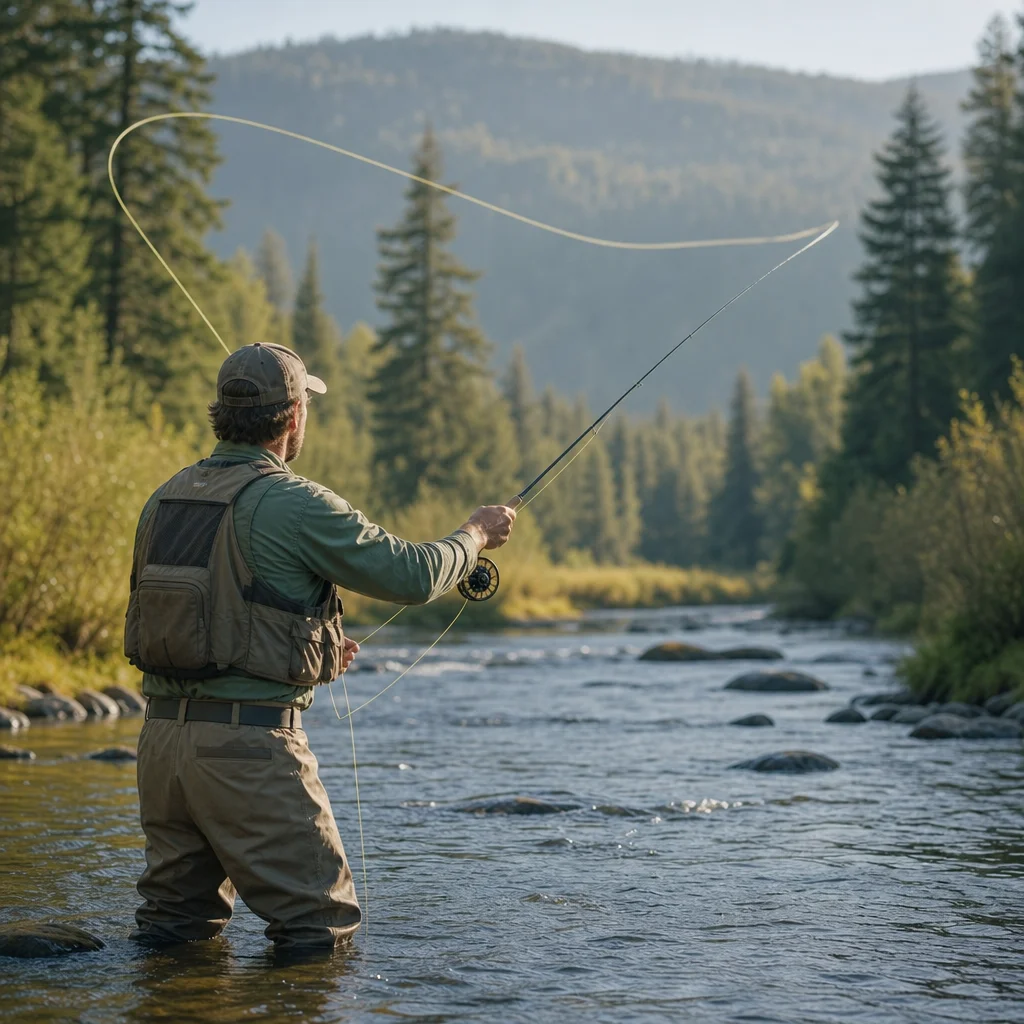
Slightly stained water creates an awkward middle ground: trout can still see, but their usual view is shortened and less reliable. Many anglers respond by reaching for the largest, darkest fly they own. That can work, but it isn’t a complete strategy—and sometimes it makes the presentation less natural.
The better approach is to adjust one or two features at a time. Start by judging how much visibility the trout probably have, then choose a fly that offers enough contrast, movement, or profile to be found without looking unnecessarily large or unnatural.
First, judge how stained the water is
“Stained” can describe anything from a light tea color to water that looks like chocolate milk. Your fly selection should change with the degree of discoloration.
Light stain: trout can still inspect a fly
If you can see the bottom in shallow water and detect your leader a short distance below the surface, the trout may still have a useful visual window. In these conditions, begin with a pattern close to the food you expect to be present, but favor materials or colors that stand out slightly.
A nymph with a dark back, a pale body, or a modest amount of flash may be easier to track than a muted pattern that perfectly matches the streambed. A dry fly with a visible hackle or wing post can remain effective if trout are feeding near the surface.
Moderate stain: the fly needs help being found
When the bottom disappears at modest depth and the current carries visible silt or runoff, trout have less time to locate your offering. Contrast and movement become more important than a precise imitation.
This is a good point to consider a darker nymph, a fly with a hot spot, a bead, rubber legs, or a streamer that pushes some water. You still want a believable size and profile, but the fly needs to announce its presence within a shorter visual range.
Heavy stain: prioritize detection and control
If visibility is only a few inches, a small, delicate pattern may be difficult for trout to find. A larger nymph or streamer with a strong silhouette, vibration, or flash can be more practical.
There is a limit, though. A fly that is too large, too bright, or too aggressive can look out of place, especially in a small stream where trout are accustomed to compact food. Heavy stain doesn’t eliminate the need for a sensible presentation; it simply shifts the balance toward detection.
Use contrast before reaching for extreme color
Contrast is the difference between the fly and the background behind it. In stained water, a contrasting outline can matter more than the exact shade of the fly.
Dark flies often produce a clear silhouette against a brighter, cloudy background. Black, dark brown, olive, and deep purple can be useful choices, particularly under overcast skies or in water carrying pale sediment. A dark fly doesn’t need to be huge to be visible.
Bright elements can help in a different way. Orange, pink, chartreuse, white, and fluorescent materials may create a target against a darker streambed or shadowed water. Use them as an accent before making the entire fly intensely bright. A colored bead, thread collar, indicator-style post, or small hot spot may provide enough contrast.
Reflective flash can also help, but it should support the fly’s profile rather than overwhelm it. A few strands of flash suggest a flicker from a minnow or emerging insect. Excessive flash can make the fly look less like food and more like a small piece of misplaced decoration.
The most useful contrast depends on the background. A black fly isn’t automatically the best choice in every stained stream, and a bright fly isn’t automatically easier for trout to accept. Think in terms of outline and separation from the water around it.
Let movement make the fly easier to detect
Movement gives trout another way to find a fly when visibility is reduced. This doesn’t mean every fly should be stripped quickly or jerked aggressively. It means the pattern can contain features that move naturally in current or during a controlled retrieve.
For nymphs, rubber legs, soft hackle, marabou, and other mobile materials can suggest life. A bead adds weight and may create a small visual cue as the fly moves through the water. These features are especially useful when the current is pushing food around and trout are feeding opportunistically.
Streamers are a natural option when stain follows rain, rising water, or the movement of baitfish. Marabou, rabbit-strip, and other flowing materials can pulse even at slow speeds. A streamer with a defined profile and moderate movement may be easier for a trout to track than a stiff, featureless pattern.
Keep the retrieve controlled. In discolored water, trout may need to turn toward the fly, and a fast retrieve can take it out of their limited visual range before they can commit. Start with slow strips, pauses, or a swing through likely holding water. Adjust only after you’ve considered depth and current speed.
Movement also comes from the river itself. A fly dead-drifted through the correct seam may be more detectable and convincing than a highly animated fly presented in empty water. Don’t use action to compensate for poor positioning.
Choose size as a response to visibility, not panic
Increasing fly size can help a trout locate the pattern, but “bigger” should be a measured adjustment.
If you normally fish a small nymph in clear water, moving up one size may create a more visible profile without becoming implausible. With streamers, a slightly larger fly may push more water and give the fish a stronger target. In moderate stain, this is often enough.
A much larger fly can create several problems:
- It may no longer resemble the food trout are seeing.
- It can be harder to cast accurately or safely.
- It may land heavily and disturb shallow holding water.
- It can drift or swim at an unnatural speed.
- It may encourage you to fish too aggressively.
Try changing size and color separately when possible. If you switch from a small olive nymph to a much larger, bright streamer and get no response, you won’t know which change failed. A more disciplined progression might be a familiar pattern in a slightly larger size, followed by a darker or more contrasting version.
Match the fly category to the conditions
Nymphs for subsurface feeding
Nymphs are a dependable starting point when stain has followed a brief rain but there is no clear sign of surface activity. Choose a pattern that combines a recognizable shape with one visibility aid: a bead, a contrasting collar, a darker thorax, or subtle flash.
Fish it where trout can conserve energy while watching food pass by—along current edges, behind rocks, near undercut banks, and at the inside edge of faster water. Stained water can make trout more willing to hold in areas they avoid when the current is highly exposed, but you still need to cover plausible lanes rather than casting randomly.
Streamers for active searching
A streamer can be useful when trout are responding to movement, especially in higher or slightly off-color water. Select one that is visible enough to track but not so large that it becomes difficult to control.
Dark streamers provide a strong outline. White or bright accents can help in deeper or more shadowed water. A natural olive, brown, or gray body may be a sensible compromise when you want contrast without an extreme color change.
Vary the retrieve before changing flies. Try a slow swing, short strips, a pause, or a drift along a bank. Trout may follow without striking, and that behavior can tell you more than a completely empty cast.
Dry flies when surface clues remain
Stained water doesn’t automatically rule out dry flies. If you see rising trout, trapped insects, or adults skating and collecting on the surface, stay with that evidence.
You may need a larger or more visible dry fly so both you and the trout can find it. A visible post or contrasting wing can help you track the fly, while the body remains reasonably close to the insects present. If the surface is quiet and the water is carrying debris, a subsurface pattern is usually easier to justify.
Avoid these common mistakes
Changing flies too quickly
Runoff often makes anglers cycle through patterns without learning anything from each one. Give a reasonable fly enough time to pass through several productive lies. Change the presentation—depth, drift, retrieve, or angle—before assuming the pattern is wrong.
Using too much flash or color
A visibility aid is useful only if it helps the fly look like something a trout might eat. Start with a small accent. Increase brightness or flash when the water becomes more opaque, not simply because the first cast was ignored.
Fishing only the obvious water
Stained conditions can change where trout feel secure. Fish the soft edges beside faster current, the seams around structure, and the slower water near banks. A well-chosen fly can't compensate for presenting it where trout aren’t holding.
Forgetting depth
A highly visible fly above the trout is still invisible as a meal. Add weight, use a weighted pattern, adjust your leader and indicator setup, or slow the drift so the fly reaches the feeding lane. Make changes that preserve control rather than adding weight indiscriminately.
A simple selection process
Use this sequence when you’re unsure where to begin:
- Estimate visibility. Decide whether the water is lightly, moderately, or heavily stained.
- Look for evidence of food. Check the surface, banks, current edges, and any baitfish activity.
- Start with a familiar category. Use a nymph, streamer, or dry fly that fits what you’re seeing.
- Add one visibility feature. Choose contrast, a modest size increase, movement, or a small bright accent.
- Fish the right depth and lane. Presentation usually matters more than the color change you’re considering.
- Change methodically. Adjust one variable at a time so each result teaches you something.
Slightly stained water doesn’t require a secret pattern. It requires a fly that can be found, presented naturally, and adjusted to the amount of visibility available. Start with contrast and a realistic profile, add movement when it helps, and increase size only as much as the conditions justify. Then let the trout’s response—not the color of the water alone—guide your next change.