Choose Streamer Size Without Guessing What Trout Can Eat
Streamer size gets confusing when clear water, fast current, and mixed forage point in different directions. I’ll show you how to weigh visibility, prey profile, presentation, and target fish instead of defaulting to “go big” or “go small.”
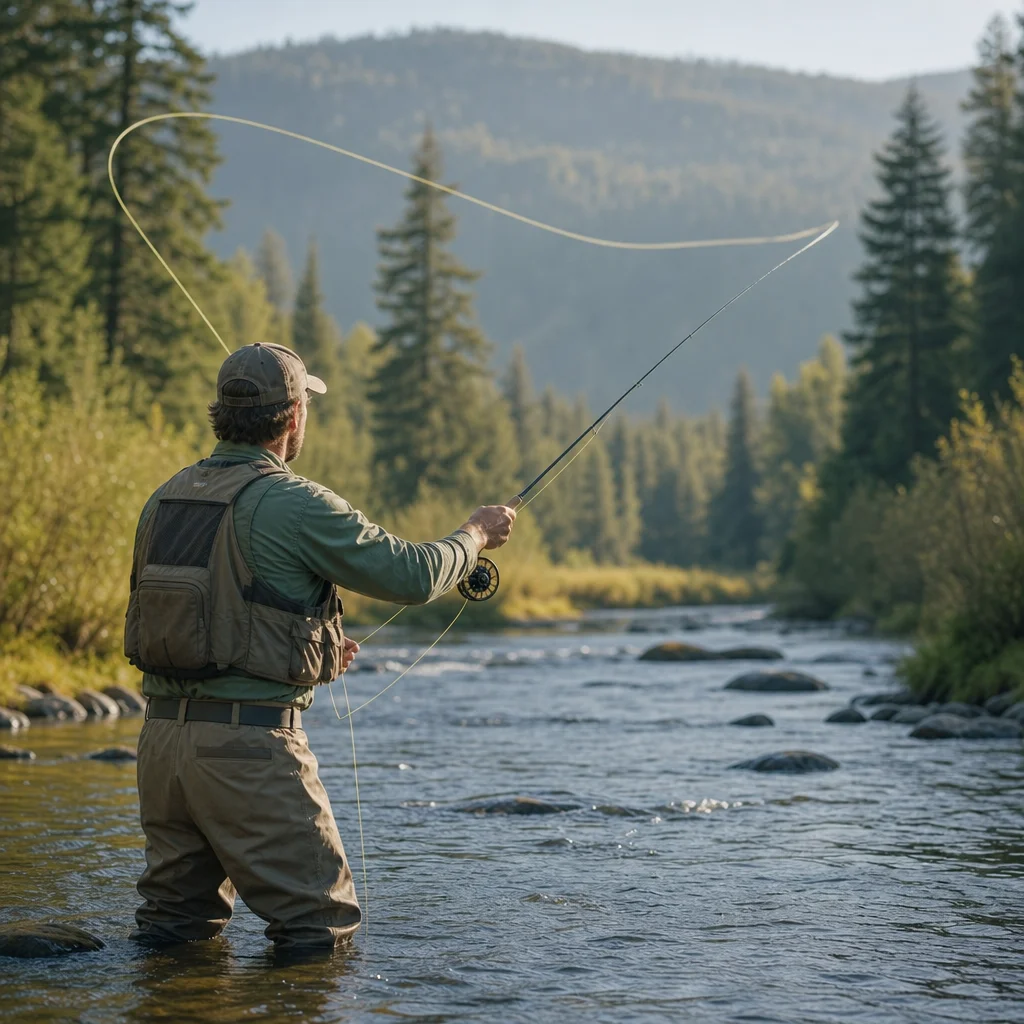
A streamer can be small enough to look harmless and still be difficult for a trout to track. It can also be large enough to imitate an appealing meal but move so poorly in the current that fish never get a clean look. The useful question isn’t simply, “What can this trout fit in its mouth?” It’s, “What size and profile can this trout find, intercept, and confidently attack today?”
That decision depends on more than trout size. Water clarity, light level, current speed, available forage, depth, retrieve, and the behavior of your target fish all matter. Rather than treating streamer size as a large-versus-small argument, use those conditions to choose a sensible starting point, then adjust based on what the fish tell you.
Start with profile, not just length
Streamer size is usually discussed in inches or hook size, but length alone doesn’t describe what a fly presents. A slim baitfish pattern, a broad sculpin imitation, and a bulky articulated fly may occupy very different amounts of water even if their measured lengths are similar.
Consider four parts of the fly:
- Length: The apparent size from nose to tail.
- Profile: How tall or wide the fly looks from the side and below.
- Bulk: How much material displaces water and how strongly the fly pushes during the retrieve.
- Weight: How quickly it reaches the intended depth and how it behaves in current.
A long, sparse streamer may be easier for a trout to track than a shorter, heavily dressed pattern. A compact fly with a broad profile may imitate a crayfish or sculpin more convincingly than a much longer, narrow baitfish pattern.
This distinction matters when you change flies. If a trout follows a streamer but turns away, reducing length may not solve the problem if the real issue is excessive bulk, an unnatural pause, or a fly that is running too high. Change one feature at a time when possible.
Use visibility to set the first size
Water clarity and available light determine how much detail a trout can see before it decides whether to chase. They don’t dictate a single correct size, but they help establish a useful starting range.
Clear water and bright conditions
In clear water, trout can inspect a streamer from a greater distance. A large, bulky pattern may look unnatural, especially when fish have time to follow it through calm water. Start with a moderate or slender profile that matches the size of the most plausible forage, then increase size only if the fly is difficult to track or fails to draw interest.
This doesn’t mean clear water always calls for tiny streamers. A large trout may still attack a substantial meal, particularly near cover, during a short feeding window, or when the fly crosses a fish’s territory. The difference is that the presentation usually has to give the fish a reason to commit. A cleaner silhouette, controlled speed, and convincing direction change may matter more than adding length.
Stained water, shade, and low light
When visibility is reduced, a larger profile can help a trout locate the fly. Bulk, contrast, movement, and vibration may be more useful than fine anatomical detail. You can increase the streamer’s apparent size by choosing a wider pattern rather than simply adding several inches of length.
In these conditions, watch the difference between “visible” and “oversized.” A dark, broad fly may create a strong silhouette without imitating an unusually large baitfish. If the fly feels difficult to cast, sinks too aggressively, or fouls during pauses, it may be delivering more size and mass than the situation requires.
Check the fly’s visibility: Before changing to a much larger streamer, watch whether you can track the current fly during the retrieve. If you can’t see its direction or depth, try a more contrasting or bulkier pattern first; that may solve the problem without making the meal dramatically larger.
Let current speed influence both size and mass
Current changes how large a streamer appears and how much control you have over it. In fast water, a large or heavily weighted fly may reach depth quickly, but it can also swing too rapidly, snag frequently, or lose its intended action. A smaller, less bulky pattern may stay in the strike zone longer and look more natural as it crosses seams.
Fast current also reduces a trout’s decision time. That can make a substantial profile effective because the fish has less opportunity to examine it. However, the fly still needs to be interceptable. If it is racing across the current above the fish or plunging below the feeding lane, its size is irrelevant.
In slower water, trout have more time to inspect and follow. A smaller or slimmer streamer often gives you better control, particularly in clear pools and along gentle banks. You can compensate for the reduced profile with pauses, subtle rod movement, or a retrieve that allows the fly to suspend and turn.
Think of size and speed as linked variables. If you choose a larger streamer, you may need a slower retrieve, deeper presentation, or more deliberate pauses. If the current forces a fast retrieve, a slimmer fly may remain believable when a bulky pattern doesn't.
Match the likely forage, not the entire food chain
You don’t need to identify every prey item in the river. You do need a reasonable idea of what trout can encounter in the water you’re fishing.
Useful clues include:
- Small baitfish around shallow edges, tributary mouths, or lake structure
- Sculpins and other bottom-oriented prey near rocks and deeper banks
- Juvenile trout in systems where trout reproduce
- Crayfish in rocky rivers and lakes with suitable habitat
- Large aquatic insects or terrestrial prey that may be represented by a streamer-like pattern
Forage size can vary by location within the same river. A deep undercut bank may hold larger prey than a shallow riffle. A lake point may offer different baitfish than a windblown shoreline. Match the habitat you’re targeting rather than choosing a streamer based on a general impression of the whole fishery.
Also consider whether the forage is abundant or merely present. Trout may ignore a large imitation when small prey are everywhere, yet attack a larger streamer when a single vulnerable baitfish moves away from cover. The fly doesn’t have to be an exact copy; it has to be a believable opportunity.
Consider the target trout and the opportunity cost
A trout’s ability to eat a streamer isn't the same as its willingness to pursue one. Larger fish can handle larger prey, but they may not spend energy chasing a fly that is difficult to intercept. Smaller trout can attack surprisingly large streamers, especially when the fly is presented near cover or moves with a fleeing action, but that doesn’t mean a large pattern is the most efficient choice for finding them.
Ask what you’re trying to accomplish:
- Locate active fish: Start with a visible, moderately sized fly that covers water efficiently.
- Target a known large fish: Increase profile or length if the habitat and forage support it, but preserve control and a believable retrieve.
- Avoid small fish: A larger streamer may reduce some small-fish interest, though it won’t prevent every small trout from attacking.
- Fish tight cover: Choose a size and weight you can cast accurately and keep out of excessive snags.
The larger the streamer, the more water it may cover visually, but the more it can cost in casting effort, leader turnover, hang-ups, and missed fish. Bigger is a tactical choice, not a measure of seriousness.
Build a size progression instead of carrying one answer
A practical streamer box should give you several profiles rather than a dozen nearly identical lengths. A simple progression might include:
- Small and sparse: Useful for clear water, slower current, pressured fish, or compact forage.
- Medium and versatile: A dependable starting point when conditions are mixed or uncertain.
- Large but streamlined: Helpful when visibility is poor, forage is substantial, or you’re searching for a larger target.
- Short and bulky: Effective when you want a strong silhouette without excessive length.
- Long and articulated: Useful when you need swimming movement and a larger presence, provided you can control the fly and protect the tippet connection.
These categories are more useful than rigid inch labels because patterns vary. One maker’s size 4 may have a completely different profile from another’s size 4. Compare flies by silhouette, mass, and behavior in the water.
Use the first few casts as a test
Your opening streamer should answer questions, not merely catch a fish. Watch how it tracks, sinks, turns, and responds to pauses. Note whether you can keep it near the bank, bottom, or current seam you intended to fish.
Then read the trout’s response:
- No sign of fish: Change depth, angle, or retrieve before assuming size is wrong.
- Short follows: Try a smaller profile, a less bulky fly, or a different speed.
- Aggressive follows that stop short: Test a pause, direction change, or slightly smaller silhouette.
- Weak interest in clear water: Reduce bulk or length, especially if fish have plenty of time to inspect the fly.
- Fish appear but can't track the fly: Increase contrast or profile before dramatically increasing length.
- Repeated strikes from small fish: Consider a larger or more selective pattern if avoiding them is important.
Don’t make five changes after one cast. Streamer fishing contains too many variables for a single refusal to identify the problem. A short sequence of consistent casts gives you better information.
Edge cases that defeat simple rules
Some situations reward breaking the usual advice.
A large streamer can work in bright, clear water when it is fished close to structure, where a trout has little time to inspect it and a substantial meal is worth defending. A small streamer can work in muddy water when the fish are holding close and the pattern’s vibration or contrast is easy to detect. A slender fly may outperform a bulky one in deep water because it reaches the feeding lane without creating excessive drag.
Likewise, matching local forage size may be less important during territorial or reaction-based strikes. In those cases, the streamer’s entry into a trout’s space, acceleration, pause, or escape angle may trigger the response. Size still affects how the fly moves, so it remains part of the equation even when the trout isn’t treating it as a literal meal.
A practical decision sequence
When you’re unsure, work through this order:
- Can the trout see the fly? Adjust contrast or profile if visibility is poor.
- Can the trout intercept it? Fix depth, speed, and angle before changing size.
- Does the profile fit the habitat and likely forage? Consider length, bulk, and silhouette together.
- Is the target fish worth showing a larger meal? Match the fly to your objective, not just the biggest possible trout.
- What did the fish’s response reveal? Make the smallest change likely to address the evidence.
Start with a medium, controllable streamer when conditions don’t point strongly in one direction. Go smaller when inspection time, clear water, or subtle forage makes finesse valuable. Go larger when visibility, search coverage, target size, or a strong reaction presentation gives you a reason—but keep the fly fishable.
The best streamer size is the one a trout can notice, intercept, and believe in. Once you treat size as part of a larger presentation rather than a contest between extremes, your fly changes become deliberate instead of hopeful.