How to Use Bank Vegetation to Estimate Current Speed and Depth
When bank grass leans into a seam and foam gathers below an overhanging branch, I’ll show you how to turn those clues into cautious estimates of current speed and depth before you wade into unfamiliar small-stream water.
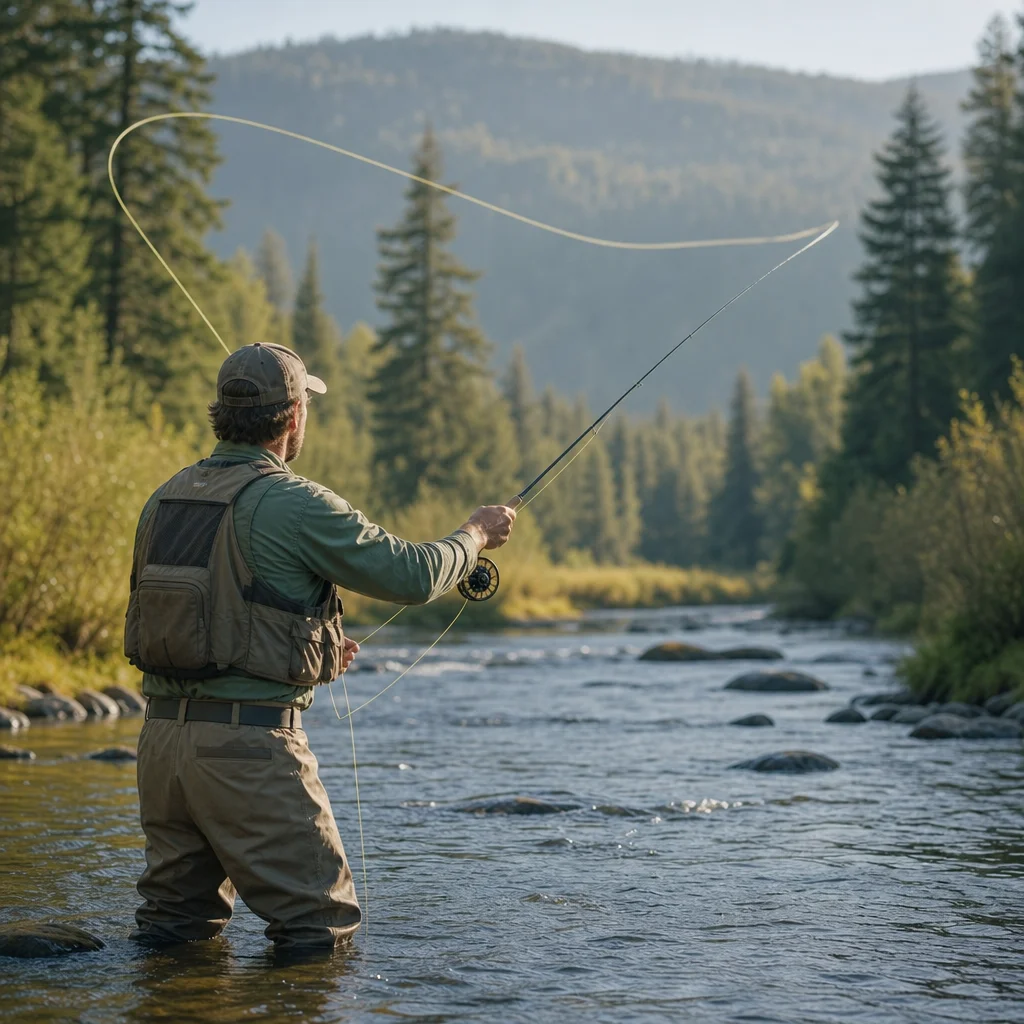
You can learn a surprising amount about a small stream without stepping into it. Bank vegetation, foam, exposed roots, and partially submerged structure show how water is moving and where the channel changes. They won’t give you a perfect depth reading, but they can help you choose safer approaches and more promising water.
The important word is estimate. Each clue has limits, and the strongest reading comes from comparing several signs rather than trusting one bent stem or drifting patch of foam.
Start with the bank, not the middle
Before studying current speed or depth, look at the bank’s shape and vegetation from a stable position.
A low, grassy bank usually gives better visual information than a tall, brush-covered one. Grass blades and flexible stems may bend with the current, while sturdy shrubs can hide the waterline or reflect wind rather than flow. Look for plants that enter the water, hang directly above it, or show repeated wear at a consistent height.
First, identify the apparent waterline. Then look for:
- Grass or reeds lying in one direction
- Stems that disappear below the surface
- Foam collecting in a narrow line
- Exposed roots or undercut soil
- Branches, rocks, or logs interrupting the flow
- A change in surface texture beside the bank
Take a moment to separate current clues from wind clues. If leaves and grass above the water are moving in different directions from the submerged stems, the lower vegetation is usually the more useful indicator of flow.
Estimating current speed from leaning vegetation
Submerged grass and flexible stems can provide a rough speed comparison. They’re most useful when you compare similar plants in different parts of the same stream.
A few stems barely tilted from vertical may indicate slower water, especially in a shallow margin or backwater. Vegetation pressed nearly flat against the bottom suggests stronger flow, though it may also reflect a recent high-water event or seasonal growth pattern.
Use the angle as a relative clue:
- Mostly upright: likely slower or sheltered water
- Moderately leaning: noticeable current, often a transition zone
- Strongly bent downstream: faster flow or a concentrated chute
- Flattened and swept along the bottom: potentially strong current, but difficult to interpret precisely
Don’t treat those categories as speed measurements. A long, flexible blade will bend more easily than a short, stiff stem in the same current. Water depth also matters: deeper water can move quickly at the surface while barely disturbing plants at the edge.
The most useful comparison is side by side. If stems along the inside of a bend are upright but those beside a narrow outside-bank chute are sharply bent, you’ve identified a likely difference in current strength. That difference may matter more than knowing whether either area flows at a particular number of feet per second.
Reading current direction from grass and stems
Vegetation usually reveals the downstream direction more clearly than it reveals speed. Follow the direction in which submerged blades, floating strands, or flexible stems point. Then compare it with the surface drift.
A straight section may show a simple downstream flow. In a bend, however, the surface can appear to move one way while water near the bank circulates, slows, or pushes back. A small pocket behind a rock or rootwad may contain an eddy even though the main current runs past it.
Look for repeated alignment rather than one isolated stem. One piece of grass may have been pushed by a boot, animal, or fallen branch. Several plants leaning consistently in the same direction are stronger evidence.
Vegetation can also reveal a seam. If one group of stems bends downstream and another appears nearly still, the boundary between them may be a current seam. Foam, leaves, or bits of grass often gather along that line because water with different speeds or directions meets there.
Using foam and floating debris as a surface-speed check
Foam is useful because it shows movement over time. Watch a small patch instead of judging it from a single glance. If it travels quickly past a fixed branch, the surface current is relatively fast. If it lingers, circles, or repeatedly returns, you’re looking at an eddy or slack pocket.
For a simple comparison, choose two visible landmarks along the bank and observe how long a leaf or foam patch takes to travel between them. You don’t need exact numbers. The same rough timing method can show that one bank section is slower than another.
For example, a leaf might take several seconds to cross a short stretch beside a grassy margin but move quickly through a narrow center channel. That suggests different surface speeds, not necessarily different fishing quality. Trout may use the slower edge to conserve energy while feeding on food carried from the faster water.
Foam has limitations. Wind can move it, and foam may collect because of a surface obstruction rather than a deep current. If it gathers beside a branch but nearby leaves continue downstream, the branch may be creating a small holding pocket. Compare at least two objects before drawing a conclusion.
Estimating depth from exposed structure and waterline clues
Bank vegetation can help you identify where the bottom rises and falls, but it’s a poor ruler for exact depth.
Exposed roots often indicate an undercut bank. The water beside the roots may be deeper than the adjacent shallow margin, particularly on the outside of a bend. A dark horizontal line on grass, moss, or bank soil may mark a typical water level, but it can also reflect a previous flood, seasonal change, or splash from repeated flow.
Look for combinations of clues:
- A sharp bank edge with exposed roots often suggests a deeper near-bank trough.
- Upright grass extending into clear water may indicate a shallow shelf or gradual margin.
- A sudden change from visible bottom to dark, featureless water suggests a drop-off, though glare and depth can create the same appearance.
- A submerged branch disappearing close to shore may mark a deeper slot beneath an undercut bank.
- A smooth, slow surface beside a fast riffle may indicate a pocket, but not necessarily shallow water.
Water color can help only when you know the bottom material and lighting. Dark water may be deep, shaded, or simply over a dark substrate. Clear water over pale gravel can look shallower than it is. Use depth estimates to plan observation and approach, not to decide that a crossing is safe.
Before You Step Off the Bank
Recheck the water from your actual entry point. Bank vegetation can reveal current patterns, but it can’t confirm footing, hidden holes, slippery rocks, submerged branches, or a safe crossing. If the bottom or exit isn’t visible, keep your position and choose another approach.
Read bends, structure, and vegetation together
The bank’s position often explains why vegetation bends the way it does.
On the outside of a bend, current commonly presses toward the bank. Look for undercut soil, exposed roots, and vegetation tilted downstream or toward the channel. This side may hold deeper water, but it can also have unstable footing and stronger flow.
The inside of a bend often builds a shallower bar or margin. Grass may stand more upright, and the surface may be slower. That doesn’t make every inside bend shallow or easy to wade. A narrow chute can cut through the bar, and a downstream-facing pocket can hide a deeper hole.
Rocks and logs complicate the picture. Water speeds up around the obstruction, then slows behind it. Vegetation immediately upstream may be pushed down, while plants in the pocket behind the object barely move. Foam that gathers below the object can mark the eddy’s edge rather than the deepest water.
Use the structure to divide the stream into zones:
- Approach zone: the bank and shallow margin where you’ll stand or enter
- Fast-water zone: the main push of current, often marked by bent vegetation or broken surface
- Transition zone: a seam where speed changes and debris gathers
- Holding zone: a slower pocket, cushion, or eddy near cover
This division helps you make a practical decision. You may not need to reach the deepest water if the feeding lane is visible from the margin or from a slower, more stable position.
Compare the signs before choosing an approach
The best bank reading uses at least three independent clues. For instance, sharply bent submerged grass, quickly moving foam, and an undercut outside bank all point toward stronger and potentially deeper water. Upright stems, lingering debris, and a visible gravel bottom suggest a slower margin, though they still don’t guarantee firm footing.
When the clues disagree, assume your interpretation is incomplete. A calm surface can conceal depth or a strong subsurface current. Upright vegetation can grow in a sheltered pocket beside fast water. Foam can be held in place by a branch. Clear water can disguise a sudden drop.
That uncertainty is useful information. It tells you to slow down, improve your viewing angle, or fish from the bank rather than forcing an entry.
Common mistakes to avoid
Treating bent grass as a speedometer
Bending shows force acting on the plant, not a precise current speed. Plant type, water depth, season, and recent flow all affect the result.
Assuming dark water is deep
Shade, glare, and dark rock can make shallow water look deep. Change your viewing angle and look for bottom detail before drawing a conclusion.
Reading only the surface
Surface foam may move quickly over a slower bottom current or stall in an eddy. Compare surface clues with bank shape, submerged vegetation, and visible structure.
Equating slower water with easier water
Slow pockets may contain soft silt, deep holes, undercut banks, or unstable edges. Current speed is only one part of an approach decision.
Wading farther because the first step looked easy
A shallow margin can end abruptly. Reassess after every step, and don’t let a promising seam persuade you to enter water you can’t read clearly.
A simple bank-first routine
Before wading an unfamiliar small stream, spend a few minutes doing the following:
- Find the apparent waterline and identify the stable bank edge.
- Check which submerged plants lean downstream and how strongly.
- Watch foam, leaves, or twigs move between two fixed points.
- Look for seams where debris gathers or surface texture changes.
- Mark possible depth changes using roots, rocks, logs, and visible bottom.
- Compare the inside and outside of the nearest bend.
- Choose the slowest, clearest approach that still gives you access to the water you want to fish.
Bank vegetation won’t replace careful observation, and it won’t turn an unfamiliar stream into a measured diagram. It will give you a better starting point. Read the plants with the foam, structure, bank shape, and surface movement, then let uncertainty make you more conservative—not more adventurous.