A Plain-English Guide to Fly-Fishing Leaders, Tippet, and Turnover
I’ll explain how leaders, tippet, and turnover work together so you can avoid the common mistake of treating them as interchangeable. You’ll learn how to choose, connect, and adjust them for clearer presentations without memorizing a glossary.
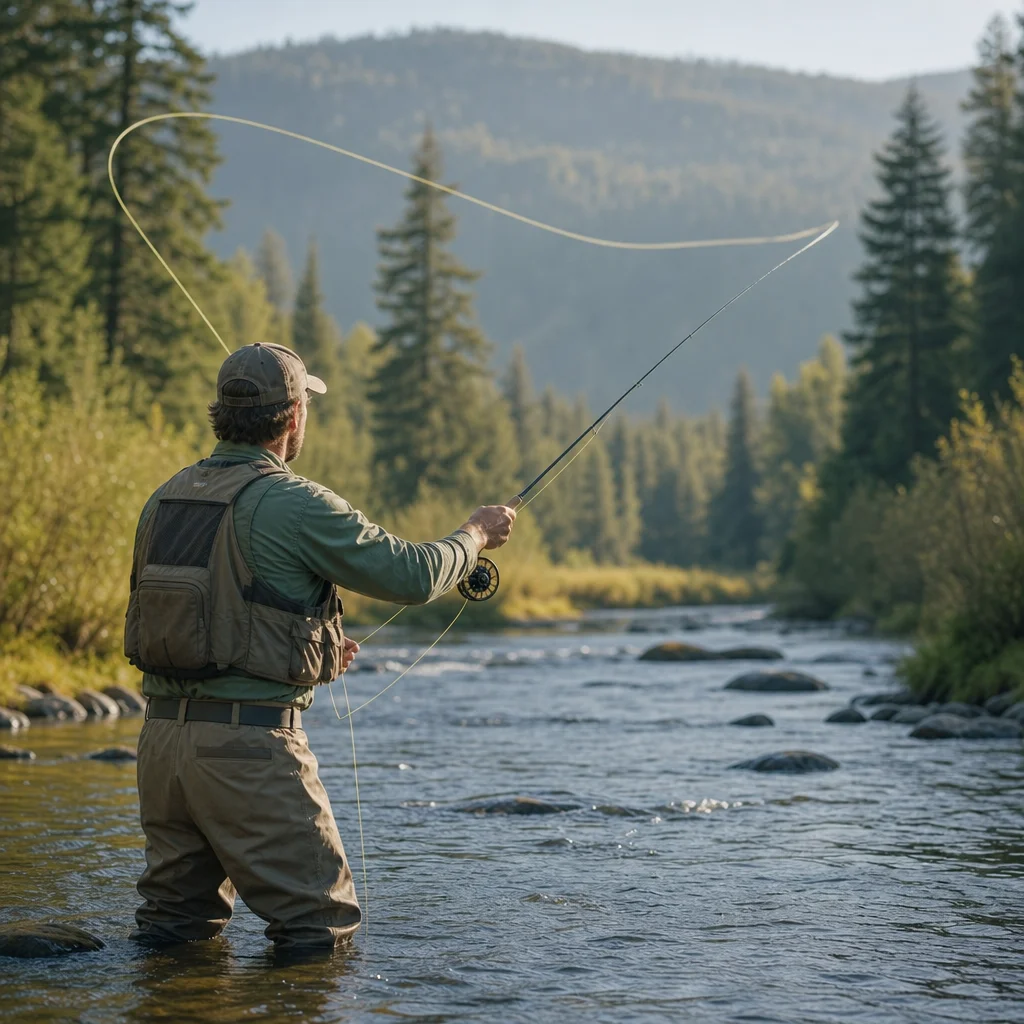
If your fly lands with a heap of leader, snaps back toward you, or falls far short of the target, the problem may not be your cast. The leader and tippet are part of the cast. Their length, diameter, stiffness, and knots all affect whether the fly turns over neatly or arrives like a small bird falling out of a tree.
Understanding that relationship makes fly-fishing tackle easier to adjust. You don’t need to memorize every leader designation. You need to know what each section does, what a good turnover looks like, and which trade-offs matter for the water and fly in front of you.
The simple version: three connected jobs
A fly line carries energy from the rod toward the target. The leader transfers that energy from the relatively thick fly line to the much smaller fly. Tippet finishes the connection and gives the fly a section of thin, relatively unobtrusive line to move and drift on.
Most leaders have three functional sections:
- Butt section: The thick end attached to the fly line. It helps receive energy from the line.
- Taper: The gradually thinner middle section. It spreads energy over distance rather than delivering it all at once.
- Tippet: The thin end attached to the fly. It provides the final connection and is the part you replace most often as you change flies or lose material to knots.
In a factory-made tapered leader, these sections are joined as one continuous product. When you add a short piece of tippet to its thin end, you extend the leader and restore its working tip after changing flies.
That’s the basic arrangement. The useful part is understanding how changes to it affect the cast and the fly.
What “turnover” means
Turnover describes how the leader straightens during the cast. A leader with good turnover unrolls in the intended direction and places the fly with reasonable control. It doesn’t have to straighten perfectly every time, but it should give you a predictable connection between the end of the fly line and the fly.
Think of a cast as a wave of energy traveling forward. The thick butt section moves first, the taper passes the energy along, and the tippet follows. The fly arrives last.
If the system is balanced, the leader gradually unrolls. If it isn’t, you may see several common symptoms:
- The leader piles up: The fly lands in a loose coil or the tippet drops short of the target.
- The fly lands with a violent kick: The leader may be too powerful or too short for the fly and presentation.
- The cast collapses early: There may not be enough energy to turn over the leader, especially with a long leader or heavy fly.
- The fly lands far behind the line: The leader may be too light, too long, or affected by wind and slack.
Turnover isn’t automatically better when the leader straightens as hard as possible. A dry fly often benefits from controlled extension and a gentle landing. A streamer may need more authority. The goal is appropriate turnover, not maximum force.
Leader, tippet, and fly: how the pieces balance
The most important trade-off is between power and delicacy.
A thick, stiff leader transfers energy efficiently. It can help turn over a larger fly, resist wind, and reduce the chance of a large fish breaking the connection. The downside is that it may produce a heavier landing and can be more visible or less flexible at the fly.
A thin, supple tippet lands more softly and can help a small fly drift naturally. The trade-offs are reduced strength, greater vulnerability to wind and drag, and a greater chance that the leader will fail to turn over if the rest of the system is too long or too light.
The fly itself changes the equation. A compact nymph with little resistance is easier to cast than a large, heavily dressed dry fly. A weighted streamer, beadhead, or bulky foam pattern adds air resistance and may require a shorter or stronger setup.
Instead of asking, “Which tippet size is correct?” ask three questions:
- How much air resistance does the fly create?
- How much control and delicacy does the presentation require?
- What conditions will affect the cast, such as wind, brush, or current?
Those questions lead to a more useful choice than selecting a diameter from a chart and assuming the cast will take care of itself.
Choosing between a tapered leader and a hand-built leader
For most beginners, a knotless tapered leader is the simplest starting point. It has a predictable taper, is easy to attach, and removes several decisions from the first setup. You can add tippet to its end as needed.
A tapered leader is especially convenient when you’re changing between ordinary dry flies, nymphs, and modestly sized streamers. It also gives you a clean baseline for diagnosing casting problems.
A hand-built leader uses sections of different diameters connected with knots. It takes more planning, but it offers control over length, stiffness, taper, and replacement cost. You can make a leader that turns over more aggressively, lands more gently, or suits a particular style of fishing.
The trade-offs are straightforward:
| Approach | Strengths | Trade-offs |
|---|---|---|
| Knotless tapered leader | Simple, consistent, quick to replace | Less customizable; the thin tip shortens as you change flies |
| Hand-built leader | Adjustable taper, stiffness, and length | More knots, more maintenance, more decisions |
| Short leader | Easier turnover and better control in wind or tight spaces | Can land the fly more heavily and may reduce separation from the line |
| Long leader | More distance between fly line and fly; useful for cautious fish and delicate presentations | Harder to cast, more affected by wind, and more difficult to manage |
Neither approach is universally superior. A factory-made leader is often the sensible choice when you want to spend your attention reading water and controlling the drift. A custom leader becomes more useful when you can identify a specific limitation that a standard leader doesn’t solve.
Check your starting setup: Before changing several things at once, cast your current leader with the fly you actually plan to fish. Watch whether the leader straightens, piles up, or kicks over. One clear symptom is more useful than a pile of unused formulas.
How to add tippet without making the system worse
Tippet is commonly added to the end of a tapered leader with a knot. The new section should be reasonably compatible with the leader’s existing tip. A dramatic jump from thick material to very fine material can create a weak connection and interrupt energy transfer.
For general use, add a section that continues the leader’s taper rather than replacing a large portion of it. If the existing tip becomes short from repeated fly changes, cut back to sound material and add fresh tippet. Don’t keep stacking short pieces indefinitely; every knot adds bulk, hinge points, and another place for failure.
When connecting sections, seat the knot carefully and trim the tag ends close enough to avoid catching weeds or guides. If the knot slips, cuts into the material, or looks damaged, replace it. A leader can appear fine while the tippet near the fly has been weakened by teeth, rocks, brush, or repeated tightening.
A tippet ring can make leader changes convenient, particularly when you’re adding tippet repeatedly. It also adds a small piece of hardware and another connection point. That may be worthwhile for efficiency, but it isn’t required for a functional setup.
Adjusting turnover when the cast misbehaves
Change one variable at a time. Start with the easiest adjustment: shorten the tippet or leader slightly and make a controlled cast. If the fly begins to straighten and land more predictably, the original setup was probably asking for more energy than your cast or conditions could provide.
If the fly still won’t turn over, consider these possibilities:
The fly is too large or air-resistant
A bulky fly can act like a small parachute. Try a shorter leader, a stronger tippet, or a more open casting loop. Avoid compensating only by casting harder; extra force can make the fly dangerous and may worsen a poor loop.
The leader is too short or powerful
If the fly lands with a sharp kick or the tippet straightens aggressively, add length to the tippet or use a slightly more supple final section. This can soften the delivery, though it may also make turnover harder in wind.
The leader is too long or light
If the leader collapses before the fly reaches the target, shorten it or use a slightly heavier section near the fly. You’ll usually gain control at the cost of some delicacy.
The cast is creating slack
A leader problem can actually be a loop problem. An overly wide loop, an abrupt stop, or poor timing may leave insufficient energy to unroll the leader. Fixing the cast may be more effective than rebuilding the tackle.
A practical starting method
When you’re unsure, begin with a moderate-length tapered leader and a tippet size suited to the fly’s size, wind resistance, and the fish you expect. Make several casts before judging it. Watch the leader, not just the fly: it should generally extend toward the target without repeatedly forming a pile or hinge.
Then adjust according to the result:
- Need easier turnover? Shorten the overall leader, use a stronger final section, or choose a less bulky fly.
- Need a softer landing? Add length carefully, use a lighter or more supple tippet, and reduce casting force.
- Need better wind control? Shorten the leader slightly, use appropriate diameter, and tighten your loop without making it dangerously narrow.
- Need better drift? Focus on where the leader and tippet land, not merely on distance. Excess leader on the water can create drag, while too little separation can make line control difficult.
The takeaway
Leaders and tippet aren’t just transparent extensions of fly line. They are the delivery system that determines how energy reaches the fly and how the fly behaves after it lands.
Use a tapered leader when you want a dependable baseline. Add tippet to maintain the thin end, but don’t create a long chain of unnecessary knots. Choose length and diameter by balancing fly size, wind, turnover, drift, and the strength you need. If the system fails, adjust one part at a time—and remember that a leader piling up may be asking for a tackle change, a casting change, or both.
Your next setup can stay simple: attach a sound tapered leader, add a clean section of tippet, cast the actual fly you’ll fish, and observe the turnover. That small test will tell you more than a glossary ever could.