Stopping Drag on a Dry Fly Drift
I’ll help you identify why a dry fly is skating, then choose safer, simpler fixes involving line placement, reach casts, mends, and leader design. The goal is a natural drift without chasing every current seam or making risky movements in the river.
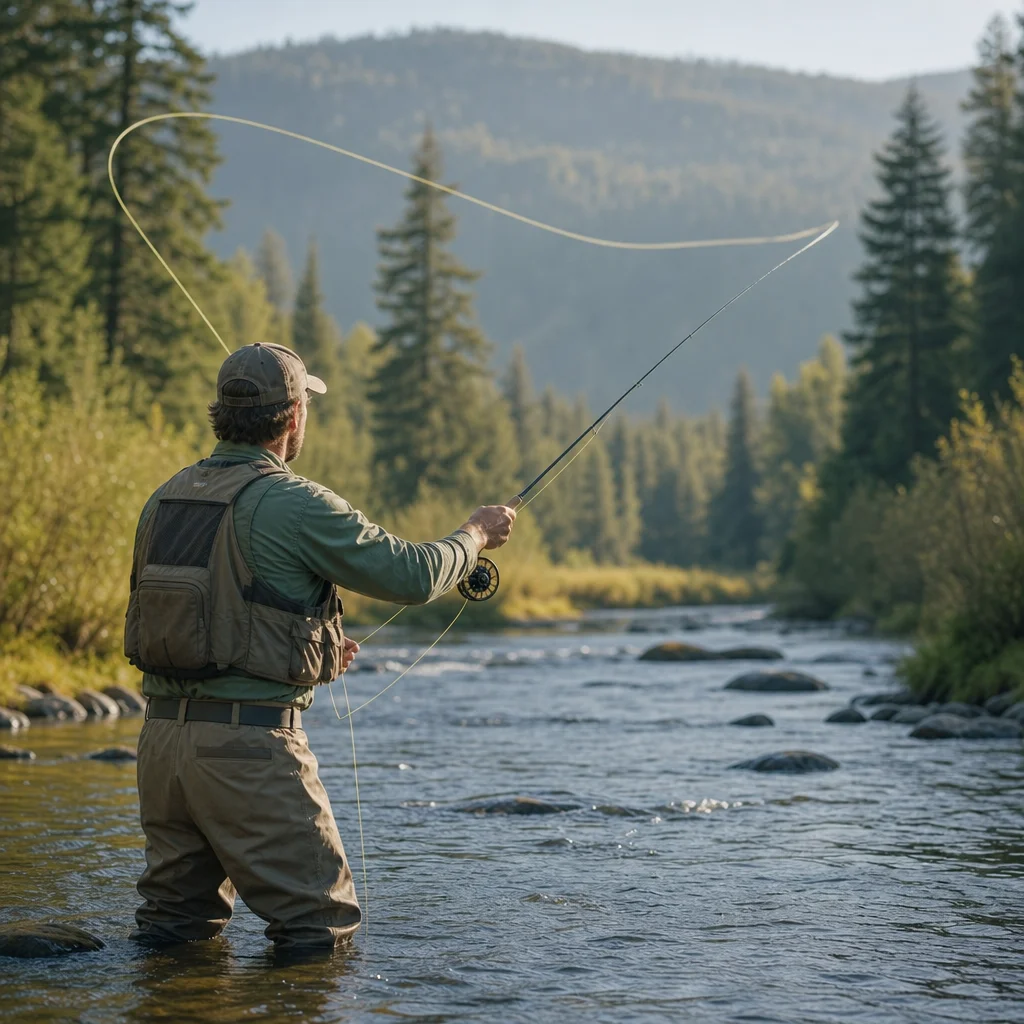
A dry fly that skates across the surface is usually telling you that the line, leader, or current is moving faster than the fly. The trout may refuse it, follow it briefly, or stop looking altogether. The good news is that drag is usually a presentation problem you can diagnose and fix without changing flies.
The safest approach is to solve the problem from a stable position first. Adjust your casting angle, keep more line upstream or across the current, and mend only as much as necessary. If the drift still fails, reconsider your leader design and where you’re standing.
What drag looks like on a dry fly
A drag-free dry fly should travel at roughly the same pace as the surface current around it. It doesn’t need to move perfectly slowly; it needs to move naturally relative to the water carrying it.
Common signs of drag include:
- The fly slides faster than nearby bubbles or foam.
- The fly swings toward the bank or across the current.
- The leader straightens tightly behind the fly.
- The fly leaves a small wake or skips over the surface.
- A trout rises, turns, or refuses just as the fly begins to pull.
Some drag is obvious, but the more troublesome version can be subtle. A dry fly may still look reasonably natural from your position while the leader transfers tension to it. If the fly accelerates after landing or changes direction before reaching the end of the drift, suspect drag.
Start with the current, not the fly
Before making another cast, watch the water around the target. Look for the speed and direction of surface bubbles, floating leaves, foam lines, and small bits of debris. These clues show how the current is divided, often more clearly than the texture of the water itself.
A trout’s feeding lane may cross several current speeds. For example, your fly could be in a slow cushion beside a rock while your leader lies in a faster tongue. The faster water pulls the leader downstream and drags the fly out of the slower lane.
This is why simply casting farther upstream doesn’t always help. If the line still lands across different currents, it can create drag almost immediately.
Identify the likely drag direction
Ask three questions before you cast:
- Is the current faster near me or near the fly?
- Is the water moving in one direction, or are there conflicting seams?
- Where will the line land in relation to the fly?
If the line will cross a fast seam, plan to keep that section of line off the water, place it upstream, or add a mend as soon as the cast lands. A good cast isn't just accurate at the fly; it also arranges the line to protect the drift.
Improve line placement before adding mends
Mending is useful, but the best mend is often the one you don’t need. Line placement determines how much correction will be required after the cast.
Try to land the fly first, followed by the leader and then the line, in a way that keeps the line from immediately pulling across the fly’s current. Depending on the situation, you may want the line upstream, downstream, or mostly off the water.
Cast from a better angle
Your position controls the relationship between the fly and the current. Moving a few steps upstream or downstream can change the drift more effectively than repeated casting from the same spot.
If you’re fishing across several current lanes, shift toward a position that lets you cast more in line with the drift. A downstream-and-across angle can reduce conflicting currents, while a more upstream position may let you keep the fly and leader in the same seam.
Don’t wade farther simply to improve an angle. First try casting from the bank, shortening the line, or approaching from a different side. If you do move, keep your footing and avoid stepping into water you haven’t assessed. A perfect drift isn't worth a fall.
Use slack in the cast
A straight, tight presentation is useful for accuracy, but it gives the current a direct path to the fly. Slack in the leader can delay that pull.
Useful slack-producing casts include:
- Reach cast: Extend the rod upstream or downstream during the forward cast so the line lands offset from the rod tip.
- Parachute cast: Stop the rod high and add a slight upward or sideways movement to place coils of line on the water.
- Pile or tuck cast: Send the leader down in loose coils, usually with a higher rod stop and controlled power.
- Curve cast: Bend the line around an obstacle or away from a conflicting current seam.
You don’t need dramatic coils. Excessive slack makes it harder to set the hook, track the fly, or recover from a missed rise. Aim for purposeful slack between the fly and the section of line most likely to be pulled.
Use the reach cast for early drag prevention
A reach cast is one of the simplest ways to stop drag because it places the line in a better position before it touches the water.
Make the normal forward cast, then move the rod tip upstream or downstream before the line settles. For a typical across-stream presentation, reaching the rod upstream places the line upstream of the fly and delays the current’s pull. Reach in the opposite direction when the water requires it.
The exact direction depends on the currents, not on a fixed rule. Watch the surface and decide which way the line needs to move to avoid crossing a faster lane.
Keep the rod movement smooth. A sharp sideways flick can collapse the loop or pull the fly off target. Practice the motion on open water first, then apply it with a short, controlled cast near a feeding lane.
Mend early, lightly, and in the right direction
A mend is a repositioning of line on the water. It works best when it’s made before drag has developed, not after the fly is already skating.
For an upstream mend, lift the rod tip and move the line upstream in a smooth motion. This creates slack or places the line in slower water. An upstream mend is common when the current near you is faster than the current carrying the fly.
A downstream mend can help when the fly is in faster water than the line, or when you need to keep the fly moving with a particular seam. The correct mend is the one that matches the speed and direction of the water under the line.
Match the mend to the distance
At short range, a small rod movement may be enough. At longer range, you may need a larger mend or more line lifted from the surface. Start with the smallest correction that protects the drift.
Large mends can create several problems:
- They move the fly out of the feeding lane.
- They throw spray or disturbance near wary fish.
- They leave too much slack for a quick hook-set.
- They force you to make another correction almost immediately.
When possible, mend the line without moving the leader or fly. Lift the rod tip, move the line, and then lower the rod while maintaining enough contact to see or feel a take.
Keep the rod tip low, but not trapped
After the fly lands, rod position affects how much line is exposed to conflicting currents. Lowering the rod tip can reduce the amount of line in the air and help you maintain control, especially at short range.
However, burying the rod tip in the water isn’t always an improvement. It can create surface disturbance, catch on submerged vegetation, or make a clean hook-set difficult. At longer range, keep enough rod height to lift line and mend effectively.
The practical goal is to keep the line you don’t need out of the current while retaining control of the line you do need. Strip in excess slack before the drift begins, then preserve only the slack that prevents drag.
Adjust leader design when casting fixes aren’t enough
A leader transfers energy from the fly line to the fly. A short, heavy, or overly straight leader often turns over strongly and lands with tension. That can be helpful for accuracy and wind, but it can also pull a dry fly immediately.
A longer, finer leader generally gives the fly more separation from the fly line and can create a softer presentation. It may also introduce more slack for a longer drift. The trade-off is reduced control, more difficulty turning over large flies, and a greater chance of tangles.
For a beginner-friendly starting point, use the leader length and tippet strength appropriate for the fly size, wind, and fish you’re targeting, then modify one variable at a time. If a standard leader lands too straight and the fly drags quickly, adding a finer tippet section or choosing a longer leader may help.
Avoid making the tippet unnecessarily light
Fine tippet can reduce disturbance and delay drag, but it isn’t automatically safer or better. Use enough strength to control the fish and avoid prolonged fights. The appropriate choice depends on the fly, water clarity, structure, target species, and local conditions.
If you’re frequently breaking off fish, losing flies in vegetation, or struggling to turn over the leader, the setup may be too delicate for the situation. A natural drift shouldn't require equipment that leaves you unable to handle a hooked fish responsibly.
Troubleshoot one variable at a time
When the fly drags, changing everything at once makes the cause difficult to identify. Use a simple sequence:
- Watch bubbles and determine the current speeds.
- Shorten the cast and see whether the fly drifts naturally.
- Change your casting angle or position.
- Add a reach cast before the line lands.
- Mend early and lightly if needed.
- Adjust leader length or tippet only after improving line placement.
If the fly drags only at long range, the issue is probably line control, current complexity, or leader turnover. If it drags immediately at every distance, look first at the leader, fly attachment, or a cast that lands too straight.
Also check the fly itself. A waterlogged dry fly, oversized hackle, or tangled fibers may sit poorly and create resistance. Dry the fly and restore its shape before rebuilding the entire presentation.
A safer way to improve your drift
Practice from stable ground whenever possible. Choose a visible seam, use a short length of line, and watch how different reach casts and mends affect the fly. This lets you learn the relationship between line and current without rushing into deeper water or making repeated false casts over a fish.
When you must reposition, move slowly and deliberately. Keep your balance, avoid wading beyond your confidence, and remember that current speed can increase around drop-offs, rocks, and narrow channels. If conditions feel uncertain, change the cast rather than forcing a new position.
Practical next steps
On your next outing, pick one feeding lane and observe it for a minute before casting. Track a few bubbles through the lane, identify the fastest current touching your line, and decide where the line should land.
Then try this progression:
- Make a short cast with minimal line on the water.
- Extend the cast while watching for acceleration.
- Add a reach cast before the line lands.
- If necessary, make one small mend immediately after the cast.
- Change your angle before wading farther.
The most reliable dry-fly drift usually comes from combining modest adjustments: a better position, a reach cast, a small mend, and a leader that matches the conditions. When those pieces work together, the fly can travel naturally without constant line manipulation—and you can spend less time repairing drag and more time watching the surface.