How to Fish a Dry Fly Through Broken Water Without Overworking the Drift
Broken water can make a dry fly look natural without a complicated presentation. I’ll show you how to use pockets, seams, and current breaks to lengthen useful drifts while making fewer, better casts.
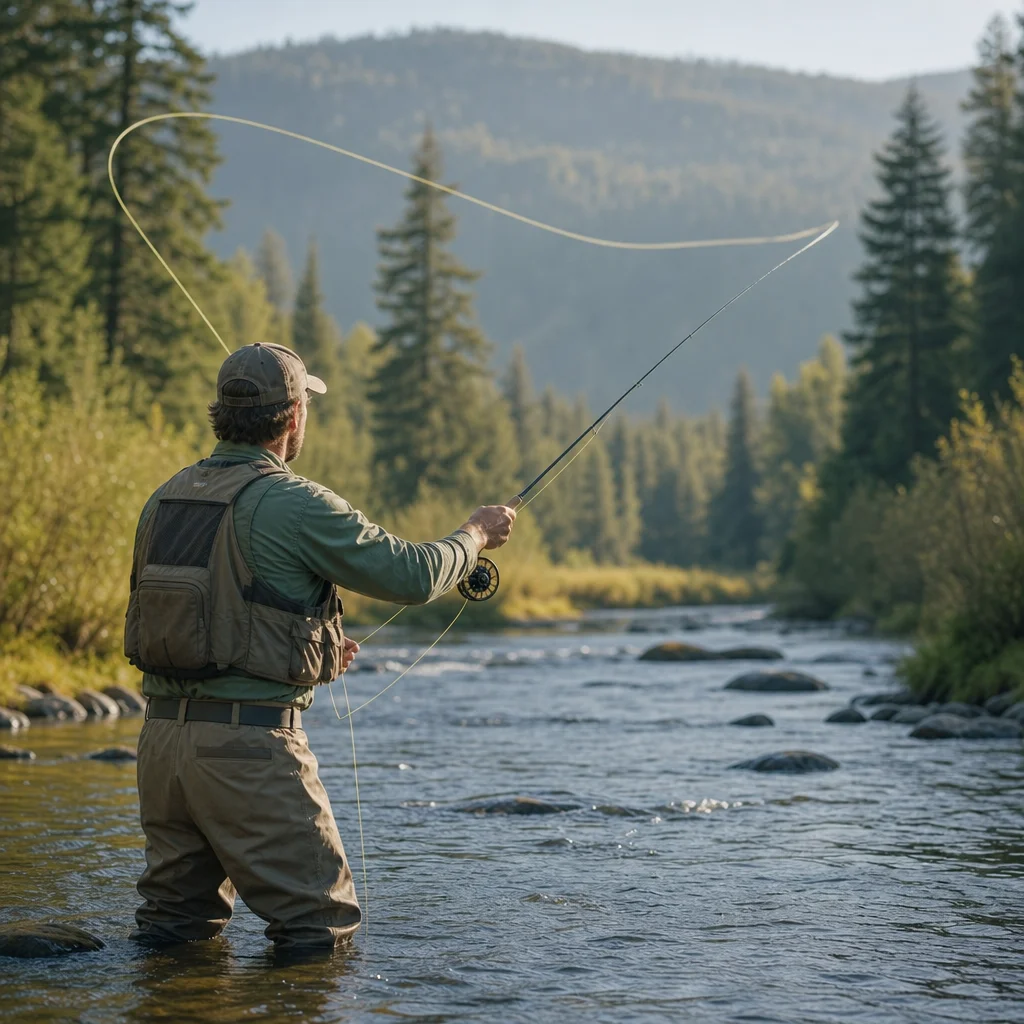
Fast pocket water gives a dry fly two advantages: plenty of broken surface and very little time before the current carries the fly away. The mistake is trying to solve that short window with more casting, more mending, and more movement. In many cases, the water is already doing the disguising for you.
The minimalist approach is to find the right landing point, shape the cast before the fly touches down, and let the current create the presentation. You’re not trying to control every inch of line. You’re trying to keep the fly moving naturally through the most likely feeding lanes.
Read the water before you cast
Broken water isn't one uniform current. It is a collection of small current systems divided by rocks, depth changes, and submerged structure. Start by identifying where the water slows, where currents meet, and where foam or bubbles travel in a reasonably steady line.
Look for:
- Pocket water: A cushion of slower water immediately upstream of a rock or obstruction.
- Seams: The visible boundary between two currents moving at different speeds.
- Soft edges: The quieter water beside a fast chute or along the bank.
- Foam lines: Surface features that reveal a consistent drift path.
- Small depressions: Slightly deeper spots where a trout can hold without fighting the fastest current.
A trout in fast water often chooses a position that provides food delivery without demanding constant effort. That doesn’t mean every quiet patch holds a fish. It means your best targets are usually places where a trout can look into faster water while remaining in a manageable current.
Watch the water for a few seconds before presenting the fly. Follow a leaf, bubble, or bit of foam. If it accelerates sharply, disappears under a conflicting current, or spins in an eddy, your fly will probably experience the same problem.
Pick a landing point, not just a target fish
In broken water, the spot where the fly lands matters more than the spot where you expect the trout to be. Your goal is to land the fly in a current that can carry it toward the likely holding water without immediately pulling the leader across another current.
For an upstream presentation, place the fly slightly above and to one side of the target. This gives it time to enter the fish’s window before it reaches the holding lie. Avoid dropping the fly directly on top of a pocket unless the water is turbulent enough to hide the impact and the fish isn't easily spooked.
When two currents meet, land the fly on the calmer side if possible. A dry fly can cross a seam naturally, but the leader and fly line often can't. If the fly begins in the slower lane, you have more time to make a useful adjustment before the faster current takes over.
Give yourself room to repair the drift
Don’t cast as far as you can simply because the water is open. A shorter cast often gives you better control, a better view of the fly, and a smaller amount of line exposed to conflicting currents.
Work from the nearest productive water to the farthest. Start with the pocket at your feet, then the seam a little farther out, then the next current break. This prevents your line from crossing water you haven’t fished yet and reduces the chance of disturbing nearby fish with repeated casts.
In steep or especially broken water, a slightly elevated rod position can help keep excess line off the surface. Use it sparingly. Holding too much line in the air can make the fly jump or can turn a small correction into a large one.
Build the drift before the fly lands
The cleanest dry-fly drift usually begins with the cast, not with a frantic mend after touchdown. A standard upstream cast may work in a uniform current, but broken water often calls for a cast that places the line in a helpful shape.
Use an aerial mend when currents differ
An aerial mend is a change in the line’s shape while it is still in the air. By moving the rod tip during or just after the forward cast, you can place a curve or loop in the line before it lands. This helps keep the fly moving naturally without dragging the fly across the surface.
For example, if the current on your side is faster than the seam holding the fly, place more line upstream of the fly. The upstream curve delays the faster current’s pull and can extend the drift.
The exact shape depends on your position and the direction of the currents. The principle is simple: put line where it will slow the current’s influence, rather than waiting for drag and trying to fix it afterward.
Try a reach cast for a longer natural drift
A reach cast lays the line to one side of the fly as the cast finishes. The fly lands first or nearly first, while the line lands in a curve upstream or across the current. That separation gives the fly more time to travel naturally.
A reach cast is useful when you can see that the fly will cross a faster lane shortly after landing. It is less useful when the fly itself lands with too much slack and fails to straighten toward the target. Aim for controlled slack, not a pile of line.
Use stack or slack when the water demands it
In especially broken water, a small amount of slack can be helpful. A stack mend places loose line in a compact series of curves, allowing the fly to drift while the line gradually straightens. This can work well when the target is close and several short current tongues would otherwise pull the line tight.
Too much slack creates a different problem: you may lose contact with the fly and miss a take. Keep enough connection to lift or set the rod when the trout eats, but don’t remove every curve from the line just to make the setup look tidy.
Extend the drift without overworking it
A longer drift doesn’t always require a longer cast. It can come from choosing a better lane, landing the fly with a useful line shape, and avoiding unnecessary movement once the fly is fishing.
After the fly lands, watch the fly and the line together. If the fly is still moving naturally, leave it alone. Don’t mend simply because you can. Every mend moves the fly, creates surface disturbance, or changes the angle at which the leader enters the water.
If you need to mend, make one deliberate adjustment. Keep the rod tip low enough to avoid pulling the fly, lift only the line you need to move, and return the rod to a position that preserves contact. A small upstream mend is often enough in pocket water. Repeated corrections usually signal that the original landing point or cast shape needs improvement.
Know when the drift is finished
A dry fly has stopped fishing effectively when it begins skating, dipping, twisting, or moving at a noticeably different speed from nearby bubbles. Once the fly has entered a conflicting current, continuing to watch it rarely creates a better presentation.
At that point, lift smoothly and recast. Don’t drag the fly back through the holding water if you can avoid it. A clean pickup outside the target lane is usually less disruptive than trying to rescue a dead drift.
Check the fly’s travel lane: Before adding another mend, follow the fly for a moment and identify which current is causing the problem. If the fly is already skating or the line has crossed several conflicting lanes, recasting is usually more effective than further repair.
Let rough water provide concealment
Broken water can hide both the fly’s landing and the leader’s presence. Take advantage of that instead of trying to make every presentation delicate.
You may be able to use a slightly more direct cast into a foamy pocket than you would on a smooth pool. The surface turbulence breaks up the image of the fly and masks small disturbances. That doesn’t make accuracy unimportant, but it gives you more room for a practical presentation.
Choose a fly you can see without making it unnecessarily large or conspicuous. A visible pattern, a small indicator post, or a high-contrast wing can help you track the drift through chop. If you can’t see the fly, watch a nearby patch of foam and the leader’s general direction, then set the rod when the surface changes in the expected area.
Use the shortest leader and tippet combination that gives you a natural drift and enough separation from the fly line. Extra length can help in clear, calm water, but in broken pocket water it may add sag and make the fly harder to control. The right length is the one you can turn over cleanly and manage in the wind and current.
A simple sequence for each pocket
Use the same basic routine as you move upstream:
- Pause and read the currents. Find the softer water, seam, and likely food lane.
- Choose the landing point. Place the fly where one current can carry it toward the holding water.
- Select the cast shape. Use a reach, aerial mend, or controlled slack if the current pattern calls for it.
- Make one accurate cast. Avoid false casting over the target whenever you can.
- Watch the drift. Leave a natural fly alone; make one small mend only when it will improve the presentation.
- End the drift cleanly. Pick up and recast once the fly begins to drag.
- Change the angle before changing everything else. A new position may solve the problem more effectively than a new fly.
When to stop forcing a dry fly
Not every piece of broken water is suited to a dry fly. If the surface is so turbulent that you can’t track the fly, if every cast is immediately pulled under, or if the likely holding water is too deep for the fly to be visible to fish, a different presentation may be more sensible.
You can also step a few feet to one side and change the current angle. Often the issue isn't the fly but the position from which you’re presenting it. A small move upstream, downstream, or toward the bank may turn several conflicting currents into one manageable drift.
The minimalist lesson is to simplify before adding equipment or complexity. Read the water, choose a realistic lane, shape the cast in the air, and make fewer corrections after the fly lands. Fast water already supplies movement and concealment. Your job is mainly to avoid getting in its way.