How to Present a Fly to Trout Feeding Tight Against a Bank
The cast that reaches bank-hugging trout can also spook them or drag the fly away from the feeding lane. I’ll explain how angle, drift length, leader control, and false-cast discipline work together in tight edge water.
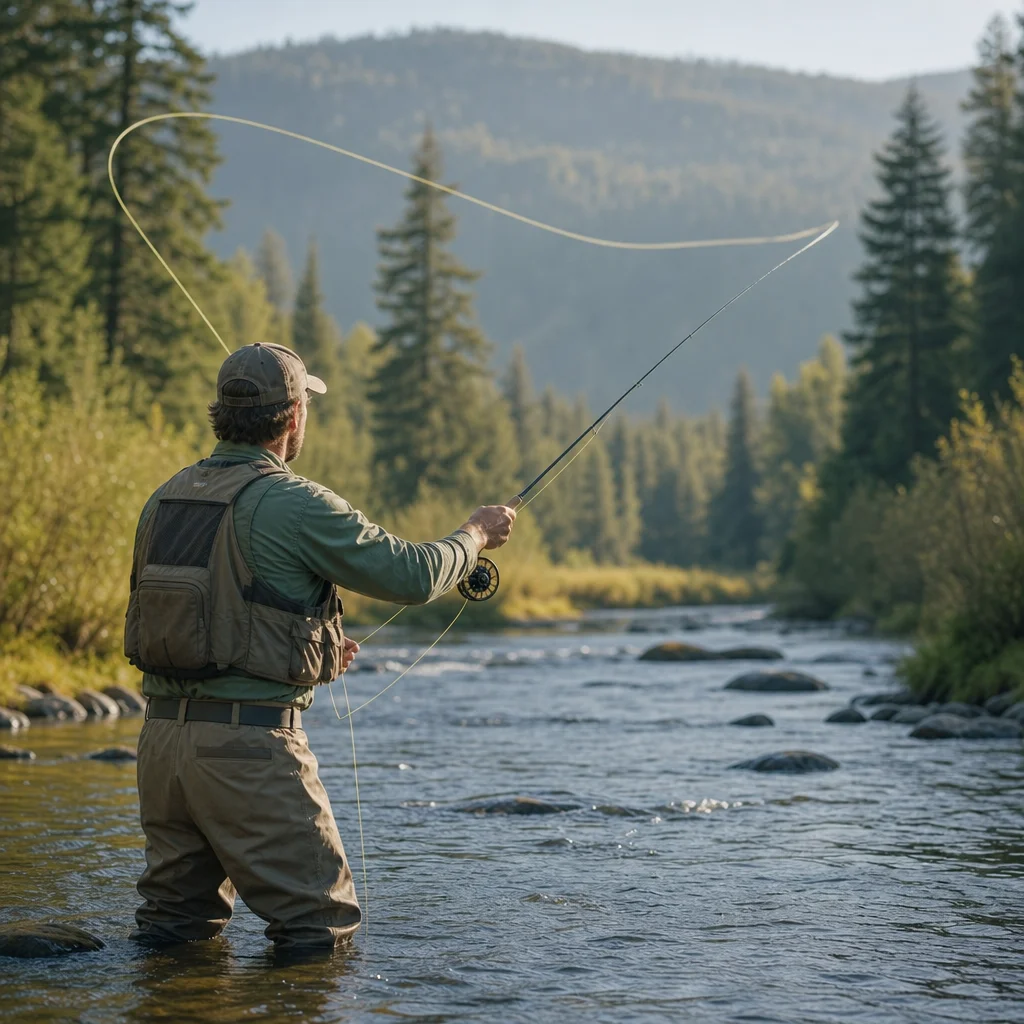
When trout feed tight against a bank, the target may be only a few feet away—but that doesn’t make the presentation easy. A short cast can land heavily, a long cast can create too much line to manage, and a single false cast over the fish may end the opportunity before the fly touches down.
The goal isn't simply to place the fly near the bank. You want the fly to enter the feeding lane quietly, drift at the correct speed, and stay under control without moving the line across the trout’s window.
Start by reading the edge water
Bank-feeding trout often hold where the current delivers food close to cover. Look for a narrow seam beside the bank, a soft cushion of water behind a rock, a pocket beneath overhanging vegetation, or a dark slot where the bottom drops slightly.
The trout may not be directly against dry land. It may sit a foot or two out from the edge, facing into the current while using the slower water near the bank as a low-effort feeding lane.
Before casting, identify three things:
- The feeding line: where drifting insects or other food are likely to travel.
- The trout’s position: the place where the fish is holding, not merely where you see a rise.
- The current seams: boundaries between fast and slow water that can pull your fly and line at different speeds.
A rise gives you useful information, but it doesn’t always reveal the fish’s exact holding position. Trout frequently move a short distance to feed and then return to the slower water. Watch several feeding movements if the situation allows. You’ll make a better cast by understanding the lane than by reacting to one splash.
Choose an angle that keeps the line away from the fish
Your position on the bank affects both presentation and visibility. Whenever possible, move before you cast. A few steps to the side can give you a cleaner drift and reduce the amount of line that must land near the trout.
Upstream or downstream?
An upstream position usually gives you a natural drift with less downstream slack to manage. You can cast above the fish, let the fly travel toward it, and keep the rod tip high enough to control the line without dragging the fly.
This approach works well when the bank is accessible and the trout isn’t looking directly toward you. Stay low, avoid sudden movement, and use the bank or vegetation as cover.
A downstream position can be useful when the trout is facing upstream and your approach from behind keeps you out of its main view. You may cast upstream and allow the fly to drift down toward the fish. The challenge is that your leader and fly line can follow into the fish’s view, especially on calm water.
A side angle is often the best compromise. Standing across from or slightly downstream of the feeding lane lets you keep the fly near the bank while leaving more room to manage line on the open-water side. It also helps you avoid casting directly over the fish.
Avoid the straight-on cast when possible
Casting directly from behind the trout can put your leader, fly line, and rod movement in the fish’s view. Casting directly across a fast current can create conflicting drag as soon as the fly lands.
Try to position yourself so the fly enters the target lane from an angle. The best angle is the one that gives you:
- A clear path for the fly.
- Minimal line over the trout.
- Enough room to mend or lift line without disturbing the drift.
- A safe, stable place to stand.
The perfect angle is less important than avoiding a presentation where the current immediately pulls your line faster than the fly.
Keep the first cast short and deliberate
A bank-feeding trout often requires less distance than you think. Start with the shortest cast that can reach the feeding lane while keeping your line under control. Shorter casts generally mean a lighter landing, fewer conflicting currents, and less line to manage after the fly touches down.
Don’t cast to the fish if you can cast to the beginning of its feeding lane. Place the fly a short distance upstream, allowing it to settle and drift through the area naturally. The exact distance depends on current speed, fly weight, and how quickly the fly begins fishing, but a modest lead is usually easier to control than a long cast thrown far upstream.
A useful sequence is:
- Estimate how long the fly needs to reach the trout.
- Place the fly far enough upstream to allow that time.
- Keep the line and leader from landing across the feeding lane.
- Follow the drift with the rod tip while maintaining contact.
If the fly reaches the fish too quickly, lengthen the lead slightly or improve your upstream line control. If it drifts past before the fly begins fishing, shorten the cast or reduce unnecessary slack.
Manage the leader, not just the fly
Many failed bank presentations look fine at the fly but fail because the leader is lying across the wrong current. The fly may be near the trout, yet the leader pulls it unnaturally as water speeds differ between the bank and the main flow.
Your leader should enter the water in a way that supports the drift. A straight leader can provide good contact, but it may also transmit drag quickly if the current is uneven. Some slack can protect the fly, but too much slack makes it difficult to detect a take or set the hook.
The right amount is functional slack: enough to let the fly drift naturally, but not so much that you lose track of where the fly is.
Use the rod tip to reduce drag
After the cast, raise or lower the rod tip according to the current and line position. Keeping more fly line off the water can reduce the number of currents acting on it. This is especially useful when you’re casting from slower water toward a faster seam.
With a short cast, you may be able to hold most of the line off the surface and guide the leader with the rod tip. With a longer cast, you’ll usually need a careful mend or a reach cast to place line upstream of the fly.
Avoid large, repeated rod movements once the fly is drifting. Every correction can move the fly or alert a trout that something is wrong. Make the smallest adjustment that solves the problem.
Mend before the line creates drag
If the current will pull your line downstream faster than the fly, mend as soon as the line lands or just before the drift begins. A small upstream mend is often enough in narrow edge water.
Large mends can be worse than no mend at all. They may throw the leader across the target, slap the water, or move the fly out of the feeding lane. Lift only the line you need to move and keep the rod tip controlled.
For very short casts, an aerial mend or reach cast can be quieter than a surface mend. Change the direction of the line before it lands, then allow the fly to settle with minimal disturbance.
Limit false casts near the bank
False casts are one of the biggest risks when trout are feeding in narrow edge water. Even if the line doesn’t land on the fish, it can pass over the trout repeatedly, create a moving shadow, or disturb the surface above a shallow holding lie.
The simplest solution is to reduce false casts. If you’re already carrying enough line to reach the target, make the final delivery cast. If you need to change distance, use a controlled pickup and laydown rather than repeatedly waving line overhead.
Prepare before the fly is in the air
Strip the amount of line you need from the reel before beginning. Remove tangles, decide where you’ll place the line during the drift, and choose your casting direction while the fly is still on the water.
A few quiet seconds of preparation are usually more productive than several rushed casts. Keep the line hand organized, and avoid letting loose line slap the surface or snag in grass and branches.
Use a roll cast when it fits
A roll cast can be effective when there’s little room behind you, particularly along a steep bank or beneath trees. It also keeps the line lower than a conventional false-cast sequence.
However, a roll cast needs a suitable anchor. If the fly is stuck in heavy current or the leader is badly tangled, forcing the cast can produce a noisy, inaccurate delivery. Set the anchor gently and use only the power needed to turn the line over.
Select the delivery for the fly and water
Your casting style should match the fly you’re using. A small dry fly may require a delicate presentation, while a weighted nymph or indicator needs enough energy to turn over without crashing down.
For a dry fly, favor a soft, controlled loop and a quiet landing. Put the leader down first when possible, with the fly arriving gently in the feeding lane. Avoid overpowering the cast just to reach a nearby target.
For a nymph, focus on getting the fly to the correct depth while keeping the indicator, sighter, or line from disturbing the bank-side fish. A short tuck-style delivery can help the fly begin sinking, but it shouldn't create a hard splash or pile the leader directly over the trout.
If the wind is pushing toward the bank, use a lower sidearm cast or adjust your position rather than forcing a high loop. Keep the fly away from your body and be especially cautious around branches, steep banks, and other anglers.
Watch the drift, then change one variable
After the first presentation, diagnose the result before changing everything. If the trout ignores the fly, ask whether the problem was location, depth, speed, or visibility.
- The fly lands well but moves too fast: improve your angle or add a small upstream mend.
- The fly never reaches the feeding lane: shorten the cast or adjust the leader and fly weight.
- The fly drifts correctly but the trout refuses: consider a different fly size, color, or pattern.
- The trout reacts but turns away: the fly may be dragging, too large, or presented at the wrong depth.
- The trout disappears after the cast: stop casting and give the water time to settle before trying again.
Change one variable at a time when conditions allow. That makes it easier to learn what the trout is responding to and prevents a series of increasingly complicated casts.
A simple bank-feeding routine
Use this routine when you find a trout working a narrow edge:
- Stop well back from the bank and observe the current.
- Identify the trout’s likely holding position and feeding lane.
- Choose a casting angle that keeps line away from the fish.
- Measure the shortest cast that reaches the lane.
- Prepare the line and fly before making the delivery.
- Make one quiet cast with little or no false casting.
- Control the leader with the rod tip and a small mend if needed.
- Follow the drift without moving the fly unnecessarily.
- If the presentation fails, let the water settle before adjusting.
The most important part is often the pause before the cast. Bank-feeding trout are close enough to reward precision and close enough to punish haste.
Practical next steps
The next time you find a trout feeding along the edge, begin with a short cast from a side or slightly upstream angle. Keep the first drift simple. Watch the leader and the fly together, make only small corrections, and limit false casts to protect the fish’s narrow window of comfort.
Your checklist is straightforward: reach the lane, keep the line out of the trout’s view, match the fly’s speed to the current, and change only one part of the presentation when something goes wrong. In tight water, quiet control usually outperforms extra distance.