How to Set the Hook on a Trout Feeding Downstream
A downstream take can turn a good drift into a missed fish if your reflex is to lift straight up. I’ll explain how to read the trout’s orientation, choose a reliable set direction, and build the timing through simple bank-side drills.
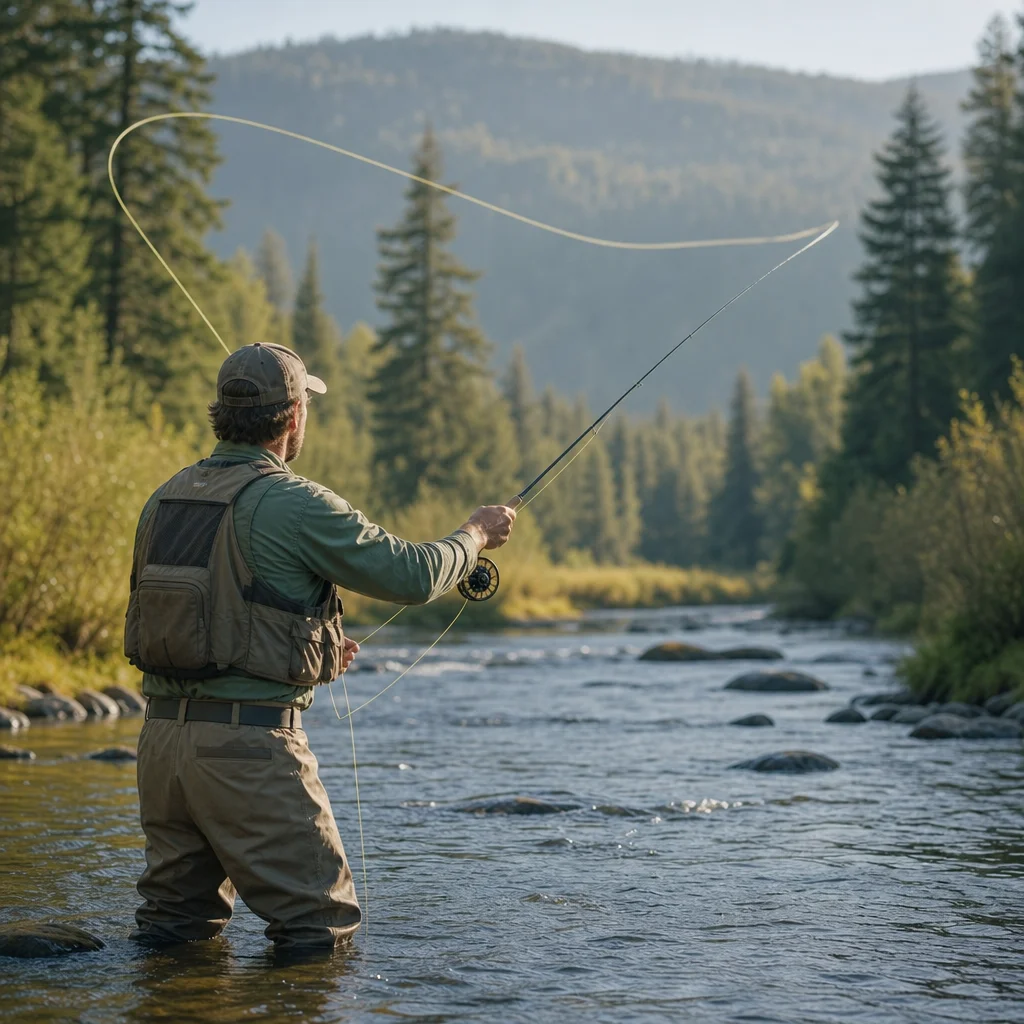
A trout feeding downstream can make the hook set feel backward. Your eyes see the take, your hand lifts, and the fly comes free—or the line pulls straight through the current before the hook finds a corner of the mouth.
The dependable answer isn’t one memorized direction. It’s a repeatable way to read the fish, understand how current is loading your line, and move the rod so the hook travels firmly into the mouth rather than simply upward.
First, separate two different situations
“Downstream” can describe either the trout’s position or its direction of travel. Those details matter.
- The trout is downstream from you: The fish may still be facing upstream, as trout commonly do in moving water.
- The trout is feeding while facing downstream: Its head and mouth point with the current, which changes the useful direction of your hook set.
Watch the fish’s head whenever you can. If you can’t see it clearly, track the fly, leader, and fish’s likely line of travel. Avoid choosing a set direction simply because the trout is somewhere below you.
A good hook set does three things:
- Removes slack.
- Pulls the hook point through the fish’s mouth.
- Keeps enough side pressure to turn the fish without ripping the fly away.
A straight-up lift often does only the first part. It can also pull the fly toward the surface, where it may slide out before the hook point gains purchase.
Why a downstream-facing trout changes the set
Current affects both the fly and the line connected to it. When a trout is facing downstream, the fly may be entering or leaving its mouth along a different path than it would during a normal upstream-facing presentation. The current can also push your leader and create a slight bow in the line.
That means a vertical lift may work against the angle at which the fly was taken. Instead, use a low, firm, sideways-to-upstream set when the trout is clearly facing downstream. Move the rod tip away from the fish’s line of travel and slightly upstream, keeping the motion compact.
The exact angle depends on your position. The goal isn't to yank the fly in a particular compass direction. The goal is to pull the hook point across the mouth and maintain contact.
If the trout is facing upstream instead, a downstream or side set is often more useful than lifting straight up. Again, fish orientation matters more than the fish’s location in the river.
The basic hook-setting sequence
1. Keep the rod low during the drift
A high rod leaves little room for a controlled set and encourages the lifting reflex. Keep the rod tip low enough to maintain contact without dragging the fly. With a dry fly, stay connected without pulling the fly off its intended track. With a nymph or streamer, manage slack so you can feel or see the take.
You don’t need a rigid rod angle. You need enough reserve movement to set sideways.
2. Confirm the take when the presentation allows it
For a visible dry-fly take, wait until the fish has closed its mouth or the fly has disappeared. Setting at the first splash is a common way to pull the fly away from a trout that is still turning toward it.
For nymphing, the indication may be a pause, a twitch, a sudden change in the sighter, or resistance that doesn’t belong. Don’t wait for a dramatic tug. Set when the signal is unusual and your fly could plausibly be in the fish’s mouth.
The timing is a brief, deliberate reaction—not a long pause and not an instant panic response.
3. Move the rod low and across the current
For a downstream-facing trout, guide the rod tip upstream and to one side rather than lifting it over your shoulder. Keep the movement short and decisive. Your line hand can help remove slack, but it shouldn’t create a second, conflicting motion.
A useful mental cue is: pull the line away from the direction the fish is facing, then raise the rod only after the hook is set. That helps the hook travel across the mouth instead of following the fly out.
If the trout turns or runs, allow the rod to come up gradually. The set is the moment to establish contact; the fight is where you manage pressure.
4. Follow the fish after contact
Once the hook is in, don’t keep making repeated setting motions. Point the rod away from nearby obstructions, maintain steady pressure, and move your feet if necessary to keep the line clear of conflicting current seams.
A downstream fish can quickly put the line into faster water. If you stay fixed in place, current pressure may become the strongest force on the leader. Follow when the bank is safe and accessible, and avoid stepping into water you haven’t assessed.
A simple reliability system
Hook-setting consistency depends on more than reflexes. Check the parts of the system that can quietly turn a good set into a failure.
Keep the hook point sharp
A hook can look fine and still fail to penetrate cleanly after contacting rock, wood, or a hard riverbed. Lightly test the point against a fingernail. A sharp point should catch rather than skate. Replace or sharpen a damaged hook before relying on it for another difficult presentation.
Remove unnecessary slack
You can’t set a hook through a large belly of loose line. Mend early, keep the line under control, and avoid carrying more line on the water than the drift requires. If you’re fishing across multiple currents, expect the line to behave differently from the fly and compensate before the take.
Use an appropriate leader and tippet
A very light tippet may protect a wary trout but gives you less margin for an energetic set, abrasion, and current pressure. Choose the lightest material that suits the fly, water clarity, structure, and fish you’re targeting. The best set in the world can’t compensate for a weakened or poorly seated connection.
Check your set before the next drift: After a missed take, inspect the hook point, tippet, knot, and leader for damage or displacement. Fix the weak link before making the same presentation again.
Keep the motion repeatable
A reliable set should look similar whether the trout is small or large. Practice a compact pull with the rod tip low, then let the rod load after contact. Large, fast movements are harder to control and more likely to break light tippet or pull a fly free.
Drills for replacing the upward reflex
The low-rod dry drill
Stand beside the stream or on open ground with a fly that has no hook point, or with the hook safely covered. Hold the rod at your normal drift height. On a spoken cue, move the rod tip low and across your body instead of upward.
Repeat ten times on each side. Keep the movement smooth and stop with the rod pointing toward the intended pressure direction. The purpose is to make the correct motion familiar before a real trout supplies the excitement.
The line-hand drill
With a short amount of line outside the rod tip, practice two actions in sequence:
- Make a short strip with the line hand.
- Move the rod low and to the side.
This teaches you to remove slack before or during the set without trying to haul in a large amount of line. Keep the strip controlled. A violent line pull can move the fly before the rod has loaded.
The orientation drill
Choose a target on the bank and imagine it is a trout. Face the target upstream, then downstream. For each position, say the fish’s orientation aloud and choose the direction that would pull the hook across its mouth.
This may feel overly deliberate, but it addresses a frequent mistake: setting based on where the fish is rather than where its head is pointing. With practice, the decision becomes quicker.
Common mistakes to avoid
Setting at the splash
A trout can splash without taking the fly cleanly. Wait for confirmation with a dry fly, or respond to a meaningful change in your nymphing indicator or line.
Lifting before removing slack
If the line is loose, the rod moves before the hook does. Keep contact during the drift and use a short line-hand motion when appropriate.
Setting directly upstream or downstream by habit
Current direction is useful information, but it isn’t the whole decision. Check the trout’s head, the fly’s movement, and the line angle first.
Continuing to pull after the hook is set
Once you feel solid contact, transition from setting to fighting. Keep pressure steady and let the rod, tippet, and drag work together.
Practical next steps
On your next outing, focus on one change: keep the rod low and make the first movement sideways rather than upward. Before each downstream presentation, identify where the trout is facing and where your line is carrying slack.
After every missed take, inspect the hook and leader before changing flies. If the gear is sound, repeat the same presentation and adjust only the timing or set angle. Over time, that small troubleshooting habit will make your hook sets calmer, more consistent, and much less dependent on luck.