How to Mend Line Without Moving Your Fly
I’ll help you choose between aerial and on-water mends, control line without dragging the fly, and make smaller upstream or downstream corrections when trout demand a delicate, believable drift.
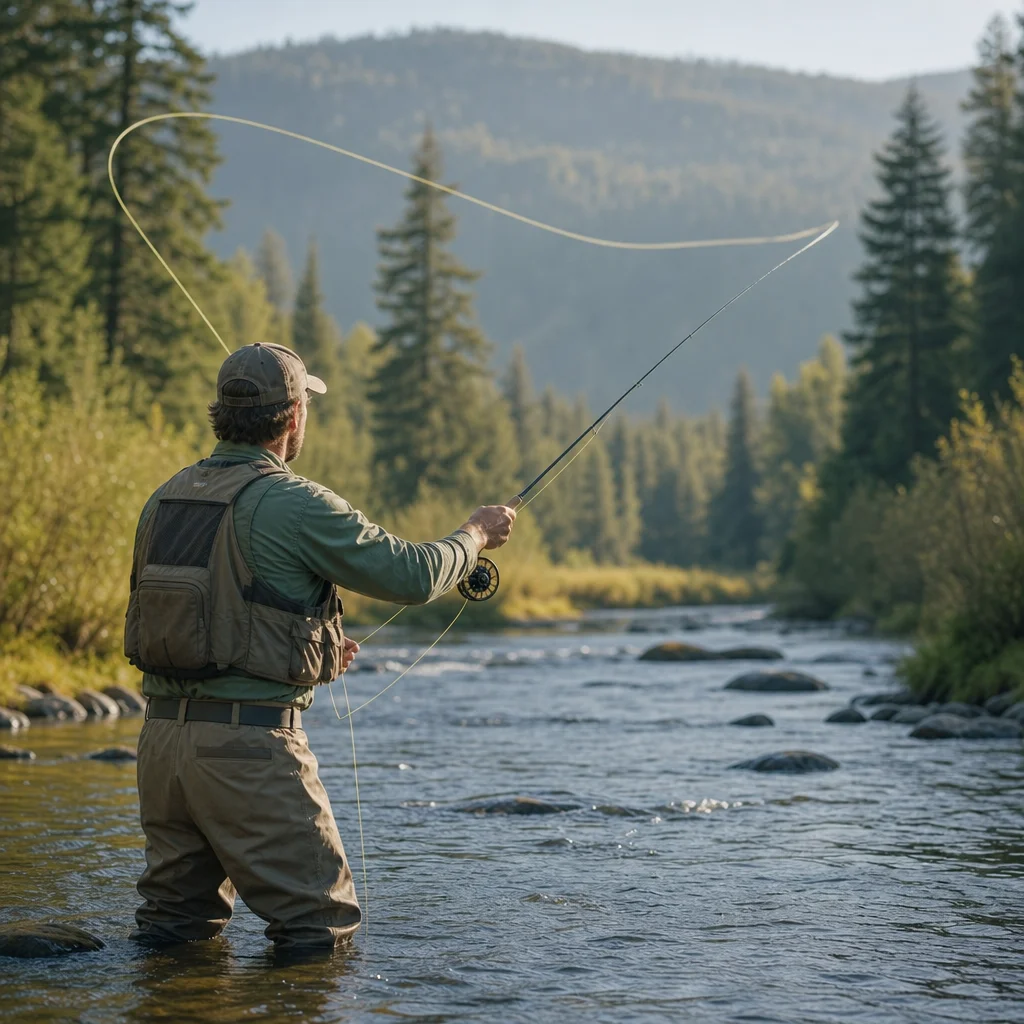
When your fly starts skating across the current, the problem usually isn’t the fly itself. It’s the line: too much of it is lying in the wrong current, pulling against the leader and moving the fly before a trout has a fair chance to eat.
Mending line without moving the fly means changing the line’s position or shape while preserving the fly’s drift. That takes more than simply flipping line upstream. You need to consider where the fly is, which currents are affecting the line, how much slack you need, and whether the correction should happen in the air or on the water.
What a mend is actually doing
A mend places the fly line into a more useful position relative to the current. Most often, you’re trying to reduce drag by putting line into slower or more favorable water, creating slack, or changing the angle between the line and the fly.
The fly should remain where it is while the line moves around it. That distinction is the foundation of a good mend.
If the fly moves noticeably when you mend, one of several things has probably happened:
- You lifted or swept line that was already tight to the fly.
- Your mend was too large for the amount of correction needed.
- You waited until the line pulled the fly off its intended path.
- You placed the line across a faster current instead of away from it.
- You used the rod tip to move the fly line without controlling the line closest to the fly.
A mend doesn’t have to be dramatic. Often, a small change in the line’s curve is enough to extend the drift.
Start with the currents, not the direction of the mend
“Upstream mend” and “downstream mend” describe where you move the line, but they don’t explain why. The better question is: which current is pulling the line out of alignment with the fly?
Suppose your fly is in a slow seam and your line has landed in faster water closer to you. The faster water will pull the line downstream, eventually dragging the fly. An upstream mend can move the line away from that pull and create slack between the rod tip and the fly.
In another situation, the line may land in slow water while the fly is in a faster current. The fly can then pull the line, leader, and possibly your rod tip downstream. A downstream mend may help the line match the fly’s pace or prevent an awkward bow from forming.
The correct mend is determined by the competing currents, not by a rule that says every trout drift requires an upstream mend.
The basic on-water mend
An on-water mend is made after some or all of the line has landed. It’s useful when you need to correct line that is already in the current or when the cast doesn’t leave enough time for an aerial correction.
Use this sequence:
- Keep the rod tip low enough to maintain control, but high enough that you can move the line cleanly.
- Watch the line between the rod tip and the fly rather than staring only at the fly.
- Lift enough line to reduce friction with the water.
- Move the rod tip in the direction of the desired mend.
- Stop the rod tip deliberately and allow the line to settle in its new position.
- Lower the rod tip and follow the drift without pulling the line tight.
The rod movement is usually a short, controlled sweep. You’re not trying to cast the line again. You’re repositioning it.
A useful image is to think of the line as a soft rope lying on a moving floor. Lift and slide the rope into a better lane rather than yanking it across the floor.
Use the smallest effective mend
Large mends create more visible disturbance, move more water, and often leave the line in a new position that still requires correction. They can also straighten the leader and transmit movement directly to the fly.
Begin with a small lift and short sweep. If the line still shows a downstream belly or begins to straighten, make another small correction. Two modest mends are often less disruptive than one aggressive one.
This is especially useful when fishing small dry flies, emergers, or lightly weighted nymphs in shallow water. The lighter the presentation and the more fragile the surface film, the more valuable small corrections become.
Aerial mends: move line before it lands
An aerial mend is made while the line is still in the air, usually immediately after the forward cast. Instead of allowing the line to land in a straight line, you redirect part of it upstream or downstream before it touches the water.
Aerial mends are valuable because they can create slack without disturbing the fly. They’re particularly effective when the fly is already near its target and the line is still traveling toward it.
The basic motion resembles a cast followed by a controlled change in the rod tip’s path:
- Make the cast toward the target.
- As the line straightens, move the rod tip in the direction of the intended mend.
- Allow the line to land in a curve, fold, or series of soft slack sections.
- Keep the fly on the original target line while the leader and fly line settle around it.
The exact timing depends on the cast, distance, wind, and line speed. If you move the rod too early, you may change the cast’s direction. If you move it too late, the line may land straight and require an on-water correction.
An aerial mend works best when you understand which part of the line you’re moving. A broad rod motion can redirect the entire cast, including the leader and fly. A more compact motion can place slack in the fly line while leaving the fly closer to its intended landing point.
Upstream mends and downstream mends
When to mend upstream
An upstream mend is common when the fly is drifting in slower water and the line is exposed to faster water. Moving the line upstream usually creates a downstream-facing belly or slack section that keeps the current from pulling directly on the fly.
Use an upstream mend when:
- Your line has landed in a faster current than the fly.
- The current is straightening the line toward you and dragging the fly.
- You need to extend a dead drift through a seam.
- A bank, rock, or current tongue is creating a strong downstream pull on the line.
Don’t automatically throw the whole line far upstream. The correction should match the current’s strength. A small upstream curve may be enough in a mild seam; a larger mend may be necessary when fast water is pushing hard against the line.
When to mend downstream
A downstream mend can be useful when the fly is in faster water but the line is lying in slower water, or when an upstream mend would create too much slack and make strike detection difficult.
It may also help when you’re trying to keep the fly moving at a controlled pace rather than forcing a completely drag-free drift. Some flies fish better with a slight, intentional movement, but that movement should be chosen rather than imposed by the current.
Downstream mends need particular care. A large downstream sweep can tighten the line toward the fly and cause immediate drag. Make the correction early, keep it compact, and watch the fly as the line settles.
Micro-mending for delicate drifts
Micro-mending is less a separate technique than a way of applying restraint. Instead of lifting and repositioning a visible loop of line, you make tiny adjustments with the rod tip, often moving only a few inches of line at a time.
This is useful when:
- The fly is close to the edge of its drift lane.
- The leader is long or light and transmits movement easily.
- The water is shallow and clear.
- The trout are inspecting the fly for a long time.
- A large mend would disturb the surface or collapse the leader.
Keep the rod tip high enough to reduce unnecessary contact with the water, but don’t hold it so high that you lose control of the line. Follow the drift with the rod tip and make a small lift-and-place motion whenever the line begins to form an unwanted belly.
Micro-mending also works well with a reach cast or an aerial mend that has already placed some slack upstream. You’re maintaining the original presentation rather than rebuilding it after every few feet.
The leader is part of the mend
A fly line can be perfectly positioned while the leader still pulls the fly. This happens when the leader straightens across different currents or when the final section lands in a direction that doesn’t match the fly’s drift.
Think beyond the colored line. Watch the leader, the tippet, and the fly if visibility allows. Sometimes the best correction isn't a larger line mend but a small repositioning of the line nearest the leader.
A long, curved leader can provide useful separation from the fly line, but it can also make strike detection and turnover less direct. A shorter or more powerful leader may turn over cleanly but require gentler mending. Your setup changes the amount of correction you can make without moving the fly.
Common edge cases
The fly is downstream of you
When the fly is below your position, an upstream mend may pull against the fly if the line is already tight. Make the correction before the line straightens, or use an aerial mend to place slack before the fly lands.
If the fly has already begun to drag, no mend can fully restore the previous drift. Lift and recast rather than repeatedly disturbing the fly with late corrections.
You’re casting across multiple seams
A straight line across several currents is almost guaranteed to create trouble. The line may cross a fast tongue, a slow pocket, and another fast seam before reaching the fly.
Use the cast and the initial aerial mend to place the line in a curve that minimizes how many conflicting currents can grip it. Then make small corrections to the section that is causing the most tension. Trying to mend the entire line equally may move the fly more than necessary.
Wind is affecting the line
Wind can create an aerial belly before the line lands or push a floating line sideways after it touches down. An aerial mend can help, but sometimes the better solution is a lower cast, a different casting angle, or less line on the water.
The goal is still the same: reduce tension between the line and fly without making a dramatic correction next to the fish.
You need to detect a take
More slack isn’t always better. Excessive slack can hide a subtle take, delay your hook set, and make it difficult to reposition the fly. Create enough slack to prevent drag, then maintain contact through the rod, leader, and a manageable section of line.
For nymphing or subsurface presentations, the ideal amount of slack depends on depth, weight, indicator use, and the current. A completely loose system may drift naturally but provide poor control. Aim for controlled slack rather than disconnected slack.
A simple practice drill
On a lawn, mark a target and practice aerial mends without a fly attached. Make the same cast several times, then change only the rod tip’s path near the end of the cast. Watch whether the line lands in a shallow curve or a pile of unnecessary slack.
On the water, choose a visible leaf or foam patch as your target. Cast beyond it, place the line in a favorable curve, and follow the patch downstream. Practice making one small correction before the line straightens. This teaches timing more effectively than waiting for a fish and improvising under pressure.
Practical next steps
Before your next drift, identify the current carrying the fly and the current gripping the line. Then decide whether you need to move line upstream, downstream, or simply create a small amount of slack before the line lands.
Remember these priorities:
- Mend the line, not the fly.
- Correct the strongest unwanted current first.
- Use an aerial mend when you can prevent the problem before landing.
- Use small on-water mends once the line is down.
- Watch the leader, not only the fly line.
- Keep enough contact to detect a take.
- If the fly is already dragging badly, recast instead of forcing a rescue.
The best mend is often the one a trout never notices: a quiet change in line position that lets the fly continue on its original path.