How to Mend Around a Boulder's Eddy Without Dragging Your Fly
A straight-across cast and a large upstream mend can make a boulder's currents worse, not better. I’ll show you how to choose a casting angle, place the line, and mend early enough to protect the drift without yanking the fly.
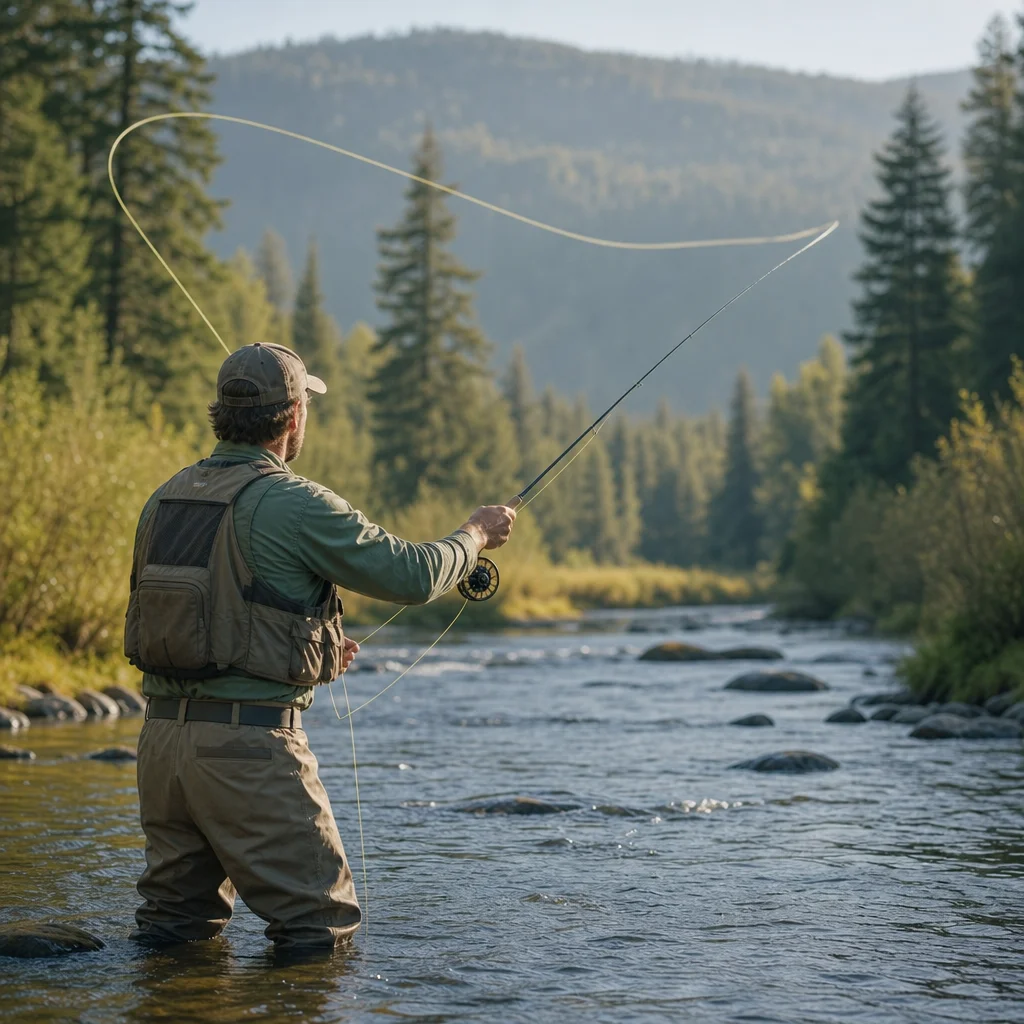
A boulder's eddy can turn an otherwise sound drift into a short lesson in conflicting currents. The main flow may rush past one side of the rock while slower water swirls behind it, and the seam between them can pull your fly, leader, and fly line at different speeds.
The common response is to cast across the current and throw a large mend upstream. That often creates more problems: the line lands in several current lanes, the mend moves the fly, and the boulder leaves you little room to recover. The better approach is to prevent as much drag as possible before the fly lands, then make the smallest useful mend as early as you can.
Read the water before choosing the cast
Start by identifying three pieces of water:
- The holding lane: where the trout is likely to sit, often along the softer edge of the boulder or just downstream of it.
- The seam: the boundary between faster main current and slower eddy water.
- The exit current: where the eddy rejoins the main flow and begins carrying everything downstream.
The seam is usually the important feature. Your fly may need to drift along it, across it, or just inside the slower water. Your line, however, may land on both sides of the seam. If those currents move at different speeds, they’ll pull the line into a curve and eventually drag the fly.
Look for surface clues. Bubbles that split around the rock show the main current. Foam or leaves circling behind the boulder reveal the eddy. A smooth patch beside broken water often marks softer holding water, but it doesn’t necessarily mean the entire patch moves at one speed.
Before casting, decide which part of the line is most likely to be grabbed first. That tells you where to place the line and which way to mend.
Aim to reduce the mend, not rescue the drift
A mend is a correction, but around a boulder it’s better treated as a small adjustment to a cast that was already designed for the currents. If you need to throw several large mends to keep the fly moving naturally, your casting angle is probably working against you.
For a drift across a seam, try to land the fly and leader in the slower water first, with the fly line kept as much as possible in that same current. You may not be able to keep every section together, but you can choose which section crosses the seam.
A useful priority is:
- Protect the fly and tippet from being pulled.
- Keep the leader from forming a sharp, unnatural angle.
- Control the fly line before the fastest current grabs it.
- Maintain enough contact to detect a take.
Perfectly straight line placement isn’t always the goal. You’re looking for a controlled curve or slack arrangement that lets the fly drift without allowing the current to tow it.
Choose a casting angle that matches the drift
Cast slightly upstream and across
A modest upstream angle usually gives you more time than a straight-across cast. It lets the fly land before the line reaches the conflicting currents, and it provides room for an early mend.
Avoid aiming directly at the far bank or directly across the boulder. A straight-across cast tends to place the fly, leader, and line on multiple current paths at once. It also leaves little space for a useful mend before the line begins pulling downstream.
Instead, cast upstream of the intended drift and across only as far as necessary. The exact angle depends on the boulder's position, but the principle is consistent: give the fly a head start while keeping the line out of the fastest water.
Use a reach cast when the current demands it
A reach cast can place the line upstream of the fly as it lands. This is useful when the fly needs to drift along slower water but the line must cross a faster lane.
The reach should be deliberate rather than dramatic. Extend the rod upstream during the forward presentation and allow the line to land in a curve or offset position. The fly should settle naturally, without the leader snapping tight behind it.
A reach cast is especially valuable when you can see that the main current will grab the line immediately. By beginning with the line upstream, you delay that pull and may eliminate the need for a heavy mend.
Consider a tuck or low, controlled presentation
If a weighted nymph or indicator is involved, a controlled, slightly tucked presentation can help the fly and leader enter the water without the line piling on top of them. Don’t force the cast so hard that the rig lands heavily or the fly is pulled back toward you.
For a dry fly, prioritize a gentle turnover and a slack section in the appropriate water. For a nymph, prioritize enough separation and contact to control depth while avoiding a tight line that swings the rig out of the eddy.
Mend the line segment that is causing the drag
The direction of the mend depends on which current is pulling the line faster. In many boulder-eddy situations, the main flow is faster than the water behind the rock, so the line in the main current needs an upstream mend to slow its downstream pull.
But don’t automatically throw an upstream mend just because you’re fishing across current. If the eddy is rotating or moving back toward the boulder, it may pull a section of line in a different direction. Watch the line, not the rock, and mend toward the slower water or against the force that is creating the unwanted curve.
A useful distinction is between a line mend and a fly-moving mend:
- A line mend lifts and repositions line while leaving the fly mostly undisturbed.
- A fly-moving mend sweeps the rod tip, leader, or fly through the water and changes the drift.
Around a boulder, the second type is easy to create because the line is often short and the fly is close to the seam. Lift only the line you need to move. Keep the rod tip high enough to clear the surface, then place the mend upstream in a compact motion.
Time the mend before the current wins
The best mend is often made immediately after the fly lands, while you still have manageable line on the water. Waiting until the line has formed a pronounced belly usually means the current has already transferred its pull through the leader to the fly.
Use this sequence:
- Watch the fly or indicator as it lands.
- Identify the line section entering the faster current.
- Mend that section before it straightens.
- Lower the rod tip enough to preserve the drift and maintain controlled contact.
If the fly lands in a soft pocket behind the boulder, the line may need to be mended before it reaches the seam. If the fly is intended to cross the seam, allow it to enter the target lane first, then mend the line behind it.
An aerial mend can be even better when the line is already extended. Lift and reposition the line before it touches down, keeping the fly in the air only as long as needed. This avoids dragging line across the surface and is useful when the pocket is too small for a conventional water mend.
Use smaller mends than you think
Large mends are tempting because the currents look powerful. They’re also more likely to move the fly, collapse the leader, or put the line on the wrong side of the seam.
Start with a short, targeted mend. If the fastest current grabs only a few feet of line, move only those few feet. A series of small corrections can be more effective than one sweeping motion, particularly when the line must pass around the edge of a rock.
Keep the rod tip close to the water after the mend unless you need extra clearance. A high rod can help you lift line from conflicting currents, but holding it high for too long may reduce contact and make a subtle take harder to detect.
Common mistakes around boulder eddies
Casting directly across the rock
This places the fly, leader, and line in a sequence of mismatched currents. The solution is to cast upstream and across, or to reposition yourself so the drift requires less cross-current exposure.
Mending after the fly has already dragged
Once the fly has skated or swung, a late mend can’t restore the original presentation. Make the first correction as soon as the line begins to load up, not after a large belly has formed.
Mending the entire line
You rarely need to move every section. Focus on the line in the current that is exerting the most pull. Moving unaffected line adds slack without improving the drift.
Setting the line too close to the boulder
A tight drift beside the rock may look attractive, but a hooked fish can reach the boulder quickly, and your fly may snag in submerged structure. Leave enough margin to manage the drift and respond to a take.
Repeating the same cast after a failed drift
If the fly repeatedly gets pulled toward the main current, change the angle, shorten the cast, or move your feet. More aggressive mending won’t fix a presentation that begins in the wrong water.
A simple adjustment sequence
When the first drift fails, change one variable at a time:
- Shorten the cast to reduce the amount of line crossing the seam.
- Aim farther upstream to give the fly more time before the line tightens.
- Add a reach cast to place the line upstream of the fly.
- Mend earlier and smaller before the current forms a belly.
- Change position if the boulder prevents a clean line angle.
This makes it easier to learn what the water is doing instead of responding with increasingly large mends.
Practical next steps
On your next bouldery run, pause before casting and trace the current paths from the boulder to your feet. Pick the holding lane, identify the fastest line-grabbing current, and decide where your first mend will go.
Then make a cast that gives the fly a head start: slightly upstream, across only as far as necessary, with the line placed toward the slower water. Mend the exposed line early, keep the correction compact, and watch whether the fly changes speed after the mend.
If it does, reduce the mend or adjust the casting angle on the next presentation. Around a boulder's eddy, prevention usually beats recovery—and the best mend is often the one you arranged before the line touched down.