When to Change Flies and When to Change Your Presentation Instead
I’ll clarify when a refusal points to the fly itself and when it really means your drift, depth, angle, or retrieve needs work. You’ll get a practical sequence for diagnosing missed takes without changing patterns at random.
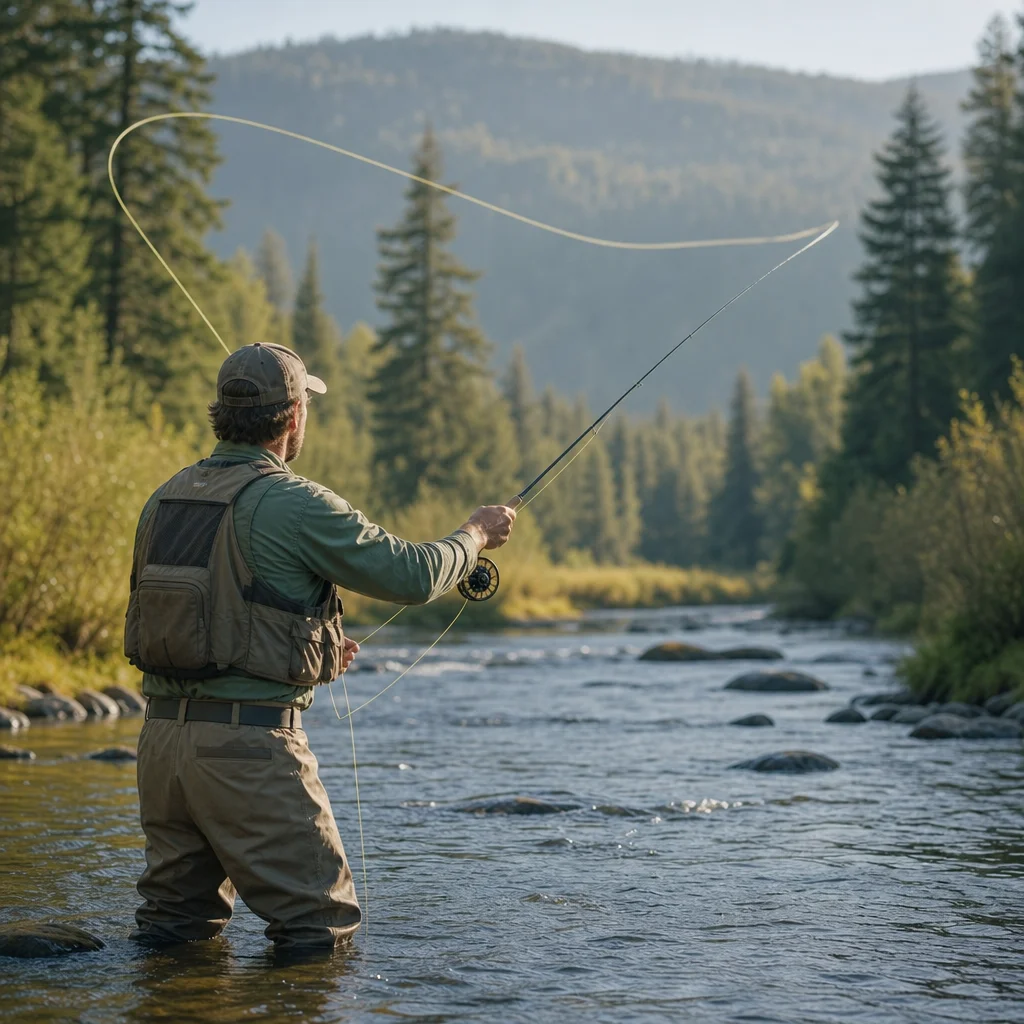
A trout refusing your fly doesn’t automatically mean you’ve chosen the wrong pattern. The fly may be fine, but moving too quickly, riding too high, drifting at the wrong depth, or approaching from a poor angle. Changing flies can feel productive because it gives you something to do, yet it often leaves the real problem untouched.
A better approach is to treat each refusal as a troubleshooting clue. Change the presentation first when the trout has little chance to inspect the fly properly. Change flies when the fish has seen a credible presentation and still rejects the offering—or when the available food clearly doesn’t match what you’re showing.
Start by identifying what actually happened
“Refusal” covers several different situations. Each one suggests a different adjustment.
- No visible reaction: The trout may not have seen the fly, or your presentation may have passed outside its feeding lane.
- A fish follows but turns away: The fly was noticed, but its movement, size, profile, or behavior raised a concern.
- A rise stops short: Drag, an unnatural angle, excessive speed, or a poor imitation may be responsible.
- A take is missed: The problem may be hook setting, a poor connection, a fly that rides incorrectly, or a fish that only touched the edge of the pattern.
- Several fish reject the same drift: Your presentation is more likely to be at fault than the fly alone.
- One fish rejects several good drifts: That individual may be cautious, disturbed, poorly positioned, or simply not interested in feeding at that moment.
The first useful question isn't “Which fly should I try?” It’s “What did the fish have a chance to evaluate?”
Fix the presentation before opening the fly box
Presentation includes more than the cast. It covers where the fly enters the water, how it moves, how deep it travels, how long it remains in the feeding lane, and whether the fish sees your line or leader in a threatening way.
Check for drag
In moving water, a fly can travel faster or slower than the current around it. That unnatural movement is drag. Trout may respond immediately, especially in smooth water where they have time to inspect the drift.
Look for the fly skating, speeding ahead of bubbles, or pulling the leader into an obvious curve. A downstream belly in the line can also move the fly before you notice it.
Try a better upstream mend, a reach cast, a shorter cast, or a different casting angle. Sometimes the simplest solution is to cast closer to the target so you don’t need to manage a long line on the water.
If the fly begins drifting naturally after the adjustment, give it several good passes before changing patterns. A single improved drift may not be enough to reach a trout that has already been alerted.
Test the depth
A fly that looks perfect but runs above the fish is still the wrong presentation. Trout often hold close to the bottom in stronger current, deeper pools, or conditions where conserving energy matters. In shallow water, the same fly may need to stay near the surface.
Change depth systematically:
- Improve the drift with your existing setup.
- Add or remove weight only if the water and tackle allow it.
- Adjust leader length or the position of an indicator.
- Give the fly time to reach the target depth before it enters the best holding water.
- Reassess whether the fly is now moving through the fish’s likely feeding lane.
If you’re using a dry fly and fish are rising just below it, changing to a smaller dry may help—but first check whether the trout is refusing the pattern or simply failing to reach it. A short subsurface dropper or a nymph presented at the observed depth may be a more meaningful change than switching from one dry fly to another.
Change the angle and drift line
A trout may be willing to feed but positioned where your current drift can't reach it cleanly. Casting directly upstream, across-and-upstream, or from a different bank can change both the fly’s path and the amount of line you must control.
Try to place the fly in the fish’s feeding lane rather than repeatedly landing it near the same visual target. A few feet of lateral difference can matter in a pocket, seam, or foam line.
Also consider the fish’s view of you. If you’re standing above a shallow lie or repeatedly casting over it, the trout may stop feeding before the fly gets a fair chance. Move carefully, lower your profile, and make fewer, more deliberate casts.
When changing the fly makes sense
Change flies when you have corrected the basic presentation and still have evidence that the pattern is the weak link.
The natural food clearly differs
If trout are feeding on small dark mayflies while you’re presenting a large pale imitation, a pattern change is sensible. The same applies when fish are taking emergers just below the surface but ignoring fully emerged adults.
You don’t need to identify every insect with certainty. Look for useful clues: size, color, silhouette, behavior on or below the surface, and where the food is concentrated. A close match in the most important characteristics is often more useful than an exact name attached to an ineffective drift.
The fish repeatedly inspects the fly
A follow or partial rise can tell you the fish noticed the offering. If repeated, drag-free presentations produce the same rejection, adjust one fly characteristic at a time:
- Size: Go smaller when fish appear cautious or are feeding on tiny food; go larger when the fly is difficult to see or the available food is substantial.
- Profile: A sparse, low-riding pattern may be better than a bulky imitation in smooth water.
- Color: Change broad color impression when the natural food or surrounding conditions make the current fly conspicuous.
- Stage: Try an emerger, cripple, nymph, or spent form when the trout’s behavior suggests it is feeding between familiar stages.
- Movement: A streamer or soft-hackled pattern may be more appropriate when the fish respond to motion rather than a dead drift.
Change only one major feature when possible. If you replace the fly, depth, tippet, angle, and retrieve at the same time, you won’t know which adjustment helped.
The fly is no longer functioning correctly
A damaged, waterlogged, fouled, or poorly positioned fly can create a presentation problem that looks like a pattern problem. Check the hook point, hackle, tail, wing, and any attached material. Remove trapped debris and dry a surface fly before deciding it has failed.
A nymph that has lost its weight, a streamer with a twisted leader, or a dry fly sitting on its side may need maintenance rather than replacement. If the pattern can't ride or sink as intended, change it—or repair the setup—before judging its effectiveness.
A simple change-one-variable sequence
When fish refuse, work through the least disruptive adjustments first:
- Pause and observe. Note whether fish are rising, following, flashing, refusing short, or ignoring the fly entirely.
- Improve the drift. Reduce drag, control slack, and adjust your casting angle.
- Recheck location. Cover a different seam, depth, pocket, or holding lane.
- Adjust depth. Modify weight, leader arrangement, indicator position, or fly type as appropriate.
- Change retrieve or speed. This matters especially for streamers and wet flies; avoid adding movement simply because the fish haven't responded.
- Change one fly characteristic. Start with size, stage, or profile based on the evidence.
- Rest the water or reposition. A fish that has seen repeated casts may need time, distance, or a different approach.
This sequence keeps you from cycling through patterns without learning anything. It also preserves time on the water: a good presentation with the “wrong” fly can reveal more than a poor presentation with the “right” one.
Match the adjustment to the water type
Fast pocket water
Fish have less time to inspect the fly, but they also have less time to move far for it. Prioritize getting the fly into the correct depth and lane. A small change in weight, entry point, or drift length may matter more than a precise color match.
Smooth pools and slow runs
Trout can examine both fly and leader. Focus on slack, tippet visibility, fly size, and a natural drift. If several careful passes fail, a smaller or lower-profile pattern may be worthwhile.
Riffles and broken surface
The current and surface disturbance can hide minor imperfections. Cover water efficiently, but don’t assume a refusal always requires a fly change. A better angle or a fly running slightly deeper may solve the problem.
Stillwater
Depth and retrieve often deserve attention before pattern changes. Vary the retrieve gradually, observe how fish respond, and consider whether the fly is traveling through the depth where fish are holding. A different pattern is useful when the fish show interest but consistently reject the one you’re using.
Avoid the most common switching mistakes
Changing too quickly: One poor cast isn't a reliable test. Give a fly several sound presentations when conditions allow.
Blaming the fly for drag: A new pattern can produce a brief response simply because it lands differently, not because it is a better imitation. Correct the cast and drift first.
Changing everything at once: Keep a note of what changed, even if it’s only a mental note. Diagnosis requires a comparison.
Ignoring the fish’s position: A fly change won’t help if the trout is holding outside the path you’re covering.
Overmatching the hatch: A highly specific imitation still needs the right depth, speed, and angle. Matching food is useful, but presentation determines whether the fish gets a believable look.
The practical decision
Change your presentation first when the fly is unseen, drifting unnaturally, running at the wrong depth, or reaching the wrong part of the water. Change flies when the fish has repeatedly received a credible presentation and the evidence points to size, profile, color, life stage, or movement.
On your next refusal, make the smallest reasonable adjustment, then watch what changes. If the fish responds differently, you’ve learned something. If it doesn’t, move to the next variable rather than reaching immediately for a larger fly box. That habit turns refusals into information—and makes the eventual fly change far more likely to solve the actual problem.