Fishing a Dry-Dropper Rig Through Changing Summer Water
When summer water drops, weeds thicken, and trout shift between surface and subsurface feeding, a dry-dropper can become awkward fast. I’ll help you simplify adjustments to depth, spacing, fly size, and presentation without carrying a box for every possibility.
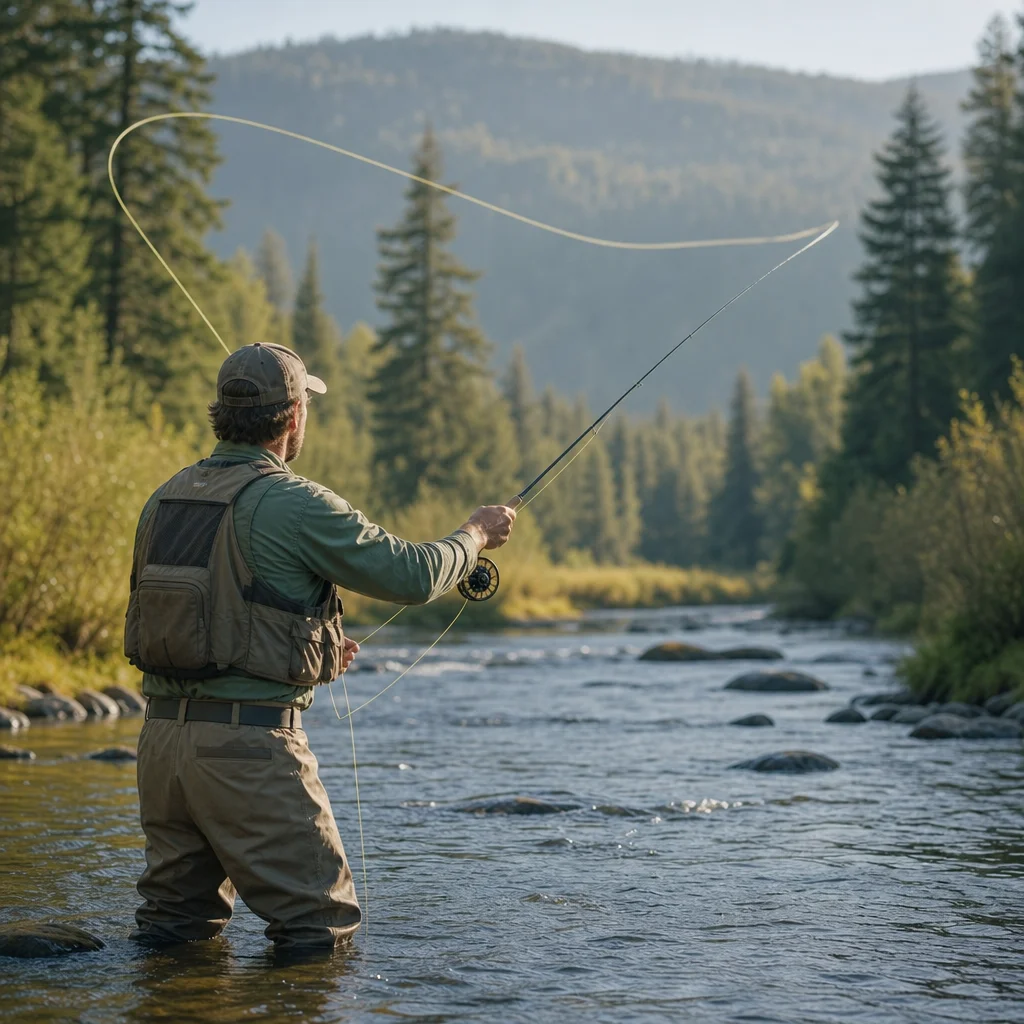
Summer water rarely stays consistent for long. A dry-dropper that works beautifully in a cool morning riffle may drag through afternoon weeds, land too heavily in a clear pool, or put the dropper at the wrong depth after flows recede.
The solution isn’t a larger rig. It’s a small set of deliberate adjustments. Change one variable at a time—usually depth first—then pay attention to how the flies move, where trout are holding, and whether the dry is still behaving like a fly rather than a bobber.
Start with the simplest useful rig
A dry-dropper rig gives you two chances to find fish: the dry can imitate a surface meal, while the nymph searches below it. In summer, that combination is especially useful when trout rise intermittently but still feed heavily beneath the surface.
For a minimalist setup, carry:
- One or two buoyant, visible dry flies in a couple of sizes
- A small selection of nymphs suited to the stream’s common food and depth
- Tippet in a few practical diameters
- A short section of stronger tippet for the leader and a finer section for the dropper when conditions allow
- Small nippers and forceps for quick changes and safe hook removal
The exact fly names matter less than the rig’s behavior. Your dry needs enough flotation to support the dropper and remain visible. Your nymph needs to reach likely feeding depth without turning the cast into a tangled negotiation.
Adjust depth before changing everything else
The distance between the dry and the dropper controls how far the nymph can fish below the surface. It also affects casting, landing position, and how easily the rig catches vegetation.
Use a short connection in shallow, fast water
In shallow riffles, pocket water, and broken runs, start with a short dropper length. Trout often hold close to the bottom or beside current breaks, but the water itself may be only a foot or two deep. A long dropper can hang up immediately or swing unnaturally through the pocket.
A shorter connection also turns over more cleanly. You can place the rig beside rocks, seams, and small plunge pools without making an oversized cast. If the dry passes cleanly but you see no response, lengthen the connection gradually rather than doubling it at once.
Add length in deeper, slower water
As summer flows fall, deeper pools and slow edges may become more important. Trout can move into these areas when riffles become too shallow, bright, or warm. Give the nymph more room to sink when the water below the dry is clearly deeper than the current connection allows.
Add a modest amount, fish it, and watch the dry. If the dry repeatedly dips, drifts sideways, or disappears without a surface take, the dropper may be too heavy or too deep for the flotation available.
The goal isn’t to suspend the nymph at a precise measured depth. The goal is to keep it near the level where trout are feeding while maintaining a castable, manageable rig.
Let the water tell you when to shorten it again
Longer isn’t automatically better. Weed growth, shallow margins, and complex currents often make a long dropper less effective even when the water looks deep. Shorten the rig when the nymph snags on nearly every drift, the dry loses contact with the current, or you’re spending more time clearing vegetation than fishing.
A short, clean drift beats a theoretically perfect depth that never reaches the target intact.
Match the fly size to summer conditions
Fly size affects more than imitation. It changes visibility, flotation, casting difficulty, and how much disturbance the rig creates.
Fish larger, more buoyant dries when conditions are rough
A larger dry is useful in broken water, wind, low light, or when the dropper has enough weight to pull it down. It’s also easier to track through foam and pocket water. In these conditions, a slightly conspicuous dry can function well as both an attractor and an indicator.
That doesn’t mean it should be enormous. Choose the smallest buoyant dry you can see and that can support the nymph. Oversizing the dry may create a hard landing and discourage trout in shallow, clear water.
Downsize when summer water becomes low and clear
Low flows often expose line, leader, fly shape, and poor landings. A smaller dry and a lighter dropper can reduce disturbance. Use longer, finer leaders only when you can still cast and control them reliably.
If the dry keeps sinking, don’t automatically go bigger. First check whether the nymph is too heavy, the tippet is waterlogged, or the fly has been damaged. A properly treated, appropriately sized dry may be enough.
For the dropper, favor a compact pattern that sinks efficiently without requiring excessive weight. A small nymph that reaches the feeding lane is usually more useful than a bulky one that repeatedly snags or pulls the dry under.
Change the rig as vegetation takes over
Summer vegetation can turn a productive dry-dropper into a collection device. Aquatic plants often grow thickest along slow edges, inside bends, and in water that appears inviting but leaves little room for a clean drift.
When weeds are a problem, make three changes:
- Shorten the dropper.
- Fish the open lanes between vegetation instead of dragging through the beds.
- Reduce the nymph’s weight if it is dropping into plants before it reaches the trout.
You can also fish a shallower dry-dropper through the upper part of the water column, especially along weed edges where trout patrol for insects. Keep the rig moving through clear channels, and lift it before it reaches the thickest growth rather than waiting for the hook to find it.
If nearly every useful target is covered in vegetation, a single dry may be the more efficient choice. The second fly is only an advantage when it can drift cleanly.
Use casting technique to protect the drift
A dry-dropper has more hinges and more opportunities to tangle than a single fly. Summer conditions often demand shorter, quieter casts rather than longer ones.
Cast at the target, not past it
Aim to land the dry close to the beginning of the drift. Extra line on the water creates more drag and gives currents more time to pull the dry and dropper apart. In pocket water, a compact cast to the soft edge of a current seam is often enough.
Use the rod to mend only as much as needed. Large mends can move the dry, disturb the dropper, or collapse the leader. A reach cast or slight change in casting angle may create a better drift with less movement after the flies land.
Open the loop when the rig becomes difficult
Tight loops are useful for accuracy, but a dry-dropper can collide with itself when the cast is too forceful or compact. Slow the stroke slightly and open the loop enough for the dry and nymph to separate.
Keep the back cast clear, and avoid false casting more than necessary. Every additional aerial cycle gives the rig another chance to twist around the leader. If the flies begin landing together, pause and inspect the connection rather than continuing to cast through the problem.
Use the water’s structure to shorten the cast
When trout are close to you, don’t automatically wade farther or add line. Summer water can be clear enough for fish to detect movement, but many trout still feed within a short cast if you approach carefully. Stay low, use available bankside cover, and place the rig upstream of the feeding lane.
A shorter cast gives you better control and makes it easier to lift the rig before it reaches weeds, branches, or a downstream obstruction.
Read trout behavior before changing flies
A dry-dropper provides useful clues if you watch the whole system.
If trout rise near the dry but refuse it, keep the same general setup and consider a smaller or more subdued dry. If the dry is ignored but the nymph produces occasional reactions, preserve the nymph and adjust its depth or weight before replacing it.
If the dry dips repeatedly in water with no visible surface activity, check for a take—but also check the rig. The dropper may be too heavy, the dry may be waterlogged, or the nymph may be catching bottom. A strike indicator shouldn't behave like a stone tied to your leader.
If the dry drifts naturally but the nymph never seems to get down, add a little depth or use a more efficient nymph. Don’t solve every depth problem with heavier weight; excessive weight can ruin the drift and increase snags.
A simple summer adjustment sequence
When conditions change, work through this order:
- Check the drift. Is the dry moving naturally, and is the leader reasonably straight without dragging?
- Check the depth. Is the dropper reaching the likely feeding level, or is it hanging in the wrong part of the current?
- Check the weight. Is the nymph sinking enough without pulling the dry under or catching vegetation?
- Check fly size. Downsize for low, clear, calm water; use more buoyancy and visibility in broken or windy water.
- Check casting distance. Shorten the cast when close targets and cover allow it.
- Change flies last. A poor depth or drag problem can make a good fly look ineffective.
This sequence keeps the rig simple and helps you identify the actual problem instead of changing several pieces at once.
When to abandon the dropper
The dry-dropper isn't a requirement. Switch to a single dry when trout are consistently rising, the water is too shallow for a useful nymph, or vegetation makes the second fly impractical. Use a single nymph when surface activity has faded and the dry can’t be kept afloat or tracked effectively.
You can also drop the rig when wind, branches, or tight banks make two flies unsafe to cast. Fewer hooks make close-quarters fishing easier and reduce the chance of catching clothing, gear, or nearby vegetation.
The minimalist approach isn't carrying the fewest flies at all costs. It’s carrying and using only what improves the next drift.
Practical next steps
Before your next summer outing, decide on a starting setup: one visible, buoyant dry, one moderately weighted nymph, and a short dropper connection. Begin in water where you can watch the rig clearly. After several clean drifts, adjust only one variable—usually depth—based on what the current and trout are showing you.
As flows drop or weeds thicken, shorten the rig and the cast before reaching for a new fly. As water deepens or trout hold farther below the surface, add length in small increments. Keep the drift clean, the landing quiet, and the setup simple enough that you spend more time fishing than repairing it.