How to Fish the Same Run After Trout Have Seen Several Flies
I’ll help you decide what to change—and what to leave alone—when trout have rejected several flies in a promising run. You’ll work through rest, angle, depth, fly size, and drift quality before giving up on water that may still hold fish.
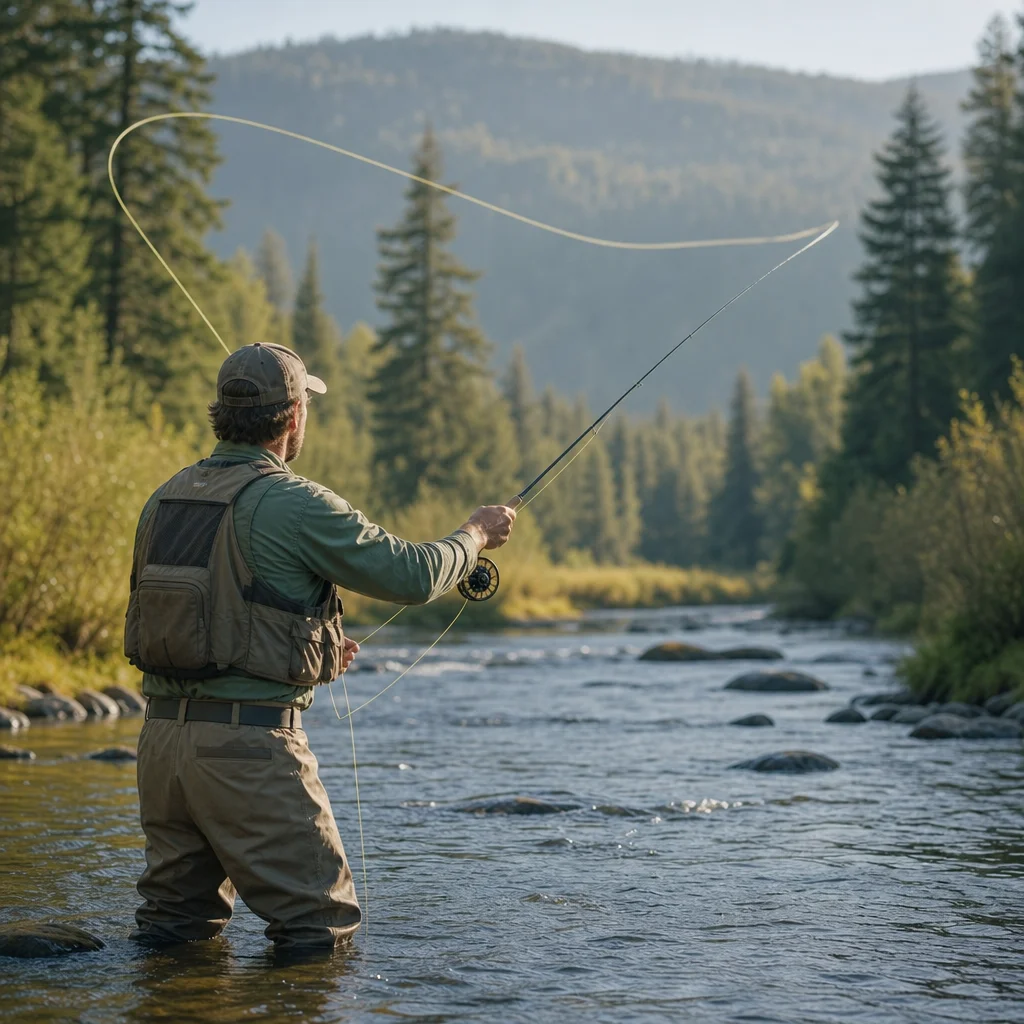
A promising run can start to feel cursed after trout have ignored several flies. The usual reaction is to keep changing patterns, shorten the leader, or fire casts into every remaining pocket until the water seems thoroughly introduced to your entire fly box.
That approach often makes the problem worse. Trout may not have rejected the run itself; they may have rejected one presentation repeated from one angle. After several flies, your best adjustment is usually not a dramatic new pattern. It’s a controlled change in how the fly enters the fish’s view, how deeply it travels, and how naturally it moves.
The goal is to learn whether the fish are still catchable before you abandon the run.
Stop changing flies at random
Several refusals don’t tell you exactly what’s wrong. The trout may be seeing the fly too high, detecting drag, watching the leader land across their window, or simply refusing a pattern that doesn’t match what they’re eating. Changing flies without changing the presentation can leave you repeating the same mistake in different colors.
Before making the next cast, identify what has actually changed. Ask yourself:
- Did the fly reach the depth where the trout are feeding?
- Did it drift through the likely holding lane?
- Did it move at the same speed as the surrounding current?
- Did the cast approach from an angle the fish can tolerate?
- Did the leader or line land close enough to disturb the fish?
If the answer to one of these is no, solve that problem before reaching for another pattern. A different fly can't compensate for a fly that never reaches the fish naturally.
Give the run a proper rest
Resting the water is often the least exciting and most useful adjustment. Move well away from the immediate bank if possible, lower your profile, and leave the run alone long enough for surface disturbance and line movement to stop mattering.
There’s no universal rest period. A short pause may be enough after a few careful casts, while a heavily fished pocket may benefit from a longer break. Use the situation as your guide:
- Rest briefly if you made only a few quiet casts and saw no obvious reaction.
- Rest longer if trout followed, flashed, bolted, or were repeatedly covered.
- Leave temporarily if you’ve waded through the holding water or made several poor landings.
You can use the pause productively. Watch the surface, inspect nearby insects, retie a damaged knot, or fish a different section while the run settles. The aim isn’t to follow a magic clock. It’s to stop adding disturbance while you decide on a better presentation.
Change your angle before your pattern
Your casting position controls much more than distance. It affects the fly’s depth, the way the leader lands, the amount of line on the water, and how long the fly remains in the trout’s feeding lane.
If you’ve been casting straight upstream, move slightly to one side and consider a quartering angle. If you’ve been standing directly across from the fish, shift downstream or closer to the bank where the footing allows. Even a modest change can produce a cleaner drift through the same water.
Work across the current thoughtfully
A more lateral angle can help you reach a seam that was difficult to cover from upstream. It can also create unwanted swing or drag, so keep the cast compact and control the line immediately after the fly lands. Mend only as much as needed. Large, repeated mends can disturb the water and make the presentation look less natural.
Consider the trout’s view
Changing angles isn't only about improving your drift. It can reduce the chance that the trout sees your leader, fly line, or moving rod tip before the fly arrives. Avoid moving directly over shallow fish, and use the bank, current breaks, and available cover to keep your profile unobtrusive.
A new angle is especially worthwhile when you’ve been casting from one position long enough that every drift follows the same track. The run may still be productive; you may simply be showing the fish the same problem repeatedly.
Change depth in small steps
Depth is one of the most common reasons a good-looking fly receives no response. Trout often hold lower than expected, particularly in faster water, deeper slots, or during periods when they’re conserving energy. At other times, fish may be suspended higher and ignore a fly that scrapes along the bottom.
Make depth changes deliberately rather than adding weight until the fly becomes difficult to control. A useful progression might look like this:
- Improve the drift with the current setup.
- Add a small amount of depth if the fly is clearly riding above the feeding lane.
- Adjust leader length or tippet configuration when that gives you more control without creating a heavy landing.
- Try a higher-riding presentation if you’ve been repeatedly ticking bottom or snagging vegetation.
Watch the end of the drift. A fly that occasionally reaches the bottom may be close to the right depth, while a fly that never enters the likely lane needs help. Constantly dragging through rocks usually means you’ve traded natural movement for contact.
Depth changes can also be made through the cast and mend. A more upstream landing, an earlier mend, or a longer pause before line tension develops may allow the fly to sink without changing flies at all. These adjustments are subtle, but pressured trout often respond better to subtlety than to a heavily weighted solution.
Downsize, then consider a change in profile
If the trout have seen several flies and the presentation is sound, reducing fly size can be a sensible next move. A smaller offering may look less intrusive and can match the behavior of small food items that are easy for trout to ignore until the drift is perfect.
Downsizing isn’t automatically better. A fly that’s too small for the available light, water color, or your vision can make you lose track of the drift. Choose the smallest fly you can fish accurately and observe confidently.
You can change more than size:
- Reduce flash or other bright elements.
- Move from a bulky silhouette to a slimmer one.
- Try a softer, less rigid profile when the fish seem interested but unwilling to commit.
- Simplify the pattern if your current fly is much more conspicuous than the natural insects.
Change one feature at a time when possible. If you switch size, color, profile, and depth together, a successful drift teaches you very little about what solved the problem. You’re trying to catch a trout, but you’re also trying to make a useful decision for the next cast.
Improve the drift before blaming the fly
A drag-free drift is more than a fly floating in the correct direction. The fly should move at a speed and pace that make sense for the water around it. Uneven currents can pull the leader, creating movement that reaches the fly before you notice it.
Look for these signs of a compromised drift:
- The fly accelerates toward the bank or downstream edge.
- The leader straightens too quickly.
- The indicator, if used, moves at a different speed from the surface current carrying the fly.
- The fly swings across the holding lane instead of traveling through it.
- You’re repeatedly lifting or mending line during the most important part of the drift.
Try shortening the cast if distance is creating too much line on the water. Use a reach cast or a careful aerial adjustment to place line away from the strongest conflicting current. Keep slack controlled rather than piling it randomly; slack that you can’t manage won’t protect the drift for long.
If you’re fishing a dry fly, avoid false casting over the fish while trying to change direction. If you’re fishing a nymph, pay attention to whether the rig is entering the zone too late or leaving it before it reaches the likely holding water. In both cases, presentation quality matters more than the number of pattern changes.
Use a disciplined change sequence
When a run has seen several flies, follow a sequence that limits guesswork. One practical order is:
- Pause and observe. Look for rises, flashes, follows, and changes in current or light.
- Rest the water. Stop adding disturbance while you prepare.
- Change your angle. Seek a cleaner drift and a less obvious approach.
- Adjust depth. Move the fly toward the feeding lane in small increments.
- Refine the drift. Reduce drag, excess line, and unnecessary mending.
- Change size or profile. Make a modest fly adjustment once the presentation is credible.
- Try a different method. Switch between dry fly, nymph, or another suitable approach only when the water and conditions support it.
Give each meaningful adjustment enough casts to produce useful information. That doesn’t mean repeating a poor drift for twenty minutes. It means avoiding a rapid cycle of one cast, one fly change, and one new theory.
Know when to leave the run
Persistence becomes counterproductive when you’re no longer learning anything. Leave or move on when the fish have been repeatedly disturbed, your casts are degrading, or the run requires a presentation you can’t execute safely and cleanly from your position.
You should also move if nearby water offers a better opportunity. A promising run isn't necessarily the best run at this moment. Changes in light, insect activity, water level, and angler pressure can all shift where trout feed.
Leaving doesn’t mean the water was empty. It means you’ve reached the point where additional casts are less valuable than a reset elsewhere. You can return later from a better angle, with a more appropriate depth, or after the run has had time to settle.
Practical next steps
When trout have seen several flies, resist the urge to conduct a fly-box lottery. Start by resting the water, then change the angle and improve the drift. Adjust depth in small steps, choose a smaller or simpler profile only after the presentation is sound, and make one meaningful change at a time.
Before abandoning the run, ask three final questions:
- Have I shown the fly at the trout’s likely depth?
- Have I presented it from a cleaner angle?
- Have I produced a genuinely natural drift rather than a new version of the same mistake?
If the answer to any of those is no, the run may still deserve another careful attempt. If the answer to all three is yes, moving on is a sensible decision—not a defeat.