How Should You Fish a Run After a Sudden Change in Water Clarity?
I’ll help you avoid the common mistake of changing flies at random when a run clouds up or clears suddenly, with a practical sequence for adjusting size, depth, retrieve speed, casting distance, and your approach.
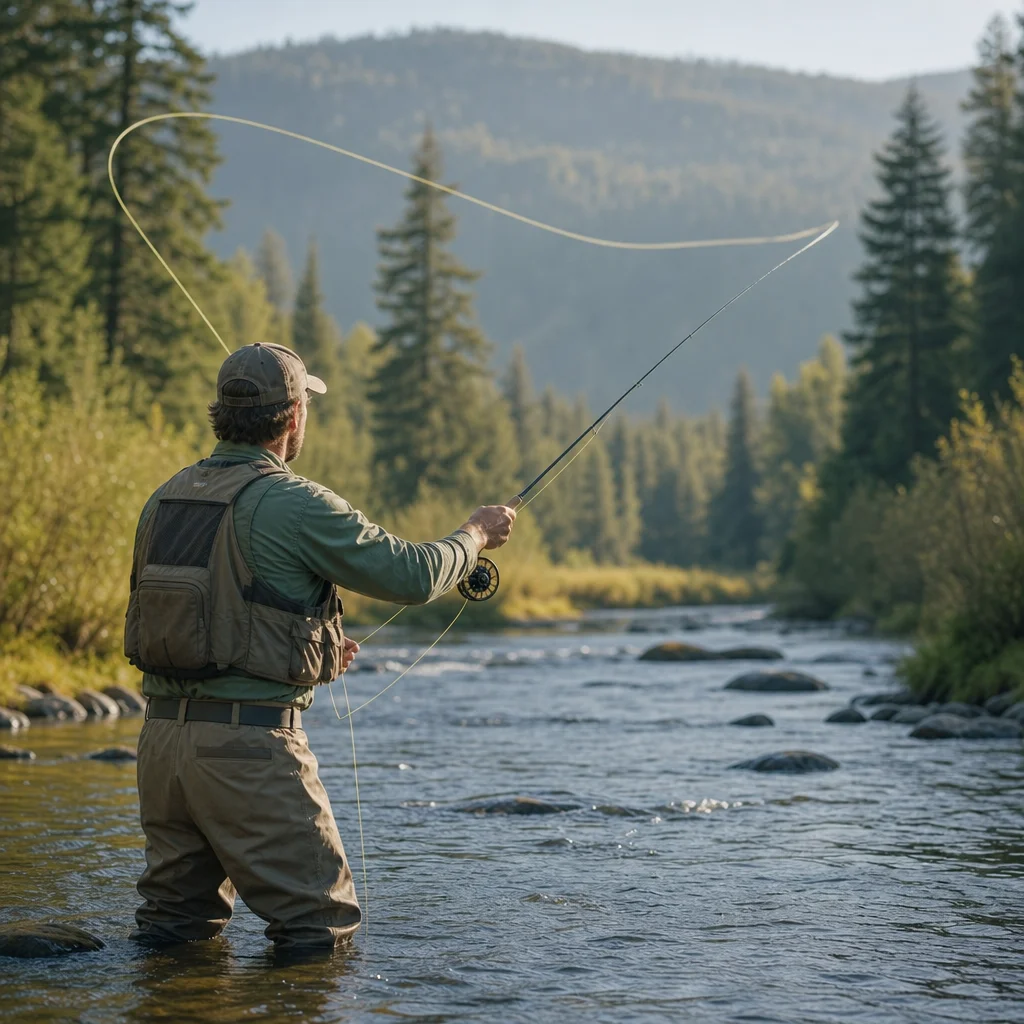
A run that fished well half an hour ago can become a different problem after a rain shower, a muddy tributary joins the river, or a burst of runoff moves through. The common mistake is to change flies repeatedly without first deciding whether the trout have lost visibility, changed depth, or simply become more cautious.
Treat the clarity change as a series of decisions rather than a reason to abandon the run. First determine whether the water is getting dirtier or clearer. Then adjust presentation in a controlled order: depth, fly visibility and size, retrieve or drift speed, casting distance, and finally your position on the bank or in the water.
Start by identifying the direction of change
“Changed clarity” covers two very different situations. Water that is becoming cloudy reduces the distance at which trout can detect a fly. Water that is clearing often gives them more time to inspect it and makes your movements, leader, and poor drifts easier for them to notice.
Look at the water against a familiar reference, such as a pale rock, submerged branch, or the riverbed in a shallow margin. You don’t need a precise measurement. You’re trying to answer three questions:
- Can you still see the bottom at the same depth?
- Is the color evenly cloudy, or are distinct bands and plumes moving through?
- Is the change happening across the entire run or only along one seam?
A sudden, localized plume can create a short-lived edge where trout hold on the cleaner side of the color change. If the whole run is gradually clouding, fish may move closer to the bank, slower water, structure, or any seam that gives them a better balance between shelter and feeding opportunity.
If the water is becoming clearer, expect the useful holding water to become more specific. Trout may still feed, but they can shift toward shade, deeper slots, broken surface, or the far side of a current seam.
When the water is getting dirtier
Clouding water doesn’t automatically mean you should use the largest fly in the box. It means the trout have less time and distance to find it. Your first adjustments should make the presentation easier to detect without making it so unnatural that the fly loses credibility.
Adjust depth before dramatically changing size
In a rising or dirtying river, trout often leave exposed feeding lanes for slower water near the bank, the inside of bends, the lower side of rocks, and the edges of seams. They may also hold slightly higher if dislodged food is moving near the surface, or deeper if the current becomes uncomfortable.
Make one depth change at a time. Add a small amount of weight, lengthen the nymphing depth, use a heavier-rigged fly, or change to a sinking presentation when conditions call for it. Avoid immediately combining a much heavier fly, a longer leader, and an aggressive cast. You can lose contact and put the fly where the fish aren’t holding.
Start by working the water closest to the bank and the near side of the seam. If the run has become more opaque, trout may not be comfortable moving far to intercept a fly. A presentation that reaches them at short range can outperform a long cast to more distant water.
Choose visibility over novelty
A fly with a clear silhouette or a modestly brighter trigger can be easier to find in stained water. That might mean a larger profile, darker materials against a bright sky, lighter materials against a dark bottom, or a visible indicator when appropriate.
Size should remain proportional to the food available and the river’s character. Try moving up one size category rather than making a dramatic jump. A slightly larger nymph, streamer, or attractor can improve detection while still looking plausible. If the water is only lightly tinted, a familiar pattern with a little more contrast may be enough.
The best color depends on background and light. Black, dark olive, brown, and other strong silhouettes can show well in pale or cloudy water, while brighter accents can help when the background is dark. Don’t treat color as a universal rule; use contrast as the principle.
Slow the presentation, but keep it alive
Trout have less opportunity to track a rapidly moving fly in cloudy water. With nymphs, improve depth and drift control before adding excessive movement. With streamers, begin with a slower retrieve and deliberate pauses, then test a slightly faster pace if fish are following without committing.
A fly that moves too quickly can leave the trout’s limited visual window before it gets a response. A fly that stops completely may look just as unconvincing. Change retrieve speed in small steps and watch the water for follows, short strikes, or the flash of a fish turning.
When the water is clearing
Clearing water creates a different problem: trout can see more, and they may have time to reject what looked acceptable during the murky period. Your presentation usually needs to become more precise rather than merely more delicate.
Return toward a natural size
If you upsized while the water was dirty, begin stepping back toward the food size suggested by the season, the river, and any insects you’ve observed. You don’t have to change immediately if the water remains moderately stained and fish are still responding. Make the adjustment when refusals increase or the fish stop moving toward the larger offering.
A smaller fly can be useful in clearer water, but size alone won’t fix a poor drift. A naturally sized fly presented across the wrong current still looks wrong. Prioritize the drift and the angle before searching for a microscopic pattern.
Fish deeper and more selectively
As visibility improves, trout may leave the bank or shallow edges and return to established feeding lanes. Don’t assume the deepest part of every run is best. Look for the combination of depth, moderate current, and nearby cover that lets a fish feed without exposing itself.
Work the transition water first: the edge of a seam, the head of a pool, the soft side of a rock, or the boundary between fast and slow flow. These places can remain productive while trout are repositioning. If you cover them carefully, you’ll learn more than by immediately casting over the entire run.
Reduce disturbance
Clearer water makes distance and angles more valuable. Stay low when the bank is open, avoid walking directly along the edge if fish can see you, and keep false casts away from the most promising water. A longer cast can help when it preserves a good drift, but distance isn't automatically stealthier if it creates slack or poor line control.
Your first cast into a newly clear run should often be your most careful one. Begin with the water nearest you only when you’re confident it isn’t holding a visible fish. Otherwise, start with the most likely water at the edge of your comfortable casting range and work inward methodically.
Check the river before you reposition. After rain or a rapid clarity change, look for rising water, floating debris, unstable banks, and altered footing before wading or crossing. If the river is changing faster than you can read it, fish from the bank and wait for safer conditions.
A practical adjustment sequence
When you notice a clarity change, use this order rather than changing everything at once.
1. Recheck the holding water
Watch for a few minutes. Look at seams, soft edges, structure, and the color boundary. Trout may have moved before your fly selection became the problem.
2. Change depth
Move the fly into the likely feeding level. Adjust weight, leader depth, or presentation style in a measured way. Keep enough contact to detect takes without dragging the fly through the run.
3. Change visibility and size
In dirtying water, consider a modest increase in profile or contrast. In clearing water, return toward a natural size and subtler appearance if the conditions and refusals suggest it.
4. Change speed
Slow a streamer or swing when trout need more time to track it. For a nymph, improve the drift before adding movement. If the water is clear and fish are inspecting the fly, a dead-natural presentation often deserves another chance before a new pattern.
5. Change casting distance and angle
Cloudy water generally rewards shorter, more direct coverage of nearby holding water. Clear water often rewards longer casts, lower profiles, and angles that keep your line away from the fish. In both cases, cast only as far as you can maintain control.
6. Change your position
If the run’s best water is now on the far side of a seam, move along the bank rather than forcing repeated casts from a poor angle. When safe, a change in position can improve the presentation more than another fly change.
Reading common combinations
Some clarity changes involve more than visibility. Light, flow, and insect activity can change at the same time.
Rain clouds the river, but surface activity continues
A cloudy sky and tinted water can still support surface feeding if insects are active or food is being flushed along the margins. Before abandoning a dry fly, inspect the softer edges and watch for rises. You may need a larger or more visible dry, but a subsurface presentation isn’t automatically the answer.
The river clears while the flow remains elevated
Trout may still favor protected edges and slower pockets even though they can see your fly better. Keep searching those areas, but improve your distance, drift, and approach. Clear water doesn’t always mean fish have returned to their normal low-flow positions.
A muddy tributary creates a sharp color line
Fish may hold along the cleaner edge, the dirty edge, or just downstream of the mixing zone, depending on food and current conditions. Cover the boundaries before committing to the middle of either color. A short, controlled cast can test the edge without disturbing the entire run.
Know when to stop changing tactics
A clarity change can make every missed fish feel like evidence that another adjustment is needed. That mindset leads to constant switching and little useful information.
Give each meaningful change enough casts to show whether it helped. If you alter depth, fly size, speed, angle, and location together, you won’t know what worked. Change one main variable, fish the most likely water, and observe the result.
If the run produces no signs after a careful pass, move to a different type of water. Trout may have relocated, or the change may have made the run temporarily unproductive. Returning later can be more effective than forcing the same piece of river with increasingly elaborate tactics.
Practical next steps
When the next shower or runoff pulse changes a familiar run, remember the sequence: identify the direction of the change, find where trout are likely to reposition, adjust depth, then tune fly visibility and retrieve speed. Use shorter coverage and stronger contrast as the water dirties; use greater distance, cleaner drifts, and more selective presentations as it clears.
Keep your changes deliberate. The goal isn’t to find a magic fly for altered water. It’s to present a believable meal at a range and speed the trout can actually detect.