How to Approach Trout in Clear Water When There Is No Cover
I’ll show you how to avoid the mistake of treating clear, coverless water like ordinary trout water, using distance, a controlled silhouette, careful wading, sensible clothing, and better timing to approach exposed fish safely.
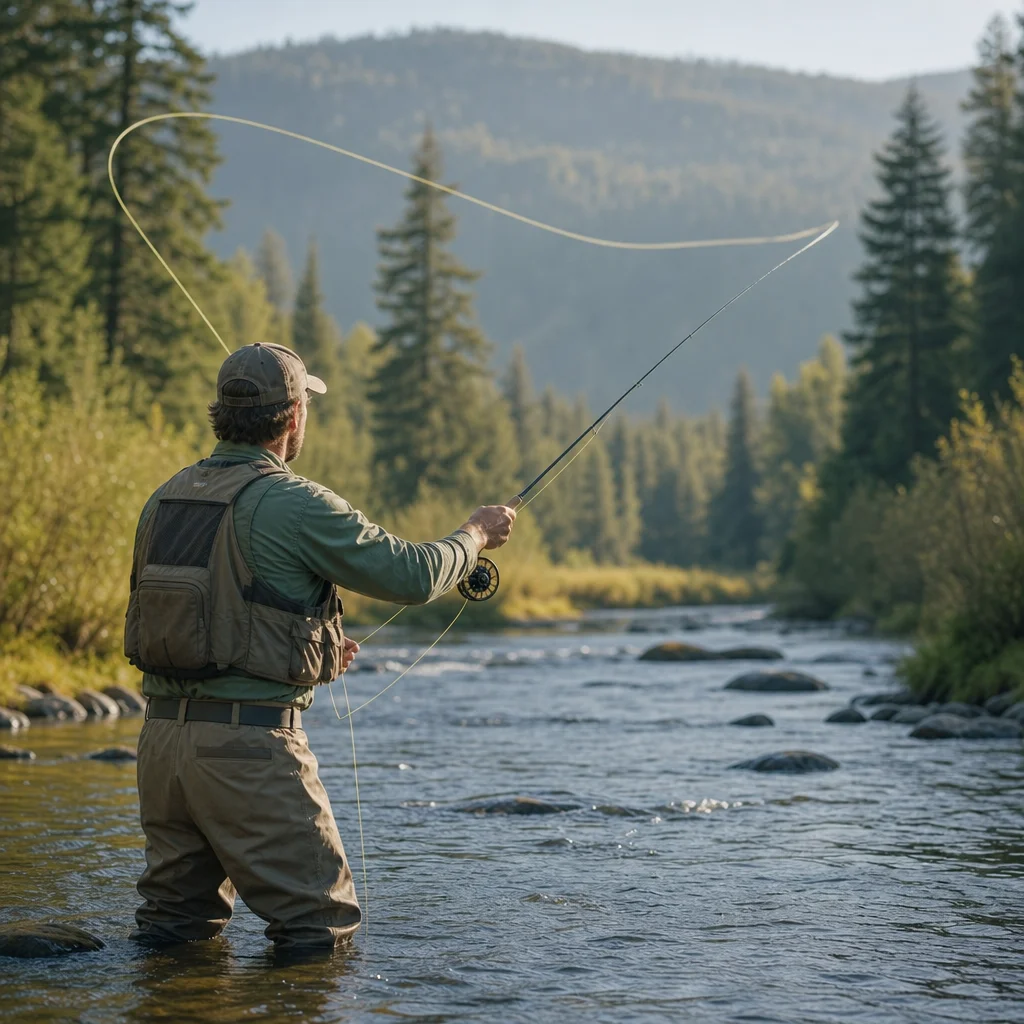
Why open water makes trout difficult
When trout have no logs, undercut banks, weed beds, or deep shadows to hide beneath, they can detect your approach from a long way off. The mistake is assuming that the lack of cover makes them easier to reach. In clear water, the fish may see you before you see them, and your options shrink quickly once you’ve entered the shallows.
Treat the whole approach as part of the presentation. Your cast matters, but so do your route to the bank, your clothing, your pace, and the shape you make against the sky. A good first cast begins well before you unroll the leader.
Start from the fish’s perspective
Before moving, identify the trout’s likely window of vision. A fish looking upstream can often detect movement across a broad cone above and ahead of it. The exact range depends on depth, surface glare, water clarity, light, and the trout’s position, but the principle is simple: assume exposed fish can see farther than you’d prefer.
Look for visual barriers from the trout’s position rather than yours. A low bank, bend in the river, tall grass, or a distant rise may conceal you even when the near bank appears completely open. If no useful barrier exists, distance becomes your main form of cover.
Watch the fish for a few seconds before committing to a route. Note its feeding lane, direction of movement, and how much of the bottom it can see. A trout holding in a shallow flat may be alarmed by a person wading anywhere in the same section, even if the cast itself lands accurately.
Make distance your first adjustment
In clear, open water, lengthening the cast is usually more reliable than trying to sneak close. Start from the farthest practical position and move nearer only if the presentation demands it. A longer leader and a controlled, open loop can help you keep the line away from the fish while preserving accuracy.
Distance has trade-offs. A cast that is technically long but poorly controlled can create more drag, slack, and false casts than a shorter cast from a better angle. You need enough line to reach the feeding lane, not a heroic cast that leaves you unable to mend or lift cleanly.
Before adding distance, improve the angle. A downstream or quartering position may let you reach the trout while keeping your body farther away. It can also change how the fly and leader land. The best position is the one that reduces both the fish’s view of you and the amount of correction your line needs after landing.
Control your silhouette
A trout may not identify you as a person, but it can register a large, moving shape where nothing was there before. Standing upright on an exposed bank creates a strong silhouette, particularly when you’re between the fish and a bright sky.
Lower your profile when doing so is safe and useful. Kneeling, crouching, or sitting can reduce the visible shape of your upper body. Move slowly into position rather than dropping suddenly; a quick change in outline can be just as alarming as a larger outline.
Avoid waving the rod above your head while planning the cast. Keep it low until you’re ready, and make as few false casts as possible. In calm conditions, repeated overhead movements are conspicuous even when the line never touches the water.
Silhouette control doesn’t mean sacrificing balance. A low stance near slippery rocks, steep banks, or deep water can create more risk than it removes. If you can’t crouch securely, stay upright and increase your distance instead.
Choose clothing for concealment, not camouflage theater
Muted, low-contrast clothing is a sensible choice for clear water. Earth tones, gray, olive, and subdued blue generally create a less obvious shape than bright white, saturated colors, or high-contrast patterns. The goal isn’t to disappear. It’s to avoid presenting a sharply defined moving object against the background.
Match the surroundings without becoming distracted by the idea of perfect camouflage. Clothing that blends with a dark bank may stand out against a pale sky, and a bright shirt can be visible from either side of the river. Consider the background the trout is likely to see, then choose the least conspicuous practical option.
Reduce unnecessary movement as well. Shiny tools, flashing rod sections, and a rapidly swinging net can attract attention in calm, clear water. Keep accessories secured and organize your essential tools before you begin the approach.
Plan the route before entering the water
Wading should be the last adjustment, not the first. Study the section from shore and decide whether you can reach the fish without crossing its feeding lane. If you must wade, identify firm footing, the intended stopping point, and a retreat route before stepping in.
Enter well downstream or well outside the trout’s likely view whenever the river layout allows it. Move diagonally rather than walking directly toward the fish. Each step should accomplish something: improving your casting angle, reducing line drag, or reaching a safer and more stable position.
Keep your wading pace deliberately slow. Rapid steps create pressure waves, dislodge bottom material, and send sediment downstream. In shallow water, even a small cloud of disturbed silt can warn trout that something has changed. Pause after moving and allow the water to settle before casting.
Avoid crossing between the trout and the area it is watching. Clear water gives fish time to respond to disturbance, and an angler who walks across the feeding lane may ruin more water than the single target being pursued.
Check the crossing first: Before wading, reassess depth, current speed, footing, and your exit route from the exact entry point. Water levels and river hazards can change during the day, so use local conditions and current access or safety guidance rather than relying on an earlier observation.
Pick a casting position that protects the presentation
Once you’re in position, prioritize a clean drift over a convenient stance. A downstream angle may keep you out of the fish’s view, but it can make drag more difficult to manage. A cross-stream position may improve control while exposing more of your body. Compare the two before committing.
If the fish is facing upstream, approach from behind its primary view when possible. Keep the leader and fly moving into the feeding lane naturally rather than throwing across several current seams. The fewer conflicting currents your line crosses, the less manipulation you’ll need after the cast.
Use the shortest effective cast from the safest, least visible position. This may seem contrary to the distance-first rule, but distance is a tool, not a contest. If moving three steps changes the angle dramatically, those steps may be more valuable than adding twenty feet of line.
Make one or two deliberate false casts at most when conditions are calm and the trout is exposed. If you need repeated attempts to find the range, back away and reset rather than continuing to advertise your position.
Let timing do some of the work
Light and surface conditions can change how visible you are. Bright overhead light may produce a clear silhouette, while low-angle light can lengthen shadows across the water. Wind can break the surface and reduce the trout’s ability to inspect you, but it also complicates casting and may make wading less stable.
Cloud cover, surface texture, and increased flow can create brief opportunities. These conditions don’t make an exposed approach automatically safe; they simply reduce the clarity of the fish’s view in some situations. Use the change to make a better-positioned cast rather than rushing into the water.
Timing also matters between casts. If the trout refuses, loses interest, or shows a sharp reaction, stop. Give the pool or flat time to settle, then reconsider your angle, distance, fly, and route. Continuing to cast at a disturbed fish rarely repairs the original mistake.
Common approach errors to avoid
Walking straight to the target
The direct route is often the most visible and the least useful. Move around the fish’s field of view, or stay on shore and adjust the cast.
Wading before studying the water
Entering first can contaminate the entire area with movement and sediment. Spend time identifying feeding lanes and safe footing before you disturb either.
Overvaluing camouflage
Clothing helps, but it can't compensate for a tall silhouette, a swinging rod, or a close approach in shallow water. Use subdued clothing alongside distance and controlled movement.
Confusing a long cast with a good cast
A long cast with poor line control may create drag immediately. Choose the position that gives you the best combined control of distance, leader, and drift.
Ignoring personal stability
A trout isn't worth a fall. If the only way to lower your profile or reach a casting angle is to stand on unstable footing, change the plan and fish from a safer position.
A practical approach sequence
- Observe from shore. Locate the trout, its feeding direction, depth, and likely field of view.
- Choose the least visible route. Prefer bank cover or a distant angle; avoid crossing the fish’s view.
- Set up before moving. Organize line, leader, tools, and fly so you won’t create extra motion at the final position.
- Enter only if necessary. Identify firm footing and an exit route, then wade slowly and pause when the bottom is disturbed.
- Lower your visual impact. Keep the rod low, reduce your silhouette where safe, and avoid sudden movement.
- Cast from the best angle. Use the shortest effective cast that reaches the feeding lane with manageable drag.
- Reset after a refusal. Back away, wait for conditions to improve, or leave the fish for another opportunity.
Next steps on your next clear-water session
Approach exposed trout as though every movement is part of the cast. Begin farther away than feels necessary, study what the fish can see, and change your angle before changing your fly or adding more line.
If you’re choosing between a closer position and a safer, more distant one, take the distant position first. You can always move closer after a careful reassessment. In coverless water, patience, stability, and a quiet route often give you a better chance than one more cast from the wrong place.