Making the First Cast Count in a Small Pool
I’ll show you how to read a small Appalachian pool before casting, prioritize water a trout can reach safely, and avoid spooking fish by covering the easiest-looking target first.
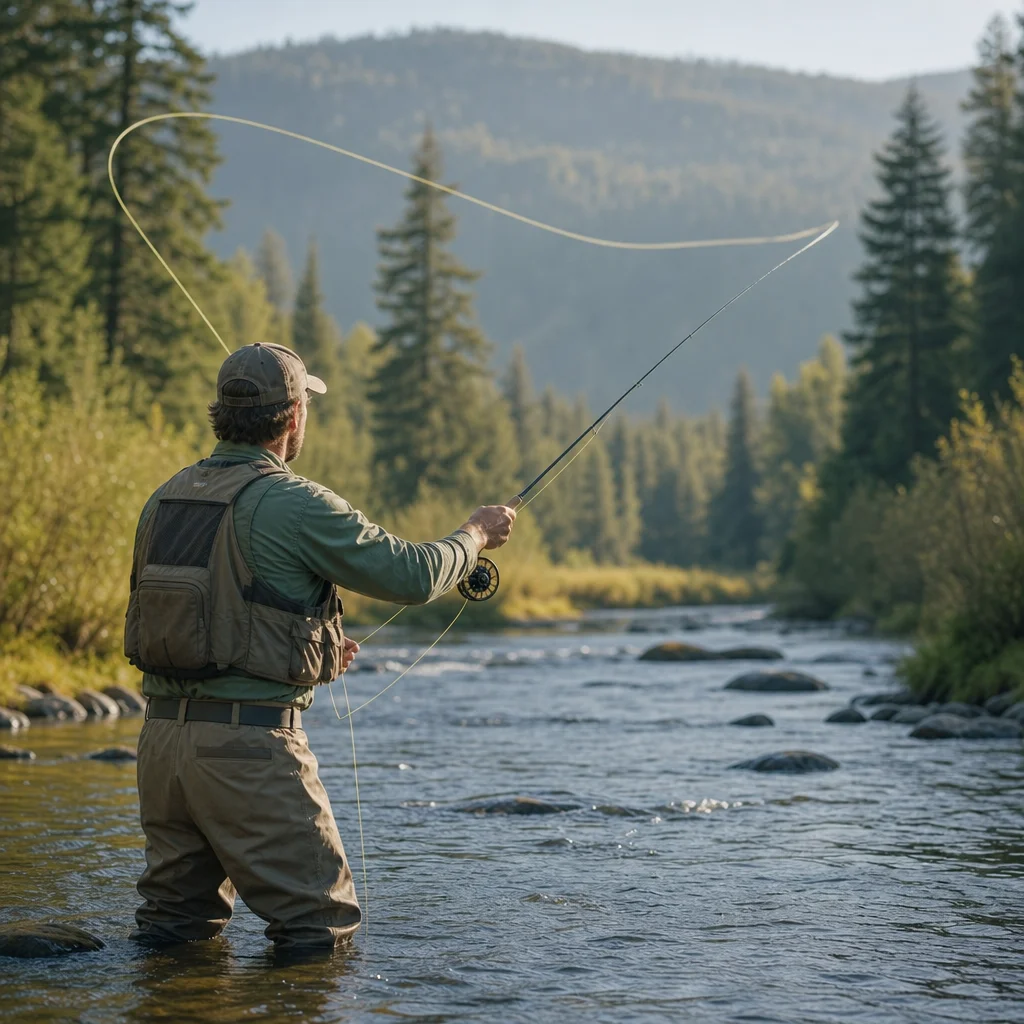
The easiest-looking water in a small pool is often the water you should fish last. A near-bank pocket, visible seam, or open center may invite a quick cast, but your approach and line can cross better lies before your fly ever reaches them.
Making the first cast count means treating each small pool as a limited set of opportunities. You want to reach the highest-value target with the least disturbance, then work inward without forcing trout to compete with your own mistakes.
Why the first cast matters more in a small pool
Small Appalachian streams often compress several kinds of trout water into a short distance: a shaded bank, a plunge, a cushion at the head, a soft seam, and a deeper tailout. The trout may be close together, but your options for approaching them aren't unlimited.
A poor first cast can do more than miss a fish. It can:
- Put your leader across a feeding lane.
- Land heavily in shallow water.
- Pull a fly through the only quiet pocket.
- Force you to false-cast over the pool.
- Alert fish that were holding in places you hadn't yet identified.
The common mistake is fishing by convenience. You cast to the open water directly in front of you because it is visible and easy to reach. Once that water is covered, you may step closer, cast farther, or change flies—without realizing that your first presentation already disturbed the pool.
Instead, begin with the water that is most valuable and most vulnerable.
Read the pool before you move
Pause at the bank and spend a few seconds looking. You’re not trying to conduct a scientific survey. You’re identifying where a trout could hold while spending little energy and remaining protected from current and predators.
Look for four features first:
Depth and overhead cover
A darker section may indicate depth, but don’t rely on color alone. Compare the surface texture, submerged rocks, and current speed. A trout may sit beside a boulder, under a small overhanging branch, or beneath a cut bank even when the pool’s middle looks deeper.
Cover is especially valuable when the water is clear or the pool is shallow. A fish that has a secure roof or wall may tolerate a moderate current nearby because the cover reduces its exposure.
Current seams and softer water
A seam forms where faster and slower water meet. Trout can hold on the slower side while reaching into the faster flow to feed. In a small pool, this may be only a narrow strip along a rock or bank.
Watch leaves, bubbles, or bits of foam. If they divide, slow, or gather along a line, that line may be more useful than the broadest section of open water.
The head of the pool
The inflow at the head often delivers food and oxygen, but it may also be shallow, turbulent, or difficult to approach. Don’t automatically cast there first. Decide whether you can reach the target without putting your shadow, boots, or line over the rest of the pool.
A head-of-pool lie is a good first target when you can stay low and present from a safe angle. It is a poor first target if reaching it requires wading through the pool or standing where every fish can see you.
The tailout
The tailout is the section where the pool narrows and begins to run downstream. It can hold fish in softer margins and deeper slots, particularly when the current changes gradually.
Because the tailout is often close to where you stand, it’s tempting to fish it immediately. Mark it mentally instead. Unless it’s the only practical target, save it for later.
Choose targets by risk, not convenience
A useful first-cast order is based on two questions:
- How likely is a trout to use this spot?
- How easily will my approach or cast disturb it?
The best first target is usually a high-value lie that can be reached cleanly. It may be a far-bank pocket, a shaded edge, or a seam beside a rock. The best target isn’t always the farthest one; it’s the one you may lose by fishing other water first.
A simple priority system helps:
First: exposed, high-value water
Start with a likely lie that will be difficult to reach after you move closer. Examples include:
- A far-bank cushion below a small drop.
- A dark slot beside a rock.
- A foam line beneath an overhanging branch.
- A narrow seam along the opposite bank.
Make the shortest accurate cast that reaches the target. Longer casts create more line on the water and give current more chances to produce drag.
Second: central seams and structure
After the most vulnerable target is covered, work the main seams, submerged rocks, and transitions between fast and slow water. Change your casting angle rather than immediately adding distance.
A slight shift upstream or downstream can let the fly enter the same lie with less line on the surface. In a small pool, changing your position by a few steps may be more useful than making a heroic cast.
Last: near-bank and tailout water
Fish the water closest to you after you’ve covered targets beyond it. This includes the shallow edge at your feet, the near side of a seam, and the easiest open lane.
Trout do use these areas, especially when they have depth, shade, or a current break. The point isn’t that near water is unproductive. The point is that approaching it usually puts you in a position to disturb it, so it deserves patience.
Build a cast sequence for the pool
Once you’ve chosen the first target, decide how you’ll fish the rest before moving. A sequence keeps you from improvising noisy casts after the first presentation.
1. Start from the bank
Avoid entering the water simply because wading feels like the normal way to begin. Your first presentation may be possible from dry ground, particularly in a small pool.
Keep a low profile. Don’t stand on the skyline, and watch where your shadow falls. In clear water, a careful approach can matter more than a delicate fly choice.
2. Cover the highest target with one clean cast
One deliberate cast is better than several hurried attempts. If the target is small, shorten the amount of line outside the rod tip and make the cast easier to control.
If the fly lands a little off but drifts through a useful lane, let the presentation finish. Immediately ripping it out for another cast can create more disturbance than allowing the drift to complete.
3. Change angles before changing distance
If the drift is poor, first adjust your rod position, mend direction, or standing angle. Moving a few feet may improve the presentation without requiring more line.
When you do move, move along the bank if possible. If you must wade, enter below the pool and stay out of the target’s current path. Water carries sound and vibration farther than many beginners expect, especially in a small, quiet stream.
4. Work from far to near
As you cover the pool, bring your target range gradually closer. This helps preserve water you haven’t fished and gives you a clear reason for each cast.
A practical progression might be:
- Far-bank cover or a distant seam.
- Mid-pool structure and current transitions.
- The head or central feeding lane.
- Near-bank edges and the tailout.
The exact order can change with the pool’s shape. The principle stays the same: don’t cross or occupy good water before you’ve fished it.
When the nearest cast really is the right first cast
There are exceptions. The nearest target may deserve the first cast when it has an obvious combination of depth, cover, and current. A trout under your bank, beside a root wad, or in a narrow pocket can be more valuable than a distant patch of featureless water.
You may also start close when the far side is too shallow, too fast, or impossible to reach without excessive line. A first cast should be realistic. A perfect target that you can’t present cleanly is less useful than a nearby lie you can fish without disturbance.
Use the same test: what will your next movement or cast take away? If fishing the near pocket won’t cross the far seam or require you to stand in the pool, it may be a sensible starting point.
Common first-cast mistakes to prevent
Casting before identifying an exit route
If you don’t know where you’ll stand for the second and third casts, you may end up wading through productive water. Plan your movement before the first cast.
False-casting over the pool
Repeated false casts are conspicuous in a small stream. Keep the cast compact, use the water or a roll cast when appropriate, and carry only the line you need.
Landing the fly in the visible center
The open center is easy to see, but trout often prefer edges, depth changes, and current breaks. Look for a reason to fish the center before spending your first cast there.
Changing flies after one poor drift
A poor drift may result from position, leader placement, current, or excess line rather than fly selection. Improve the presentation first. If the fly still seems unsuitable after several controlled attempts, then make a deliberate change.
Wading too soon
Wading can improve your angle, but it also announces your presence. Stay on the bank until the water you can reach from there has been covered.
A small-pool first-cast checklist
Before you cast, ask:
- Where is the deepest or most protected water?
- Which target would become difficult after I move closer?
- Can I reach it from the bank?
- Where will my line and leader land?
- Is my first cast short and accurate enough?
- What will I fish next if this drift is clean?
You don’t need to answer these questions perfectly. The pause itself breaks the habit of casting at the first visible opening.
Practical next steps
At the next small pool, delay your first cast for a brief visual scan. Pick one vulnerable, high-value target and fish it from the safest position you can find. Then work from far to near, changing your angle before adding distance and wading only when the bank no longer gives you a clean presentation.
The goal isn’t to make every first cast produce a trout. It’s to make sure the first cast doesn’t waste the pool before you’ve had a chance to understand it.