Should You Fish Upstream or Downstream on a Small Trout Creek
I’ll clarify when upstream is the smarter choice on a small trout creek—and when moving downstream solves a real problem. You’ll compare visibility, approach angle, casting room, and drift control without treating “always fish upstream” as a rule.
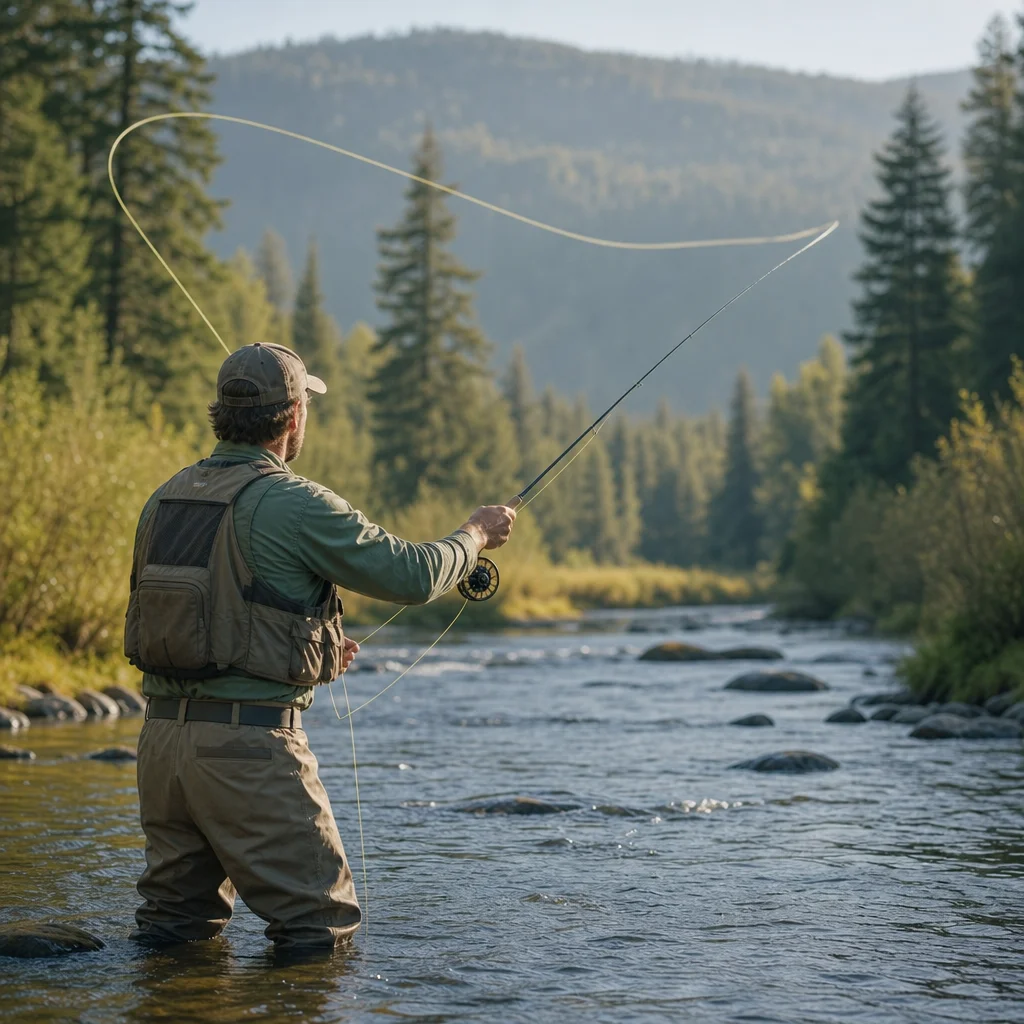
Small creeks make direction feel more important than it sometimes is. You may have heard that you should always fish upstream, then found yourself staring into glare, blocked by brush, or unable to put a fly in front of a trout without dragging it. Downstream may seem wrong, but it can occasionally be the better recovery move.
The useful question isn’t “Which direction is correct?” It’s “Which direction gives me the best chance of staying unseen while presenting the fly naturally?”
Why upstream is the usual starting point
Trout generally hold facing into current so they can watch for food drifting toward them. In a narrow creek, that means a fish often looks upstream, while your approach from behind is outside its most direct view.
Moving upstream also lets you work into water you haven’t disturbed yet. Each step carries some vibration through the bank or streambed, but the fish ahead haven't watched you pass. If you move downstream, trout behind you may see your legs, shadow, line, or fly line landing on the water before you reach the next target.
Upstream fishing also pairs naturally with a floating presentation. You can cast ahead, mend if needed, and let the fly drift back toward you or across the current. On a small creek, short casts and careful movement are usually more important than distance.
That makes upstream the sensible default—but not a commandment.
Four factors that should decide your direction
1. Visibility
If you can see the trout before it sees you, you have a valuable advantage. Direction should protect that advantage.
Upstream is often best when:
- The water is clear and shallow.
- The bank has enough cover to hide your outline.
- Trout are holding in obvious pockets, edges, or plunge pools.
- You can stay low and approach from behind.
Downstream can work better when the upstream bank is open and bright, while the downstream bank gives you shade, vegetation, or a lower profile. A trout doesn't care whether your method follows tradition; it cares whether your shape appears where it shouldn’t.
Look at the creek from the fish’s perspective. Identify the direction of the current, then imagine what the trout can see above and around its holding water. A low bank, grass, or a large rock may hide you. A bare gravel bar may make you visible from far away.
2. Approach angle
The angle of your approach matters as much as the direction you walk.
A straight upstream approach can be excellent if the trout is facing away from you and the current breaks up your outline. It can also fail if you walk directly into the fish’s window of vision, especially in calm, shallow water.
A diagonal approach is often safer. Move slightly to one side of the holding lane, stay behind cover, and present from an angle that keeps your body out of the trout’s view. This is particularly useful around larger pools where fish have time to inspect the water and the bank.
Downstream approaches can be effective when you can stay outside the fish’s view and cast from behind a bank feature. For example, you might walk downstream along the opposite bank, cross only where the water is slow and shallow, and then fish back toward a shaded pocket. The direction of travel and the direction of presentation don’t have to be identical.
3. Casting room
Small creeks often give you too much cover and not enough room to cast. Overhanging branches, tangled grass, steep banks, and bushes can make a theoretically perfect upstream position unusable.
If the upstream bank leaves no room for a backcast, forcing the issue may create more disturbance than changing direction. You could snag branches, slap the leader onto the surface, or make repeated false casts over fish that were initially unaware of you.
A downstream move may open a sidearm casting lane or let you use a roll cast, bow-and-arrow cast, or short flip under cover. The best direction is often the one that lets you make one quiet, controlled cast rather than several desperate ones.
Before stepping into position, study the line you need to cast. Check the branches behind you, the current seams in front of you, and where the fly line will land. A short cast with a clean drift usually beats a longer cast made from an awkward stance.
4. Drift control
Your direction should support the drift you need, not just the path you walk.
When fishing upstream, you can often keep the cast short and stay close to the fly. This makes it easier to mend or lift slack before it creates drag. It also helps you track a dry fly through broken water.
However, a downstream presentation can sometimes improve control in fast or complicated current. You may be able to cast beyond a pocket and let the fly drift back toward the fish, keeping your line away from the strongest seam. A reach cast, tuck cast, or carefully managed downstream angle may prevent the fly from skating unnaturally across the holding water.
The danger is excess slack. If your fly is downstream of you and the line piles up between you and the target, detecting a take becomes difficult. Downstream fishing demands more attention to line management and often benefits from shorter casts.
If you can’t explain how the fly will travel through the target zone, your direction is probably not solving the real problem.
When upstream is the better choice
Choose upstream when the creek is clear, the trout are spooky, and the bank provides enough cover for a quiet approach. It’s also a strong choice when you’re fishing dry flies or lightly weighted nymphs through a series of small pockets.
Work methodically. Start with the water closest to you, then extend your cast only after the near lies are covered. Fish the edges before stepping into the creek, and avoid standing in the current above water you still plan to fish.
If the creek is narrow, you may not need much line outside the rod tip. A short leader and controlled roll or reach cast can place the fly accurately while reducing false casting.
When downstream may be the better recovery move
Fishing downstream is worth considering when one of these problems is stopping you from making a clean presentation:
- Upstream glare prevents you from seeing the drift.
- The upstream bank exposes your entire outline.
- Vegetation blocks every useful backcast.
- The current is too complex for you to control the fly from upstream.
- You’ve already disturbed the water ahead and need to approach a fresh section from another angle.
- The creek is high, stained, or noisy enough that trout have less time to inspect your approach.
That last situation doesn’t make fish careless, and it shouldn’t be treated as permission to wade recklessly. It simply means the balance between stealth, visibility, and presentation may change.
If you move downstream, keep your profile low, stay out of the water when the bank allows, and avoid dragging line across likely holding areas. Fish the water you can reach cleanly rather than trying to cover every pocket.
A simple troubleshooting sequence
When your chosen direction isn’t working, don’t immediately change flies. Diagnose the presentation first.
You can’t see the fly
Change your angle, not necessarily your direction. Move to a shaded bank, shorten the cast, or use a visible indicator fly. If the only clear view requires you to stand in the open, downstream may offer a better position.
The fly lands well but drags immediately
Look at the currents between you and the target. You may need a reach cast, an upstream mend, less line on the water, or a different approach angle. Moving a few feet sideways can fix a problem that changing direction won’t.
Trout spook before you cast
Your outline, shadow, feet, or rod may be entering the fish’s view. Back away and approach from cover. If the upstream route exposes you, leave the fish alone for a few minutes and return from a better angle rather than continuing to creep forward.
You keep losing flies in cover
Reduce the casting movement. Use a sidearm cast, roll cast, or bow-and-arrow cast where appropriate. If the upstream position still requires repeated snags and false casts, reposition downstream or across the creek if the crossing is safe and permitted.
You see fish but can’t reach them
Don’t assume a longer cast is the answer. A downstream move may open a better lane, but first check whether the fish can be reached from the bank with a short, angled presentation. Small-creek trout are often closer than they appear.
A practical direction checklist
Before choosing where to walk, ask:
- Can the trout see my outline, shadow, or movement from this position?
- Which bank gives me the best cover?
- Do I have room for one controlled cast?
- Can I keep the fly drifting naturally through the target water?
- Will my line, leader, or feet cross water I still want to fish?
- If this approach fails, can I retreat and try a different angle?
If the answers favor upstream, start there. If they favor downstream, use the downstream option deliberately rather than feeling that you’ve broken a rule.
The useful rule to remember
Fish upstream by default, but fish the conditions in front of you. Upstream usually protects your visibility advantage and keeps you moving into undisturbed water. Downstream can be the better choice when cover, casting room, glare, or drift control makes the conventional route unworkable.
Your next step is simple: before entering a small creek, spend a minute reading both banks. Pick the direction that lets you stay hidden, make a quiet cast, and control the fly. If any one of those disappears, change your angle—or change direction.