When to Move Upstream, Downstream, or Stay Put
I’ll clarify when changing position on a trout stream is the smart move—and when it only costs you good water. You’ll learn how to weigh coverage, fish responses, visibility, confidence, and the risk of disturbing a productive lie.
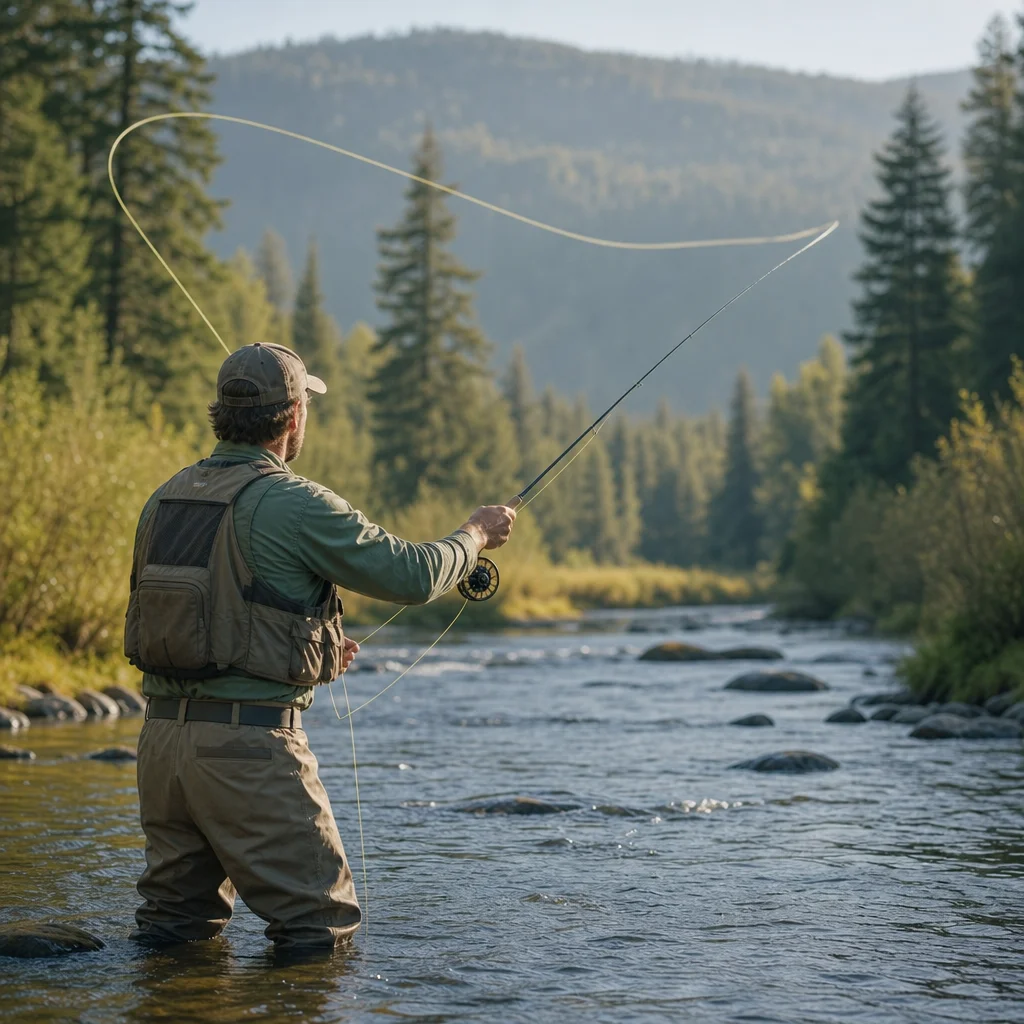
If you’re not catching trout, moving can feel like the obvious answer. But changing position too quickly may abandon fish you haven’t properly worked, while staying too long can turn a promising stretch into an afternoon of repeated casts and growing doubt.
The useful question isn’t simply, “Should I move?” It’s “What information do I have, and which direction gives me the best chance of learning something without wasting good water?”
On a wadeable trout stream, that decision usually comes down to five things: how much water you’ve covered, how fish have responded, what you can see, how confident you are in the presentation, and what your move might disturb.
Start with the reason you want to move
Before you take another step, identify the problem. You may be moving because:
- You’ve covered the likely lies thoroughly.
- You’ve seen fish refuse, follow, or spook from your fly.
- You can’t make a clean presentation from your current position.
- The water is too fast, deep, shaded, or obstructed to fish effectively.
- You’re uncertain whether the lack of action reflects poor location or poor technique.
- You’re bored and hoping a new view will solve the problem.
That last reason is common and not entirely useless. A change of scenery can reset your attention. It just shouldn’t be confused with evidence that the fish have moved.
If your casts are landing poorly, your fly is drifting unnaturally, or you’re repeatedly lining the same fish, moving upstream may not solve the real issue. Fix the presentation first when the water still looks promising.
Move upstream when you want fresh water
Moving upstream is often the simplest choice when you’re fishing a new stretch and want to cover water systematically. In many wadeable streams, working upstream lets you approach likely holding water from behind and keep your disturbance moving away from water you haven’t fished yet.
Upstream is usually the best direction when:
- You’ve fished the current area carefully but haven’t found a convincing response.
- The next section contains similar or better-looking structure.
- You can stay low and use bankside cover as you advance.
- You’re trying to maintain a steady rhythm rather than leap between isolated spots.
- Your current position is no longer giving you useful casting angles.
A steady upstream progression also helps you avoid fishing the same water repeatedly. Pick a pace that allows you to cover the important parts of each run, pocket, seam, and pool without treating every square foot as equally valuable.
Don’t rush through productive-looking water
Moving upstream doesn’t mean charging to the next pool. Stop before the water you intend to fish, look for visible trout, and consider how your approach will affect the section behind you. Step carefully, keep unnecessary wading to a minimum, and make your first casts to the nearest useful targets.
If the stream is low and clear, the fish may notice movement before they notice your fly. In that situation, the direction of travel matters less than your approach. A poor upstream approach can spoil the next lie just as efficiently as a poor downstream approach.
Move downstream when the water demands a different angle
Downstream movement can make sense when the stream’s structure, access, or current requires it. You may also choose to move downstream after reaching the end of a productive section and deciding to restart below it rather than continue forcing awkward casts.
Downstream can be useful when:
- The bank or streambed makes upstream travel unsafe or impractical.
- The best casting lanes are below your current position.
- You need to approach a section from a different angle.
- You’re fishing a deeper pool or broad run that can’t be covered well from upstream.
- You’ve already disturbed water above you and want to work a fresh lower section.
- You’re using a method that benefits from presenting the fly into or across a particular current seam.
The main drawback is disturbance. Wading downstream through water you plan to fish can push silt, move debris, and alert trout in the next section. If you’re going downstream, avoid treating the stream as a hallway. Stay close to the bank when possible, use shallow margins, and don’t cross the water repeatedly without a reason.
Downstream positioning also deserves extra attention to your silhouette and line. Trout may be looking toward you from below, especially in clear water. Keep your movements controlled and consider whether a low crouch, a longer cast, or a different approach angle will reduce your visibility.
Stay put when the water is still giving you information
Staying put is an active decision, not a failure to decide. Remain in place when the current location continues to offer useful clues or when the fish may need more careful treatment rather than more water.
Stay when you’ve seen any of these signs:
- A trout followed the fly but didn’t take.
- A fish rose once and then disappeared.
- You’ve had a light touch, short strike, or missed connection.
- Fish are visible but wary.
- You’re still refining depth, size, color, or drift.
- The water contains several untested lies close to your position.
- Conditions are changing and fish may be repositioning.
A refusal isn't the same as a rejection of the entire area. It may tell you that the fly is too large, the drift is dragging, the tippet is visible, or the presentation is entering the fish’s view incorrectly. Change one variable at a time so you can learn from the result.
If you alter the fly, depth, and casting angle all at once, a successful cast gives you little useful information. You’ll know something changed, but not what mattered.
Give a promising lie a defined number of attempts
“Stay put” becomes unhelpful when it means casting indefinitely. Set a small decision rule before you begin. For example, you might make several careful presentations to a likely lie, then change one important variable. If the fish still doesn’t respond and no new evidence appears, move on.
The exact number of casts matters less than the discipline of having a limit. A good lie deserves attention, but not an endless negotiation.
Use fish response to choose your next action
Fish behavior can help you decide whether to move, adjust, or pause.
If you see no fish and get no response
First ask whether you’ve covered the likely holding water effectively. If your fly has reached the correct depth and drifted naturally through the best lanes, moving is reasonable. Upstream is often the efficient choice when you’re exploring fresh water.
If you’re fishing difficult water—fast pocket water, deep edges, or complex currents—lack of response may reflect a poor presentation rather than an empty stream. Change your angle or position before abandoning the section.
If fish refuse the fly
Stay long enough to make a controlled adjustment. Try improving the drift, changing the fly’s size or profile, or presenting from a less visible position. If the fish continues to refuse after a few thoughtful changes, leave it alone and return later if the stream allows.
If fish spook
Stop casting at the fish. Give the area time to settle while you examine another target, or move carefully away from the immediate lie. Repeated casts after a visible spook usually provide more education than opportunity.
You can move upstream or downstream, but the key is to avoid walking directly through the water you hope to fish next. If the fish has seen you, a new position may be more valuable than another fly.
If you hook or land a trout
Consider moving after a successful fish, particularly if the area is small and the trout fought through several nearby lies. Resting the water can preserve the chance of another fish later. If the section is broad, you may be able to continue from a different angle without disturbing the best water.
Handle the fish responsibly, release it promptly, and give the immediate area a little space before deciding whether to continue.
Let visibility and confidence influence the decision
Your confidence is useful when it’s based on observation. If you can see the current seams, depth changes, submerged structure, and likely lies, you can make a reasoned choice about where to stand and where to cast.
When visibility drops, simplify. Fish water with reliable structure—current edges, undercut banks, plunge pools, and slower pockets beside faster flow. Move more carefully because you have less ability to see fish or obstacles. If you’re uncertain about the streambed, avoid unnecessary crossings.
Confidence also affects presentation. A familiar position may produce better casts and drifts than a new location that looks exciting but offers poor control. Don’t move merely to escape a technical problem. Move when the new position improves your ability to fish effectively.
Consider the cost of disturbing productive water
Every move has a cost. You may spook trout, muddy the water, lose track of your route, or spend several minutes reaching a new position instead of fishing. The cost is low when you’re crossing a dry bank to a fresh section. It’s higher when you wade through a shallow run containing several likely lies.
Before moving, look for a route that protects the water you still want to fish. Use the bank when practical, cross at the shallowest suitable point, and avoid repeated crossings. If a section looks especially promising, fish it from the outside in: start with the water closest to you, then work toward the farther seam or bank.
That approach reduces the chance that your first cast—or your first step—spoils the most valuable target.
A simple decision framework
When you’re unsure, work through these questions:
-
Have I covered the best water from my current position?
If not, improve your angle or presentation before moving. -
Did the fish give me information?
A refusal, follow, rise, or spook usually calls for an adjustment or a pause, not immediate relocation. -
Will the next position give me better water or a better presentation?
Move only if the answer is reasonably clear. -
Which direction disturbs less water?
Choose the route that protects the section you still plan to fish. -
What will I learn by staying or moving?
Prefer the choice that produces useful information, not just more activity.
As a general pattern, move upstream to explore and maintain coverage, move downstream when access or casting angles make it worthwhile, and stay put when the fish or the water is still telling you something.
Practical next steps
On your next outing, choose a short stream section and set a simple plan before casting. Fish the nearest likely water first, give a promising lie a limited number of thoughtful presentations, and note what each fish response tells you. When you move, choose the direction that improves your coverage while disturbing as little productive water as possible.
The goal isn’t to keep moving or to prove that patience always wins. It’s to make each position earn its place—and to leave when the information says the next one is better.