How to Approach a Trout Run Without Fishing It From the Wrong Angle
The right approach preserves your casting options, keeps shadows and disturbance away from feeding lanes, and gives you more than one good presentation. I’ll show you how to enter small freestone pools and runs in a way that remains effective as the water changes.
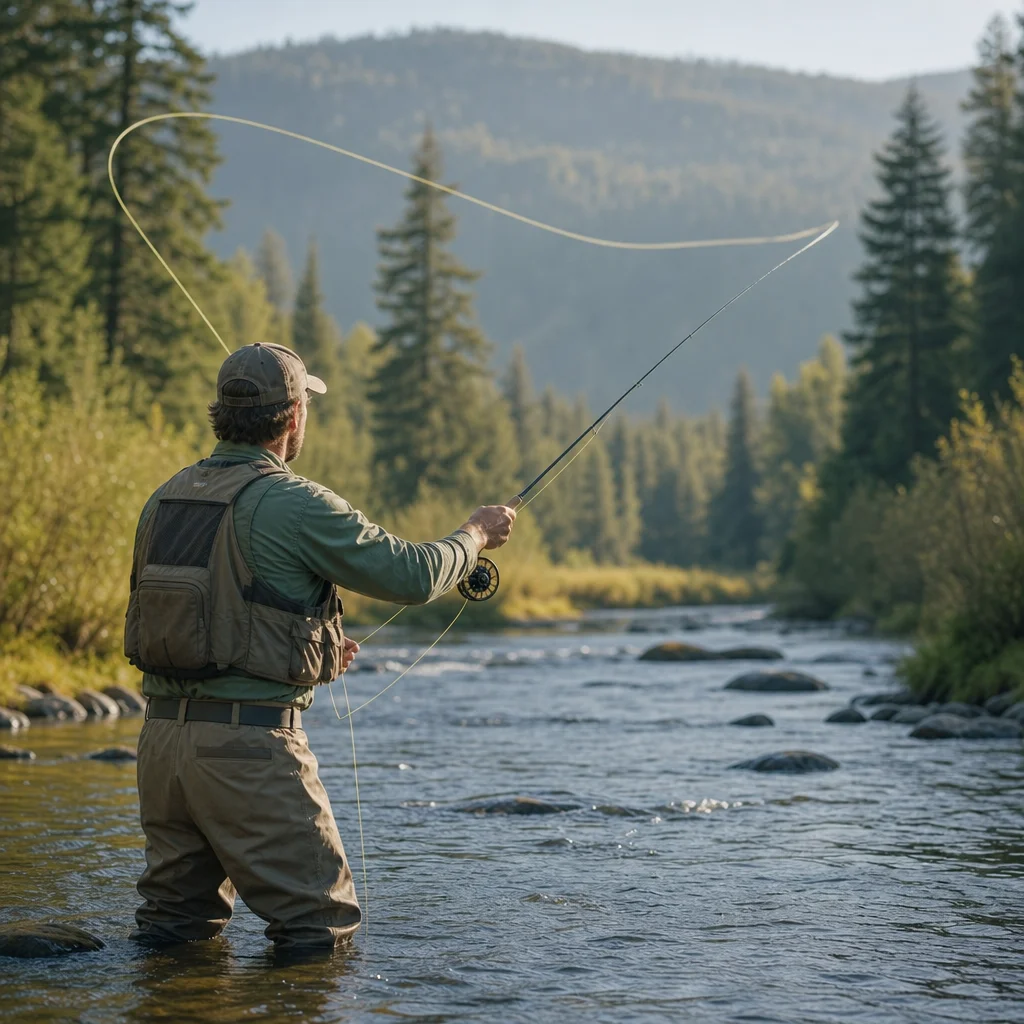
A trout run can look simple from the bank: walk up, find a seam, and cast. The problem is that your first few steps may do more damage than your first few casts. A careless approach can put your shadow across the water, force you into a poor casting position, or push trout away from the lane you hoped to fish.
The best approach isn't simply the one that gets you closest to the fish. It’s the one that preserves a useful position for several presentations. On a small freestone stream, that usually means entering slowly, staying low, and thinking about where you’ll fish next—not just where you want your first fly to land.
Read the Run Before You Move
Pause at the edge of the water and identify the features that matter before you commit to a position. Look for:
- The main current and slower edges beside it
- Foam lines or drifting debris that reveal feeding lanes
- Deeper pockets behind rocks
- Seams where two currents meet
- Undercut banks, root tangles, and shaded margins
- Any trout you can see, including fish that may be holding outside the obvious current
You don’t need to map every inch of the run. You do need a rough plan for the first few targets and an idea of how you’ll move afterward.
A useful question is: Where can I stand so I can fish the nearest likely water without crossing or disturbing the rest of the run? That question often leads you to a lower, side-on position rather than straight across from the deepest water.
Watch the Surface and the Bank
The water’s surface can tell you where the current is carrying food, but the bank can tell you how visible you are. A bright, open bank leaves little room to hide. A low, shaded bank may let you approach closer, provided you don’t brush vegetation into the water or cast your shadow across the target.
In clear, low water, assume trout can notice movement well before you think you’re within casting range. In broken, faster water, you may have more cover, but that doesn’t make stomping along the bank harmless. Wading sends pressure waves and dislodges sediment; walking on loose gravel can also make noise that carries through the stream.
Choose the Side That Protects Your Presentation
There’s no universally correct bank. The better side is the one that gives you the cleanest combination of concealment, reach, drift, and safe movement.
If you approach from downstream, you’ll often be behind the fish’s usual direction of attention, especially when trout are facing into the current. That can be helpful. It also gives you the chance to fish upstream without immediately sending your line and leader over water you haven’t covered.
Approaching from upstream can be more difficult because you may appear in the fish’s forward view. However, broken water, shade, bends, and overhanging vegetation can make an upstream approach workable. You may also choose it when the downstream bank is steep, noisy, or impossible to fish without excessive casting.
Don’t Automatically Wade to the Middle
Many beginners see a broad run and wade toward its center to gain casting distance. That often sacrifices water that could have been fished from the bank or shallow edge.
Start at the margin and work outward. Fish the near seam, pocket, or bank before stepping farther in. Trout frequently hold closer than expected, particularly where current drops food along an edge or where a rock creates a small cushion of slower water.
Every step into the stream reduces the amount of undisturbed water available in front of you. Once you wade into a lane, you may have to wait for it to settle before fishing it effectively. Treat wading as a tool, not as the default opening move.
Keep Your Shadow and Profile Under Control
Your shadow can reach fish before your fly does. The risk is greatest when the sun is low behind you, the water is clear, and the run is slow enough for a shadow to appear sharply on the bottom.
Before you move into position, check where the sun is and where your body will project. If your shadow would fall over the target, shift sideways, lower your profile, or wait for a better angle. You don’t need to crawl along the bank, but bending at the knees and avoiding sudden upright movement can make your approach less conspicuous.
Your rod, net, and bright clothing also add to your outline. Keep the rod low while moving and avoid waving it over the water before you’re ready to cast. A neutral-colored outer layer won’t make you invisible, but it can reduce the contrast between you and the background.
The goal isn’t perfect camouflage. It’s to avoid presenting a large, fast-moving shape where trout expect only rocks, branches, and changing light.
Build a Position That Allows More Than One Cast
A reliable position gives you options. From it, you should be able to make a controlled cast to the first lane, adjust your line or angle for the next lane, and move without stepping through water you still intend to fish.
Before casting, consider three distances:
- The nearest target: often a bank edge, pocket, or short seam
- The primary target: the most likely feeding lane within comfortable reach
- The next target: water you can cover after changing position
Start with the nearest target when doing so won’t interfere with the primary one. This prevents a common mistake: casting over good close water to reach a farther seam, then discovering that the trout near your feet were the easiest fish to present to.
Leave Room for Line Control
A position that reaches the target but forces your line into conflicting currents isn’t a good position. Look at the water between you and the likely drift. If the surface currents move at different speeds, your fly may drag as soon as it lands.
Move slightly upstream, downstream, or sideways to improve the angle. A small change in standing position can be more useful than adding distance to the cast. If you’re constantly mending hard or making awkward aerial corrections, the problem may be your approach angle rather than your casting technique.
On narrow streams, keep the cast compact. Long false casts can put your line over multiple lanes and announce your presence. A short roll cast, reach cast, or carefully placed sidearm cast may preserve both accuracy and concealment.
Move Through the Run Without Resetting It
Once you’ve fished a position, don’t rush into the next one. Move in a way that protects the water ahead of you and keeps your body out of the fish’s view as much as possible.
Use the bank when it’s stable and doesn’t require pushing through noisy brush. If you need to wade, enter at the shallowest practical point and avoid crossing the entire run simply to reach the opposite side. Step on firm surfaces when you can, and don’t shuffle through fine gravel more than necessary.
Plan your exit before you enter. If the only way out requires a loud climb through the bank or a long crossing through the holding water, choose a different starting position. A route that works for one cast but leaves you stranded is poor streamcraft.
Don’t Fish Behind Your Own Disturbance
If you spook a fish or cloud the water, give that section time before deciding it’s empty. Then continue from a position that lets you fish undisturbed water rather than repeatedly walking through the same pocket.
Sediment can drift downstream and affect water below you. For that reason, fishing upstream generally helps you avoid sending your own disturbance into water you haven’t covered yet. It isn’t a guarantee of success, but it gives your approach a more dependable pattern: move carefully, fish the water ahead, and leave used water behind.
Common Approach Mistakes
Walking Directly to the Best-Looking Spot
The deepest, most attractive pocket is often the first place people step toward. That makes it vulnerable to disturbance. Approach from the side, fish the water around it first, and use cover rather than assuming the fish will tolerate a direct advance.
Standing Tall on the Bank
A high profile is easy to see against the sky or open bank. Lower your stance when you’re close to the run, keep movements deliberate, and use bends or vegetation to break up your outline.
Crossing Water Before Fishing It
If you cross a shallow riffle to reach the far bank, you may disturb trout downstream. Look for a route around the head or tail of the run, or fish the accessible side before making a crossing.
Choosing Distance Over Drift Quality
Being able to reach a seam doesn’t mean you can fish it well. If the fly drags immediately, shorten the cast or change your position. A shorter, controlled drift is usually more useful than a long cast that spends most of its time fighting surface currents.
Changing Position After Every Cast
Constant repositioning creates noise and often reflects uncertainty rather than strategy. Make several thoughtful presentations from one stable position, changing the angle, depth, or drift length before you decide the position has failed.
A Simple Approach Sequence
Use this sequence when you reach an unfamiliar pool or run:
- Stop well back from the edge and scan the water.
- Identify the current seams, pockets, cover, and likely feeding lanes.
- Check the sun, your shadow, and your profile against the bank.
- Choose the side that offers concealment and a clean drift.
- Fish the nearest useful water before wading farther.
- Keep your first casts short and controlled.
- Adjust your standing angle before adding distance.
- Move only after you’ve covered the water available from that position.
- Wade carefully, avoiding water you still plan to fish.
- Keep a route out that doesn’t require unnecessary disturbance.
Practical Next Steps
For your next small-stream outing, make approach planning the first part of each presentation. Pause before entering, identify the first three pieces of water you want to fish, and choose a position that lets you reach them without crossing the run or placing your shadow over them.
If a cast fails, change one variable at a time: your angle, distance, drift, or fly depth. Don’t immediately assume you need to move closer. Often, the more reliable improvement is a quieter approach and a better relationship between where you stand and how the current carries your fly.