Present a Fly From the Wrong Bank Without Dragging It
When steep banks block the ideal approach, the right casting angle and a reliable leader system matter more than extra distance. I’ll show you how to combine positioning, mends, and simple tackle choices for repeatable drag-free presentations on narrow rivers.
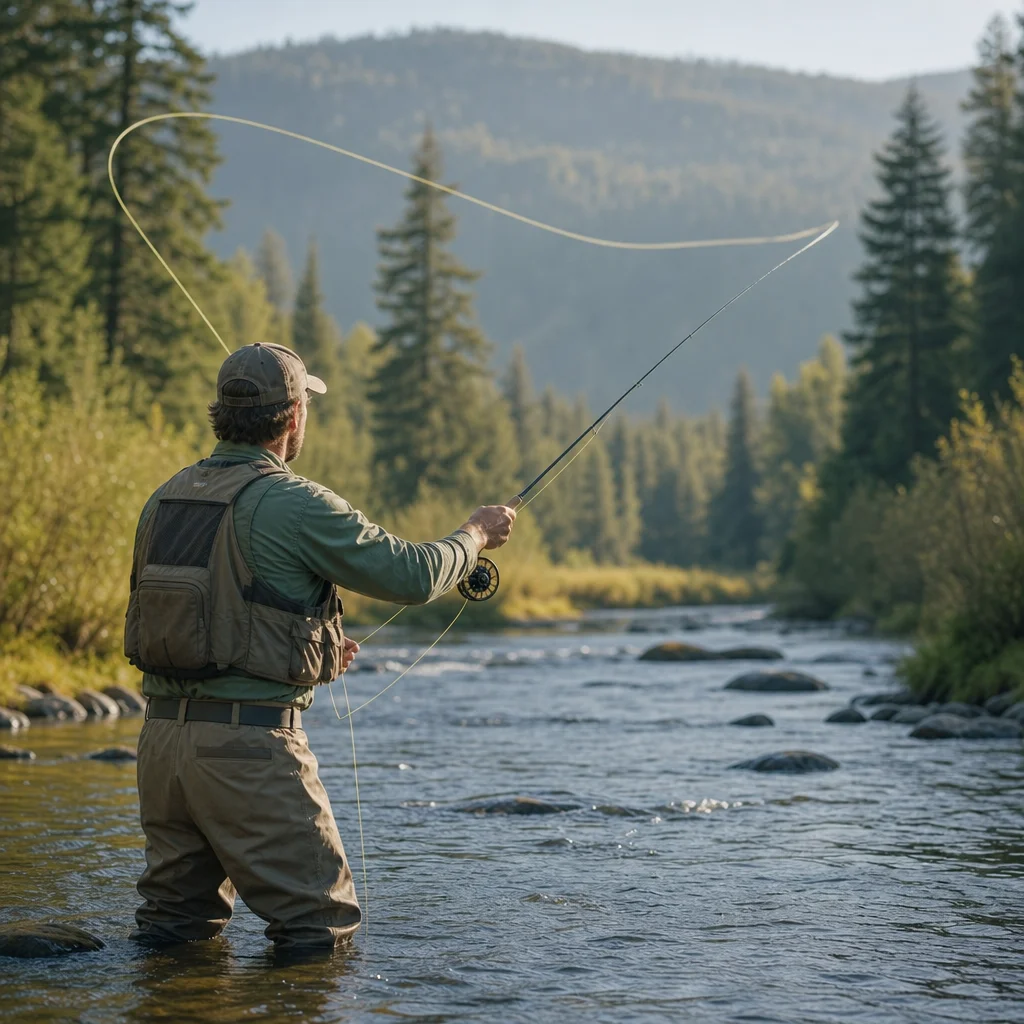
The “wrong” bank usually isn’t wrong because trout can’t be reached from it. It’s wrong because the current, bank shape, and line position make your fly move differently from the water you’re trying to imitate.
On a narrow river, you often can’t wade around the problem or make a clean upstream approach. Steep banks may force you to cast across multiple current lanes, while overhanging brush limits your backcast. The solution isn't one clever cast. It’s a dependable system: choose a better angle, keep unnecessary line off the water, mend early, and use a leader that turns over without constantly needing repair.
Start by identifying the current that will drag the fly
Before casting, watch the surface for a few seconds. Look for foam, bubbles, floating leaves, or subtle changes in texture. These reveal how quickly each current lane is moving and whether the flow is carrying toward you, away from you, or across your intended drift.
Your fly will begin dragging when the fly line, leader, or tippet pulls it faster or slower than the water around it. The trout may see the fly before that happens, but a sudden wake, unnatural acceleration, or hesitation can end the opportunity.
On a narrow river, common problem areas include:
- A fast center current between two slower margins
- An angled seam where water from a side channel joins the main flow
- A slow pocket beside a steep bank, with faster water between you and the target
- Slack water near your feet that pulls the line in a different direction from the fly
- Submerged rocks that split the current into several small lanes
The important question isn't simply, “Can I reach the trout?” Ask instead, “Which section of line will move first, and where will that movement travel?” That answer determines your position, cast shape, and first mend.
Change the casting angle before adding more distance
A poor angle can make a short cast drag immediately. A better angle can make the same cast fishable with less line in the air and fewer corrections.
If you’re standing below the target and casting upstream, aim to land the fly and leader above the fish when possible. The current can then carry the fly toward the trout naturally. Keep the line off the water or place it in the same current lane as the fly.
When the bank prevents a direct upstream stance, move laterally rather than automatically casting farther. Even a few steps can change the line’s relationship to the seam. Look for a small shelf, gravel edge, or opening behind you that lets you cast more downstream or more across-stream without stepping into the fish’s view.
Use a reach cast to place line downstream
A reach cast is useful when your fly must land in one current lane while the line needs to remain in another. As the forward cast straightens, extend your rod upstream or downstream before the line settles. This places a curve in the line and delays the current’s pull.
The direction depends on the water:
- If faster water lies between you and the fly, reach the line toward the slower water on your side or downstream of the fly.
- If your line would be swept into the fly from upstream, reach the line downstream to create slack before the current tightens it.
- If the fly is in a slow pocket beside faster water, keep the line away from that faster lane rather than dropping a large pile of slack onto the pocket.
The goal isn’t to create the biggest curve. Excessive slack makes the hook set slow and leaves you unable to tell whether the fly is drifting or snagged. Use only enough line displacement to separate the fly’s current from the line’s current.
Position downstream when the bank allows it
Downstream positioning can solve problems that repeated mending can’t. If you can reach a point below the trout without disturbing the holding water, the river may carry your fly toward the fish while keeping the leader and line behind it.
This is especially effective along steep banks where the near-side water is slower than the current running down the middle. From slightly downstream, you can cast upstream and keep the rod tip high enough to reduce line contact. A short, controlled drift is often more reliable than a long cast from the wrong angle.
Approach carefully. Move on the bank where your outline is less visible, avoid scraping loose gravel into the water, and don’t assume steep terrain is stable. If the only downstream route requires awkward climbing or a risky wade, the better choice is to fish from where you are and simplify the presentation.
When fishing downstream or at a downstream angle, avoid letting the fly overtake the leader. If the fly moves faster than the surrounding surface, it will often skate or swing unnaturally. Keep the rod tip positioned to maintain contact without pulling the fly across the current.
Check your footing before changing position: On steep banks and narrow rivers, a slightly longer cast is preferable to an unstable scramble. Stay balanced, keep an exit route in mind, and don’t enter water simply to gain a better angle.
Mend early, then stop correcting
A mend works best before the current has fully tightened the line. If you wait until the fly is directly beside the target, much of the drift may already be lost.
For an upstream mend, lift the rod tip and move the line upstream while keeping the fly and leader as undisturbed as possible. This removes line from faster water or places slack above the fly. A downstream mend can do the opposite: it may keep the fly from being pulled back by slower water near you.
The size and timing of the mend matter more than its direction alone. Use a small mend when the current difference is slight. Use a larger one only when the line must cross a strong seam. Large, repeated mends can slap the water, disturb the fish, and leave too much slack for a dependable hook set.
After the first mend, watch the line and leader. If the fly is drifting naturally and the line isn't accelerating toward it, let the drift continue. Constant correction often creates the drag you’re trying to remove.
Keep line off the water when banks are tight
High-sticking, short-line nymphing, and controlled sighter presentations can reduce drag when a long cast is impossible. The principle is the same for dry flies: keep the portion of the system crossing conflicting currents as short as practical.
Raise the rod tip enough to lift line from the surface, but don’t hold it so high that you lose control or strain your arm. Keep the rod angle consistent and lead the drift with the line hand when additional reach is needed.
For a dry fly, a short aerial reach or tuck cast can place the fly ahead of the leader while keeping the line away from the main current. For a nymph, an elevated rod and short line may let you track the drift through a pocket without presenting a large belly of fly line.
These techniques work only within your control range. If you can no longer see the fly, detect contact, or make a controlled lift, shorten the cast or change position.
Build a leader that turns over reliably
A complicated leader can solve a specific presentation problem, but it also creates more knots, more weak points, and more opportunities for a damaged section to remain in service. For fishing from a constrained bank, reliability usually comes from a simple, balanced design.
Use a leader long enough to keep the fly away from the fly line and short enough that you can turn it over accurately under the available canopy. A long leader may improve separation in clear water, but it can be difficult to straighten from a cramped stance or through multiple current lanes.
Taper also matters. A leader that transitions gradually helps the fly and tippet land without a sudden pileup. If the final section is too light for the fly or conditions, it may collapse rather than extend. If it’s too heavy or stiff, it may land hard and pull the fly as it straightens.
For repeatable fishing, favor a leader you can rebuild or modify without guesswork. Keep spare tippet in common sizes, check the terminal section after every few casts around rocks or brush, and replace wind-knotted material rather than assuming a knot will hold because it looks small.
Adjust the tippet for the presentation
Longer, finer tippet can soften the landing and help a dry fly drift naturally, but it also magnifies problems caused by poor turnover and conflicting currents. Shortening the tippet slightly can make the cast more accurate and improve control when the bank limits your backcast.
If the fly is repeatedly pulled by the leader, don’t immediately add more tippet. First check your angle, line placement, and mend timing. More tippet won’t fix a fly that is being dragged by a fast belly of fly line.
Likewise, if the fly lands well but the drift fails after a second or two, inspect the tippet for coils, abrasions, or a stiff connection. A clean, straight terminal section is a small maintenance detail that often matters more than changing flies.
Use a cast you can repeat around obstacles
The best cast from the wrong bank is the one you can make accurately without hitting the bank, trees, or water behind you. A roll cast, single-spey-style change of direction, or sidearm cast may be more useful than a full overhead cast when the backcast is blocked.
Practice the motion at low speed. Start with a short amount of line, form the anchor in a controlled spot, and increase distance only when the loop remains stable. A rushed cast creates narrow timing margins and often puts the fly in the wrong current lane.
When overhead room is limited, keep your casting plane low and to the side, but remain aware of where the hook is traveling. Small flies can still find jackets, fingers, and branches with impressive efficiency.
Diagnose the drift before changing flies
If the fly refuses to drift naturally, change one variable at a time:
- Move the rod tip. Lift or reposition it to reduce line contact.
- Change the angle. Step laterally or cast more upstream or downstream.
- Adjust the first mend. Make it earlier, smaller, or in the opposite direction.
- Shorten the cast. Reduce the number of current lanes crossing the line.
- Inspect the leader. Look for coils, abrasions, hinge points, or a damaged knot.
- Change the fly or tippet only after the presentation is sound.
This sequence prevents a common mistake: changing flies to compensate for drag. A different pattern may briefly catch a fish, but it won’t make an unnatural drift reliable.
A dependable wrong-bank routine
When the ideal approach is blocked, take a moment to build a presentation you can repeat:
- Watch the current and identify the conflicting lanes.
- Choose the shortest useful cast rather than the longest possible one.
- Position yourself laterally or downstream if the route is stable and sensible.
- Use a reach cast or controlled roll cast to place the line away from the fly.
- Mend before the current tightens the line.
- Keep the rod tip high enough to reduce surface contact while retaining control.
- Check the leader and terminal tippet after contact with rocks, brush, or a fish.
- Stop correcting once the fly is drifting naturally.
You don’t need the perfect bank to present a fly well. You need a casting angle that respects the current, a leader that behaves consistently, and a setup you can maintain without constant improvisation. When those pieces are dependable, the inconvenient bank becomes a manageable tactical problem rather than a reason to leave the water.