When a Longer Leader Helps and When It Makes Casting Worse
Leader length changes more than stealth: it affects turnover, wind control, accuracy, and how safely you manage the fly. I’ll help you decide when added length solves a presentation problem and when it simply makes casting harder.
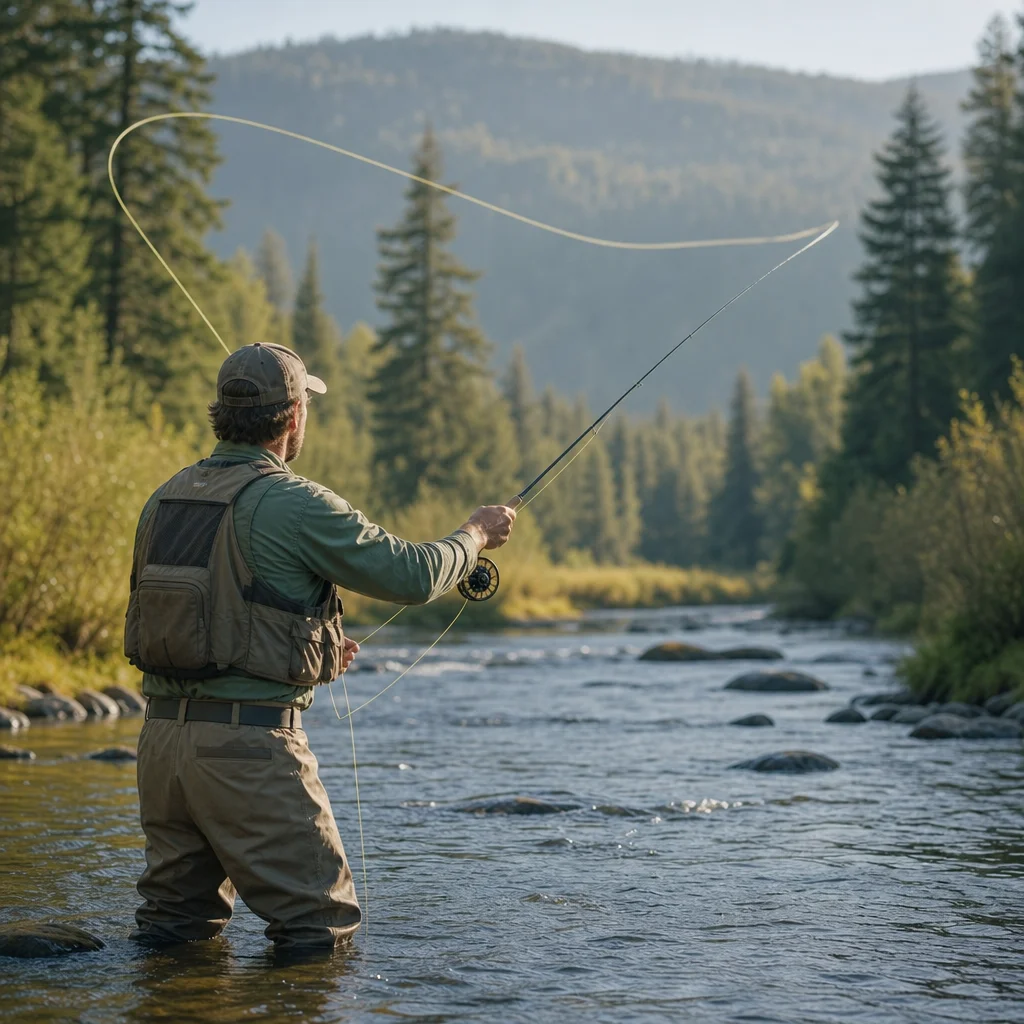
A longer leader can make a cautious trout less likely to notice your line, but extra length isn’t automatically an upgrade. It also creates more line to straighten, more material for wind to move, and a larger casting system to control around trees, banks, and other people.
The useful question isn’t “Should I use a long leader?” It’s “What problem am I trying to solve, and can I control the added length safely?”
What a longer leader changes
A leader creates separation between the fly line and the fly. As you add length, the fly usually lands farther from the visible, thicker line. That can help in clear water, shallow water, and situations where trout have time to inspect what approaches them.
But a leader is also part of the casting system. Its taper must transfer energy from the fly line through the butt section, into the tippet, and finally to the fly. Every additional section of leader adds another opportunity for energy to weaken, knots to catch, or wind to disturb the cast.
Longer isn’t better or worse by itself. It’s a trade-off between presentation and control.
When extra length helps
Clear, shallow water
In clear water, trout can often see the fly line, leader, and angler more easily. A longer leader gives the fly more room to operate away from the line and can reduce the visual connection between your cast and the fly.
This matters most when the fish has time to look. A trout feeding in calm, shallow water may reject a fly because something about the approach seems wrong, even when the fly itself is a good match. More distance between the fly and the line can make the presentation less intrusive.
The benefit is smaller in broken water, deep water, or heavy current seams where the fish has less time and visibility. In those conditions, a shorter leader may give you better control without costing much in stealth.
Delicate presentations
A longer leader can help a fly land with less disturbance when the taper and cast are matched properly. The leader has more room to unfold, and the tippet can settle before the fly line reaches the same area.
That doesn’t mean you should simply lengthen the leader whenever a fly lands too hard. A rushed cast, excessive hauling, or a poorly matched taper can create a rough presentation regardless of leader length. Sometimes slowing the stroke or reducing the amount of line in the air solves the problem more effectively.
Avoiding drag on smooth water
Longer leaders can also increase the distance between the fly and line, giving different currents more room to act on separate sections. This can help when the fly needs to drift naturally across conflicting surface currents.
However, the extra distance doesn’t eliminate drag. It can make drag harder to detect and harder to correct. If the leader is too long for your casting accuracy, you may place the fly in a good lane but lose the ability to mend or reposition it before the drift fails.
Use added length when it improves the whole drift, not merely because long leaders are associated with technical water.
Small, light flies
Small flies and fine tippet often benefit from a leader that turns over gently. A long, properly tapered leader can prevent a light fly from being pulled abruptly by the fly line.
The key word is properly. A leader that is long but poorly balanced may collapse short of the target, pile up in uneven coils, or leave the fly connected to a large, stiff section that continues to influence it. Length can't compensate for a taper that is too powerful, too weak, or badly damaged.
When a longer leader makes casting worse
Wind
Wind exposes the weaknesses of a long leader quickly. More leader gives the breeze more material to push, especially when the tippet is fine and the fly is light. The result may be a cast that drifts sideways, piles up, or fails to straighten.
A strong wind also reduces your margin for error. You may need tighter loops, more deliberate stops, and better control of the backcast. If the leader is already struggling to turn over, adding length usually makes the problem more obvious.
In wind, a shorter leader can improve control. You might also use a more suitable fly, a lower casting plane, or a compact stroke rather than trying to force a long leader through conditions it can't handle.
Large or air-resistant flies
Bulky streamers, heavily dressed dry flies, foam terrestrials, and weighted nymph rigs place more demand on turnover. A long, fine leader can fail to transfer energy cleanly to these flies.
That failure creates two problems. First, the fly may not reach the target with enough accuracy. Second, the leader may land in loose coils, making it difficult to know where the fly is and increasing the chance of an unwanted tangle.
For a large fly, a shorter and stronger leader often gives you better control. The goal isn't a perfectly straight leader at all times; the goal is a predictable cast that puts the fly where you intend without forcing the rod or casting harder than necessary.
Tight quarters and overhead hazards
A longer leader increases the amount of material moving around you. In open water, that may be manageable. Along brushy banks, under trees, or beside other anglers, it can become a liability.
The fly doesn’t need to be moving quickly to cause trouble. A hook that catches behind you, wraps around a branch, or swings unexpectedly near another person can turn a routine cast into a safety problem. Extra leader also makes it harder to keep the fly and tippet within your awareness during false casts.
Check your casting space first: Before lengthening the leader, look behind, above, and to both sides. If the added length brings the fly closer to people, branches, rocks, or your own body, choose control and clearance over a more delicate presentation.
Reduced accuracy
A long leader can be accurate in skilled hands, but it offers less forgiveness when the cast loses energy. The fly may land short, the tippet may fail to straighten, or the leader may drift away from the target before the fly settles.
This is especially noticeable when you’re changing direction, casting from an awkward stance, or trying to place a fly into a narrow pocket. If you can’t predict where the leader will unfold, you don’t have a presentation advantage—you have a control problem.
Match leader length to the fly and conditions
Think of leader length as one part of a system rather than an isolated specification. Consider these factors together:
- Water clarity: Clearer water often rewards more separation.
- Surface texture: Broken water can hide the line and reduce the need for extreme length.
- Wind: Stronger wind generally favors better turnover and control.
- Fly size: Large or bulky flies usually need more casting authority.
- Tippet diameter: Fine tippet can improve delicacy but may struggle with heavy flies or wind.
- Casting room: Open banks allow more freedom than brushy, crowded, or overhead-obstructed water.
- Required accuracy: A narrow target may favor the leader you can turn over consistently.
You don’t need to change every part of the setup at once. If a standard leader is presenting the fly well, keep it. If the fly is landing too close to the line in calm, clear water, add a modest section of tippet and test the result. Small changes are easier to evaluate than a dramatic increase in length.
A safer way to test more length
Start from a cast you can already control. Then add length gradually rather than replacing the entire system with an unfamiliar extra-long leader.
1. Identify the actual problem
Ask what you’re seeing. Is the trout refusing the fly? Is the fly line landing too close? Is the fly dragging? Or is the cast simply failing to reach the target?
Each problem points in a different direction. Refusal in clear water may justify more separation. A poor turnover may call for a better taper, shorter leader, or different fly. Drag may require a better angle, reach cast, mend, or drift—not necessarily more leader.
2. Add a manageable section
Adding tippet is a common way to increase length, but the connection should be secure and the diameter should remain compatible with the existing leader. A very fine section attached to a much stiffer section can create a hinge that prevents smooth turnover.
After adding length, make a few controlled casts away from people and obstacles. Watch whether the leader straightens, whether the fly lands where expected, and whether the connection creates a recurring tangle.
3. Stop when control declines
The right length is the longest setup you can cast, place, and monitor reliably in the conditions at hand. If you need to overpower the rod, widen the loop excessively, or make repeated false casts just to straighten the leader, you’ve probably passed the useful point.
A slightly shorter leader that turns over cleanly is often more effective than a longer one that promises stealth but leaves the fly in an unpredictable pile.
Common mistakes to avoid
Adding length to fix every refusal
A refusal may come from fly size, profile, drift, depth, tippet visibility, or the angle of your approach. Length is only one possible variable. Change one thing at a time so you can tell what helped.
Using fine tippet with a heavy fly
Fine tippet may be appropriate for small flies and selective fish, but it can struggle to turn over bulky patterns. It can also make the cast less predictable and increase the risk of a breakoff when a fish, snag, or sudden movement loads the system.
Ignoring worn leader material
A long leader contains more knots and more material to inspect. Check for wind knots, abrasions, damaged loops, and weakened tippet before fishing it close to structure. Replace compromised sections rather than relying on the extra length to compensate.
False-casting too much
Long leaders and repeated false casts are an uncomfortable combination in confined water. They increase fatigue, tangle opportunities, and the time a hook is moving through the air. When possible, use a compact cast, a roll cast, or a waterborne change of direction that keeps the fly under better control.
A simple decision rule
Use a longer leader when stealth and delicate separation are the limiting factors, the water is relatively open, and you can still turn the fly over predictably. Shorten or simplify the leader when wind, fly size, tight quarters, or accuracy make control the limiting factor.
Before making the change, identify the problem. Add length in small steps, test it in a safe casting space, and stop as soon as turnover or awareness begins to suffer. The best leader isn't the longest one you can attach—it’s the one that lets you present the fly quietly while keeping every part of the cast under control.