How to Fish a Dry Fly When the Wind Comes From Behind You
I’ll explain how to keep a dry fly under control when a tailwind disrupts your loop, turnover, and placement. You’ll learn which casting adjustments help on open water and which safer alternatives prevent wind-driven flies from finding brush—or you.
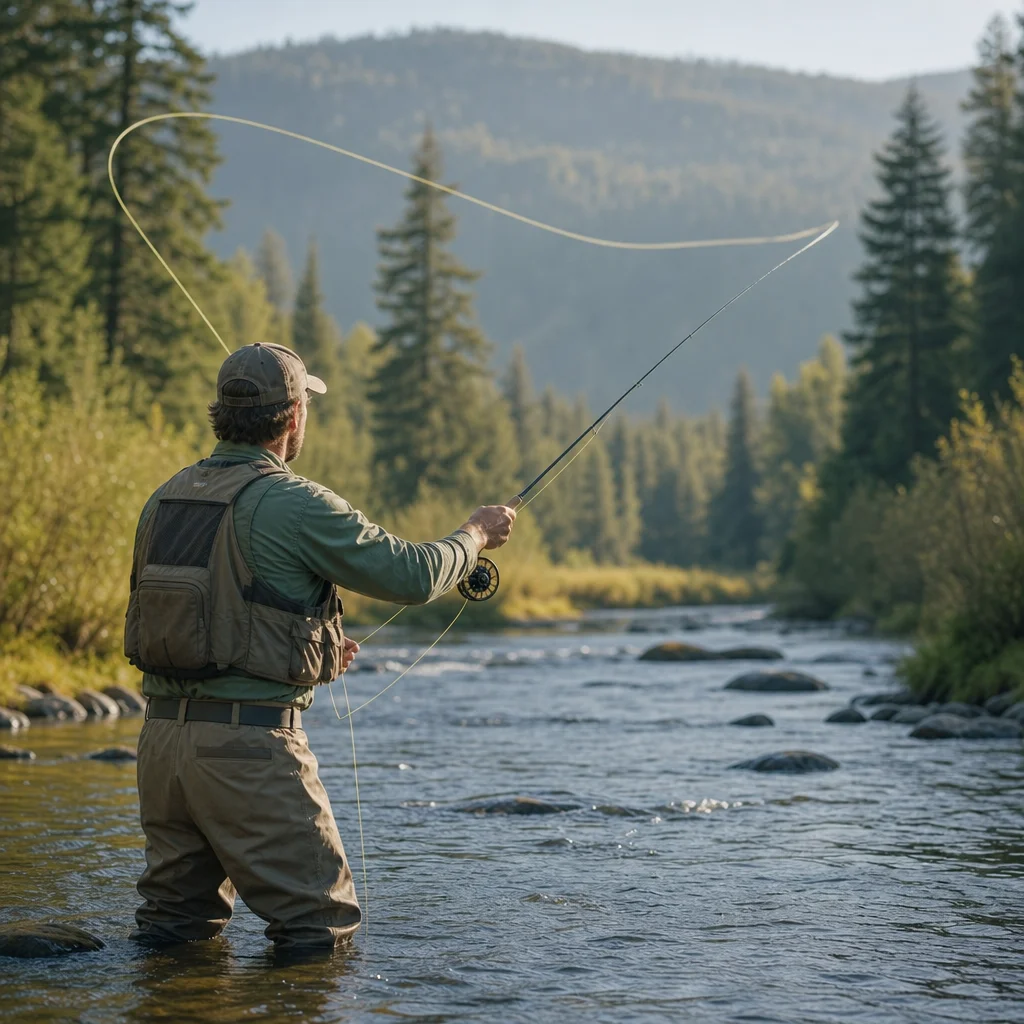
A wind at your back sounds like free distance, but it often creates the opposite of a clean dry-fly presentation. The forward cast may travel easily while the leader collapses, the fly lands hard, and the line drifts into an awkward pile of slack. Meanwhile, the backcast still needs room, even if the wind seems to be helping you cast downstream.
The solution isn’t simply to cast harder. You’ll get better results by changing the shape of your loop, the height of your stroke, and the amount of line you carry. Tailwinds reward control more than force.
Check your casting lane: Before making an overhead backcast, look behind you for people, branches, tall grass, and uneven footing. A tailwind can move a fly and leader unpredictably, so shorten the cast or change angles when the backcast lane isn’t clear.
Understand what the tailwind is doing
When the wind comes from behind, it generally pushes the forward-moving line toward the target. That sounds helpful, and it can be. The problem is that the wind can also push the loop downward and accelerate the fly faster than the leader can turn over smoothly.
Several familiar problems follow:
- The leader piles up instead of extending.
- The fly lands with a slap rather than settling onto the surface.
- Slack forms between the fly and the line.
- The fly travels too far and lands beyond the feeding fish.
- The backcast feels slow, tempting you to apply too much power.
A tailwind also changes how much effort each part of the cast requires. The forward cast may need less power, while the backcast may need a deliberate stop and a little more patience. If you use the same stroke in both directions, the forward cast often becomes too aggressive and the backcast too hurried.
Start with a higher, controlled backcast
On an open bank, begin by giving the backcast enough height to clear the water, grass, and nearby obstacles. A higher backcast gives the line room to straighten behind you and makes it easier to control the timing of the next forward stroke.
Keep the casting stroke compact. A long, sweeping stroke creates a broad loop and makes the line more vulnerable to gusts. A compact stroke with a firm stop gives you a more predictable loop, even when the wind changes slightly.
The key sequence is simple:
- Lift the line cleanly from the water.
- Cast back with a compact stroke.
- Pause long enough for the line to straighten.
- Drive the forward cast with less force than you think you need.
- Stop the rod high enough to let the line unroll before lowering the rod.
The pause matters. A tailwind can make the backcast appear to straighten slowly because the wind is working against its direction. If you start forward too soon, the line is still moving backward when you begin the forward stroke. The result is a weak loop, poor turnover, and a fly that lands short or tangled.
Watch the line rather than relying only on feel. Once the leader begins to extend behind you, make the forward cast. You don’t need to wait for the line to become perfectly rigid, but you do need enough extension for the rod to load predictably.
Use a firm stop and a softer delivery
A good tailwind cast has a clear stop but not an unnecessarily forceful launch. The stop forms the loop; excessive acceleration often makes the presentation worse.
On the forward stroke, allow the wind to provide some of the travel. Apply enough power to direct the line, then let the loop unroll. If you punch the cast hard, the fly may arrive before the leader has a chance to straighten. That creates the classic tailwind pile-up: the fly reaches the water, but the leader and tippet arrive in a heap behind it.
A slightly higher rod tip at the end of the forward stroke can help the leader turn over before the fly descends. Avoid holding the rod high for too long, though. The line can drift backward or form unwanted slack if you fail to lower the rod and maintain contact after the fly lands.
For a delicate presentation, think in terms of direction and shape rather than distance. The fly should land where you intend, the leader should extend naturally, and the line should leave you with enough control to manage the drift.
Adjust the loop for the water in front of you
The best loop shape depends on what lies between you and the trout.
Open water and a clear bank
With plenty of room, you can use a moderately open loop and a higher trajectory. This gives the leader time to turn over and reduces the chance that the tailwind will drive the fly straight down into the surface.
An open loop is also useful when you’re making a longer cast and need to reduce line speed. Keep the rod path smooth, pause cleanly, and avoid trying to force a tight loop through a wind that is already moving the line quickly.
For a short cast, use even less effort. Many tailwind problems happen because anglers make a long-distance stroke for a target only a few rod lengths away. Pick up only the line you need, make one controlled backcast, and place the fly. Fewer false casts mean fewer chances for the wind to move the fly or introduce slack.
Open water with a strong or gusty tailwind
A steady tailwind is manageable; gusts are less predictable. Shorten the amount of line outside the rod tip and make your cast during a lull when possible. If the wind suddenly increases during the forward cast, lower your expectations for distance and prioritize a clean leader turnover.
A reach cast can help after the forward stop. Move the rod tip slightly to the side as the line unrolls, placing the line upstream or away from the main current when the situation calls for it. Don’t make the reach so large that it destroys your contact with the fly.
You can also change your position. Wading a little farther along the bank, turning your body to alter the casting angle, or casting across rather than directly downwind may make the same fish easier to approach.
Change tactics near brush and overhanging limbs
A tailwind can be especially awkward on a brushy bank. The wind may help the forward cast while your backcast has nowhere safe to go. In that situation, an overhead cast isn’t automatically the best cast just because the target is downstream.
First, reduce the amount of line you carry. A short, accurate cast is usually more useful than a long cast that catches a branch or leaves you unable to control the drift. Keep the fly low when the forward lane is clear, but don’t lower the backcast into vegetation simply to avoid making it visible.
Several alternatives can help:
- Roll cast: Useful when the fly is already on or near the water and there’s little room behind you. The anchor should be controlled and placed on the side that gives the fly a clear path.
- Switch or waterborne pickup: Lift and redirect the line with minimal airborne line behind you. This can be gentler on a dry fly than repeated false casting.
- Sidearm cast: A lower sidearm stroke can keep the line beneath some branches and change the backcast angle. Use it only where the side lane is clear.
- Off-shoulder cast: Casting on your non-dominant side can move the fly away from your body and from obstacles on your usual casting side.
- Belgian or oval-style cast: Keeping the backcast and forward cast on slightly different planes can help prevent the fly from crossing close to your body. It takes practice, so use a short line until the motion feels controlled.
Don’t force a difficult cast merely because the fish is visible. If the fly keeps touching branches, change your position, shorten the leader temporarily if appropriate for your setup, or wait for a better angle. A trout can survive your decision to pass; your fly may not survive the branch.
Protect the dry fly during pickup and false casts
Repeated false casting can damage a delicate dry fly, especially when the wind causes the fly to hit the water, rod, or nearby vegetation. It can also remove floatant and make the fly sit lower each time it lands.
When possible, keep the fly airborne between presentations. If it does touch down, lift it cleanly rather than ripping it from the surface. A smooth pickup reduces spray and helps preserve the fly’s flotation.
You don’t need to false cast until the fly is perfectly dry. A few controlled casts are often enough to remove surface water, but stop if the fly begins to twist or the leader starts to hinge. A short pause to inspect and dress the fly is better than adding more speed to a failing cast.
Keep your casting rhythm deliberate. The wind may make the line travel faster, but that doesn’t mean you should speed up the entire motion. The backcast still needs time to straighten, and the forward cast still needs a clean stop.
Place the fly, then manage the slack
Once the fly lands, the casting problem becomes a presentation problem. A tailwind can push the line and leader toward the fly, creating slack that either drags the pattern or makes a hook-set difficult.
Land the fly slightly upstream or upwind of the trout’s expected feeding lane when the current and angle allow it. Aim for a natural drift rather than the absolute farthest reach. If the fly lands too far downwind, you may have no practical way to remove the extra slack without disturbing the presentation.
After the cast, lower the rod tip enough to maintain contact while keeping the line off the surface when possible. Use small line-hand adjustments rather than large pulls. If you need to mend, do it early and with the least movement that solves the problem.
A reach cast made during delivery can be more useful than a large mend after the fly lands. Once the fly is floating, every correction risks moving it. Plan the position of the line before it touches down.
Common mistakes to prevent
Casting harder to beat the wind
More power usually creates a faster, less controlled presentation. Let the wind assist the forward cast and concentrate on a clean stop, adequate backcast timing, and a controlled landing.
Starting forward before the backcast straightens
This is one of the easiest mistakes to make when the backcast feels slow. Watch for the leader to extend behind you, then begin forward. If you can’t see it, use the changing tension in the rod and practice with a short line until the timing becomes familiar.
Using a tight loop everywhere
A tight loop isn't automatically better. It can be excellent for penetrating a headwind, but a tailwind may drive a narrow forward loop downward and make the leader collapse. Choose a loop that gives the leader enough space to turn over.
Ignoring the backcast lane
The target is in front of you, but the fly still travels behind you. Brush, rocks, companions, and uneven ground can turn an ordinary cast into a problem. Check the lane before you begin and change your angle when needed.
Carrying too much line
Extra line makes wind problems larger. Start with less line outside the rod tip, make a clean presentation, and add distance only when the loop and drift remain under control.
A simple tailwind sequence
When you’re standing on an open bank, use this sequence:
- Check behind you and to both sides.
- Strip in excess line until you’re carrying only what the cast requires.
- Lift the line smoothly and make a compact backcast.
- Pause until the leader begins to straighten.
- Make a controlled forward stroke with a firm stop.
- Allow the wind to carry the loop instead of overpowering it.
- Reach or reposition the line as needed before the fly lands.
- Lower the rod and manage slack without moving the fly.
Near brush, replace the overhead cast with a roll cast, sidearm cast, off-shoulder cast, or a change of position whenever the backcast lane is unsafe. The best adjustment is the one that keeps the fly, leader, and angler under control.
A tailwind can help you cover water, but it won’t automatically improve your presentation. Shorten the cast, wait for the backcast to straighten, use a deliberate stop, and let the wind contribute rather than dictate the delivery. On open banks, that approach produces a softer, more accurate dry fly. In tight quarters, a different casting angle—or no overhead cast at all—usually saves both the fly and the afternoon.