How to Fish a Trout Run After Another Angler Has Passed Through
I’ll clarify how to approach a trout run after another angler has worked it, including when to wait, where to reposition, and how fly size and presentation affect your chances. The goal is a thoughtful recovery plan, not a race to the next pool.
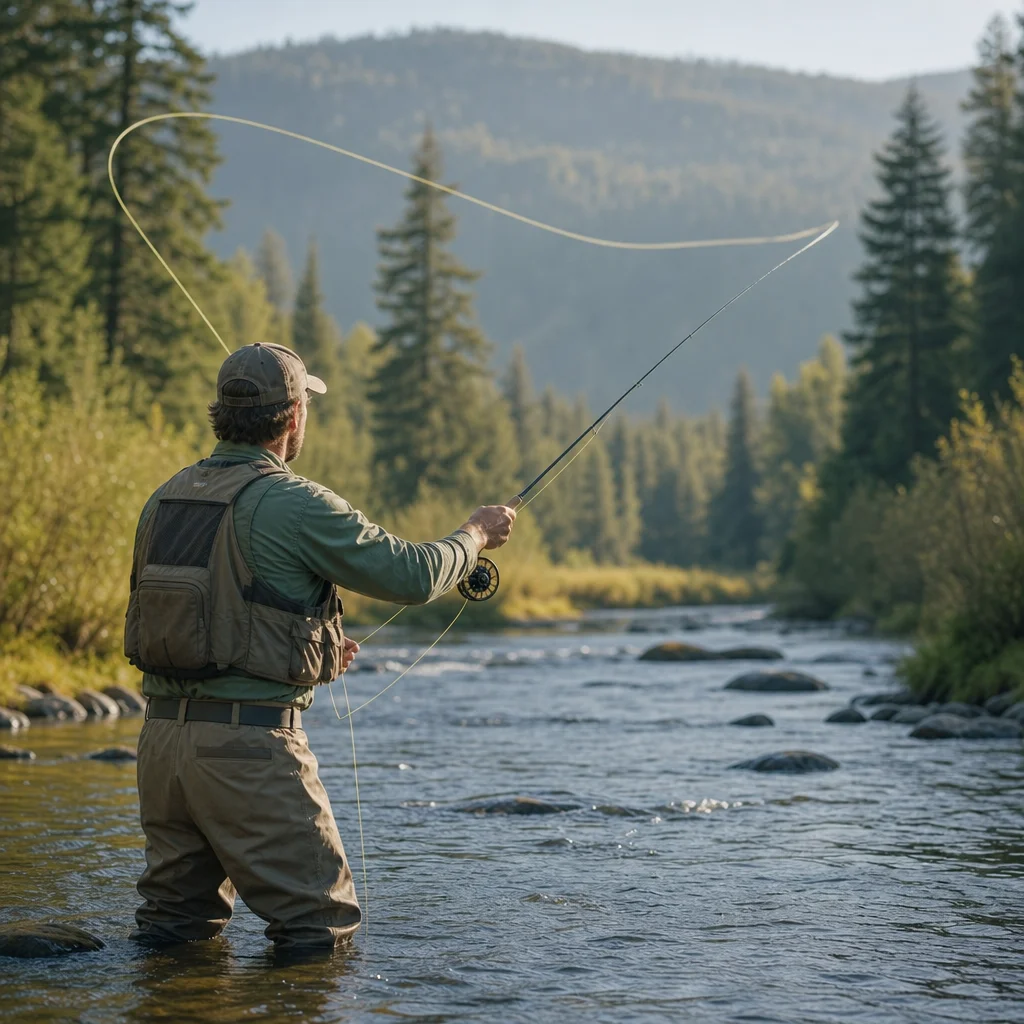
The angler ahead of you may have covered the obvious lies, but that doesn’t mean the run is finished. Trout can be temporarily cautious, displaced by wading, or simply untouched in the quieter edges and deeper seams.
Your best response usually isn’t to charge in with a smaller fly and cast harder. Give the water time, change your angle, and fish the places the first angler may have skipped. The trade-off is straightforward: waiting costs fishing time, while rushing often produces more disturbance and fewer useful presentations.
Start by deciding whether the run is worth recovering
Not every recently fished run deserves an immediate second attempt. Look at the water before you step in and ask three questions:
- How thoroughly did the other angler cover it?
- How much disturbance did their approach create?
- Are trout likely to be holding there right now?
An angler who stayed on the bank and made a few careful casts may have left plenty of opportunities. Someone who waded through the middle, stood in the prime lie, and worked every visible seam may have pushed fish toward the edges or downstream.
Water temperature, flow, and light also matter. A productive run during a hatch or feeding period may be worth waiting for. A shallow, slow stretch with no visible activity may be better left alone while you explore another section.
If the other angler is still fishing, give them room rather than leapfrogging into the same water. On shared rivers, spacing and communication are part of the tactic. A better cast doesn’t compensate for crowding someone else’s run.
Let the water settle before you fish it
Rest time is useful, but it isn’t a magic reset button. Trout that were merely alerted may resume feeding fairly quickly. Trout that watched boots move through their holding water can remain cautious much longer, especially in clear, shallow conditions.
A sensible waiting period depends on the disturbance:
- Light disturbance: Wait a few minutes while you observe the run or prepare your leader.
- Moderate disturbance: Give it roughly 10 to 20 minutes, particularly if the angler waded near the main lies.
- Heavy disturbance: Leave the area and return later if possible. Thirty minutes or more may help, but moving fish may not return to the same spots immediately.
These aren’t rules. They’re starting points. A noisy bank, bright sun, and low clear water call for more patience. Deep, broken, or fast water often hides disturbance better and may recover sooner.
Use the waiting period productively. Watch for rising trout, drifting insects, baitfish movement, and changes in current. Check whether the first angler left feeding lanes untouched. You’re not simply waiting for the trout to forget; you’re gathering information.
Check the access before you return: Make sure the bank, path, and fishing position you’re considering are allowed under current local access rules, seasonal closures, and special regulations. If another angler is still nearby, preserve a comfortable distance rather than treating an empty-looking gap as an invitation.
Change your position before changing your fly
The first angler’s casts tell you something about the run, but they don’t reveal everything. If they fished from downstream, you may be able to approach from upstream later. If they stood in the center of the river, the margins may still be fresh.
Changing your position can improve your odds in several ways:
- It shows the trout a different angle. A fish that refused a drag-prone downstream presentation may respond when the fly enters from upstream.
- It reaches water the first angler couldn’t cast to. Rocks, current tongues, and awkward banks create blind spots.
- It reduces your own casting problems. A better position can create a more natural drift without requiring a dramatic fly change.
Approach from the bank whenever possible. Avoid walking directly through the deepest or most promising water. If you must wade, use the shallowest route and move slowly, keeping your steps deliberate and your profile low.
The trade-off is that a new position may demand a more difficult cast. A downstream bank can give you a better angle but leave less room for a back cast. An upstream approach may preserve stealth but force you to manage more line and current. Choose the angle that improves the drift without creating unnecessary movement.
Fish the overlooked water first
After another angler has passed through, start with water that is both plausible and less obvious. Trout don’t always remain in the center of the run, particularly after disturbance.
Check:
- The near bank, especially under overhanging vegetation
- The slow seam beside faster current
- The head and tail of the run
- Small pockets behind rocks
- Deeper troughs between shallow shelves
- Soft water along the inside of a bend
- Current edges that can be reached without wading farther
Begin at the closest likely lie and work outward. This prevents you from crossing fresh water to reach a distant target. It also lets you learn how the trout are responding before you commit to the hardest cast.
A common mistake is to assume that a fish pushed from the middle has moved to the deepest water. Sometimes it has. Sometimes it has shifted only a foot or two into softer current. Fish the transition water carefully before abandoning the run for a different depth.
Adjust the fly size with a reason
Fly size is worth changing, but smaller isn’t automatically better after an angler has been through. A tiny fly can look less threatening in clear water, yet it may be difficult for a trout to find or for you to present cleanly in broken current.
Consider three approaches:
Stay with the same general size
Keeping a similar size makes sense when the hatch and feeding behavior are clear. If trout are rising to a particular insect, changing away from that profile may solve the wrong problem. Instead, improve your angle, leader presentation, or drift.
This approach is efficient when the first angler had the right fly but poor positioning. It’s less useful if the trout inspected that exact pattern repeatedly and refused it.
Go smaller
A smaller fly can help when the water is clear, the trout are cautious, or the visible food is small. It may also give you a more subtle presentation in slow margins.
The cost is control. Small flies are harder to see, harder to mend around, and easier to lose in fast or mixed currents. If you can’t track the drift or detect a take, the theoretical stealth doesn’t help much.
Go larger or more visible
A larger pattern can be useful when the first angler fished too delicately for the conditions, when the water is slightly stained, or when you need to locate the fly in complex current. A more visible dry fly or a larger nymph indicator can improve your ability to fish accurately.
The drawback is that a conspicuous pattern may look less natural to already-alert trout. Use it when visibility, depth, or food size supports the choice—not simply because the first angler failed.
Improve presentation before adding complexity
Disturbed trout often expose flaws that willing trout forgive. Focus on a clean, controlled drift before adding extra flies, weight, or elaborate changes.
For a dry fly, reduce drag by adjusting your casting angle and creating slack where the current demands it. A reach cast, a curve in the leader, or a shorter drift may be more useful than switching patterns.
For a nymph, make sure the fly reaches the likely depth without dragging unnaturally. Adjust weight or indicator position gradually. Too much weight can create snags and repeated disturbance; too little may leave the fly riding above the fish.
For a streamer, cover the edges and slower pockets rather than repeatedly charging through the main holding lane. Change retrieve speed and direction before cycling through every color in the box.
Keep casts short at first. Shorter casts improve accuracy, reduce false casting, and make it easier to lift off without lining fish. Extend only when the near water has been checked.
Know when to leave the run alone
Recovery fishing has a point of diminishing returns. If you’ve rested the water, changed your angle, covered the overlooked lies, and made several controlled presentations without a response, move on.
Leaving doesn’t mean the run was ruined or that your technique failed. The trout may be inactive, feeding elsewhere, or already displaced. You can return later after the light changes, another angler’s disturbance fades, or the current shifts.
Moving also protects the quality of the water. Repeated wading and casting through the same run can create more disturbance than the original angler caused. A nearby riffle, bank edge, or secondary pool may offer better fishing with less pressure.
A simple recovery sequence
When another angler has just passed through, use this order:
- Watch the run from a distance.
- Give the water an appropriate rest period.
- Approach from a different or less disruptive angle.
- Fish near-bank and overlooked water first.
- Keep the initial fly and presentation simple.
- Change size only when conditions or refusals justify it.
- Adjust depth, angle, or drift before making several fly changes.
- Leave if the run no longer offers productive opportunities.
The most effective recovery strategy is usually quiet and methodical. You’re balancing patience against lost time, stealth against access, and fly changes against better presentation. Treat the run as altered rather than finished, and you’ll often find fish where the first angler’s approach left them—or where that approach never reached.