How to Fish a Dry Fly When Trout Rise Once and Disappear
I’ll help you turn a single, disappearing rise into a sensible dry-fly plan: how long to watch, when to reposition, how to choose a presentation, and when to stop spending casts on one uncertain trout.
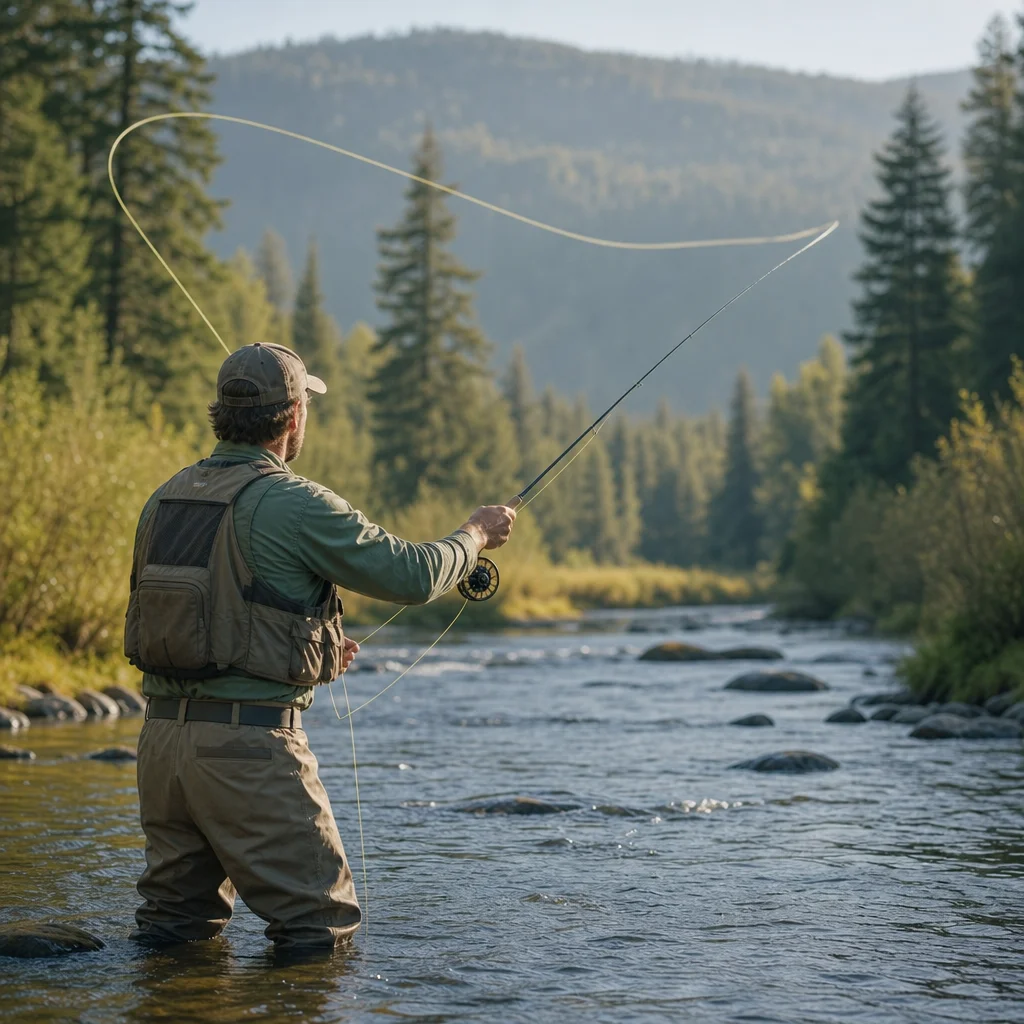
A single rise is enough to get your attention, but not always enough to justify an immediate cast. On clear rivers and spring creeks, trout often show themselves once and then leave you with no obvious target, no reliable rhythm, and plenty of opportunities to educate them with a rushed presentation.
The useful response is measured rather than dramatic. Treat the rise as a clue, not a command. Observe first, make the smallest effective adjustment, and give the trout only a few accurate chances before you move on.
Read the rise before you cast
The first question isn't “Which fly should I use?” It’s “What exactly did I see?” A quick splash, a sipping nose, and a rolling head-and-shoulders rise can point to different situations.
A trout that gently dimples the surface may be taking a small adult insect or an emerging insect trapped just below the film. A splashy rise could be a trout chasing something, intercepting an insect in rougher water, or simply reacting to a less predictable food item. A broad, slow rise may indicate a fish feeding confidently in a particular lane.
Try to remember four details:
- Location: Was the rise tight against a bank, beside a rock, in a seam, or in the middle of a smooth glide?
- Direction: Did the trout move upstream, downstream, or across the current?
- Shape: Was it a delicate sip, a sharp splash, or a rolling rise?
- Timing: Did you see one event, or did the fish pause briefly before rising?
If you can’t answer all four, that’s fine. Even an approximate location and rise form are better than casting at the general area where you think the trout might have been.
Wait longer than feels necessary
The most common mistake after a single rise is casting immediately. The trout may still be moving through its feeding lane, and your first cast can land before you understand where that lane is.
Give the water a quiet interval. In a smooth pool or spring-creek glide, waiting a minute or two can reveal whether the rise was isolated or merely the first visible event in a pattern. Keep your rod low, avoid false casts, and watch the surface around the original rise rather than staring at the exact spot alone.
You’re looking for connected clues: a second dimple upstream, a faint bulge near the bank, or small drifting insects collecting along a seam. If nothing happens, don’t assume the trout has vanished. It may have shifted slightly, stopped feeding, or simply risen outside your field of view.
Before You Commit a Cast
Confirm the approximate feeding lane, identify your likely drift path, and decide where your leader and fly will land. If you can’t describe the presentation clearly, wait or reposition instead of guessing.
Separate the rise location from the feeding position
The place where you saw the rise isn't always the place where you should cast. Current can carry an insect into the trout’s feeding lane from upstream, and the fish may have moved several feet before taking it.
On a clear river, look for the water features that could organize feeding:
- the edge of a faster current beside slower water;
- a narrow foam line;
- the head or tail of a pool;
- a submerged rock creating a soft pocket;
- a bank seam where food drifts close to cover.
The trout may have risen at the end of a short drift, not at the beginning. If you cast directly to the rise ring, your fly can arrive in the wrong place or from the wrong angle.
A useful mental exercise is to trace the drift backward. Ask where a natural insect could have entered the surface current and where it would have traveled before the trout intercepted it. That upstream point is often a better target than the visible rise itself.
Reposition before changing everything
When a rise disappears, anglers often change flies first. In clear water, changing your position is frequently more valuable.
A few careful steps can improve the drift angle, reduce the amount of line on the water, or keep your leader from crossing the trout’s window. Move slowly and stay low, especially on shallow spring creeks where a trout can detect movement through the water or along the bank.
Your goal isn’t to get as close as possible. It’s to create the cleanest presentation with the least disturbance. Sometimes that means moving downstream for a better upstream drift. Sometimes it means shifting sideways to place the cast across a seam. In other cases, staying put and extending the leader is the quieter choice.
Before moving, consider the escape routes around the fish. A trout holding beside a bank, under an overhanging branch, or near a deep slot may be difficult to approach from one direction but straightforward from another. Avoid crossing shallow water simply to gain a few yards if doing so is likely to disturb the area you’re trying to fish.
Choose the fly with limited information
A single rise rarely gives you enough evidence to make a perfect fly choice. Instead, choose a reasonable starting point based on the rise form, visible insects, and the seasonally likely food in that water.
If you can see adult insects on the surface, match the general size and silhouette before worrying about an exact pattern. If the rise was a quiet sip and no adults are visible, a small, sparse dry fly may be a sensible first option. If the rise was splashier or occurred near faster water, a more visible pattern may help you track the drift without requiring an oversized fly.
Keep the change modest. Going from a small, subtle dry to a large, heavily dressed attractor after one uncertain rise may solve a visibility problem while creating a presentation problem. Likewise, changing through several nearly identical patterns can distract you from the more important questions of angle and drag.
A simple sequence works well:
- Start with a dry fly that fits the approximate size and profile of what you observed.
- Make one careful presentation from the best available angle.
- If the drift is clean but ignored, adjust size or profile once.
- If the second presentation is also clean and ignored, reassess the situation rather than continuing automatically.
Make the first cast count
For an isolated rise, the first cast should be your most deliberate one. Avoid using the water around the fish as a practice area.
Plan the landing point upstream of the likely feeding lane and allow enough room for the fly to settle before reaching the trout. On slower water, a short cast with a controlled leader may be better than a long cast that leaves coils and slack between you and the fly.
Watch for conflicting currents. If the fly and leader cross different speeds of water, drag can appear almost immediately. The fly may skate, hesitate, or pull unnaturally across the surface even when the line looks fairly straight.
Depending on the angle, a reach cast, an aerial mend, or a soft landing can help. The exact technique matters less than the result: the fly should travel at the speed and direction of the surface current that carries the natural food.
If the trout refuses, don’t instantly rip the fly away and recast. Let the drift finish when practical, then lift gently and reset. A rushed pickup can disturb the lane and makes it harder to tell whether the fly was rejected, dragged, or simply unseen.
Use a short presentation limit
One disappearing rise can absorb an entire afternoon if you let uncertainty make the decisions. Set a presentation limit before you begin.
A practical limit might be three good drifts, provided each one is genuinely different or improves the presentation. For example, the first could test your initial angle, the second could follow a small repositioning, and the third could use a modest fly adjustment. Three nearly identical casts don’t provide three useful tests.
Stop sooner if the trout visibly spooks, if your line lands over the fish, or if your approach has compromised the holding water. Continuing to cast after a poor presentation usually adds disturbance without adding information.
If the trout ignores clean drifts, consider that it may not be feeding consistently. It could have moved, taken a subsurface food item, or risen for a brief opportunity that has passed. None of those possibilities is solved by repeatedly dropping the same dry fly on the same spot.
Know when to leave the fish
Moving on isn’t a failure. On clear rivers and spring creeks, protecting the quality of your next opportunity is part of good decision-making.
Leave the area when you’ve had a few accurate presentations, can’t find a repeat rise, or would need to make a risky or noisy approach to continue. Mark the location mentally and return later if the water changes or feeding activity becomes more consistent.
You can also fish the likely continuation of the feeding lane rather than the original rise. Work upstream or downstream with careful spacing, looking for another fish or a new rise that gives you better information. A visible trout is exciting, but a fish that offers a repeatable pattern is usually the better dry-fly target.
A simple response plan
When a trout rises once and disappears:
- Watch instead of casting immediately.
- Identify the rise form, location, and likely current lane.
- Trace where food could have entered the drift.
- Reposition quietly if it will improve your angle.
- Choose a sensible fly based on size, profile, and visibility.
- Make one accurate first cast.
- Allow two or three useful presentations, not a series of guesses.
- Change the approach modestly, then move on if the evidence remains weak.
The rise has already given you valuable information. Your job is to preserve that advantage by slowing down. On technical water, a restrained response often produces a better chance than a faster cast—and it leaves the pool ready for another opportunity instead of another lesson in drag.