When to Fish the Near Bank Before Wading Across the River
I’ll show you how to test the near bank before wading across a river, including where trout commonly hold, which casts to make first, and how this simple sequence can save water, fish, and missed opportunities.
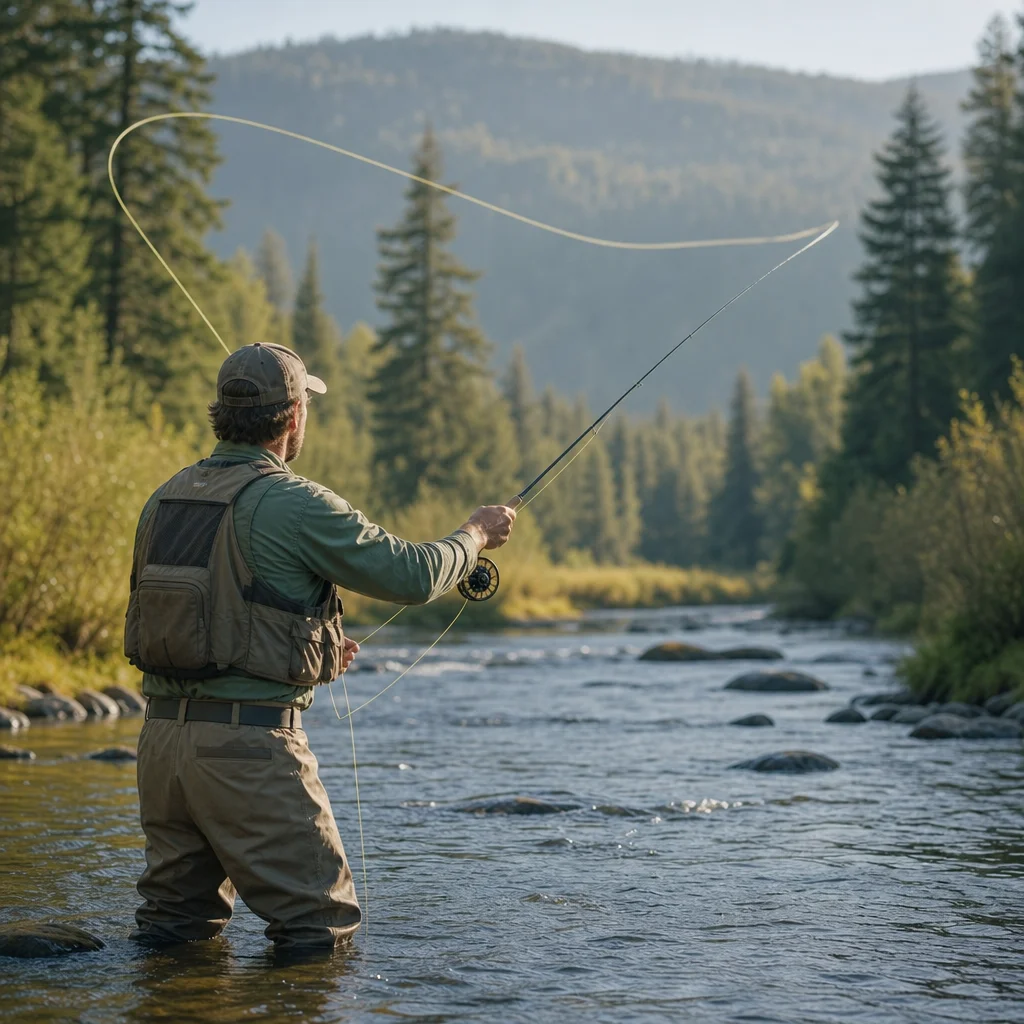
Walking straight into the river is one of the easiest ways to disturb the fish you came to catch. It also removes the closest water from your options before you’ve made a single cast.
A bank-first approach gives you a better starting point: fish the water at your feet, then work outward, and only wade when the untouched water no longer deserves attention. This is especially useful on small and medium rivers where trout may hold in surprisingly shallow margins.
Why the Near Bank Deserves Your First Cast
Trout don’t need to be in the middle of the river to find food or shelter. The edge can provide several advantages at once:
- Cover: Overhanging grass, roots, rocks, and undercut banks can hide trout from predators.
- Food: Current seams may deliver insects along the bank, especially where faster water meets a slower margin.
- Energy savings: A calm pocket beside stronger current can provide food without requiring the fish to fight the full flow.
- Shade: Even a narrow shadow can make a trout feel safer during bright conditions.
- Depth: Banks often look shallow from above but may drop quickly just beyond the visible edge.
A trout holding close to shore may be difficult to see, but that doesn’t make it unlikely. Your approach, shadow, fly line, and false casts can reach the fish before your fly does if you wade in first.
The near bank also includes more than the strip of water directly touching land. Look for the first current seam, the edge of a deep pocket, the downstream side of a rock, and the soft water beside a faster chute. These zones may be only a few feet from your boots.
The Bank-First Sequence
Treat each new section of river as a series of rings expanding away from you. Start with the water most vulnerable to your movement and increase your distance only after you’ve covered the closer options.
1. Pause before stepping in
Stop at the bank and spend a few moments reading the water. Look for depth changes, foam lines, submerged structure, slow pockets, and places where the current changes speed.
Check where your body and shadow will fall. On a bright day, standing directly above a shallow margin can be enough to alert a trout. If possible, stay low and approach from behind cover rather than walking openly along the edge.
You don’t need to turn this into a long inspection. The goal is simply to replace the automatic first step with a deliberate look.
2. Fish the water you can reach from shore
Begin with the shortest practical cast. A short cast is easier to control and usually creates less disturbance than a long one. It also lets you place the fly accurately near bankside cover.
Work likely targets one at a time:
- The edge of an undercut bank.
- The calm side of a rock or log.
- A visible seam between slow and fast water.
- The head or tail of a small pool.
- Any shaded pocket or depression.
Keep your line and leader off the water when the situation allows. Excess line landing across a narrow pocket can spook a fish or pull the fly unnaturally through the target zone.
3. Extend the cast in small steps
After covering the closest water, add distance gradually. Move from the edge to the first seam, then to the next useful lane. This keeps your presentation organized and reduces the temptation to make one oversized cast that covers everything poorly.
With a dry fly, focus on a clean drift through the most likely lane. With a nymph, pay attention to depth and the path of the indicator or sighter. With a streamer, cast across or slightly downstream and let the fly move through the edge of cover before retrieving it away.
The exact fly matters less than keeping the presentation controlled and giving each likely holding spot a fair look.
4. Change your position only when necessary
Once the near bank and reachable seams have been covered, decide whether wading will improve your angle or simply make the next few casts easier. If you do step in, move slowly and enter through the least productive-looking water available.
Avoid crossing directly over the best holding lane. If you must cross, do it below or above the target when the river layout allows, then give the disturbed water time to settle before fishing it.
When Near-Bank Fishing Is Especially Important
The bank-first sequence is useful on most wadeable rivers, but some conditions make it particularly valuable.
Clear and shallow water
In clear water, trout can detect movement and vibration more easily. Shallow margins may look empty because fish are hard to see against the bottom, not because they aren’t there.
Use a longer leader when appropriate, keep your profile low, and avoid repeated false casts over the same pocket. If you can’t make the cast without standing in the water, consider changing your angle or shortening the target rather than immediately wading closer.
Low flows
When water levels are low, the available cover and depth become more important. A narrow depression beside the bank may be one of the few comfortable holding places in an otherwise shallow run.
Low water also leaves less room for mistakes. Limit unnecessary movement, avoid dragging your feet through the bottom, and make your first presentation count.
Banks with structure
Roots, grass, rocks, woody debris, and undercut edges all create potential cover. They can also snag your fly, so select a cast you can control and leave yourself room to land the fish if one takes.
A target beside structure doesn’t always require a cast directly into it. Often the best presentation lands just outside the cover and drifts along its edge.
Pools and pocket water
The near edges of pools can hold trout before the deeper center does. In pocket water, fish may sit immediately behind rocks or in small cushions of slower current. These targets are easy to lose by wading to the first large pool or stepping between rocks before making a few short casts.
How to Choose Your First Cast
Your first cast should balance opportunity and control. The closest target isn’t automatically the best target, especially if it’s too shallow, turbulent, or impossible to present to cleanly.
Ask three quick questions:
- Can a trout hold here? Look for depth, cover, food, or a current break.
- Can I reach it without disturbing it? Consider your position, line, shadow, and backcast.
- Can I make a clean presentation? A reachable target isn't useful if your fly will immediately drag or snag.
If the answer is yes to all three, start there. If not, shift your angle from shore before shifting your feet into the river.
A downstream or slightly across cast may work better than a straight cast from the bank. A roll cast can be useful where branches restrict the backcast, while a short sidearm cast may keep the line away from low vegetation. The best choice is the one that protects the fish’s holding water and gives you control over the fly.
Common Mistakes and How to Recover
Mistake: Wading to reach a fish you haven’t actually located
A promising seam can look farther away than it is. Before entering the river, try a shorter cast, change your angle, or move a few steps along the bank. Many “out of range” targets become manageable without getting wet.
Mistake: Making long casts first
Long casts cover more water but often create more slack, poorer accuracy, and less control. They can also send line over fish holding close to shore.
Start short and add distance. This isn't only a stealth tactic; it’s a way to improve the quality of your drift.
Mistake: Walking along the edge without fishing it
Moving downstream or upstream along the bank can disturb fish just as entering the river does. If the margin looks promising, fish it before passing it.
Mistake: Entering through productive water
If you step into a feeding lane, you may scatter fish and cloud the bottom. Look for a shallow, featureless entry point instead, and avoid grinding your boots across gravel whenever possible.
Mistake: Continuing after the water has been disturbed
If you wade too quickly or stumble through a pool, don’t keep casting as though nothing happened. Move away from the affected area, fish another section, or wait for conditions to settle. The right recovery depends on the river, depth, visibility, and how much disturbance you created.
Choose a safer crossing point: Before wading, confirm that the depth, current, bottom, and exit route are manageable for your conditions. If any part of the crossing feels uncertain, stay on the bank and fish from a different angle instead.
A Simple Way to Remember the Order
Use this sequence whenever you arrive at a new run:
- Observe: Read the bank, current, depth, and cover.
- Reach: Fish the nearest useful water from shore.
- Expand: Increase casting distance in small steps.
- Reposition: Move along the bank if a better angle is available.
- Wade: Enter only when it improves your presentation enough to justify the disturbance.
- Cross carefully: If crossing is necessary, use the least productive route and protect your exit.
This order won’t make every fish catchable. It will, however, prevent you from eliminating nearby opportunities before you’ve tested them.
Practical Next Steps
On your next outing, choose one river section and commit to fishing the near bank before wading. Make at least a few short casts to the closest cover, then work outward through the seams. Notice where you get takes, follows, or signs of spooked fish.
If you do wade, enter through water that offers little cover and avoid crossing the best holding lane. The habit is simple: fish the water you’re about to walk through before you walk through it. It saves presentations, reduces unnecessary disturbance, and may put the first trout of the day closer to your boots than you expected.