How to Fish a Streamer Without Chasing Every Follow
A streamer can draw trout all the way to your boots without giving you a second chance. I’ll show you how to use each follow to adjust speed, angle, pause, and fly position before reaching for another pattern.
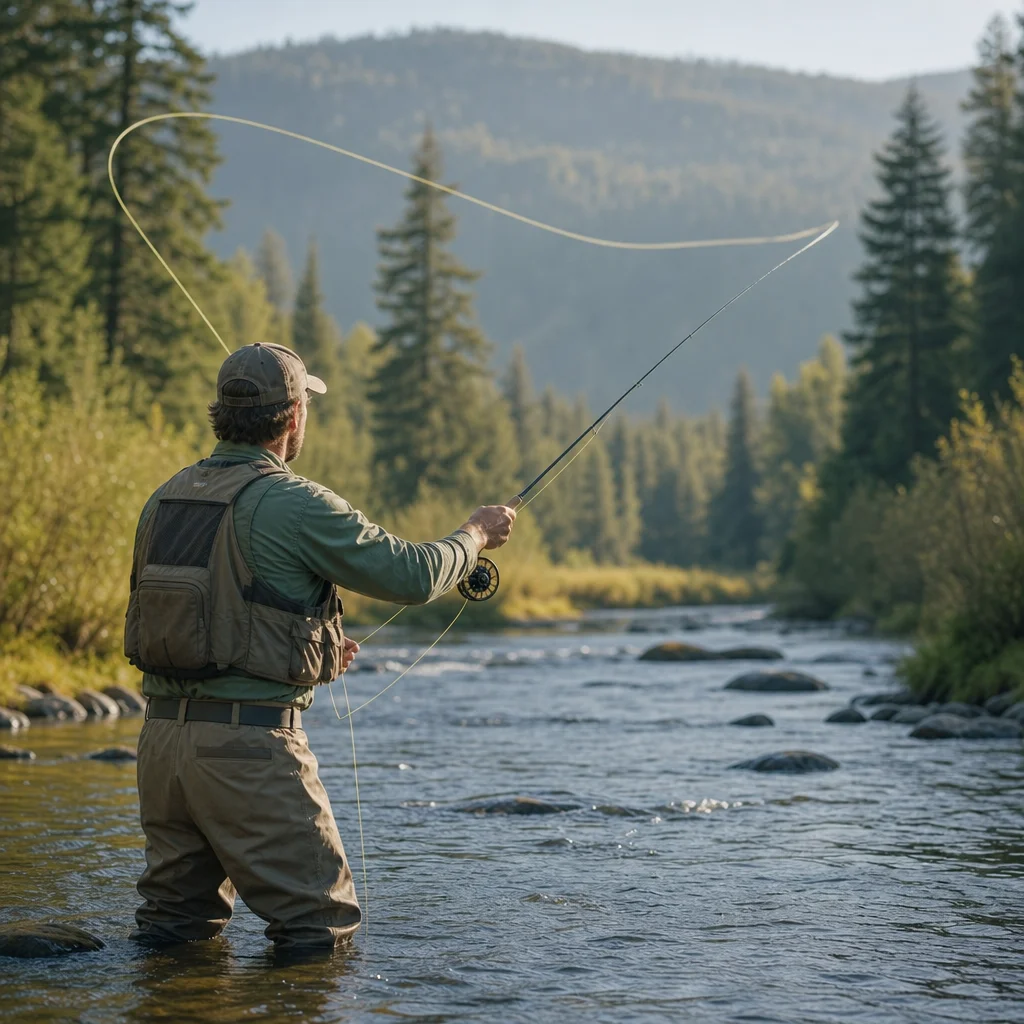
A follow is encouraging, but it isn’t automatically a reason to change flies. The trout has already told you something: it noticed the streamer, tracked it, and found at least part of the presentation believable. Your job is to learn which part failed before you make the next cast.
Streamer fishing becomes simpler when you treat follows as information rather than rejection. Keep a small number of useful flies ready, then adjust the way you move them through the water. Often, the most productive change isn't a new pattern. It’s a better angle, a longer pause, or a fly that stays in the trout’s view a little longer.
Read the Follow Before You React
Not all follows mean the same thing. Watch the trout’s body language and the point where it turns away.
- A long, steady track: The trout is interested but may need a slower or more predictable retrieve.
- A quick flash and immediate retreat: The fly may be moving too fast, appearing too large, or crossing the trout’s view at an awkward angle.
- A follow that reaches shallow water: The trout may want a pause, a change of direction, or a fly that stays deeper near the end of the retrieve.
- A short inspection close to the bank or boat: The fish may need more time to commit, or it may be responding to the fly’s profile without accepting its movement.
- A follow that stops when the fly accelerates: The trout may be tracking rather than hunting. Try a pause or a less aggressive finish.
Try to remember the final few feet of the retrieve. That’s where many follows become refusals, and it’s also where the easiest adjustment is available.
Keep the Fly in the Strike Zone
A streamer can look excellent at the start of a retrieve and become irrelevant halfway through it. Depth, current speed, and line angle determine how long the fly remains available to a trout.
After a follow, ask whether the fish had enough time to inspect the fly at a useful depth. If the streamer rose quickly toward the surface, use a slower retrieve, a sinking line or leader section, or a slightly heavier pattern. If it dragged along the bottom and snagged repeatedly, raise the rod tip, speed up briefly, or choose a more buoyant or lightly weighted fly.
You don’t need to solve depth perfectly. You only need to identify whether the fish followed the fly in the part of the water where it could realistically eat it.
Change Position Before Changing Gear
A modest shift in your casting position can alter the entire presentation. A downstream angle may make the fly move too quickly with the current. A quartering cast across the current can give you better control and keep the streamer in front of the fish longer.
If a trout follows from one side of the river, avoid immediately repeating the same cast from the same spot. Move a few steps, change the angle, or cast slightly farther upstream. The goal is to show the fly again without making the trout watch the same performance twice.
In lakes, this may mean changing your retrieve direction rather than your position. Cast along a drop-off, across a weed edge, or toward structure, then vary how the fly enters and leaves the trout’s likely holding water.
Use Speed as Your First Adjustment
Retrieve speed is one of the simplest variables to change, and it often tells you more than switching patterns does.
If the trout follows closely but never gains on the streamer, slow the retrieve. Use short strips with a pause between them, or let the fly drift briefly while maintaining enough contact to detect a take. A slower presentation gives the fish more time to close the distance and can make the fly appear less threatening.
If the trout follows loosely and falls behind, try speeding up. Some fish respond to a fleeing baitfish better than one that crawls along. Increase the pace in small steps rather than turning the retrieve into a frantic race.
A useful progression is:
- Repeat the cast with the same fly.
- Slow the retrieve and lengthen the pause.
- Try a slightly faster retrieve with sharper acceleration.
- Change the casting angle or fly position in the water.
- Only then consider another pattern.
This sequence keeps your adjustments readable. If you change speed, angle, depth, and fly all at once, you won’t know what improved the presentation.
Make the Pause Do Some Work
A pause isn't simply a rest between strips. It changes the fly’s posture and gives the trout a chance to catch up.
Start with pauses of one or two seconds. Watch what the fly does during that pause. Some streamers suspend, some sink nose-first, and others roll or rise. The action can matter as much as the length of the pause.
If the trout follows nearly to the bank, pause before the fly leaves the strike zone rather than only at the end of the retrieve. In moving water, a brief pause behind a rock or along a seam can allow the streamer to drop and present a different silhouette.
Avoid making every pause identical. A regular retrieve can be useful, but a trout that has already followed may need an irregular movement to trigger a decision. Try two short strips, a pause, then one longer strip. Keep the changes controlled so the fly still behaves like something alive rather than a small piece of equipment having a difficult day.
Change the Fly’s Position, Not Just Its Pattern
“Fly position” includes depth, distance from cover, distance from the bank, and the side of the current where the streamer travels. These details can matter more than color.
A follow beside a log or boulder suggests that the trout may be using that structure as an ambush point. Cast so the streamer passes closer to the cover on the next presentation, while leaving enough room to avoid a predictable snag. If the trout follows from deeper water but turns away in the shallows, keep the fly deeper or end the retrieve before it climbs out of the productive zone.
You can also change the fly’s path by mending or lifting the rod tip. A downstream mend may slow the streamer’s swing in current. A slight rod lift can move it over submerged debris. These are small corrections, but they can turn a follow into a take without requiring another fly.
When a Pattern Change Makes Sense
Minimalism doesn’t mean refusing to change flies. It means changing for a clear reason.
Switch patterns when the trout repeatedly follows the same presentation but reacts poorly to its size, silhouette, or action. For example, a large streamer may attract fish but fail to produce a commitment in clear, low water. A smaller or less bulky pattern may give the trout a more comfortable target.
A change in color can also be reasonable when light or water clarity shifts. In bright, clear conditions, a subtler profile may be useful. In stained water or low light, a stronger silhouette can help the trout find the fly. These are starting points, not rules; the fish still gets the final vote.
Before changing, identify the suspected problem:
- Too large: Try a smaller profile.
- Too subtle: Try a darker or more visible silhouette.
- Too fast-sinking: Use a lighter pattern or alter the line and retrieve.
- Not enough movement: Choose a fly with more natural motion or add pauses and acceleration.
- Too much movement: Use a simpler, more stable pattern and a steadier retrieve.
Change one major variable at a time whenever conditions allow. You’re trying to learn what the trout wanted, not merely collect evidence that it saw several different flies.
Avoid the Common Follow Mistakes
Recasting immediately to the same fish
A trout that has followed may need a short break, especially in clear water or a small stream. Move on briefly, fish another piece of water, or give the area time before returning from a different angle.
Speeding up out of panic
The sudden “get it away from the fish” acceleration often removes the easiest opportunity. If the trout is close, a pause or a change of direction may be more effective than a desperate sprint.
Changing flies after one imperfect look
One follow can result from a poor angle, a bad depth, or a retrieve that passed just outside the strike zone. Give the presentation at least one thoughtful adjustment before blaming the pattern.
Watching only the fly
Keep enough awareness of the surrounding water to see how the trout approaches. Its direction and speed are clues. If you lose sight of the fly, maintain contact and make the next cast more deliberate rather than trying to force the current retrieve.
A Minimalist Follow Response
When a trout follows and turns away, use this compact decision process:
- Recall where it turned: deep water, cover, current edge, or the bank.
- Repeat the presentation with one change: usually speed or pause length.
- Alter the angle: make the fly cross a different part of the trout’s view.
- Adjust depth or position: keep the streamer where the fish can comfortably attack.
- Change patterns only with a specific hypothesis.
- Give the fish time before showing it the same fly again.
The best streamer anglers aren’t trying to force every follower into a strike. They’re using each follow to narrow the choices. Keep the fly, change the movement. Keep the movement, change the angle. Keep the adjustments small enough that the trout—and you—can tell what happened.
On your next outing, carry a limited selection of streamers that cover different sizes, weights, and profiles. Then spend more time varying their speed, pause, and position than swapping patterns. A follow isn’t the end of the cast. It’s the most useful part of the conversation.