Fish a Soft Hackle Without Turning It Into a Tiny Streamer
A soft hackle can look lifeless when you swing it too far, too fast, or too deep. I’ll show you how to match swing length, lift, pace, current angle, and depth to an emerging-insect presentation instead of turning a delicate fly into a tiny streamer.
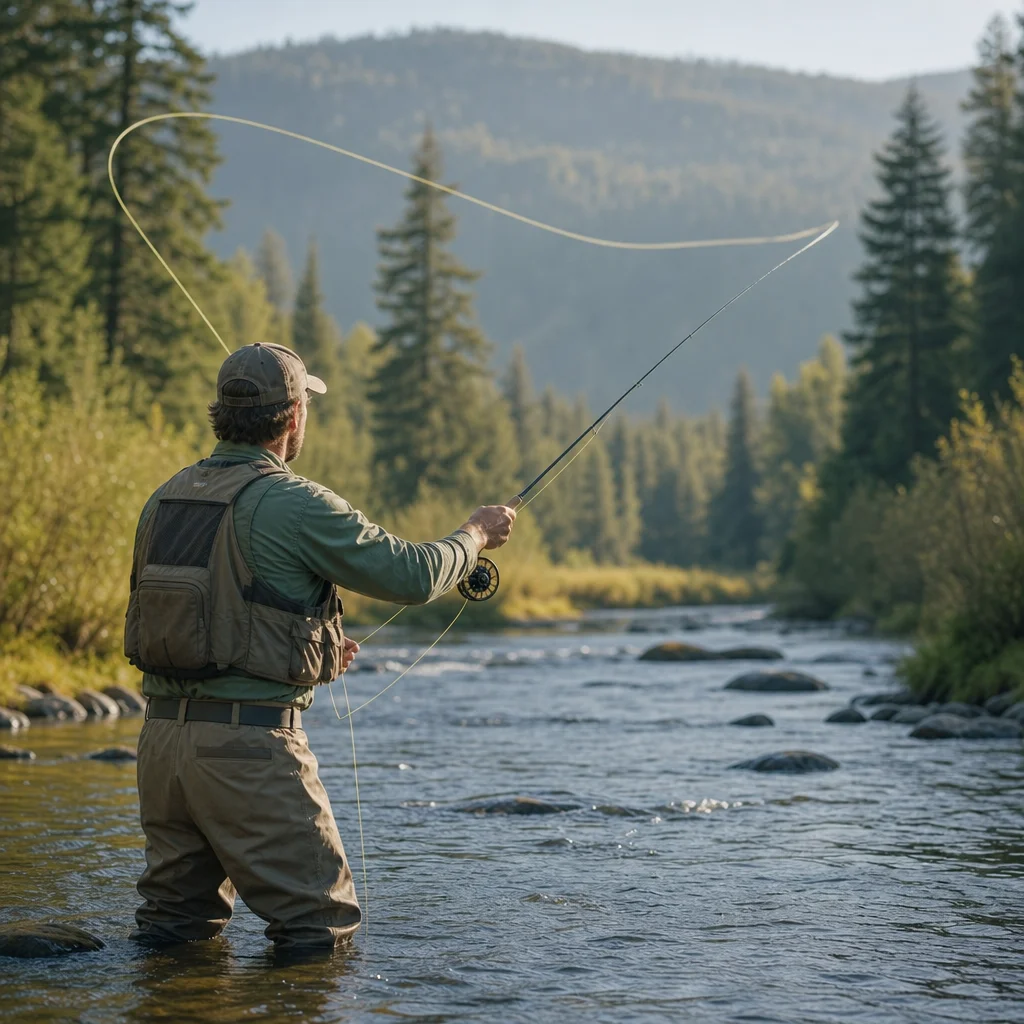
The usual problem with a soft hackle isn’t the fly; it’s the retrieve. Add too much speed and it starts behaving like a small streamer. Let it drag too far downstream and it loses the suspended, rising quality that makes it convincing during an emergence.
The goal is controlled movement: the fly should enter the current, settle briefly, travel across or slightly downstream, and then lift toward the surface at the end of the swing. That sequence imitates an insect becoming mobile in the water column rather than a baitfish fleeing through it.
Start with the insect’s imagined path
A soft hackle is versatile because its fibers suggest movement without requiring a complicated animation. The fly can represent an emerging mayfly, caddis, midge, or other insect depending on size, color, profile, and local conditions. You don’t need to make it perform one exact imitation, but you do need to give it a plausible path.
During emergence, an insect commonly moves upward and becomes vulnerable as it travels through the current. Your presentation should therefore include three elements:
- A controlled entry: The fly reaches the intended lane without crashing down.
- A suspended drift or swing: It moves with the current and across the trout’s viewing window.
- A lift: It rises toward the surface at the end, where an attentive fish may intercept it.
If the fly immediately races across the surface or hangs below the feeding depth, one of those elements is out of balance.
Choose the current angle before you cast
Your casting angle determines how much time the fly has to work and how quickly tension builds. For most soft-hackle presentations, begin with a cast slightly downstream and across the current. The exact angle depends on current speed, water depth, and the amount of swing you want.
A more upstream angle gives the fly additional time to sink and delays the start of the swing. It can be useful in deeper water or when fish are holding low, but too much upstream direction can turn the presentation into a dead drift followed by an abrupt, unnatural acceleration.
A more downstream angle creates immediate tension and a shorter, faster swing. That can work in shallow riffles or when trout are already looking upward, but it leaves little time for the fly to settle. If the soft hackle starts planing across the surface before it has crossed the productive lane, reduce the downstream angle or add a small amount of depth.
Think of the cast as setting the length of the fly’s runway. You’re not simply trying to cover water; you’re deciding how long the fly can move before the lift.
Manage swing length deliberately
Swing length is the distance the fly travels under controlled tension before you allow it to rise or recast. Longer isn’t automatically better. A long swing can cover more water, but it also gives the fly more time to sink, drag, or move outside the feeding zone.
Use a longer swing when:
- The current is moderate and reasonably uniform.
- Trout may be spread across a broad lane.
- The water is deep enough for the fly to move without scraping bottom.
- You need time to detect a subtle take before the lift.
Shorten the swing when:
- The current accelerates through a narrow chute.
- The fly reaches shallow water near the bank.
- Uneven currents create an obvious belly in the line.
- Fish are feeding in a small, specific seam.
A useful adjustment is to finish each swing at a different point instead of repeating one cast length. Start with a moderate swing, then shorten or extend it based on where the fly appears to be entering the trout’s zone. If takes occur only near the end, the fish may be following the fly or responding to the lift. If nothing happens until the fly is already out of the seam, your swing may be too long or your angle too broad.
Control pace with line, not frantic rod movement
The current should provide most of the fly’s speed. Your job is to prevent excess drag and maintain enough contact to recognize a take. That usually means keeping the rod low enough to connect with the fly while allowing the line to follow the current naturally.
If the fly is moving too quickly, reduce the amount of downstream tension. A small upstream mend can slow the line and let the fly hold its position longer. The mend should be modest; a large one can pull the fly out of its lane or create slack that hides a take.
If the fly is moving too slowly or sinking below the likely feeding depth, allow a little more downstream influence. You might cast farther across, mend less, or angle the rod slightly downstream. Avoid stripping immediately as a correction. Stripping adds a deliberate horizontal acceleration, which is often what turns a soft hackle into a tiny streamer.
You can use occasional short strips, but treat them as a specific variation rather than the default retrieve. A brief draw may suggest an insect struggling in faster water. Repeated strips at a steady rhythm usually create a different imitation altogether.
Add the lift at the end of the swing
The lift is the defining move in many soft-hackle presentations. As the fly reaches the end of its controlled swing, raise the rod tip gradually or draw the fly upward with a slow hand movement. The fly should rise, not rocket toward you.
Begin the lift before the line points directly downstream. If you wait until the fly is fully below you, the lift may be too abrupt and the fly may leave the water like a fleeing object. Starting slightly earlier gives it a shallow, rising path across the edge of the feeding lane.
The height of the lift matters. In shallow water, a small elevation may be enough. In deeper water, you may need a longer or more pronounced rise, but the fly still shouldn’t skip repeatedly across the surface unless that is the behavior you’re intentionally testing.
Pause briefly after the lift. Trout sometimes follow and take during the final rise or just after the fly begins to settle again. Keep contact without holding the fly rigidly. A completely tight line can make the fly look pinned; too much slack can make a take disappear.
Find depth without burying the fly
Depth is controlled by more than weight. It depends on fly mass, leader diameter, current speed, cast angle, mending, and how long the fly travels before tension lifts it.
Start shallower than you think you need. A soft hackle intended to represent an emerging insect should generally have room to rise. If it is ticking bottom repeatedly, it may be too deep, moving too slowly, or entering water that is simply too shallow for the chosen swing.
To fish deeper, make one change at a time:
- Cast a little farther upstream or across.
- Delay the first lift.
- Use a slightly longer swing.
- Add a modest mend to reduce immediate surface drag.
- Change to a heavier fly or a leader arrangement suited to the water.
The last option is often overused. If the presentation is fundamentally too fast, adding weight may only produce a fast, deep fly that still doesn’t behave like an emerging insect. Adjust the path before reaching for a heavier pattern.
To fish higher, do the reverse: shorten the sink time, reduce the mend, begin the lift earlier, or choose a lighter presentation. Watch the fly when you can. Its position in the water is more useful than assumptions based on the fly’s name or bead size.
Match the presentation to water type
Riffles and broken runs
Use a shorter swing and a relatively direct cast. Trout in broken water have limited time to inspect the fly, and the current can create plenty of movement without help from you. Keep the fly just above the bottom or in the upper half of the water column, depending on where fish are showing.
The lift can be subtle here. A small rise at the end of the swing is often enough, especially where the current already pushes the fly upward through shallow structure.
Smooth glides
Smooth water gives trout more time to examine the fly and exposes poor line control. Favor a longer, slower swing with careful mending. The fly should move steadily, not trace a sharp arc caused by an overpowered downstream pull.
If fish follow but refuse, reduce the pace before changing the fly. A softer angle, earlier lift, or longer pause can make the presentation less mechanical.
Seams and current edges
Target the seam rather than automatically casting across the entire river. A soft hackle can work especially well where fast and slow water meet, but conflicting currents can pull the line away from the fly.
Keep the line positioned to preserve contact while allowing the fly to enter the slower or faster edge naturally. If the fly swings out of the seam immediately, shorten the cast or adjust your rod position instead of adding repeated mends.
Recognize the common failure modes
The fly skates immediately: The cast is too downstream, the line is too tight, or the fly is too light for the current. Reduce initial tension and give it a moment to settle.
The fly dredges: The swing is too long, the entry is too upstream, or the water is too deep for the current setup. Shorten the swing before changing patterns.
The fly hangs motionless: You may have added too much upstream influence or allowed excess slack. Restore a gentle connection and let the current move the fly.
The fly moves like a streamer: Repeated stripping, a sharp rod sweep, or excessive downstream tension is probably responsible. Return to a current-led swing and reserve movement for the lift.
You feel takes but don’t connect: Keep the rod angle moderate and avoid an immediate, forceful strike. Trout can take a soft hackle while it rises, when the line is partly tensioned but not fully tight. A smooth lift of the rod can maintain pressure without ripping the fly away.
Check the river’s rules before choosing the method: Local regulations may limit hook styles, fly construction, or when and where particular presentations are allowed. Confirm the current rules for the river and season before fishing, especially during regulated emergence periods.
A simple sequence for the next run
Begin with a cast slightly downstream and across. Let the fly settle for a moment, then manage the line so the fly swings at a steady pace rather than accelerating. Watch the angle of the line and the water around the fly. Start the lift before the line points fully downstream, and pause briefly at the end.
On the next cast, change only one variable: swing length, current angle, pace, or depth. That makes the response easier to interpret. If the fly begins to behave like a streamer, remove motion first. If it never reaches the likely feeding level, work on depth and entry before adding strips.
A successful soft-hackle swing is usually understated. The fly moves enough to look alive, rises enough to suggest emergence, and remains in the feeding lane long enough for a trout to make a decision. Let the current do the theatrical work; your task is to keep the presentation believable.